
Golf is as much a mental challenge as it is a physical one. While lessons from a certified coach are invaluable, the right book can reinforce concepts, clarify technique, and deepen understanding between sessions. Whether you're just learning to grip a club or preparing for competitive play, there's a well-written, expert-backed guide tailored to your stage. This curated list spans foundational mechanics, course management, and psychological mastery—offering something for every golfer who wants to lower their handicap through knowledge.
Foundational Skills: Best Books for Beginners
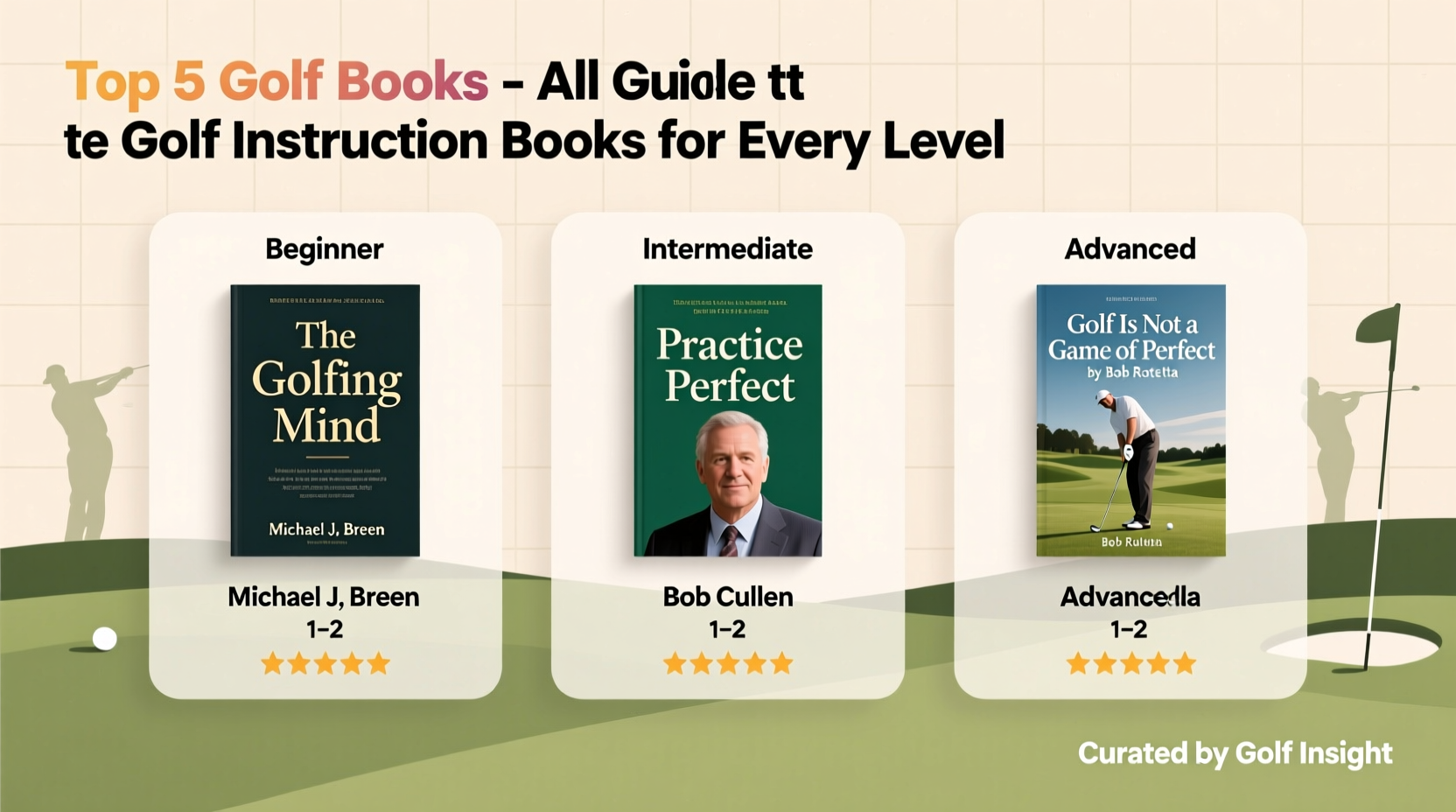
Starting in golf means building habits that last a lifetime. The best beginner books don’t overwhelm with technical jargon but instead focus on clear, repeatable fundamentals. They explain the basics of grip, stance, alignment, and swing path in digestible ways, often using illustrations or analogies to make concepts stick.
The Complete Idiot’s Guide to Golf by Gary McCord remains a top pick for newcomers. It breaks down the entire game—from equipment selection to etiquette—with humor and clarity. Another standout is Golf For Dummies by Peter Sanders, which includes structured drills and troubleshooting tips for common mistakes like slicing or topping the ball.
- Start with grip and posture before worrying about power
- Use alignment sticks or clubs on the ground to visualize proper setup
- Practice putting daily—even 10 minutes builds confidence
Intermediate Mastery: Refining Technique and Strategy
Once the basics are internalized, intermediate players benefit from deeper analysis of swing mechanics, shot shaping, and decision-making. These books bridge the gap between mechanical understanding and real-world application.
Ben Hogan’s Five Lessons: The Modern Fundamentals of Golf is widely considered the bible of golf instruction. Despite being written in 1957, its insights into the “secret” of the pivot, weight shift, and controlled backswing remain relevant. Though dense at times, it rewards slow, thoughtful reading paired with on-course experimentation.
For a more modern take, Rotary Swing: The Manual by Chuck Quinton deconstructs the swing using biomechanics and video analysis principles. It emphasizes spine rotation over excessive lateral movement—a key fix for many mid-handicappers stuck in a plateau.
“Most amateurs think they need more power. What they really need is better sequence.” — Chuck Quinton, PGA Professional and Biomechanics Analyst
Recommended Intermediate Reads
| Book Title | Author | Focus Area | Best For |
|---|---|---|---|
| Ben Hogan’s Five Lessons | Ben Hogan | Swing Mechanics | Serious learners wanting classic precision |
| Rotary Swing | Chuck Quinton | Biomechanics & Sequence | Players fixing swing flaws |
| Every Shot Must Have a Purpose | Pia Nilsson & Lynn Marriott | Course Management | Strategic thinkers |
| Fix Your Body, Fix Your Swing | Mickey Ritz | Physical Fitness & Mobility | Aging or injury-prone golfers |
Advanced Tactics: Books for Low Handicaps and Competitive Players
At the advanced level, marginal gains matter. The difference between breaking 80 and shooting in the 70s often lies not in raw skill but in execution under pressure, pre-shot routines, and intelligent risk assessment. These books go beyond mechanics to cultivate a champion’s mindset.
Playing a Game You Can’t Lose by Dr. Bob Rotella is essential reading. A renowned sports psychologist, Rotella has worked with dozens of PGA Tour professionals. His philosophy centers on trust, routine, and emotional control. He argues that anxiety stems not from poor skill but from trying to force outcomes—an idea that resonates deeply with tournament players.
Another elite resource is The Mind Game: Consciousness, Creativity, and the Brain in Sport by Dominic Riccio. While broader than golf alone, its exploration of flow states, visualization, and neural conditioning offers actionable tools for mastering high-pressure situations on the course.
Mini Case Study: From 12 to 5 Handicap in 18 Months
Mark T., a 42-year-old amateur from Charlotte, struggled for years around 88–92 strokes per round. After reading Every Shot Must Have a Purpose, he began tracking his decisions on each hole—not just swings. He realized he was consistently overestimating his carry distances and avoiding smart layups. By adopting a data-driven strategy (using yardage books and GPS), focusing on percentage shots, and practicing recovery scenarios, he dropped to a 5 handicap within 18 months. “The book didn’t change my swing,” he says. “It changed how I think about the game.”
The Mental Game: Why Psychology Matters as Much as Mechanics
No aspect of golf is more underrated than mental discipline. Even technically sound players falter when confidence wanes or pressure mounts. The best mental game books teach self-awareness, resilience, and focus.
In addition to Rotella’s work, 101 Performance Projects for Golf by Dave Alred offers practical exercises to build composure. Alred, who coached England’s rugby team and numerous golfers, uses behavioral science to design drills that simulate stress. One example: attempting a 6-foot putt with a financial penalty for missing. These simulations train the brain to stay calm when stakes rise.
- Visualize each shot before stepping up
- Develop a consistent pre-shot routine (15–20 seconds)
- Keep a journal of emotional triggers during rounds
- Replace negative thoughts with process-focused cues (“smooth tempo” vs. “don’t slice”)
Building a Personal Golf Curriculum: A Step-by-Step Approach
Treating your development like a structured curriculum ensures steady progress. Instead of randomly picking books, follow this timeline to build competence systematically.
- Months 1–3: Read a beginner-friendly book (Golf For Dummies or similar). Focus on grip, posture, and full-swing basics. Practice one concept per week.
- Months 4–6: Move to a mechanics-focused text like Ben Hogan’s Five Lessons. Work with a coach to apply its principles. Record your swing monthly.
- Months 7–9: Study course management with Every Shot Must Have a Purpose. Begin mapping holes, calculating risk/reward, and logging shot outcomes.
- Months 10–12: Dive into mental training (Golf Is Not a Game of Perfect). Incorporate visualization and breathing techniques into warmups.
- Ongoing: Revisit favorite sections annually. Rotate in new titles as your goals evolve (e.g., tournament prep or senior fitness).
Frequently Asked Questions
Do these books replace professional coaching?
No single book can provide personalized feedback. However, they complement coaching by reinforcing concepts discussed on the range. Think of them as textbooks that support your private lessons.
Are older golf books still relevant?
Yes—especially those grounded in biomechanics or psychology. Hogan’s teachings remain valid because they’re based on physics and repetition. That said, newer books often include updated research on fitness, launch monitors, and mental training.
How do I know which book fits my learning style?
If you learn visually, choose books with diagrams or QR codes linking to videos (like Rotary Swing). If you’re analytical, opt for data-driven approaches (Every Shot Must Have a Purpose). For inspiration, go with narrative-driven works like those by Rotella.
Conclusion: Turn Knowledge Into Lower Scores
The best golfers aren’t always the most athletic—they’re the most informed. A well-chosen book can clarify confusion, correct ingrained errors, and instill the confidence to execute under pressure. Whether you're holding a club for the first time or chasing a low single-digit handicap, investing in your golf education pays dividends stroke after stroke.




 浙公网安备
33010002000092号
浙公网安备
33010002000092号 浙B2-20120091-4
Comments
No comments yet. Why don't you start the discussion?