
Science fiction has evolved far beyond space operas and dystopian warnings. Today’s most compelling sci-fi literature blends speculative science with profound explorations of identity, consciousness, and societal transformation. For readers who crave intellectual stimulation alongside narrative excitement, the past two decades have delivered a golden age of genre-defining works. From climate-driven futures to post-human evolution, these novels challenge assumptions while delivering unforgettable stories.
Why Modern Sci-Fi Matters Now More Than Ever
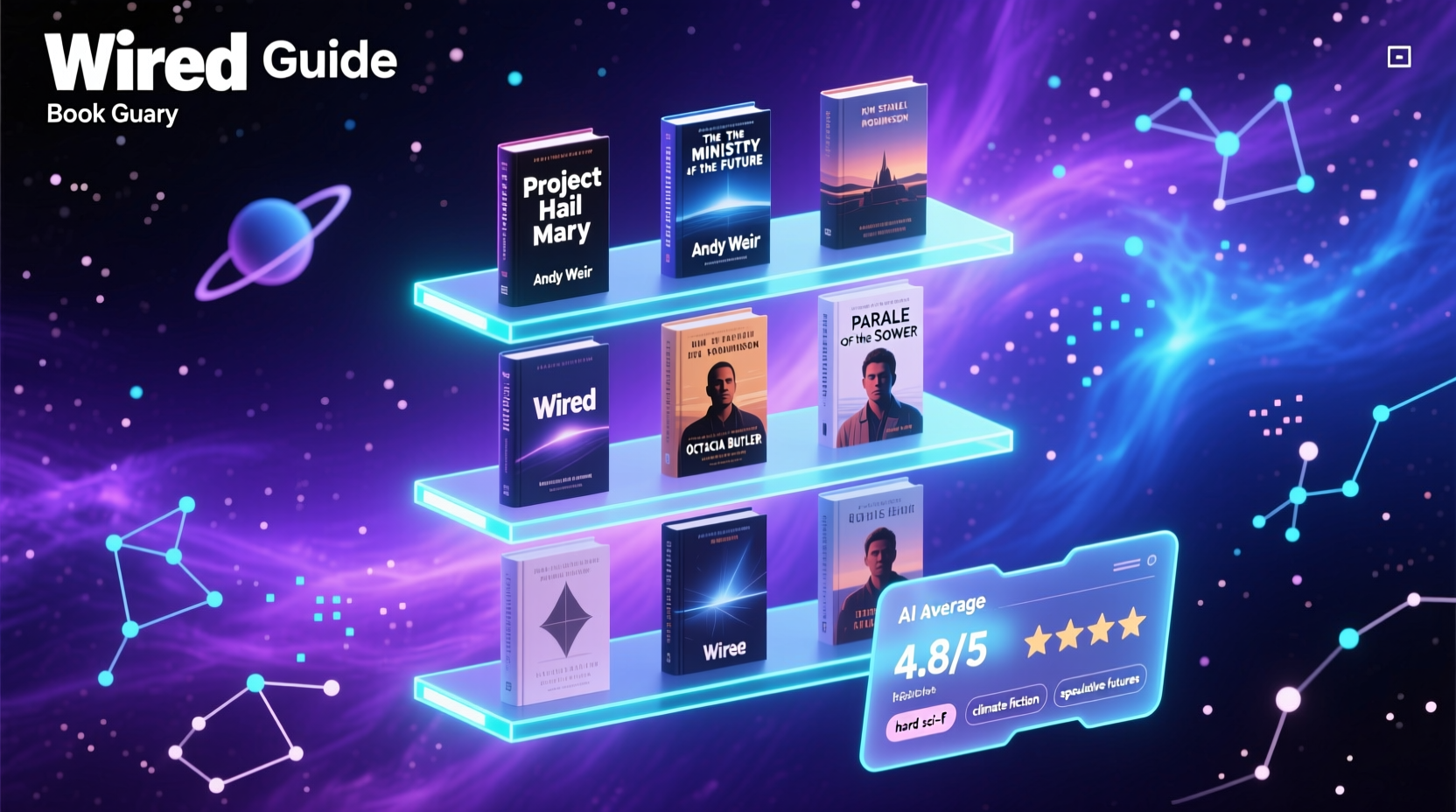
Contemporary science fiction no longer merely predicts the future—it interrogates it. As artificial intelligence, genetic engineering, and climate disruption reshape our reality, authors use speculative frameworks to explore ethical dilemmas, systemic inequities, and the limits of human adaptability. Unlike earlier eras dominated by pulp adventure or Cold War allegory, today’s sci-fi often reads like philosophical inquiry wrapped in gripping plots.
The genre now embraces diverse voices, global perspectives, and hybrid styles—blending literary fiction, thriller pacing, and sociological insight. This shift has elevated sci-fi into mainstream critical acclaim, with titles appearing on prestigious award shortlists and university syllabi alike.
“Modern science fiction is less about rockets and more about resonance—how change reverberates through individuals, cultures, and time.” — Dr. Lena Tran, Professor of Speculative Literature, Columbia University
Essential Modern Sci-Fi Novels Every Avid Reader Should Explore
The following titles represent a curated selection of groundbreaking works published since 2000. Each has significantly influenced the genre, earned major accolades (such as the Hugo, Nebula, or Arthur C. Clarke Awards), and offers something unique in terms of theme, voice, or structure.
Dune Messiah and Beyond: The New Wave of Epic Worldbuilding
While Frank Herbert’s original Dune remains iconic, modern successors have expanded the scope of planetary-scale storytelling. One standout is:
- Anathem by Neal Stephenson (2008): A dense, intellectually rigorous novel set in an alternate Earth where monastic scholars live isolated from society, studying mathematics and metaphysics. When an extraterrestrial threat emerges, centuries of theoretical knowledge must confront real-world crisis. Its blend of philosophy, linguistics, and quantum theory rewards patient readers.
Humanity Reimagined: AI, Identity, and Consciousness
As machine learning becomes part of daily life, several authors have probed what it means to be sentient—or perceived as such. Key works include:
- Sea of Tranquility by Emily St. John Mandel (2022): Weaving together timelines spanning centuries, this novel explores pandemics, simulation theory, and time travel through lyrical prose. It’s less concerned with mechanics than emotional continuity across existence.
- Klara and the Sun by Kazuo Ishiguro (2021): Told from the perspective of an Artificial Friend designed to companion children, this Booker-longlisted novel questions love, memory, and whether souls can be programmed.
- Autonomous by Annalee Newitz (2017): A bio-punk thriller featuring a pirate scientist and a military robot investigating pharmaceutical slavery. Sharp, socially aware, and unafraid to critique capitalism’s grip on biology.
Climate Futures and Planetary Realities
With climate change accelerating, a subgenre known as “cli-fi” has emerged, offering both warning and resilience narratives:
- The Ministry for the Future by Kim Stanley Robinson (2020): Perhaps the most comprehensive fictional treatment of climate mitigation ever written. Following international negotiators, scientists, and even non-human narrators (like glaciers and carbon markets), it presents a plausible path toward stabilization—not through apocalypse, but coordinated effort.
- Parable of the Sower by Octavia Butler (1993, but widely rediscovered in the 2020s): Though slightly older, its resurgence makes it essential modern reading. Set in a water-starved California ruled by corporate enclaves, it follows Lauren Olamina as she develops a new belief system—Earthseed—to survive societal collapse.
How to Build a Meaningful Sci-Fi Reading List: A Step-by-Step Approach
With thousands of titles available, choosing where to start can feel overwhelming. Follow this method to build a personalized, enriching collection:
- Identify your thematic interests: Are you drawn to space exploration, digital consciousness, ecological survival, or political revolution? Start with one core theme.
- Select one award-winning book per theme: Use prize lists (Hugo, Nebula, Clarke) to find high-quality entries. For example, if interested in AI, begin with A Memory Called Empire by Arkady Martine (Hugo winner, 2020).
- Broaden geographically: Read at least one work translated from another language, such as Broken Stars (anthology of Chinese sci-fi, edited by Ken Liu).
- Vary formats: Include a novella (This Is How You Lose the Time War by Amal El-Mohtar & Max Gladstone), a serialized story (Serial Box titles), and a graphic novel (Saga by Brian K. Vaughan).
- Revisit with reflection: After finishing three books, write a short review comparing their visions of the future. Do they agree on humanity’s trajectory?
Comparison of Major Themes in Contemporary Sci-Fi
| Theme | Key Books | Core Question Explored | Best For Readers Who Enjoy… |
|---|---|---|---|
| Post-Human Evolution | Children of Time, Gideon the Ninth | What happens when humans are no longer the dominant intelligence? | Epic scale, evolutionary biology, dark humor |
| Digital Immortality | Solaris (revisited), Lock In | Can consciousness exist outside the body? | Neuroscience, legal ethics, identity crises |
| Societal Collapse | The Road, Parable of the Sower | What values survive when systems fail? | Lyrical prose, moral philosophy, survival psychology |
| Interstellar Politics | A Memory Called Empire, Provenance | How do empires maintain control across light-years? | Diplomacy, cultural assimilation, espionage |
Real Reader Example: How Sarah Rediscovered Sci-Fi Through Climate Fiction
Sarah, a public health researcher in Portland, had dismissed sci-fi as escapist until she picked up The Ministry for the Future during a heatwave that shut down her city’s transit system. “It felt less like fiction and more like a manual,” she said. “Suddenly, the policy debates I worked on had a narrative form.” Inspired, she started a monthly sci-fi book club focused on environmental futures, attracting colleagues from urban planning, climatology, and education. Within six months, the group partnered with the local library to host a public forum on sustainable cities, using themes from the novels as discussion prompts.
Her experience illustrates how modern sci-fi can bridge imagination and action—transforming passive reading into civic engagement.
Checklist: Building Your Personal Sci-Fi Journey
- ☐ Choose one book from a non-Western author (e.g., Liu Cixin, Nnedi Okorafor)
- ☐ Read a novel written entirely in second person or epistolary format (e.g., Notes from Underground by Robert Jackson Bennett)
- ☐ Select a book that challenges anthropocentrism (tells the story from a non-human POV)
- ☐ Join an online forum or local group discussing current sci-fi releases
- ☐ Re-read a classic (e.g., Dune, Neuromancer) after finishing three modern titles—note the evolution in tone and focus
Frequently Asked Questions
Is modern sci-fi still relevant if I don’t like technical jargon?
Absolutely. Many acclaimed contemporary works prioritize character and theme over hard science. Authors like Emily St. John Mandel and M. Rickert use minimal tech terminology while delivering deeply speculative ideas. Start with literary-leaning titles before diving into more technical ones.
Are there any modern sci-fi series worth committing to long-term?
Yes. The Imperial Radch Trilogy by Ann Leckie combines galactic empire politics with a nuanced exploration of gender and personhood. Similarly, Becky Chambers’ Wayfarers series offers optimistic, character-driven stories set in a cooperative interstellar community—perfect for readers tired of dystopias.
How do I keep up with new releases without getting overwhelmed?
Subscribe to curated newsletters like SciFi Now, Tor.com, or Clarkesworld Magazine. These provide monthly roundups, editorials, and free short stories. Limit yourself to exploring one new release per month to avoid burnout.
Expand Your Horizons—One Page at a Time
The best modern sci-fi doesn’t just entertain; it recalibrates your understanding of what’s possible. Whether examining the ethics of gene editing or imagining societies rebuilt after ecological collapse, these books equip readers with foresight, empathy, and courage. They remind us that the future isn’t fixed—it’s shaped by the stories we tell today.




 浙公网安备
33010002000092号
浙公网安备
33010002000092号 浙B2-20120091-4
Comments
No comments yet. Why don't you start the discussion?