
Stephen King has published over 60 novels and 200 short stories across five decades, making his body of work both monumental and intimidating. For new readers, diving into his catalog can feel like stepping into a labyrinth without a map. Where should you start? Should you follow publication order, chronological universe timelines, or thematic arcs? The answer depends on your reading preferences, tolerance for horror, and appetite for depth. This guide offers a structured, flexible approach to navigating King’s literary world—complete with expert insights, reading paths, and style-based recommendations tailored to different types of readers.
Why Reading Order Matters in Stephen King’s Universe
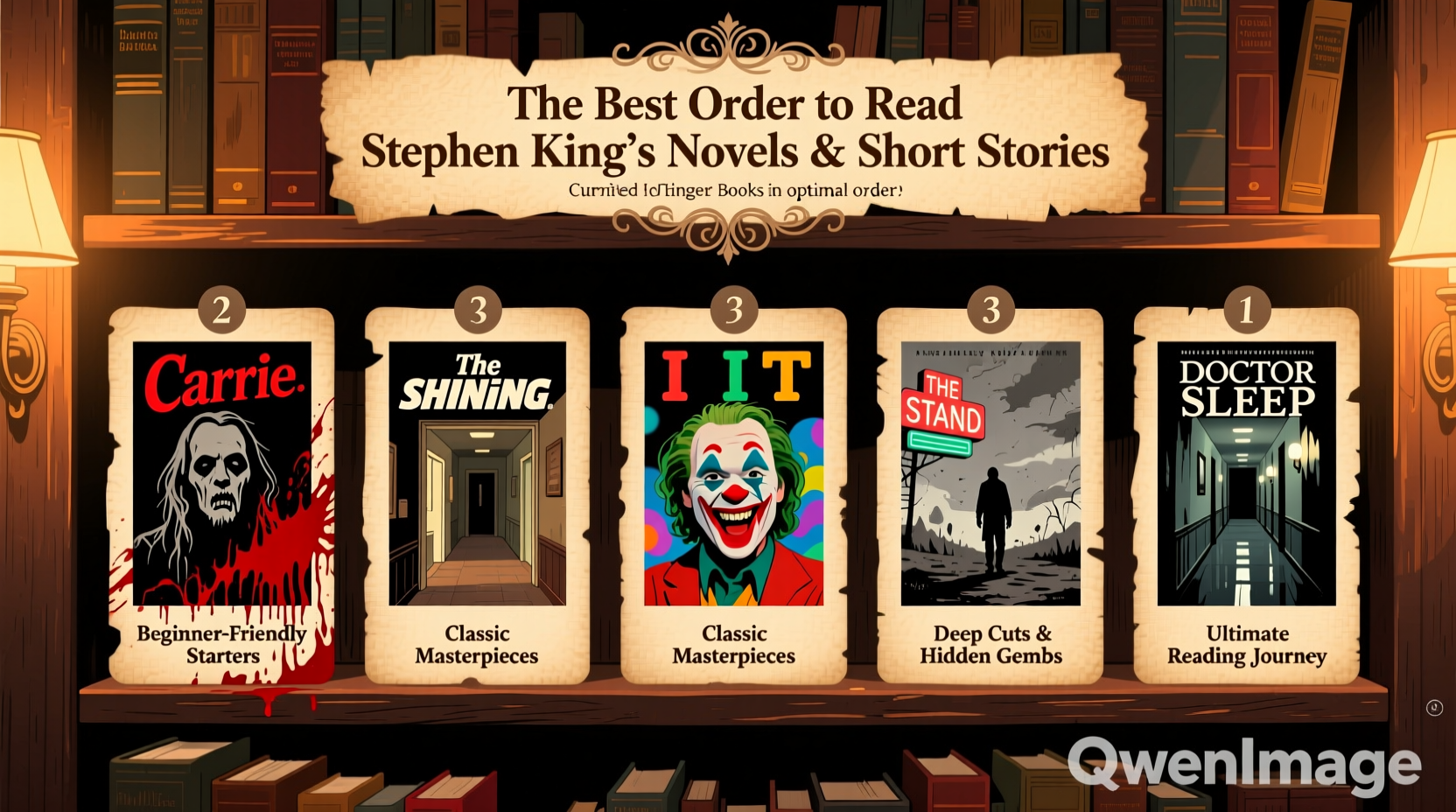
Unlike many authors, Stephen King weaves interconnected threads throughout his work. Characters, locations, and mythologies reappear across decades and genres—from The Shining to It, from Dark Tower to 11/22/63. While each book stands alone, reading them in certain sequences enhances understanding and emotional payoff. Some fans prefer chronological order within the Dark Tower saga; others argue that publication order best captures King’s evolution as a writer.
More importantly, King’s writing style shifts dramatically over time. His early works are raw, visceral, and steeped in supernatural terror. Later novels incorporate more psychological nuance, historical reflection, and character-driven drama. A thoughtful reading path respects this progression while aligning with individual tastes.
“King didn’t just write horror—he reinvented the American novel by blending genre fiction with deep human insight.” — Dr. Rebecca Monroe, Literary Critic & Author of *Modern Gothic*
Three Recommended Reading Paths (Style-Based Picks)
There is no single “correct” way to read Stephen King. Instead, choose a path based on your interests and reading habits. Below are three distinct approaches, each designed for a specific reader profile.
1. The Newcomer’s Gateway: Accessible Entry Points
If you're unfamiliar with King or wary of intense horror, begin with novels that balance suspense with relatable characters and minimal supernatural overload.
- Misery – A psychological thriller about obsession and survival. Minimal gore, maximum tension.
- 11/22/63 – Time travel meets historical fiction. One of King’s most acclaimed non-horror works.
- The Green Mile – Serialized prison drama with supernatural elements. Deeply emotional and morally complex.
- Dolores Claiborne – A woman confesses to murder in a single monologue. Gripping and grounded.
2. The Horror Enthusiast: Dive Into the Darkness
For readers who crave chills and embrace the macabre, these books represent King at his most terrifying and imaginative.
- Salems Lot – Vampires in small-town America. Slow-burn atmosphere and existential dread.
- The Shining – Isolation, madness, and haunted spaces. A masterclass in psychological horror.
- IT – An ancient evil preys on children in Derry, Maine. Epic in scale and emotionally devastating.
- Pet Sematary – Explores grief taken to unnatural extremes. Often cited as King’s most disturbing novel.
- Cujo – A rabid dog becomes a force of nature. Tense, tragic, and relentless.
3. The Compleist’s Journey: A Structured Timeline
For dedicated fans aiming to experience King’s entire universe—including recurring motifs like the Crimson King, Roland Deschain, and Castle Rock—this sequence blends publication history with narrative chronology.
| Phase | Books | Purpose |
|---|---|---|
| Foundations (1974–1986) | Carrie, Salems Lot, The Shining, Cujo, IT | Establish core themes: isolation, fear, childhood trauma |
| Expansion (1987–1999) | Misery, The Dark Half, Dolores Claiborne, The Green Mile | Shift toward psychological depth and moral ambiguity |
| Universe Integration (2000–Present) | Black House, 11/22/63, Later, Fairy Tale | Link older myths with modern storytelling; revisit past characters |
| Dark Tower Arc (Read Mid-Journey) | The Gunslinger through The Dark Tower; insert Wolves of the Calla after IT | Central epic tying together multiple universes |
Step-by-Step Guide: Building Your Personal Stephen King Reading Plan
Follow this six-step process to design a reading journey suited to your pace and preferences.
- Assess your comfort level with horror. If extreme violence or supernatural themes unsettle you, prioritize novels like Mr. Mercedes or Finders Keepers.
- Choose a starting point. Pick one book from the \"Newcomer’s Gateway\" list above.
- Decide on depth. Are you reading for fun, study, or completion? This determines whether you’ll read everything or select key titles.
- Incorporate short stories. Collections like Night Shift and Everything's Eventual offer bite-sized entries into King’s imagination.
- Time your reads. Space out dense books (IT, Under the Dome) with lighter ones (Lisey’s Story, Gerald’s Game).
- Track connections. Keep notes on recurring places (Derry, Castle Rock) and symbols (the number 19, the Color Man).
Checklist: Your Stephen King Reading Toolkit
- ☐ Determine your preferred genre blend (horror, mystery, fantasy, realism)
- ☐ Select an entry-level novel from your chosen path
- ☐ Set a realistic reading goal (e.g., 2–3 King books per year)
- ☐ Read at least one short story collection to appreciate King’s range
- ☐ Explore adaptations only after finishing the source material
- ☐ Join a fan community or book club for deeper discussion
Mini Case Study: How Sarah Built Her King Library Over Three Years
Sarah, a high school English teacher, wanted to explore King but had avoided him due to his horror reputation. She started with The Green Mile because of its film adaptation. Moved by its humanity, she then tried Misery, which surprised her with its tight pacing and character study. Over the next year, she worked through Dolores Claiborne and 11/22/63, gradually building confidence. Only then did she tackle IT—a 1,100-page commitment she completed during summer break. By year three, she was reading Night Shift aloud to her literature class, using stories like “The Lawnmower Man” to teach symbolism. Today, she recommends starting with King’s quieter, character-rich works before confronting the full weight of his darker visions.
Do’s and Don’ts: Common Pitfalls in Reading Stephen King
| Do | Don't |
|---|---|
| Start with accessible standalones like Misery or The Dead Zone | Begin with The Stand or IT unless you’re prepared for long reads |
| Read The Dark Tower series—but not first. Begin with Book IV (Wizard and Glass) if overwhelmed | Treat the Dark Tower books as purely fantasy; they require knowledge of other King works |
| Use audiobooks narrated by King himself or actors like Craig Wasson | Watch movie adaptations before reading—many diverge significantly |
| Take breaks between heavy novels to avoid burnout | Force yourself through a book you dislike; King’s range means alternatives abound |
FAQ
Should I read the Dark Tower series in publication or chronological order?
Chronological order follows internal timeline logic, but publication order preserves King’s evolving voice. For first-time readers, start with The Gunslinger but expect sparse prose. Consider reading Books 3–5 first for stronger narrative momentum, then backtracking.
Are Stephen King’s newer books as good as his classics?
Yes—while the 1970s–80s output is legendary, recent works like 11/22/63, The Institute, and Fairy Tale demonstrate refined craft and mature themes. Many critics regard 11/22/63 as one of his finest novels.
Can I skip the violent scenes if I’m sensitive?
Some books contain graphic content, but King often uses it to explore deeper truths about fear and society. If needed, preview summaries online or opt for less intense titles like Lisey’s Story or Full Dark, No Stars (which focuses on moral dilemmas rather than gore).
Final Thoughts: Make the Journey Your Own
Reading Stephen King isn’t just about scares—it’s about witnessing the evolution of a storyteller who transformed pulp horror into profound explorations of good, evil, memory, and redemption. Whether you read ten books or all one hundred, what matters is engagement, curiosity, and personal resonance. There’s no wrong way to experience his work as long as you’re reading with intention.




 浙公网安备
33010002000092号
浙公网安备
33010002000092号 浙B2-20120091-4
Comments
No comments yet. Why don't you start the discussion?