
Walk into any handbag boutique or scroll through a luxury fashion site, and you’ll likely see two types of accessories vying for your attention: handbag charms and purse organizers. One dangles from the zipper with flair; the other sits quietly inside, dividing your lipstick from your keys. But do you need both? Or is one enough? With limited space and budget, it’s worth asking whether these accessories serve overlapping purposes—or if they fulfill entirely different roles in your daily carry.
The answer isn’t as simple as “yes” or “no.” It depends on your lifestyle, bag usage, and personal priorities—whether you value aesthetics or organization more. Let’s explore what each item offers, how they differ, and when you might benefit from owning both.
What Is a Handbag Charm—and Why Do People Use Them?
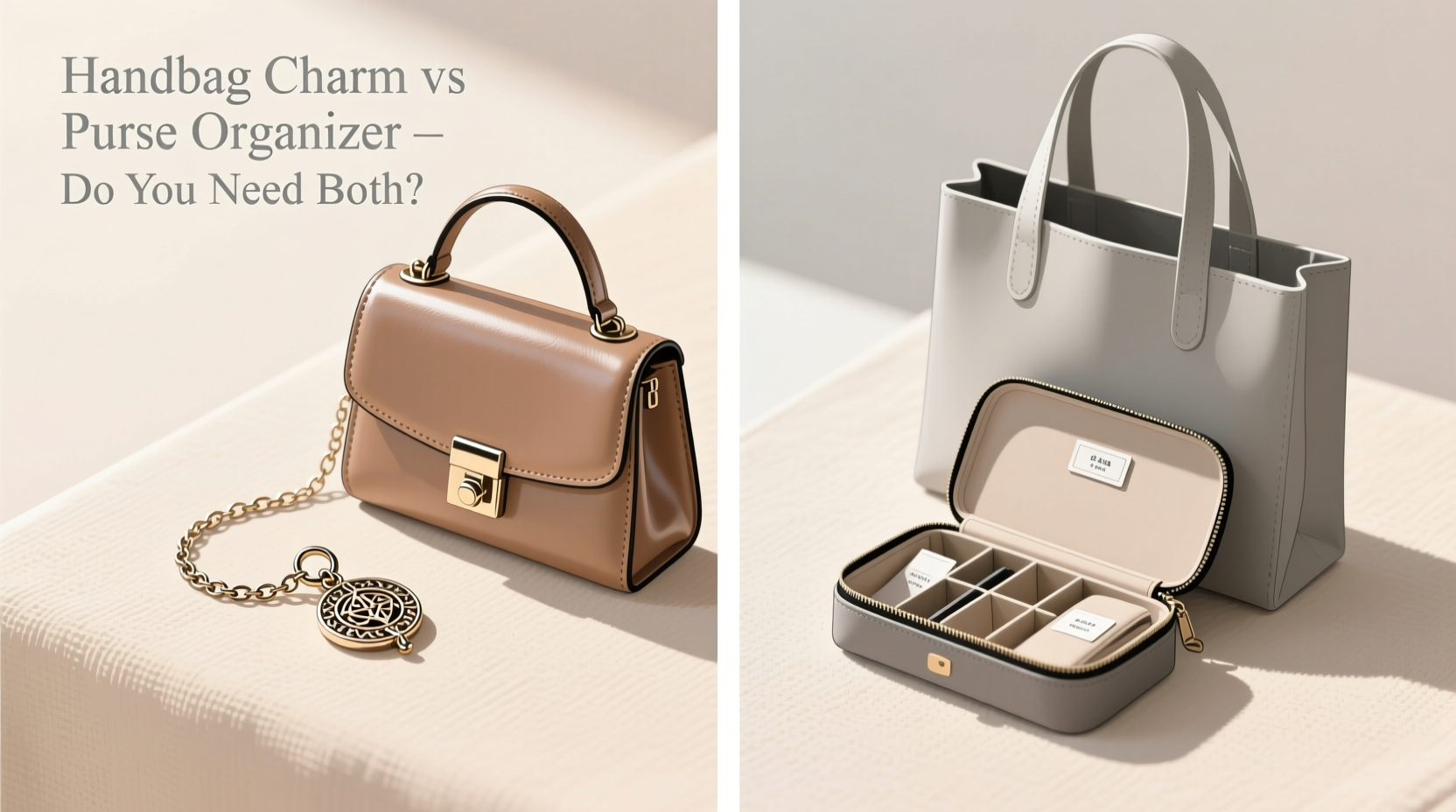
A handbag charm is a decorative accessory that attaches to the exterior of a bag, typically via a clip, chain, or ring connected to a zipper pull. These come in countless designs: branded logos, whimsical shapes like stars or animals, seasonal motifs, or even personalized initials. While primarily aesthetic, charms also serve subtle functional roles.
For some, a charm acts as a signature touch—a way to personalize an otherwise mass-produced bag. For others, it’s about visibility: a bright or dangling charm makes a bag easier to spot in a crowded coatroom or under a café table. Some high-end brands now design charms specifically to deter theft by making bags instantly recognizable.
Purse Organizers: The Hidden Workhorse of Bag Management
In contrast, a purse organizer is an internal insert designed to maximize space and order within your handbag. Usually made of nylon, felt, or vegan leather, these structured compartments fit snugly inside tote bags, satchels, or shoulder bags. They feature pockets for phones, wallets, pens, makeup, and even reusable shopping bags.
Unlike charms, organizers are all about function. They prevent items from sinking to the bottom of your bag, reduce clutter, and make cleaning easier—especially important for fabric-lined or suede interiors. Frequent travelers, working professionals, and parents often rely on them to maintain sanity amid daily chaos.
One common misconception is that organizers only work in large bags. In reality, many are customizable or foldable, fitting into medium-sized crossbodies or even clutch-style bags with removable inserts.
Comparing Purpose, Value, and Practicality
To understand whether you need one or both, consider their core functions:
| Feature | Handbag Charm | Purse Organizer |
|---|---|---|
| Primary Purpose | Style, personalization, visibility | Organization, protection, efficiency |
| Visibility | External (seen by others) | Internal (private use) |
| Lifespan Impact | Minimal (cosmetic only) | High (reduces wear, prevents spills) |
| Cost Range | $15–$300+ (luxury brand charms) | $20–$100 |
| Maintenance Benefit | None | Protects lining, simplifies cleaning |
| Portability | Transfers easily between bags | Bulkier; usually dedicated per bag |
This comparison shows that while both are accessories, they operate in completely different realms—one emotional, the other practical. A charm enhances how you feel about your bag; an organizer improves how well it works for you.
“Most people overestimate the importance of looking put-together and underestimate the stress of digging through a disorganized bag. An organizer pays for itself in saved time and reduced frustration.” — Lena Torres, Productivity Consultant & Lifestyle Designer
Real-Life Scenario: Two Women, Two Choices
Case Study: Sarah, Marketing Executive
Sarah carries a structured leather tote daily. She values professionalism but hates losing her phone or smudging her lipstick. She uses a custom-fit purse organizer with labeled sections. Recently, she added a minimalist gold charm shaped like a compass—her personal symbol for direction and clarity. For her, the organizer solves daily problems; the charm adds meaning without clutter.
Case Study: Mia, College Student
Mia uses a canvas backpack-style purse. She loves bold fashion statements and owns six colorful charms she rotates weekly. Her bag has no organizer, so her snacks, books, and pens mix freely. She admits she spends extra time searching for items—but says, “My bag reflects my mood. If I lose my keys once a week, it’s worth it.”
These examples illustrate that the choice isn’t universal. It hinges on individual needs and tolerance for disorder versus desire for self-expression.
When You Might Need Both—And When One Suffices
Here’s a step-by-step guide to help you decide what fits your life:
- Assess Your Daily Bag Use: Do you carry essentials only, or everything including gym clothes and groceries? High-volume users benefit most from organizers.
- Evaluate Bag Material and Structure: Soft, unstructured bags collapse without support—ideal for organizers. Structured bags may not need one.
- Determine Your Style Priority: If you love rotating looks or collect designer pieces, a charm can elevate even a basic bag.
- Consider Security Needs: If you frequently leave your bag unattended (e.g., at cafes), a unique charm helps identify it quickly and may deter theft.
- Test Without Accessories First: Try using your bag bare for a week. Notice pain points: constant digging? Scratches inside? That signals a need for an organizer. Feeling anonymous or bored with your bag? A charm could help.
Frequently Asked Questions
Can a handbag charm damage my bag?
Possibly. Heavy or sharp-edged charms can strain zippers or scratch leather over time. Opt for lightweight, smooth designs and avoid swinging them aggressively. Attach them to D-rings instead of zippers when possible to reduce mechanical stress.
Do purse organizers fit all bags?
No—not universally. Measure your bag’s interior before purchasing. Some organizers are brand-specific (e.g., designed for a Longchamp Le Pliage). Look for adjustable or modular versions if you switch bags often.
Are charms worth the price on luxury bags?
Only if they bring you joy or resale value. Chanel or Gucci charms can cost hundreds and become collectibles, but for most, a $25 artisan charm offers the same stylistic lift. Ask yourself: Am I buying function, investment, or emotion?
Action Checklist: Choosing What’s Right for You
- ✅ Audit your current bag: List what you carry daily
- ✅ Identify frustrations: Lost items? Messy interior?
- ✅ Decide your priority: Function first or style first?
- ✅ Try a purse organizer if you carry more than five items regularly
- ✅ Add a charm only after solving organizational issues—if desired
- ✅ Rotate charms seasonally to refresh look without new bags
- ✅ Remove charms during travel or rainy weather to protect hardware
Final Thoughts: Balance Beauty and Utility
You don’t need both a handbag charm and a purse organizer—but having both isn’t frivolous either. The key is intentionality. A charm should enhance your experience, not distract from it. An organizer should simplify your day, not complicate your routine.
Think of it this way: the organizer is your behind-the-scenes stage manager, ensuring everything runs smoothly. The charm is the spotlight—drawing attention, expressing identity, adding delight. Together, they create a handbag that’s both efficient and expressive.
If you’re someone who values both practicality and personality, there’s room for both. But if you must choose, let your lifestyle lead the decision. Efficiency first, elegance second—because no amount of sparkle compensates for missing your train ticket at the platform.




 浙公网安备
33010002000092号
浙公网安备
33010002000092号 浙B2-20120091-4
Comments
No comments yet. Why don't you start the discussion?