
For millions of gamers, portability is just as important as performance. Whether you're commuting, traveling, or simply lounging in the backyard, playing games on the go demands one critical resource: battery life. As handheld consoles like the Nintendo Switch, Steam Deck, and upcoming Analogue Pocket gain popularity, many are asking whether dedicated gaming devices outlast smartphones when it comes to sustained gameplay. The answer isn’t always straightforward—battery life depends on hardware efficiency, software optimization, screen brightness, and user habits. This article dives deep into how handheld game consoles stack up against mobile gaming devices in terms of battery longevity, offering practical insights for players who value uninterrupted playtime.
Battery Performance: A Side-by-Side Reality Check
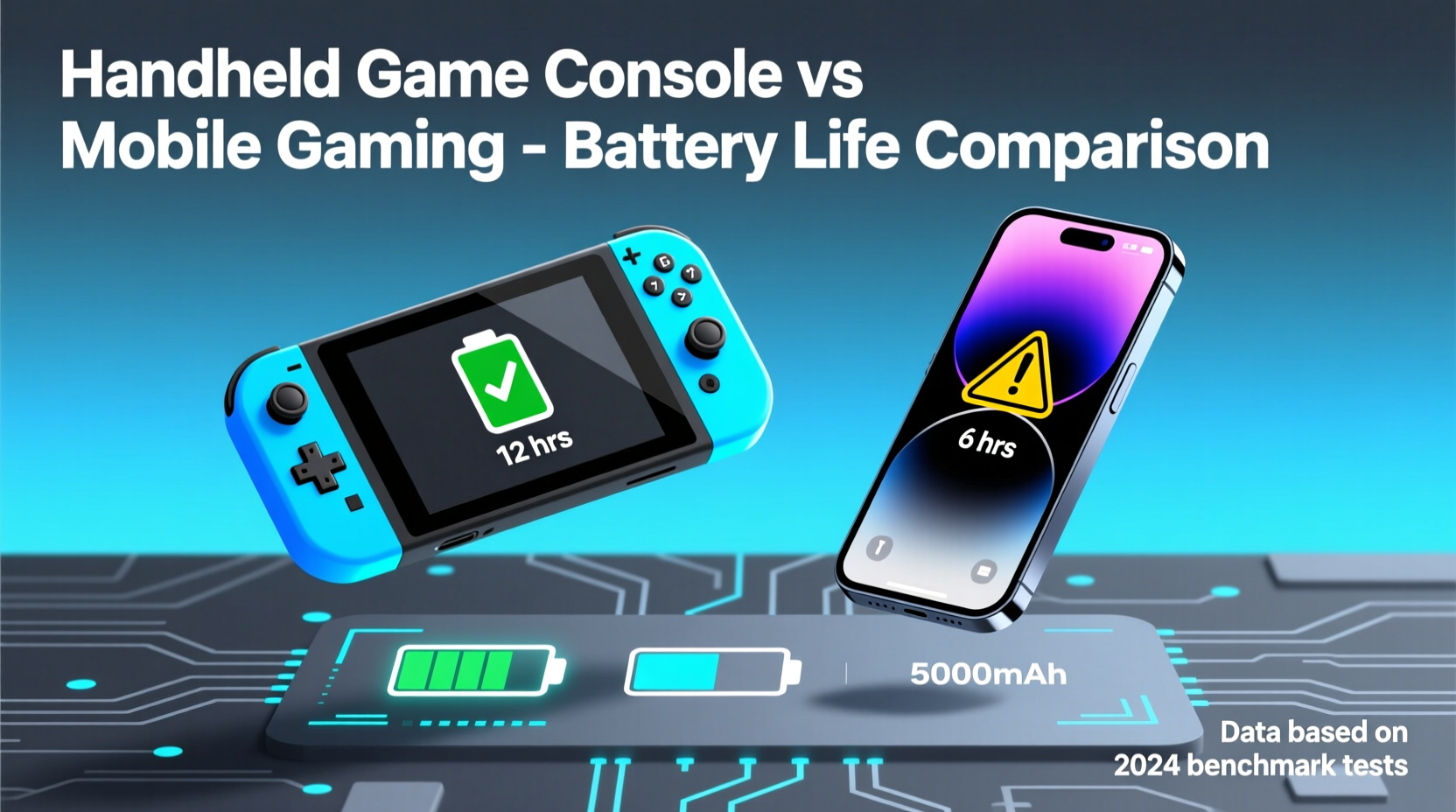
The most obvious factor in comparing battery life is raw endurance under typical use. However, “typical” varies drastically between a device built solely for gaming and one designed for calls, messaging, browsing, and social media—with gaming as just one function.
Modern smartphones typically feature batteries ranging from 3,000mAh to 5,000mAh. While that sounds substantial, high-resolution OLED screens, powerful processors, background apps, and network connectivity drain power quickly during intensive tasks like gaming. On average, playing graphically demanding titles such as Genshin Impact or PUBG Mobile can deplete a flagship phone’s battery in 2.5 to 4 hours, even with optimized settings.
In contrast, handheld consoles are engineered specifically for efficient gaming. Take the original Nintendo Switch: its battery life ranges from 4.5 to 9 hours depending on the game. Less intensive titles like Animal Crossing: New Horizons allow nearly nine hours of continuous play, while more demanding games like The Legend of Zelda: Breath of the Wild reduce that to around five. The OLED model improved this slightly with a larger battery and more efficient display technology.
The Valve Steam Deck, despite running full PC games, manages about 2 to 4 hours on AAA titles at default settings. However, lowering frame rate caps and reducing resolution through performance scaling can extend that to 6+ hours—an option not commonly available on mobile platforms without third-party tools or root access.
Hardware Efficiency and Power Management
One reason handheld consoles often achieve longer effective battery life than smartphones lies in their specialized architecture. Unlike phones, which run multiple background services (email sync, location tracking, push notifications), gaming handhelds operate in a focused environment with minimal overhead.
Dedicated consoles use system-on-a-chip (SoC) designs tailored for consistent thermal and power output. For example, the NVIDIA Tegra X1 in early Switch models was modified to balance performance and energy consumption within strict thermal limits. Later revisions used more efficient versions of the same chip, improving battery life without changing the form factor.
Smartphones, meanwhile, must handle fluctuating workloads. Even when launching a game, Android and iOS continue syncing data, updating widgets, and managing sensors—all of which consume power. While modern OSes have improved background task management, they still can't match the streamlined efficiency of a closed gaming platform.
Additionally, handheld consoles benefit from fixed screen resolutions and refresh rates. Most mobile games render dynamically across various screen sizes and densities, forcing the GPU to work harder. Consoles know exactly what resolution and aspect ratio they’re targeting, allowing developers and operating systems to optimize rendering pipelines accordingly.
“Battery life isn’t just about capacity—it’s about how efficiently every component uses power. Purpose-built devices will almost always win in focused tasks.” — Dr. Lena Patel, Embedded Systems Engineer at GameTech Labs
Comparative Battery Life Table: Real-World Usage
| Device | Battery Capacity | Avg. Gaming Duration (Demanding Titles) | Avg. Gaming Duration (Light Titles) | Charging Speed |
|---|---|---|---|---|
| iPhone 15 Pro Max | 4,422 mAh | 3–4 hours | 6–7 hours | 27W USB-C PD |
| Samsung Galaxy S24 Ultra | 5,000 mAh | 3.5–4.5 hours | 7–8 hours | 45W Fast Charging |
| Nintendo Switch (OLED Model) | 4,600 mAh | 4.5–6 hours | 8–9 hours | USB-C PD (up to 39W) |
| Steam Deck (LCD Model) | 40Wh (≈7,000 mAh @ 5.7V) | 2–4 hours | 5–7 hours | 45W USB-C PD |
| AYANEO Geek 1S | 50.25Wh | 1.5–3 hours | 4–6 hours | 65W Fast Charging |
Note: Battery durations reflect real-world testing with Wi-Fi enabled, medium brightness, and no external accessories. AAA or high-intensity games reduce lifespan significantly on all devices.
User Behavior and Optimization Strategies
No matter the device, user behavior plays a decisive role in actual battery longevity. Two people using the same phone or console may experience vastly different playtimes based on personal settings and habits.
Here are proven ways to maximize battery life across both platforms:
- Lower screen brightness: Reducing brightness from 100% to 50% can extend battery life by 20–40%, especially on OLED displays.
- Limit background processes: Close unused apps and disable auto-sync features before starting long gaming sessions.
- Use airplane mode when possible: Disabling cellular, Wi-Fi, and Bluetooth saves considerable power, particularly on phones.
- Cap frame rates: On devices like the Steam Deck, limiting FPS to 30 or 40 stabilizes power draw and reduces heat generation.
- Disable haptic feedback: Vibration motors consume surprising amounts of energy over time.
Mini Case Study: Commuter Gamer Comparison
Consider Alex, a daily commuter spending two hours each way on public transit. He wants to play during his round-trip journey but only charges his device once per day.
Using an iPhone 15 Pro Max, Alex plays Honkai: Star Rail with default settings—high graphics, full brightness, and active notifications. After 3.5 hours, his battery drops to 15%. By the end of the week, he’s developed a habit of carrying a power bank.
After switching to a Nintendo Switch OLED, Alex notices a change. Playing Fire Emblem: Engage under similar conditions (same duration, ambient light), the console lasts the full 4-hour commute with 20% battery remaining. No midday charging needed. The difference? Optimized software, consistent rendering load, and fewer background drains.
This real-world scenario illustrates how purpose-built hardware delivers not just longer battery life, but greater reliability for extended play sessions.
Step-by-Step Guide to Maximizing Portable Gaming Battery Life
Follow these steps before every extended gaming session to squeeze out maximum playtime:
- Charge fully the night before: Start with 100% to ensure you get the full window of usability.
- Adjust screen brightness: Set to 50% or lower; if outdoors, increase only as needed.
- Enable battery saver mode: On phones, this throttles CPU and limits background activity.
- Turn off unnecessary radios: Disable Bluetooth, NFC, and location services unless required.
- Close background apps: Swipe away any unused applications consuming memory and CPU cycles.
- Use headphones instead of speakers: Audio output via speaker uses more power than wired or Bluetooth headsets.
- Pause downloads and updates: Large background transfers spike network and processor usage.
- Carry a portable charger: Especially for mobile gaming, a compact power bank ensures backup power when outlets aren’t available.
Frequently Asked Questions
Do handheld consoles really last longer than phones for gaming?
Yes, in most cases. Handheld consoles are optimized for sustained gaming loads with minimal background interference. Phones, despite larger batteries in some models, suffer from multitasking overhead and less efficient rendering pipelines, leading to faster discharge during gameplay.
Can I improve my phone’s gaming battery life?
Absolutely. You can extend battery life by lowering screen brightness, enabling battery saver mode, closing background apps, disabling vibrations, and turning off non-essential connectivity features like GPS and Bluetooth. Some games also offer graphics presets that reduce strain on the processor.
Why does the Steam Deck have shorter battery life than the Switch?
The Steam Deck runs full PC-grade games with higher processing demands, including more complex shaders, physics calculations, and audio processing. It uses a much more powerful AMD APU compared to the Switch’s mobile-focused Tegra chip. Greater performance comes at the cost of energy efficiency, though intelligent power management helps mitigate this.
Checklist: Optimize Your Device Before Long Gaming Sessions
- ✅ Charge device to 100%
- ✅ Lower screen brightness to 50% or less
- ✅ Disable Bluetooth, GPS, and NFC
- ✅ Turn off vibration and haptic feedback
- ✅ Close all background apps
- ✅ Enable battery/power-saving mode
- ✅ Use wired headphones or low-power audio
- ✅ Carry a compatible power bank or wall adapter
- ✅ Cap frame rate if supported (e.g., Steam Deck)
- ✅ Avoid direct sunlight to prevent thermal throttling
Final Verdict: Which Offers Better Battery Life?
When evaluating handheld game consoles versus mobile gaming devices purely on battery life during gameplay, dedicated consoles generally come out ahead. Their advantage stems from targeted design: efficient SoCs, predictable software environments, and fewer background distractions. Devices like the Nintendo Switch deliver reliable, multi-hour experiences without requiring constant recharging.
Mobile phones, while increasingly powerful, remain general-purpose tools. Their versatility becomes a liability under sustained gaming loads. Even with large batteries and fast charging, they tend to fall short in total playtime compared to similarly sized handhelds.
That said, context matters. If you primarily play casual games like puzzle apps or turn-based strategy titles, your phone might easily last a full day. But for immersive RPGs, action-adventures, or competitive shooters, a handheld console provides superior stamina and peace of mind.
Ultimately, the best choice depends on your gaming preferences and lifestyle. If you prioritize long, uninterrupted sessions and don’t want to juggle chargers, a handheld console is likely the better investment—not just for gameplay quality, but for lasting power.




 浙公网安备
33010002000092号
浙公网安备
33010002000092号 浙B2-20120091-4
Comments
No comments yet. Why don't you start the discussion?