
In a world of mass production and instant gratification, the humble keychain has quietly evolved from a utilitarian tool into a personal statement. Whether clipped to your bag or jingling in your pocket, it's one of the few accessories you carry every single day. But when choosing between a machine-perfect factory keychain and a slightly uneven handmade version, which is truly better? More importantly—do those subtle flaws in handmade designs add character, or do they signal lower quality?
The answer isn’t binary. It depends on what you value: consistency and affordability, or individuality and craftsmanship. Let’s explore the real differences—and whether those so-called \"imperfections\" in handmade keychains are not just acceptable, but desirable.
The Nature of Imperfection: What Makes Handmade Unique
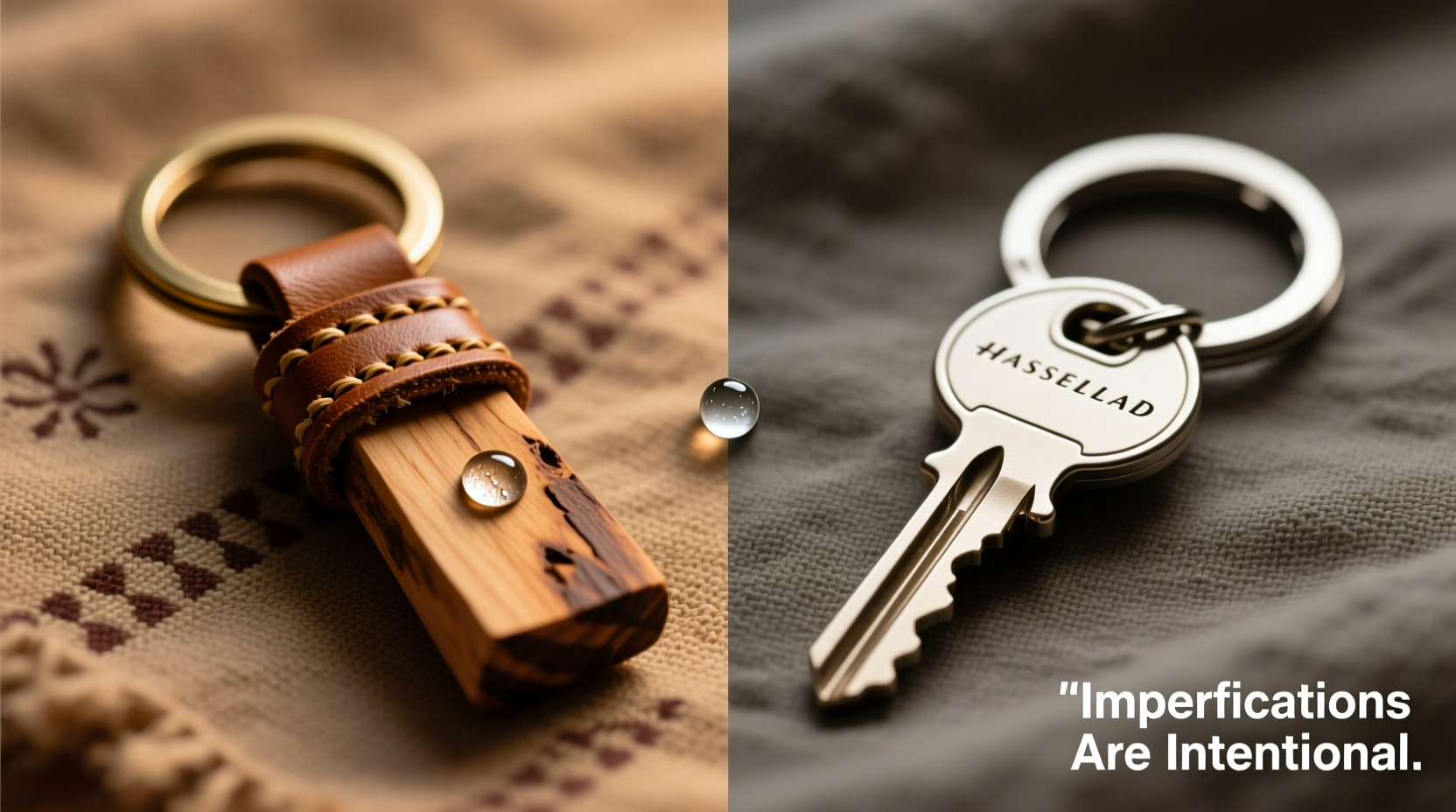
Handmade keychains are crafted by individuals, often using traditional techniques like hand-stamping, resin pouring, leather tooling, or metal casting. Because each piece is shaped, sanded, engraved, or assembled by hand, no two are exactly alike. Slight variations in texture, alignment, color blending, or edge finishing are common—and intentional.
These quirks aren’t defects; they’re evidence of human touch. A slight asymmetry in a stamped letter, a tiny air bubble in a resin charm, or a minor variation in dye absorption on leather all serve as fingerprints of authenticity. In contrast, factory keychains are produced using molds, CNC machines, and automated assembly lines, ensuring uniformity down to the millimeter.
As artisan jeweler Mara Linley puts it:
“Perfection is easy to replicate. Soul is not. The little ‘flaws’ in handmade work are where the story begins.” — Mara Linley, Artisan Metalworker
This emotional resonance is why many consumers willingly pay more for handmade items—not because they expect flawless execution, but because they seek meaning behind the object.
Quality Comparison: Durability and Materials
While aesthetics play a major role, durability matters just as much. After all, a keychain endures daily wear—jostling in pockets, exposure to moisture, drops on pavement. So how do handmade and factory versions stack up?
Factory-made keychains typically use injection-molded plastic, die-cast zinc alloys, or stamped steel. These materials are chosen for cost-efficiency and scalability. While durable in bulk, they often rely on surface coatings (like chrome plating or paint) that can chip over time. Once compromised, the base metal may corrode, especially with frequent hand contact.
Conversely, many handmade artisans prioritize material integrity. A leather keychain might be cut from full-grain vegetable-tanned hide, stitched with waxed thread, and burnished for smooth edges. A metal piece could be forged from solid brass or copper, then polished and sealed by hand. These materials age gracefully, developing a patina rather than degrading.
Handmade vs Factory Keychains: A Direct Comparison
| Feature | Handmade Keychains | Factory Keychains |
|---|---|---|
| Uniqueness | High – Each piece is one-of-a-kind | Low – Mass-produced and identical |
| Materials | Natural, high-quality (leather, brass, wood) | Synthetic or low-grade metals (plastic, zinc alloy) |
| Durability | Generally higher with proper care | Varies; coatings prone to chipping |
| Price | Higher ($15–$50+) | Lower ($2–$10) |
| Production Time | Days to weeks per batch | Seconds per unit |
| Environmental Impact | Often lower; small-batch, sustainable sourcing | Higher; energy-intensive, plastic waste |
A Real Example: The Leather Key Fob That Lasted Five Years
Take the case of Daniel R., a graphic designer from Portland who bought a handmade leather key fob at a local craft fair. Crafted from 3mm bridle leather with hand-stitched saddle stitching and a solid brass snap, it cost $32—nearly triple the price of a similar-looking factory item.
Five years later, the keychain remains in daily use. The leather has darkened beautifully, the brass developed a warm patina, and the stitching shows no signs of unraveling. “It feels more like an heirloom now,” Daniel says. “I’ve replaced my wallet twice, but this thing just keeps getting better.”
In contrast, he recalls a zinc-alloy keychain he bought online for $4. Within eight months, the chrome plating flaked off, revealing rust underneath. “It looked cheap fast,” he admits. “But I didn’t think twice until I saw how different a well-made one could last.”
This isn’t an isolated experience. Many users report that while handmade keychains require slightly more mindful care, their longevity and aesthetic evolution make them more satisfying over time.
When Factory Keychains Make Sense
That said, factory-made keychains have legitimate advantages. They’re ideal when you need large quantities—such as promotional giveaways, event favors, or team gifts. Their consistent sizing ensures compatibility with automated packaging, and their low unit cost allows broader distribution.
Additionally, modern manufacturing has improved significantly. Some factory products now use PVD coating (physical vapor deposition) for scratch-resistant finishes, or aerospace-grade aluminum for lightweight strength. For users who prioritize function over form, these options deliver reliable performance without premium pricing.
However, even high-end factory goods lack customization depth. Engraving is limited to pre-programmed fonts, and design changes require expensive mold retooling. Handmade artisans, on the other hand, can personalize initials, incorporate meaningful symbols, or adjust dimensions to fit specific needs—all without extra tooling costs.
How to Choose: A Practical Checklist
Still unsure which type suits your lifestyle? Use this checklist to guide your decision:
- ✅ Do you value uniqueness and storytelling behind your accessories?
- ✅ Are you willing to invest more upfront for long-term durability?
- ✅ Do you prefer natural materials that age gracefully?
- ✅ Will this be a gift with sentimental value?
- ✅ Can you care for it occasionally (e.g., conditioning leather, polishing metal)?
If you answered “yes” to most of these, a handmade keychain is likely worth the imperfections. If you need dozens of identical units, want the lowest price, or don’t mind replacing it every year, factory-made may be the pragmatic choice.
Frequently Asked Questions
Are handmade keychains really more durable?
Not automatically—but when made with quality materials and proper techniques (like saddle stitching or solid metal construction), they often outperform factory equivalents. The key is the maker’s skill and material selection, not just the “handmade” label.
Why do handmade keychains cost so much more?
Pricing reflects labor, material quality, and small-scale production. A single keychain may take 20–30 minutes to craft by hand, versus seconds in a factory. Artisans also absorb overhead like studio space, tools, and shipping supplies, which affects final pricing.
Can I customize a factory keychain?
Limited customization is possible (e.g., logo engraving), but options are constrained by molds and machinery. True personalization—like unique shapes, mixed materials, or hand-lettering—is usually only feasible through handmade methods.
Conclusion: Embrace the Quirks
The imperfections in handmade keychains aren’t flaws to overlook—they’re markers of authenticity, effort, and intention. While factory-made versions offer convenience and consistency, they rarely inspire attachment. A handmade keychain, with its subtle asymmetries and organic textures, becomes part of your daily ritual, evolving alongside you.
In a culture saturated with disposable goods, choosing something imperfect yet enduring is a quiet act of resistance. It says you value craftsmanship over convenience, character over conformity. And yes—that crooked stamp, the faint tool mark, the uneven polish—they’re not just worth it. They’re the reason the piece matters.




 浙公网安备
33010002000092号
浙公网安备
33010002000092号 浙B2-20120091-4
Comments
No comments yet. Why don't you start the discussion?