
In an age where technology reshapes every craft, the world of charm-making stands at a quiet crossroads. Once reserved for artisans with steady hands and patient hearts, the creation of tiny wearable art—be it for jewelry, keychains, or collectibles—is now increasingly shared with machines. 3D printing has introduced precision, scalability, and speed to a domain long defined by individuality and imperfection. But as sleek polymers emerge from digital blueprints, a deeper question lingers: can a machine-made charm ever carry the soul of one shaped by human hands?
This isn’t just about aesthetics or production time. It’s about value, meaning, and the emotional weight we assign to objects that adorn our lives. Whether you're a collector, crafter, or curious observer, understanding the nuances between handmade and 3D printed charms reveals more than a manufacturing divide—it reflects how we define authenticity in a digital era.
The Essence of Handmade Charms
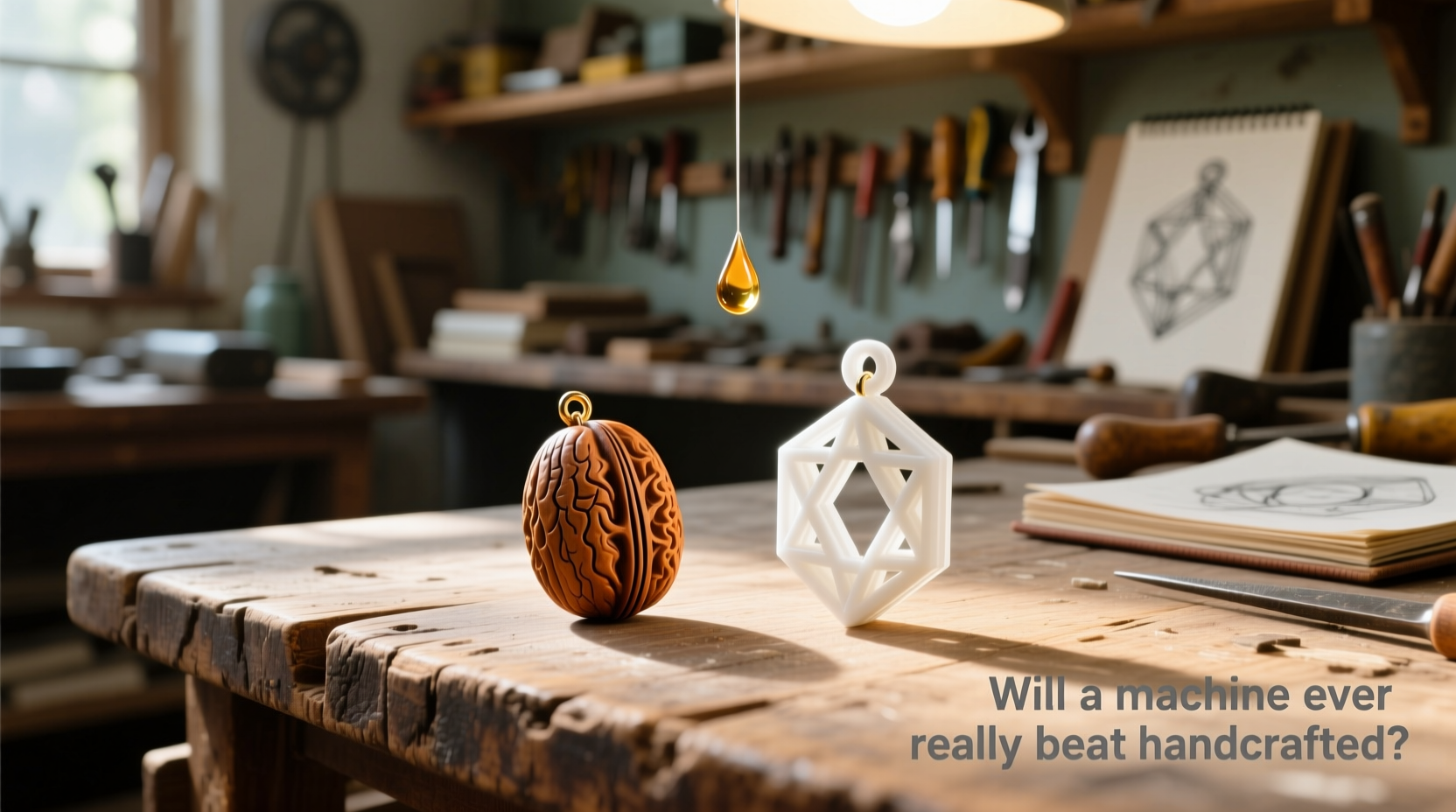
Handmade charms are born from direct human touch. Each piece is shaped through techniques like metal stamping, clay sculpting, resin casting, or wire wrapping. These methods demand skill, time, and repetition—but also allow for subtle variations that become part of the charm’s character. A slight asymmetry in a stamped letter, a faint fingerprint in polymer clay, or the organic flow of poured resin all contribute to a sense of presence and intention.
Artisans often describe their process as meditative. The rhythm of shaping, filing, and finishing creates not just a product, but a narrative. When someone buys a handmade charm, they’re often purchasing more than an object—they’re investing in a story, a moment of creativity captured in miniature form.
“Every handmade charm holds a breath of its maker. That invisible thread between creator and wearer is something no algorithm can replicate.” — Lila Torres, independent jewelry artist with over 15 years of experience
The Rise of 3D Printed Charms
3D printing entered mainstream charm production around the early 2010s, offering unprecedented design flexibility. Using CAD software, creators can model intricate shapes—geometric patterns, fantasy creatures, architectural miniatures—that would be nearly impossible to carve by hand. Once designed, these models can be printed repeatedly with near-identical consistency using materials like PLA, ABS, or even biodegradable resins.
The advantages are clear: faster turnaround, lower labor costs, and the ability to produce limited runs without molds or tooling. For small businesses and hobbyists alike, 3D printing democratizes access to complex design. Customization becomes scalable—one shop can offer hundreds of personalized options without increasing production complexity.
Yet despite technological sophistication, 3D printed charms often lack tactile warmth. Layer lines may remain visible even after sanding. Colors are typically applied post-print, which can result in uneven finishes. And while detail is high, the texture tends toward uniformity—a hallmark of machine precision, but also a departure from organic variance.
Comparing Craft: A Practical Breakdown
| Aspect | Handmade Charms | 3D Printed Charms |
|---|---|---|
| Production Time | Hours to days per batch; highly variable | Minutes to hours per unit; consistent |
| Material Options | Clay, metal, wood, resin, fabric | PLA, ABS, resin, nylon (limited natural textures) |
| Design Flexibility | Moderate; constrained by manual skill | High; supports complex geometries |
| Uniqueness | Each piece has minor variations | Nearly identical across units |
| Emotional Value | Often high; tied to artist and process | Generally functional or aesthetic |
| Sustainability | Often low-waste, natural materials | Plastic-based; recycling challenges |
A Real Example: The Cat Collector’s Dilemma
Sophie, a longtime charm collector from Portland, began assembling a series of feline-themed pendants for her daughter’s birthday gift. She found two options online: a set of five polymer clay cats, each individually sculpted and painted by an Etsy artist, priced at $45; and a similar-looking set of 3D printed resin cats, available for $22 with free shipping.
She ordered both to compare. The printed set arrived first—perfectly symmetrical, glossy, and lightweight. The details were sharp, especially around the ears and eyes. But when held side by side with the handmade versions, the difference was palpable. The clay cats had slightly tilted heads, uneven whisker lines, and a soft matte finish that felt warm to the touch. One even had a tiny smudge of blue paint on its paw—an “imperfection” Sophie later learned was intentional, symbolizing a real cat’s playful messiness.
She chose the handmade set for the gift. “They feel alive,” she said. “The other ones look like toys. These feel like little guardians.”
When Machines Complement, Not Replace
The most promising developments in charm-making aren’t about choosing one method over the other, but combining them. Some artisans use 3D printing to create master molds, then cast pieces in resin or metal, blending digital precision with traditional finishing. Others design base components digitally but hand-paint or embellish each unit, preserving uniqueness while improving efficiency.
This hybrid approach respects craftsmanship while embracing innovation. As tools evolve, the boundary between “machine-made” and “handmade” blurs—not into homogenization, but into new forms of expression. A 3D printer doesn’t replace the artist; it becomes another tool in their studio, like a kiln or soldering iron.
Checklist: Choosing the Right Charm for Your Needs
- Determine your purpose: Is it a sentimental gift, fashion accessory, or collectible?
- Assess design needs: Do you require intricate geometry or organic texture?
- Consider budget: Handmade often costs more due to labor; 3D printed offers affordability.
- Evaluate durability: Will the charm face daily wear? Metal and resin outlast thin plastic prints.
- Support intent: Choose handmade to support individual artists; choose printed for accessibility and reproducibility.
Frequently Asked Questions
Are 3D printed charms durable enough for everyday wear?
It depends on the material and coating. Basic PLA prints are fragile and degrade under UV light and moisture. However, resin-coated or nylon-based prints can be quite durable. For longevity, look for UV-resistant finishes and avoid prolonged exposure to water or sunlight.
Can handmade charms be mass-produced?
True handmade items resist true mass production due to the labor involved. However, some artisans use semi-manufactured techniques—like pre-made molds or stamping dies—to increase output while maintaining quality. These are often labeled “small-batch” rather than fully custom.
Is one type more eco-friendly than the other?
Handmade charms using natural materials (clay, wood, recycled metal) generally have a lower environmental impact. 3D printing produces plastic waste and requires energy-intensive printers. However, some sustainable filaments (like PLA, derived from cornstarch) are biodegradable under industrial conditions, offering a greener alternative if properly disposed of.
Conclusion: The Heart Behind the Object
Will a machine ever truly beat handcrafted? In terms of speed, consistency, and geometric complexity—yes, in certain contexts. But when we speak of beating in the sense of surpassing in emotional resonance, cultural value, and human connection, the answer remains no. A 3D printer can replicate form, but not intention. It can layer plastic, but not memory.
The future of charm-making doesn’t lie in replacing the artisan with automation, but in expanding what’s possible when both coexist. There will always be room for the imperfect, the unique, the hand-touched. And there will always be value in objects that carry not just design, but devotion.




 浙公网安备
33010002000092号
浙公网安备
33010002000092号 浙B2-20120091-4
Comments
No comments yet. Why don't you start the discussion?