
When shopping for bracelets, consumers face a growing dilemma: choose an affordable, uniform piece from a large manufacturer or invest in a pricier, handcrafted design. The “handmade” label carries emotional weight—suggesting authenticity, artistry, and care. But does it always deliver on that promise? Or is it simply a marketing tactic inflating prices without proportional value? This article dissects the real differences between handmade and mass-produced bracelets, evaluates what you’re actually paying for, and helps you make informed decisions based on quality, ethics, and personal values.
The True Meaning of “Handmade”
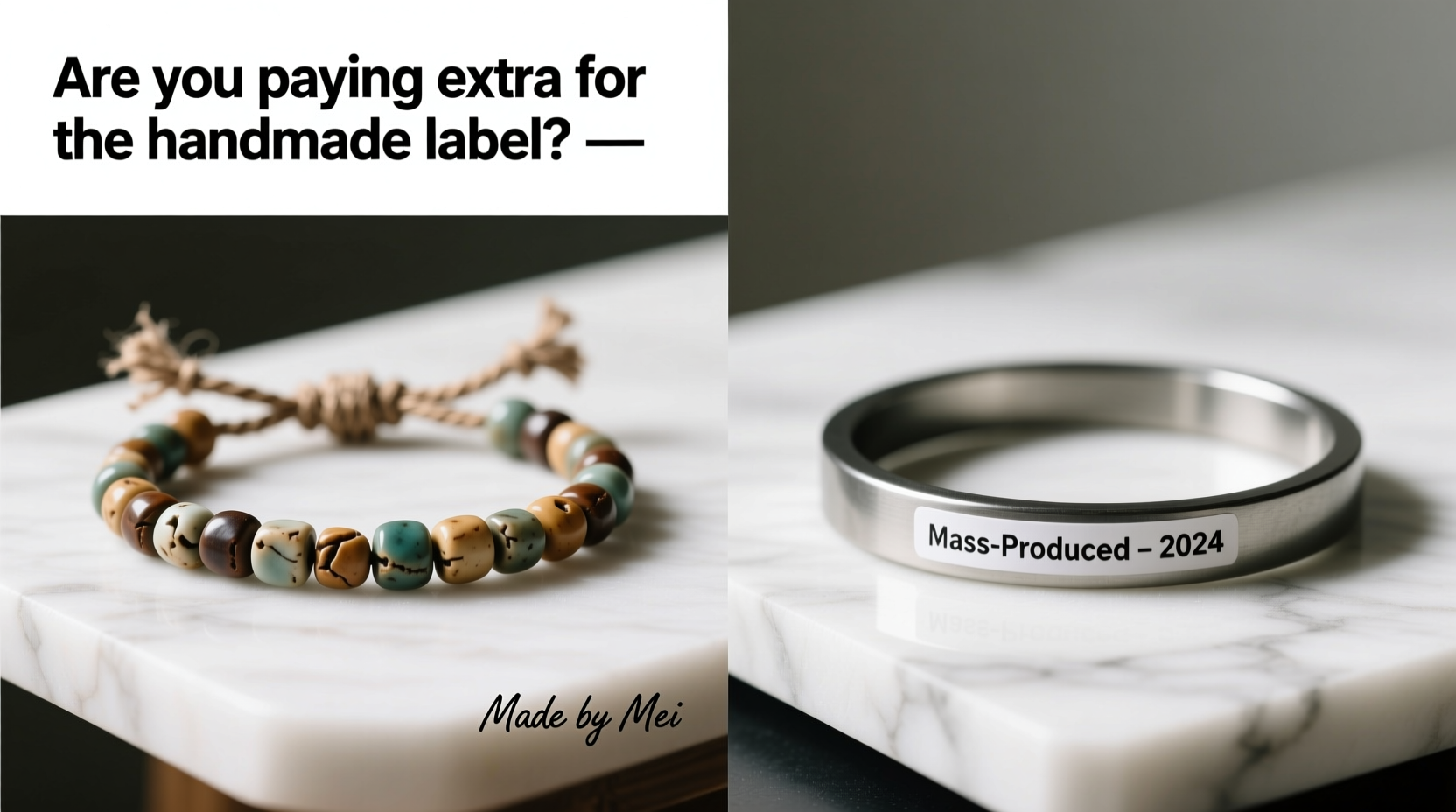
The term “handmade” lacks a universal legal definition, allowing brands to interpret it loosely. Some sellers label items as handmade even if they were partially machine-assisted or assembled in bulk overseas. Genuine handmade jewelry typically involves individual crafting by an artisan—from design to finishing touches—using traditional tools and techniques. Each piece bears subtle variations, reflecting human touch rather than robotic precision.
In contrast, mass-produced bracelets are created using automated machinery in factories, often with minimal human intervention beyond oversight. These pieces prioritize consistency, speed, and cost-efficiency. While they can be durable and stylish, they rarely carry the uniqueness associated with artisan work.
“Handmade doesn’t automatically mean better, but it should mean intentional. When done right, every decision—from material choice to finishing—is made with care.” — Lila Chen, Independent Jewelry Designer
Quality Comparison: Craftsmanship and Materials
One common assumption is that handmade equals higher quality. While this can be true, it’s not guaranteed. Quality depends more on materials, skill level, and attention to detail than production method alone.
Many handmade bracelet makers source ethically mined stones, recycled metals, or sustainable materials like wood and plant-based resins. Because their output is limited, artisans often have time to inspect each component closely. Soldering, stone setting, and polishing are done meticulously, reducing flaws.
On the other hand, mass producers may use lower-grade alloys, synthetic gemstones, or plating over base metals to cut costs. However, reputable brands still maintain high standards through strict quality control. For example, some Italian manufacturers produce stainless steel bracelets at scale with excellent durability and corrosion resistance.
Cost Breakdown: Where Your Money Really Goes
Handmade bracelets often cost two to five times more than similar-looking mass-produced versions. Understanding the price difference requires examining overhead, labor, and supply chain factors.
| Factor | Handmade Bracelets | Mass-Produced Bracelets |
|---|---|---|
| Labor Cost | High (individual hours per piece) | Low (automated, assembly-line labor) |
| Materials | Often premium or sustainable | Bulk-sourced, cost-optimized |
| Production Scale | Small batches or one-off | Thousands of units |
| Packaging & Branding | Minimalist, eco-friendly | Standardized, branded |
| Retail Markup | Moderate (direct-to-consumer common) | High (middlemen, advertising) |
While artisans charge more due to time investment and ethical sourcing, big brands also inflate prices through marketing campaigns and retail distribution. In some cases, you might pay extra for a famous logo rather than superior construction.
Real Example: Sarah’s Ethical Dilemma
Sarah, a conscious shopper, wanted a minimalist silver bangle for her sister’s birthday. She found two options: a $35 machine-made bangle from a popular mall brand and a $120 handmade version from an Etsy artisan. Both looked nearly identical in photos.
She researched both sellers. The mass-produced option used rhodium-plated alloy with no transparency about sourcing. The handmade one was crafted from recycled sterling silver, came with a certificate of origin, and supported a small studio in New Mexico.
Sarah chose the handmade piece. Not because it sparkled brighter, but because she valued traceability and supporting independent craft. A year later, the bracelet showed no tarnish and had become a family heirloom. The cheaper alternative, meanwhile, faded within months and broke at the clasp.
This case illustrates that while upfront cost matters, long-term value includes durability, ethics, and emotional resonance.
How to Spot Authentic Handmade Work
With rising demand for artisan goods, some companies exploit the handmade trend dishonestly. Here’s how to identify genuinely handcrafted bracelets:
- Variations between pieces: No two should be perfectly identical.
- Detailed product descriptions: Look for mentions of techniques like hammering, wire wrapping, or hand-soldering.
- Artisan visibility: Real makers often share studio photos, process videos, or personal bios.
- Price consistency: If every “handmade” bracelet is priced at $12, it’s likely factory-made.
- Customer interaction: Artisans usually respond personally to inquiries.
“If a seller can’t tell you who made the piece or how long it took, it’s probably not handmade.” — Marcus Reed, Craft Ethics Advocate
Actionable Checklist: Buying Smartly
Before purchasing any bracelet, ask yourself these questions to ensure you’re getting fair value:
- Is the material clearly listed (e.g., 925 silver, stainless steel, natural stone)?
- Does the seller explain the making process or show behind-the-scenes content?
- Are customer reviews consistent about quality and durability?
- Is the price aligned with the claimed production method?
- Does the brand support sustainability or fair labor practices?
- What is the return policy? Reputable sellers stand by their craftsmanship.
Frequently Asked Questions
Do handmade bracelets last longer than mass-produced ones?
Not necessarily. Longevity depends on materials and wear conditions. A well-cared-for handmade piece with solid construction often lasts longer, but high-quality mass-produced items (like surgical-grade steel) can be equally durable.
Can a bracelet be both handmade and affordable?
Yes, especially if made locally with modest materials. However, extremely low prices ($10–$20) for “handmade” jewelry often indicate shortcuts in labor or sourcing. True handmade work reflects time and skill, which has inherent cost.
Is buying mass-produced jewelry unethical?
Not always. Many large manufacturers now follow ethical guidelines, use recycled metals, and ensure safe working conditions. The key is research—look for brands publishing sustainability reports or partnering with watchdog organizations.
Making the Right Choice for You
The decision between handmade and mass-produced bracelets isn’t about superiority—it’s about alignment. Ask yourself: What do I value most? Is it uniqueness, story, and support for artisans? Or affordability, consistency, and convenience?
If you seek meaning, connection, and sustainability, handmade may be worth the premium. If you want variety, budget-friendliness, and trendy styles, mass-produced options offer practical appeal. The danger lies in paying extra for a label without substance behind it.
Ultimately, being an informed buyer means looking beyond marketing claims. Examine materials, investigate origins, and consider long-term satisfaction—not just initial appearance.




 浙公网安备
33010002000092号
浙公网安备
33010002000092号 浙B2-20120091-4
Comments
No comments yet. Why don't you start the discussion?