
Navigating city streets with an energetic dog requires thoughtful gear choices—especially when you're jogging or cycling. Two popular options for active dog owners are hands-free leashes and bike attachments. While both promise freedom of movement, they differ significantly in safety, control, and suitability for urban environments. Choosing the wrong one can lead to accidents, strain, or loss of control in unpredictable traffic. Understanding their mechanics, risks, and real-world performance helps ensure both you and your dog stay safe while staying active.
How Hands-Free Leashes Work
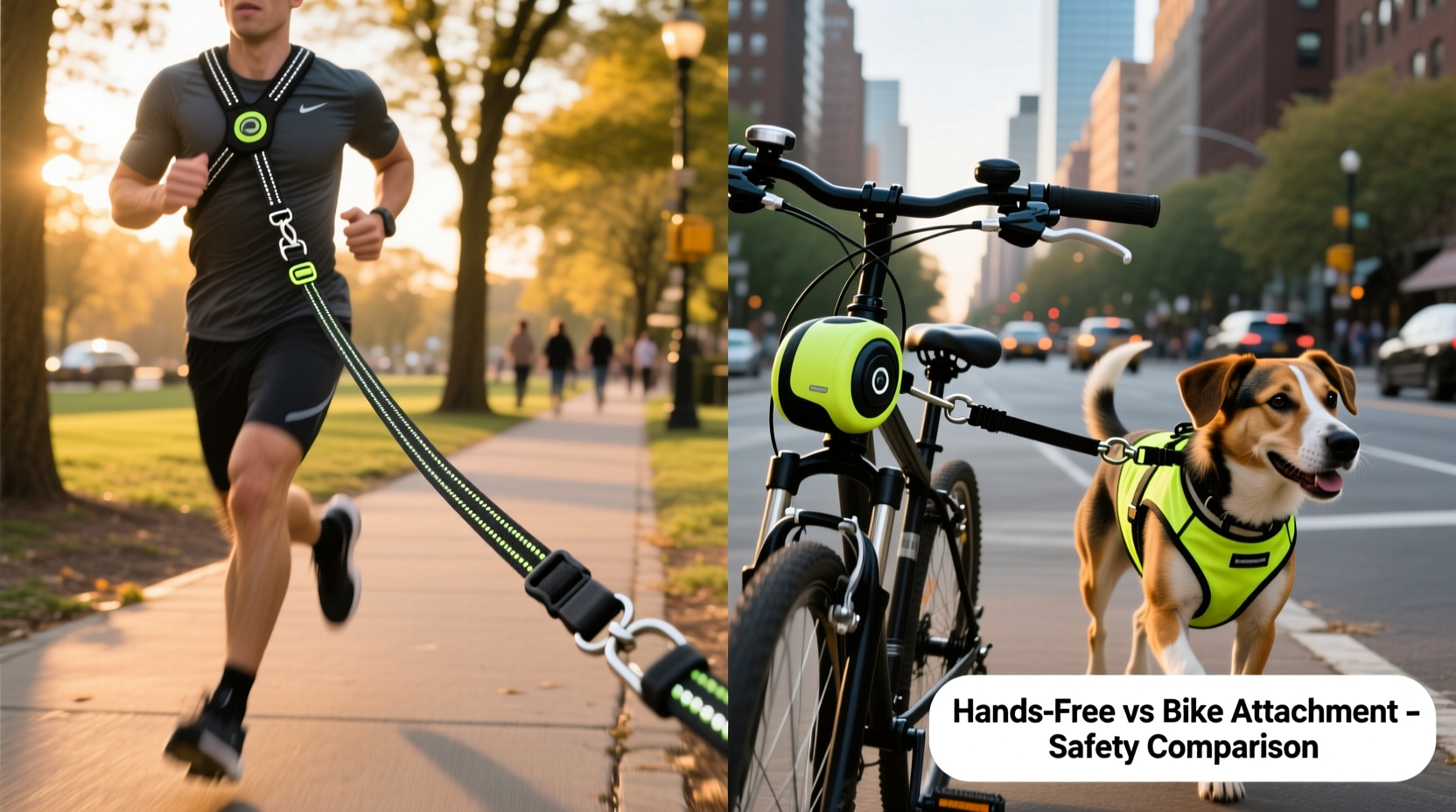
A hands-free leash typically consists of a waist belt with an adjustable tether that extends from the hip or back to your dog’s harness. This design keeps your arms unencumbered, allowing natural arm swing during runs. Most models include shock-absorbing bungee sections to soften sudden pulls and reduce joint strain.
The primary advantage lies in stability: your center of gravity remains balanced, and force from your dog’s movements is distributed across your torso rather than concentrated in your wrist or shoulder. For dogs that pull moderately or weave unpredictably, this system offers consistent tension management without compromising balance.
Bike Attachments: Function and Risks
Bike attachments connect your dog directly to your bicycle via a specialized mount, usually affixed to the rear axle or frame. These systems use strong, shock-absorbing tethers designed to handle lateral forces as your dog runs alongside. Some models allow for multi-directional movement, reducing the risk of tripping or dragging if the dog veers too close.
While effective on quiet trails or open paths, bike attachments become significantly riskier in dense urban areas. Traffic congestion, sudden stops, pedestrians, and uneven pavement amplify the danger. A startled dog lunging toward a squirrel or reacting to a siren can destabilize a cyclist instantly, potentially causing falls or collisions.
“Dogs don’t anticipate traffic patterns like humans do. Attaching them to a moving bike in a city environment introduces variables that even experienced handlers can’t always predict.” — Dr. Lena Torres, Canine Behavior Specialist and Urban Pet Safety Researcher
Safety Comparison: Key Factors in Urban Settings
In cities, safety depends on responsiveness, visibility, and adaptability. Below is a breakdown of how each system performs under critical conditions:
| Factor | Hands-Free Leash | Bike Attachment |
|---|---|---|
| Traffic Navigation | High – allows quick stops and redirection | Low – limited braking reaction time |
| Dog Control | High – direct body feedback and positioning | Moderate – delayed response due to distance |
| Pedestrian Interaction | Good – easy to shorten leash near crowds | Poor – difficult to manage proximity while cycling |
| Physical Strain | Low – weight distributed across hips | High – sudden pulls can unbalance rider |
| Emergency Response | Excellent – immediate disengagement possible | Limited – detachment requires stopping and manual release |
The data clearly favors hands-free leashes for city use, particularly where foot traffic, crosswalks, and vehicle density are high. Bike attachments may work in controlled environments but introduce unacceptable risks in dynamic urban zones.
Real-World Scenario: A Close Call in Brooklyn
Jamal, a regular runner in Brooklyn’s Prospect Park, used a bike attachment to take his 60-pound Belgian Malinois, Rex, on morning rides. One weekday, as he cycled along a shared path near Flatbush Avenue, a car backfired loudly. Rex bolted sideways in fear, yanking the bike sharply to the right. Jamal lost balance, skidded into a lamppost, and suffered a sprained wrist. Rex was unharmed but visibly stressed.
After consulting a trainer, Jamal switched to a hands-free running belt. He noticed immediate improvements—not just in safety, but in communication with Rex. “I could feel every shift in his posture,” he said. “Now when he tenses up, I slow down before he reacts. It’s like we’re synced.”
This case illustrates how environmental triggers can overwhelm a dog’s training in motion—and why proximity and tactile feedback matter in preventing incidents.
Step-by-Step Guide to Choosing the Right System
- Evaluate Your Environment: If more than 30% of your route includes sidewalks, intersections, or pedestrian zones, prioritize a hands-free leash.
- Assess Your Dog’s Temperament: Reactive, excitable, or large breeds (over 40 lbs) should not be attached to bikes in cities.
- Test Tension Response: Simulate sudden pulls on grassy ground to see how each system handles abrupt force.
- Check Local Laws: Many municipalities prohibit attaching dogs to bicycles on public roads or shared paths.
- Start Slow: Introduce any new gear gradually. Begin with short walks before progressing to runs or rides.
Essential Checklist Before You Hit the Pavement
- ✅ Use a well-fitted, front-clip harness (never a collar)
- ✅ Ensure all clips and buckles are rust-resistant and securely locked
- ✅ Carry water and a collapsible bowl for hydration breaks
- ✅ Wear reflective gear if running or biking near dusk or dawn
- ✅ Confirm your dog responds reliably to basic commands: “sit,” “stay,” “leave it”
- ✅ Avoid peak traffic hours when possible
Frequently Asked Questions
Can I use a bike attachment on bike paths only?
Some cities permit dog-bike attachments on designated trails or greenways, provided the dog stays at least three feet from other users. However, even on bike paths, distractions like runners, children, or other animals can trigger reactive behavior. Proceed with caution and consider off-leash parks instead.
Are hands-free leashes suitable for small dogs?
Absolutely. In fact, small dogs benefit greatly because the waist-level connection prevents tripping and reduces jolting. Just ensure the tether length is appropriate—usually 3 to 4 feet—to maintain control without overextending.
What if I want to run and bike with my dog occasionally?
It’s best to own both systems and use them appropriately. Use the hands-free leash for running and walking in populated areas. Reserve the bike attachment for rural trails or wide-open spaces with minimal human or vehicle interaction. Never compromise safety for convenience.
Final Recommendation: Prioritize Control Over Convenience
For city dwellers who run with their dogs, the hands-free leash is objectively safer and more practical than a bike attachment. It provides superior control, faster response times, and greater adaptability to changing street conditions. While bike attachments have niche applications, they belong on quiet country roads—not crowded urban corridors.
Your dog relies on you to make smart decisions about their safety and yours. The extra few seconds it takes to clip a waist belt are a small price for peace of mind amid honking horns, jaywalking pedestrians, and unpredictable traffic. Whether you're covering two miles or ten, the right gear keeps the experience enjoyable, efficient, and incident-free.




 浙公网安备
33010002000092号
浙公网安备
33010002000092号 浙B2-20120091-4
Comments
No comments yet. Why don't you start the discussion?