
Choosing between hard luggage and soft shell suitcases isn’t just about aesthetics—it’s a decision that impacts how well your belongings survive the journey, how much you can pack, and whether your bag returns home intact. International travel introduces unique challenges: long layovers, rough baggage handling, customs inspections, and unpredictable storage conditions. In this reality, the material of your suitcase becomes a critical factor in both protection and practicality.
Travelers often face a trade-off: do they prioritize durability and structure with hard-sided luggage, or opt for expandability and resilience with soft-shell designs? The answer depends on your travel style, destination, and what matters most—preventing cracks or maximizing space. Let’s break down the real-world performance of each type to help you make an informed choice.
Understanding Hard Luggage: Strengths and Weaknesses
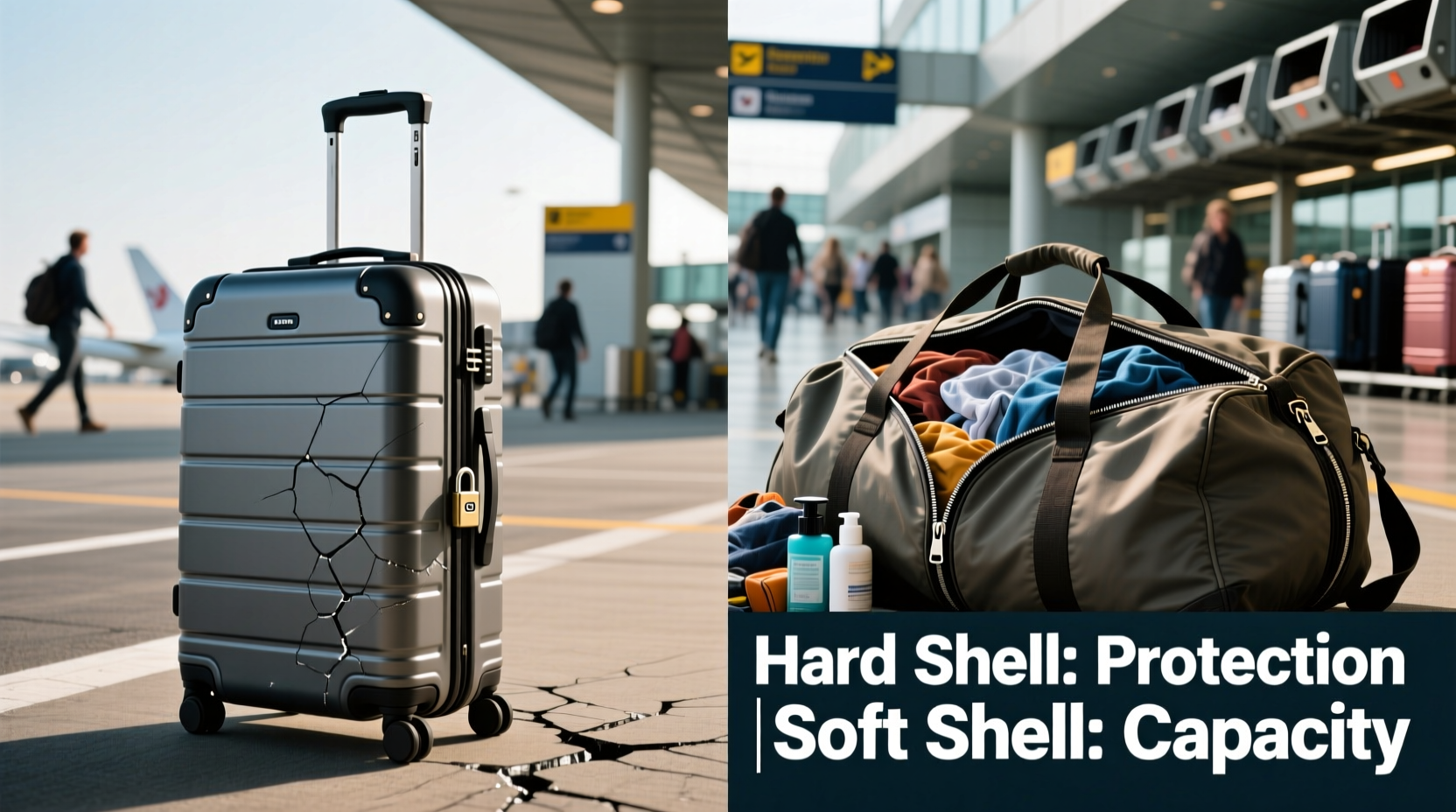
Hard luggage, typically made from polycarbonate, ABS plastic, or hybrid composites, is designed to offer maximum protection. Its rigid shell acts as a shield, absorbing impact and shielding contents from crushing pressure during transit. This makes it ideal for travelers carrying fragile items like cameras, electronics, glassware, or souvenirs.
The structural integrity of hard cases also helps maintain shape under stacking weight—a common occurrence in cargo holds where bags are piled high. Many premium models feature reinforced corners, TSA-approved locks, and aerodynamic exteriors that resist scratches and dents.
However, rigidity comes at a cost. Hard shells cannot expand beyond their original dimensions. Once full, overpacking risks damaging zippers or warping the frame. Additionally, while modern polycarbonate is surprisingly flexible, extreme impacts—such as being dropped from height or crushed by heavy machinery—can cause cracks or splits that compromise both function and appearance.
When Hard Luggage Excels
- Protecting fragile electronics or collectibles
- Traveling through regions with notoriously rough baggage handling
- Needing secure, lockable compartments resistant to tampering
- Desiring a sleek, modern aesthetic that resists scuffs and stains
Soft Shell Suitcases: Flexibility Meets Functionality
Soft shell luggage, constructed from nylon, polyester, or ballistic fabrics, prioritizes adaptability. These materials flex under pressure rather than resisting it, allowing the bag to absorb shocks without cracking. Most soft-sided suitcases feature expansion zippers, enabling up to 2–3 inches of extra capacity when needed—ideal for return trips loaded with purchases or gifts.
Another advantage lies in accessibility. Many soft cases open like clamshells, providing full visibility of contents and easier organization. They’re also generally lighter than hard cases of comparable size, helping travelers stay within airline weight limits.
But fabric has its vulnerabilities. While resistant to minor scrapes, soft shells are prone to tears if snagged on sharp edges. Moisture penetration is another concern, especially in rainy climates or humid environments, unless the bag includes a waterproof coating. Over time, repeated stuffing and unpacking can stretch seams or weaken zippers.
“Soft luggage forgives packing mistakes better than hard cases. It’s the difference between breaking under pressure and bending with it.” — Marcus Tran, Travel Gear Analyst at GlobeRover Review
When Soft Shell Makes Sense
- Long trips requiring frequent re-packing
- Shopping-heavy itineraries (e.g., fashion capitals, duty-free zones)
- Backpacking hybrids or carry-on combos needing agility
- Travelers who value lightweight design and easy maneuverability
Direct Comparison: Hard vs Soft for Key Travel Factors
| Factor | Hard Luggage | Soft Shell Luggage |
|---|---|---|
| Impact Resistance | Excellent – resists crushing but may crack under severe force | Good – absorbs shock without fracturing; vulnerable to punctures |
| Packing Flexibility | Limited – fixed volume; overfilling risks damage | High – expansion zippers add 15–25% more space |
| Weight | Heavier – adds 2–4 lbs depending on size | Lighter – often 1–2 lbs less than equivalent hard case |
| Water Resistance | Very high – seamless shell prevents moisture entry | Moderate – fabric may wick water unless coated |
| Durability Long-Term | Can last 5+ years but fails catastrophically if cracked | Gradual wear; repairs possible via patch kits |
| Security | Stronger locks, harder to slash into | Easier to cut open; requires vigilance |
Real-World Scenario: Two Travelers, Two Choices
Consider two travelers flying from New York to Tokyo with connecting flights through Seoul. Both check one bag and carry identical itineraries—one uses a premium polycarbonate spinner, the other a high-denier nylon upright.
Sophie packs her hard-shell suitcase meticulously: rolled clothes, packed cubes, camera gear in padded dividers. Her bag survives the flight with only minor surface scratches. At baggage claim, she notices several nearby hard cases with visible cracks—likely from being stacked too heavily. Hers remains intact due to its flexible polymer construction.
Jamal, meanwhile, opts for a soft-shell model. He buys several artisan ceramics in Kyoto and uses the expansion zipper to fit everything. Though his bag gets drenched in a sudden downpour before check-in, the rainfly keeps contents dry. On the return, airport staff heave his overstuffed bag onto the conveyor—it sags but doesn’t burst. No cracks, no broken zippers.
In this case, Sophie’s choice protected fragile items well but offered zero room for souvenirs. Jamal sacrificed some structural defense but gained crucial flexibility. Neither was wrong—each matched their luggage to their priorities.
How to Maximize Performance Based on Your Choice
No suitcase is perfect out of the box. How you use and maintain it determines longevity and functionality. Follow these tailored strategies based on your luggage type.
For Hard Luggage Owners
- Avoid Overpacking: Fill to 90% capacity max. Pressure on internal walls increases fracture risk.
- Use Protective Covers: A fabric slipcover reduces surface scratches and provides slight cushioning.
- Inspect Seams Regularly: Look for hairline cracks near corners or hinges—early detection prevents total failure.
- Store Properly: Keep in a cool, dry place away from direct sunlight to prevent UV degradation.
For Soft Shell Users
- Utilize Compression Packing: Maximize space with vacuum bags or roll techniques to avoid bulging.
- Apply Waterproof Spray: Re-treat fabric annually with DWR (durable water repellent) spray.
- Check Zippers Frequently: Replace sliders early if they feel stiff or misaligned.
- Carry a Repair Kit: Include duct tape, safety pins, and fabric patches for field fixes.
Expert-Recommended Checklist Before You Buy
Use this checklist to evaluate whether hard or soft luggage suits your international travel needs:
- ✅ Will I be bringing back fragile or valuable items?
- ✅ Do I tend to shop during trips or accept gifts?
- ✅ Am I traveling to destinations with unreliable baggage handling?
- ✅ Is weight a concern due to airline restrictions?
- ✅ Do I need quick access to specific compartments?
- ✅ Will my bag be exposed to rain, sand, or extreme temperatures?
- ✅ How important is repairability if damaged abroad?
If most answers lean toward protection and security, hard luggage is likely the better fit. If flexibility, weight savings, and expandability dominate your needs, soft shell wins.
Frequently Asked Questions
Can hard luggage be repaired if cracked?
Minor cracks in polycarbonate cases can sometimes be sealed with specialized epoxy resins designed for plastics. However, structural damage often compromises integrity. Manufacturers rarely offer repair services, so replacement is usually recommended. Some third-party repair shops specialize in suitcase restoration, but costs may approach half the price of a new case.
Do soft suitcases get stolen more easily?
There’s no data showing higher theft rates for soft vs hard luggage. However, soft bags are easier to slash open, making them slightly more vulnerable in unsecured areas. Always use locking zippers and consider RFID-blocking lining if carrying sensitive documents. Keeping valuables in carry-ons remains the best deterrent regardless of suitcase type.
Which lasts longer: hard or soft shell?
Lifespan depends on usage. Hard shells often fail suddenly after 3–5 years due to a single major impact. Soft shells degrade gradually—zippers wear, fabric fades—but can remain functional for 5–7 years with maintenance. Frequent flyers report replacing hard cases more abruptly, while soft ones are retired due to cosmetic wear rather than catastrophic failure.
Final Verdict: Balancing Crack Prevention and Packing Capacity
The choice between hard luggage and soft shell isn’t about declaring one universally superior. It’s about aligning your suitcase with your travel behavior. If you prioritize item protection and fly routes known for rough handling, a high-quality polycarbonate case offers unmatched defense against damage—even if it means leaving room unused.
Conversely, if your trips involve returning with more than you left with—be it winter woolens from Scotland or ceramics from Morocco—soft shell’s expandable design gives you breathing room. Its ability to bend instead of break under pressure makes it resilient in ways rigidity cannot match.
Some travelers solve the dilemma entirely by adopting a hybrid strategy: a hard-shell checked bag for protection and a soft-shell carry-on for flexibility. Others rotate luggage based on trip purpose. There’s no single right answer—only what works best for your journey.
“The best suitcase isn’t the toughest or the biggest—it’s the one that adapts to how you actually travel.” — Lena Patel, Senior Editor at Jetset Living Magazine
Take Action: Choose With Confidence
Your next international trip deserves thoughtful preparation—not just for your itinerary, but for the bag that carries your world. Evaluate your past travel experiences: did you struggle with space? Did your suitcase arrive cracked? Use those insights to guide your next purchase.
Test models in person if possible. Load them with your typical items. Roll them across tile and carpet. Zip and unzip repeatedly. Real-world testing beats specs every time.




 浙公网安备
33010002000092号
浙公网安备
33010002000092号 浙B2-20120091-4
Comments
No comments yet. Why don't you start the discussion?