
Travelers face a critical decision every time they invest in new luggage: should they go with a sleek, rigid hard case or opt for the flexible resilience of a soft-shell suitcase? One of the most pressing concerns—especially for frequent flyers—is durability under rough handling. Airline baggage handlers often toss, drop, and stack luggage without care, raising a common question: Will a hard case crack when thrown? The answer isn't as simple as yes or no. It depends on materials, construction quality, impact angle, and even temperature. This article breaks down the real-world performance of both types, examines cracking risks, and provides actionable advice for choosing luggage that survives the journey.
How Luggage Is Handled Behind the Scenes
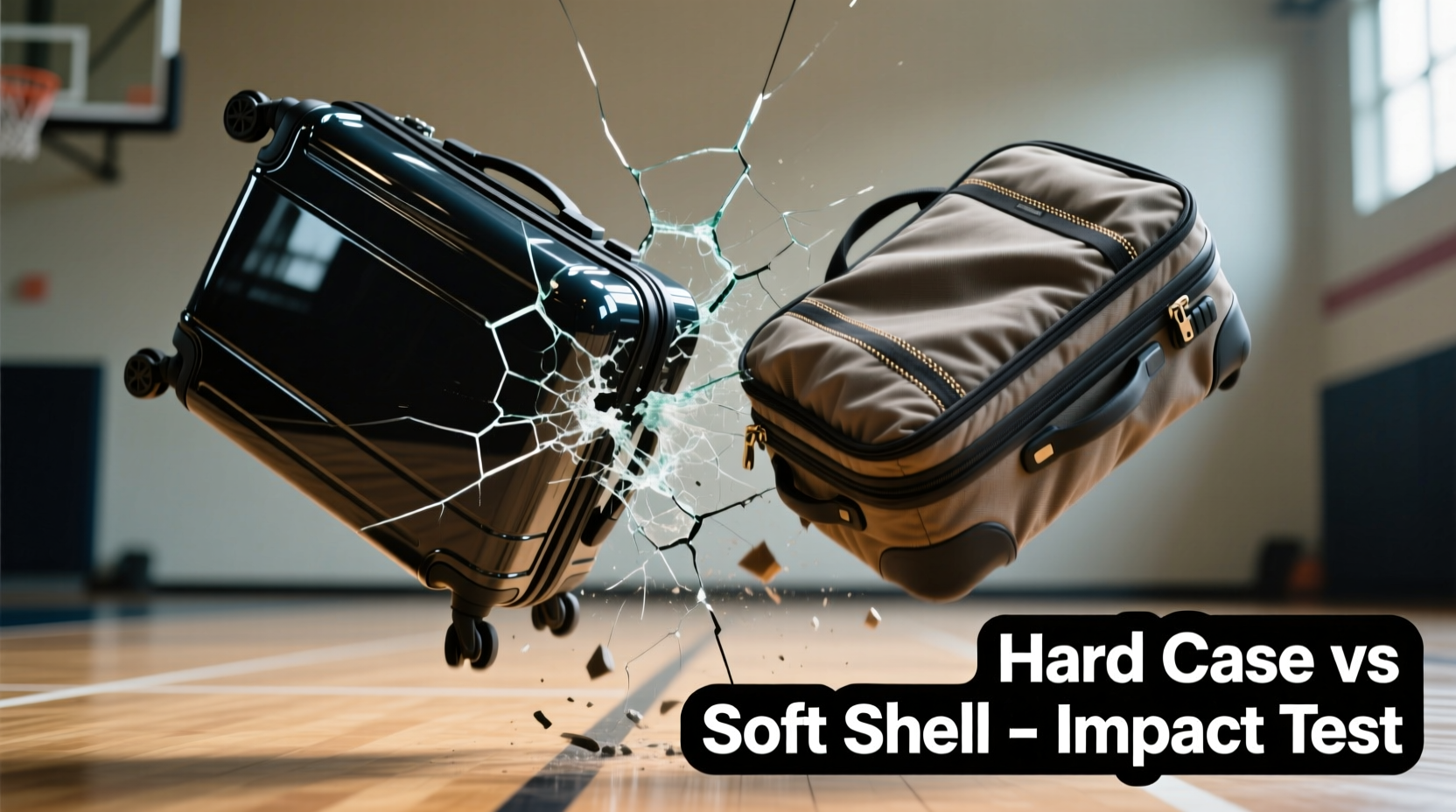
Airlines process millions of bags annually, and despite regulations, mishandling is routine. Checked luggage travels through complex conveyor systems, gets loaded into cargo holds via metal bins, and is frequently dropped from heights of two to four feet. While some carriers use automated sorting that reduces human contact, many airports still rely on manual loading, where tossing bags into carts or compartments is standard practice.
The reality is that no suitcase is immune to impact. However, the way each type absorbs or resists force varies significantly. Hard-shell cases are designed to protect contents by forming a rigid barrier, while soft-shell models flex and compress upon impact. Understanding this dynamic helps explain why cracks occur—and when they might be avoidable.
“Even high-end polycarbonate cases can fail if subjected to repeated stress at weak points like corners or zippers.” — James Lin, Industrial Designer & Travel Gear Consultant
Hard Luggage: Strengths and Vulnerabilities
Modern hard-shell suitcases are typically made from polycarbonate, ABS plastic, or a composite blend. Polycarbonate is favored for its balance of lightness and impact resistance. It can flex slightly under pressure before returning to shape—unlike brittle plastics that shatter easily.
However, not all hard cases are created equal. Lower-cost models may use thinner walls or weaker polymers that crack under moderate stress. Cracking usually occurs at stress concentration points: corners, latch mechanisms, or near handle housings. Extreme temperatures—especially cold—can make plastic more brittle, increasing the risk during winter travel or in unheated cargo holds.
One major advantage of hard cases is their ability to shield fragile items. A laptop, camera gear, or glass bottles packed inside are far less likely to break than in a soft bag that compresses on impact. But this protection comes at the cost of structural rigidity, which means the shell itself must endure the full brunt of drops and impacts.
Soft Shell Luggage: Flexibility Over Fortification
Soft-shell suitcases are typically constructed from nylon (such as ballistic or ripstop), polyester, or canvas. These fabrics offer high tensile strength and excellent abrasion resistance. Unlike hard cases, soft luggage doesn’t crack—it tears, punctures, or wears over time. Zippers and stitching are the weakest links, but modern designs use double-stitched seams and water-resistant zippers to improve longevity.
The key benefit of soft luggage lies in its flexibility. When dropped, the fabric stretches slightly, absorbing shock rather than transferring it directly to contents. This makes soft bags more forgiving under repeated tossing. They also tend to be lighter and easier to squeeze into overhead bins or tight storage spaces.
On the downside, soft shells offer less protection against crushing forces. If a heavy item lands on top of your bag in the cargo hold, clothing may survive, but electronics or delicate souvenirs could be damaged. Additionally, soft cases lack the same level of water resistance unless specifically treated or lined.
Material Comparison: Hard vs Soft Shell Durability
| Feature | Hard Shell (Polycarbonate) | Soft Shell (Ballistic Nylon) |
|---|---|---|
| Impact Resistance | High (if thick-walled); cracks possible under sharp impact | Moderate; absorbs shock via fabric stretch |
| Weight | Heavier than soft shell (but lightweight options exist) | Generally lighter |
| Water Resistance | Excellent; seamless shell prevents moisture entry | Fair to good; depends on coating and zipper seals |
| Puncture Risk | Low; surface resists penetration | Higher; sharp objects can tear fabric |
| Expansion Capacity | Limited; fixed volume unless expandable model | Often includes expansion zippers |
| Repairability | Difficult; cracks may require epoxy or replacement | Easier; patches and zipper replacements widely available |
Can a Hard Case Crack When Thrown? Real-World Scenarios
The short answer: yes, it can, but not always—and not necessarily due to poor quality alone.
In controlled tests, polycarbonate suitcases withstand drops from up to six feet onto concrete when properly packed. However, real-world conditions differ. A poorly packed bag with uneven weight distribution can create internal stress points. If a corner hits first during a fall, the concentrated force may exceed the material’s yield point, leading to a hairline crack or complete fracture.
Temperature plays a role too. A suitcase stored in a freezing warehouse overnight becomes more brittle. A single hard toss onto a metal cart could then cause a crack that wouldn’t occur in warmer conditions.
“I once flew with a premium hard-shell bag from New York to Tokyo. It was tossed twice during transfers. No visible damage—but I later noticed a small crack near the wheel housing. It started as a hairline split and grew after a second cold-weather layover.” — Sarah Nguyen, Frequent Business Traveler
This anecdote highlights a key insight: damage isn’t always immediate. Microfractures can develop over time, weakening the structure until a minor bump causes failure.
Preventing Cracks: Best Practices for Hard-Shell Luggage
To maximize the lifespan of a hard case, consider these preventive measures:
- Pack evenly: Distribute weight uniformly to avoid internal stress on the shell.
- Add padding: Use soft layers around corners inside the bag to cushion impacts.
- Avoid overloading: An overstuffed case has less room to absorb shock and increases strain on latches and hinges.
- Use protective covers: Some travelers add neoprene sleeves or bumper guards for extra defense.
- Check post-flight: Inspect your bag after each trip for early signs of wear or microcracks.
When Soft Shell Outperforms Hard Case
There are specific travel scenarios where soft-shell luggage proves superior:
- Hiking or adventure trips: You’re more likely to drag, drop, or expose luggage to dirt and moisture. Soft bags tolerate abrasion better.
- Long-term backpacking with duffel hybrids: Flexibility allows stuffing into cramped jeeps or boats.
- Cold-weather destinations: Where hard shells become brittle, soft bags remain pliable.
- Overland bus or train travel: Frequent loading/unloading favors durable, repairable fabrics.
Moreover, soft-shell suitcases are generally easier to repair. A torn seam or broken zipper pull can often be fixed with basic tools or local tailors abroad. In contrast, a cracked polycarbonate shell requires specialized adhesives or professional attention—and even then, structural integrity may be compromised.
Choosing the Right Luggage: A Step-by-Step Guide
Selecting between hard and soft shell isn’t just about durability—it’s about matching your travel style. Follow this decision framework:
- Assess your typical trip type: Do you carry fragile electronics, or mostly clothing and toiletries?
- Consider destination climate: Cold regions favor soft shell; rainy areas may benefit from hard-case water sealing.
- Evaluate airline history: Research carrier baggage handling reputation. Some airlines (e.g., certain Middle Eastern carriers) are known for gentler treatment.
- Test weight limits: If you pack heavily, a soft bag’s flexibility may help you stay within limits via compression.
- Budget for longevity: Invest in reputable brands with warranties. Rimowa, Samsonite, and Delsey offer strong polycarbonate builds; Briggs & Riley and Tumi lead in soft-shell durability.
Quick Checklist: Before You Buy Luggage
- ✅ Does it have reinforced corners or impact-absorbing design?
- ✅ Are the wheels multi-directional and replaceable?
- ✅ Is the interior lining removable and washable?
- ✅ Does the warranty cover structural damage from normal handling?
- ✅ Can you lock it with a TSA-approved lock?
Expert Insights on Luggage Longevity
Industry professionals emphasize that material choice is only one factor in durability. Construction techniques matter just as much.
“The hinge design and wheel integration are often more critical than shell material. A well-engineered soft bag with sealed seams and aircraft-grade zippers will outlast a cheap hard case every time.” — Marcus Reed, Product Manager at GlobeTrek Luggage Co.
Reed also notes that consumer expectations have shifted. Many now prioritize lightweight design and expandability over maximum protection, making soft-shell models increasingly popular—even among business travelers.
FAQ: Common Questions About Luggage Durability
Can I prevent my hard-shell suitcase from cracking?
Yes, to a large extent. Choose a high-quality polycarbonate model, pack it properly with balanced weight, avoid extreme temperatures when storing, and inspect it regularly for early signs of stress. Adding protective corner caps can further reduce risk.
Is soft-shell luggage safer for checked bags?
It depends on what you're carrying. For clothing and non-fragile items, soft shell is often safer because it absorbs shocks better. However, if you’re transporting expensive electronics, glassware, or musical instruments, a hard case offers superior protection—even with the risk of cracking.
Do airlines compensate for cracked luggage?
Sometimes, but rarely. Most airlines exclude “normal wear and tear” or “handling damage” from liability. You may receive compensation if you can prove the damage occurred due to gross negligence (e.g., a visibly bent frame or torn strap), but cracked plastic is typically considered acceptable risk. Travel insurance with baggage coverage offers better protection.
Final Thoughts: Balancing Protection and Practicality
The question of whether a hard case will crack when tossed isn’t just about material strength—it’s about trade-offs. Hard-shell luggage excels at protecting contents and resisting water, but it can crack under impact, especially in cold environments or with lower-quality construction. Soft-shell bags offer flexibility, lighter weight, and better shock absorption, but provide less armor against crushing or punctures.
Your best strategy is to align your choice with your travel habits. If you frequently fly with delicate equipment, a premium polycarbonate case with reinforced edges is worth the investment. If you move across varied terrain, value repairability, or travel in extreme climates, a high-denier soft-shell suitcase may serve you better over time.
No suitcase is indestructible. But with informed choices, proper packing, and realistic expectations, you can significantly reduce the odds of arriving to a cracked case or ruined belongings.




 浙公网安备
33010002000092号
浙公网安备
33010002000092号 浙B2-20120091-4
Comments
No comments yet. Why don't you start the discussion?