
When packing for a trip, especially one involving checked baggage, the safety of your belongings—particularly fragile items like electronics, glassware, or souvenirs—depends heavily on your choice of luggage. The debate between hard shell and soft shell suitcases isn't just about aesthetics or weight; it's fundamentally about protection. While both types have loyal followings, understanding their structural differences, impact resistance, and real-world performance can help travelers make informed decisions. This guide dives deep into how each type handles stress, absorbs shocks, and ultimately safeguards delicate contents.
Structural Design and Material Composition
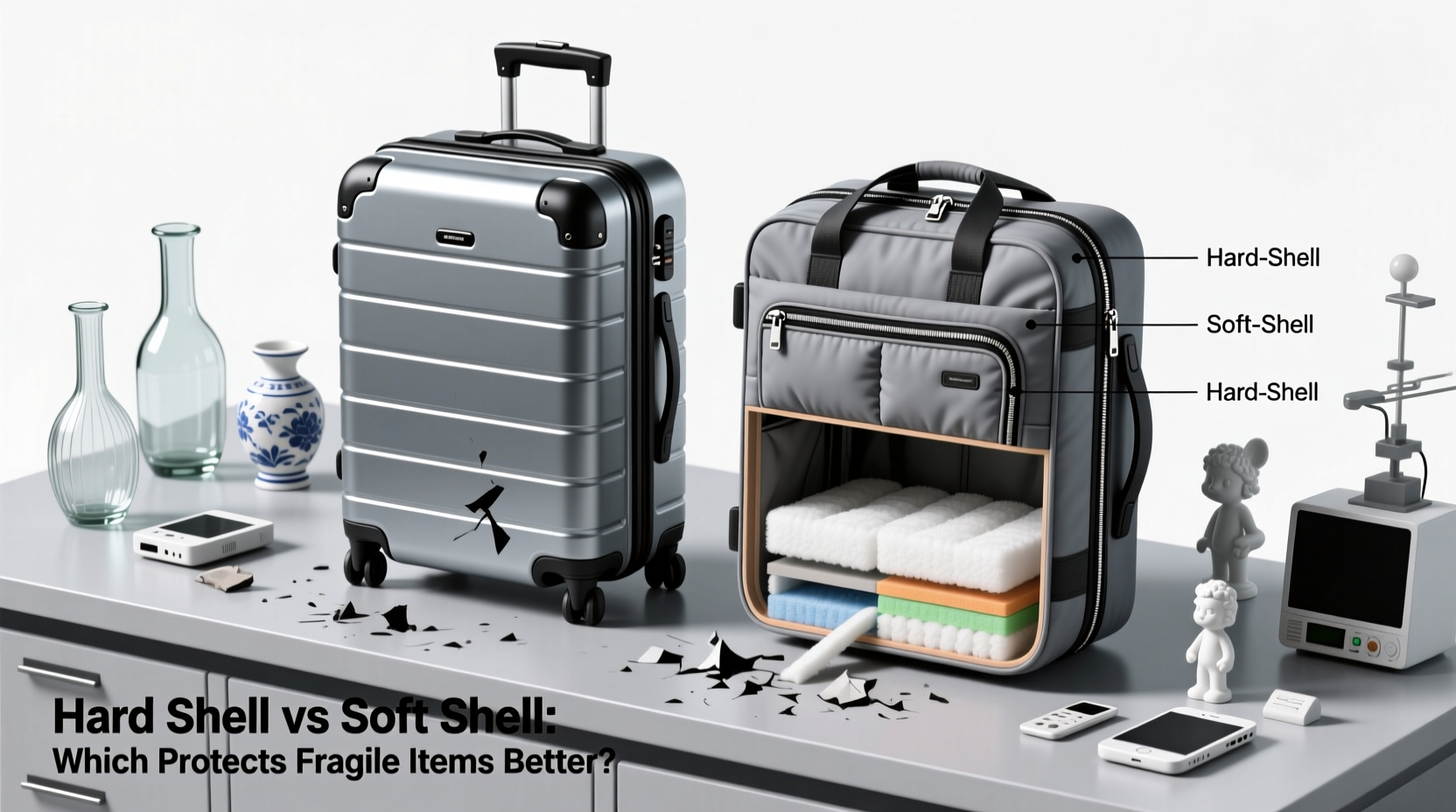
The core difference between hard shell and soft shell luggage lies in construction. Hard shell suitcases are typically made from polycarbonate, ABS plastic, or a combination of both. These materials form a rigid exterior that resists punctures and crushing forces. Polycarbonate, in particular, is known for its high impact strength and flexibility—meaning it can dent slightly under pressure and then rebound, absorbing energy rather than transferring it directly to contents.
Soft shell luggage, on the other hand, is constructed from fabrics like ballistic nylon, polyester, or Cordura. These materials offer flexibility and abrasion resistance but lack inherent rigidity. Instead of a solid frame, soft shells rely on internal lining, padded compartments, and sometimes semi-rigid frames to maintain shape. While they may compress easily during storage or when overpacked, this pliability becomes a double-edged sword when subjected to external force during transit.
The structural integrity of hard shell luggage makes it inherently more resistant to being crushed in cargo holds where bags are stacked under immense weight. Soft shells, while lighter and often more expandable, can collapse inward when compressed, increasing the risk of damage to rigid or breakable items inside.
Shock Absorption and Impact Resistance
One of the most critical factors in protecting fragile items is how well luggage absorbs shocks from drops, bumps, and rough handling. Airlines handle millions of bags annually, and despite best practices, suitcases are routinely dropped from heights, thrown onto conveyor belts, and jammed into tight spaces.
Hard shell cases excel at distributing impact across their surface. Because they are molded as a single unit (especially spinner models with seamless designs), force from a fall is less likely to concentrate in one area. High-end polycarbonate shells can flex up to an inch upon impact and return to shape—this elasticity dissipates kinetic energy before it reaches the contents. Some premium brands even incorporate honeycomb internal structures or shock-absorbing bumpers to enhance this effect.
Soft shell luggage behaves differently. Its fabric exterior may resist scratches and scuffs better than plastic, but it does little to stop sudden impacts. When a soft shell bag hits the ground, the force travels directly through the material and into the packed items unless there’s significant cushioning inside. Padding helps, but only if applied strategically around vulnerable objects. Without internal reinforcement, soft shells offer minimal defense against sharp or heavy blows.
“From a materials engineering standpoint, rigid polymers like polycarbonate outperform textiles in energy dissipation during high-velocity impacts.” — Dr. Alan Zhou, Materials Scientist at TravelTech Labs
Internal Organization and Packing Strategies
No matter the shell type, how you pack matters. However, the design of each luggage category influences how effectively you can protect fragile goods.
Hard shell suitcases often feature fixed compartments, compression straps, and built-in dividers. These elements keep items from shifting during transit, reducing internal collisions. Many also include lockable zippers and clamshell openings that allow full access to both halves of the interior, enabling precise placement of delicate items in the center—away from outer walls.
Soft shell models usually open like a suitcase (top-loading) or via a U-shaped zipper, offering good visibility but less structural support once opened. Their flexibility allows for over-packing, which might seem convenient but increases the risk of internal pressure on fragile items. Additionally, soft shells are more prone to bulging at weak points, potentially exposing corners of packed electronics or bottles to direct impact.
For optimal results with either type, use protective layers such as bubble wrap, clothing padding, or hard-sided organizers. But here’s the key distinction: hard shells provide a stable environment where these protections work *within* a secure structure, whereas soft shells require those same protections to *compensate* for structural shortcomings.
Comparison Table: Protection Features at a Glance
| Feature | Hard Shell Luggage | Soft Shell Luggage |
|---|---|---|
| Crush Resistance | Excellent – maintains shape under pressure | Fair to poor – susceptible to deformation |
| Impact Absorption | High – flexible plastics absorb shock | Low – force transfers to contents |
| Puncture Resistance | Very high – resists sharp objects | Moderate – fabric can tear or rip |
| Water Resistance | Good – sealed seams prevent moisture | Variable – depends on coating and zippers |
| Expandability | Limited – some models offer small expansion | High – easy expansion for extra capacity |
| Weight | Heavier – adds to overall luggage mass | Lighter – more allowance for personal items |
| Best For Fragile Items? | Yes – superior structural protection | No – requires extensive internal padding |
Real-World Performance: A Traveler’s Experience
Sarah Kim, a frequent business traveler based in Chicago, learned the hard way about luggage protection after returning from a conference in Berlin. She had packed her new DSLR camera, lenses, and a vintage glass perfume bottle in a lightweight soft shell carry-on, believing the padded interior would be sufficient. Upon arrival, she discovered the corner of the bag had been crushed, and the perfume bottle shattered inside her clothes.
“I assumed the fabric would give a little and protect the contents,” she said. “But seeing the dent in the side and the broken glass told me otherwise. The next time, I invested in a mid-sized polycarbonate case with TSA-approved locks and used a hard insert organizer for my gear. Even when the airline mishandled my bag and it arrived with visible scuff marks, everything inside was intact.”
This scenario reflects a common misconception: that softness equals safety. In reality, controlled rigidity provides better containment and force distribution. Sarah now exclusively uses hard shell luggage for trips involving valuable or breakable items and recommends others do the same.
Step-by-Step Guide to Maximizing Fragile Item Protection
Regardless of your luggage choice, following a systematic approach improves item safety. Here’s how to pack fragile items with confidence:
- Choose the Right Luggage: Opt for a hard shell suitcase made from polycarbonate, ideally with reinforced corners and edge guards.
- Use Protective Cases: Place fragile items like cameras, tablets, or glassware in dedicated hard-shell cases or padded pouches before placing them in the suitcase.
- Wrap Delicate Items: Individually wrap breakables in bubble wrap or foam sleeves. Avoid using paper or thin cloth, which offer negligible protection.
- Center the Load: Position fragile items in the middle of the suitcase, surrounded by soft materials like clothing or towels to act as secondary shock absorbers.
- Avoid Overpacking: A tightly packed bag reduces movement but increases internal pressure. Leave slight buffer space to allow for minor compression without crushing.
- Secure Internal Compartments: Use compression straps or packing cubes to minimize shifting during transit.
- Label Clearly: Attach a “Fragile” sticker and consider adding a handwritten note inside the bag requesting careful handling.
- Carry On When Possible: If traveling with highly sensitive or irreplaceable items, keep them in your carry-on to avoid exposure to baggage handling systems.
Expert Recommendations and Industry Insights
Luggage manufacturers and travel experts consistently emphasize the importance of matching suitcase type to travel needs. According to Tom Reynolds, lead product designer at Voyageur Luggage Co., “We’ve tested both soft and hard shells in simulated airport environments—drops from 4 feet, compression loads up to 150 pounds, and vibration cycles. The data shows hard shells reduce internal G-forces by up to 60% compared to soft alternatives.”
Additionally, consumer testing organizations like Consumer Reports have evaluated luggage durability and protection capabilities. Their findings indicate that while soft shell bags score higher in portability and flexibility, they consistently underperform in drop tests and crush simulations—key indicators for safeguarding fragile contents.
That said, hybrid luggage—featuring a soft outer shell with a rigid internal frame or removable hard panels—is gaining traction. These models attempt to merge the best of both worlds: lightweight flexibility with enhanced structural support. However, they often come at a premium price and still don’t match the full-body protection of a seamless polycarbonate shell.
FAQ: Common Questions About Luggage Protection
Can soft shell luggage be used safely for fragile items?
Yes, but only with extensive precautions. You must use hard-sided internal cases, wrap each fragile item individually, and ensure no empty spaces where movement can occur. Even then, the risk remains higher than with a hard shell option.
Are all hard shell suitcases equally protective?
No. Thickness, material quality, and design matter significantly. Thin ABS plastic shells may crack under impact, while multi-layered polycarbonate models flex and recover. Look for brands that specify impact resistance and undergo independent durability testing.
Does wheel type affect item protection?
Indirectly, yes. Suitcases with inline skate wheels and sturdy corner guards glide more smoothly, reducing jolts and vibrations during movement. Spinner wheels (four multidirectional wheels) also minimize lifting and dropping, decreasing the chance of sudden impacts that could damage contents.
Final Verdict: Which Offers Better Protection?
When it comes to protecting fragile items, hard shell luggage is the superior choice. Its rigid structure resists crushing, absorbs impacts through elastic deformation, and provides a stable internal environment that minimizes shifting and collision. While soft shell bags offer advantages in weight, flexibility, and scratch concealment, they lack the fundamental structural integrity needed to shield delicate objects from the rigors of modern air travel.
Travelers who regularly transport electronics, collectibles, or breakable souvenirs should prioritize a high-quality polycarbonate suitcase with thoughtful internal organization. The initial investment pays off in peace of mind and reduced risk of loss or damage. That said, for short trips with only lightly sensitive items, soft shells remain a practical and portable alternative—provided proper packing techniques are followed.




 浙公网安备
33010002000092号
浙公网安备
33010002000092号 浙B2-20120091-4
Comments
No comments yet. Why don't you start the discussion?