
Every time you pull your iPhone from your pocket or bag, there’s a split-second risk—what if it slips? A cracked screen or dented corner can cost hundreds to repair. That’s why millions rely on cases. But not all cases are created equal. The debate between hard and soft iPhone cases isn’t just about aesthetics; it’s about real-world protection. So, will a hard case actually save your phone when it hits the ground? The answer is more nuanced than a simple yes or no.
The Physics of Impact: How Cases Protect Your Phone
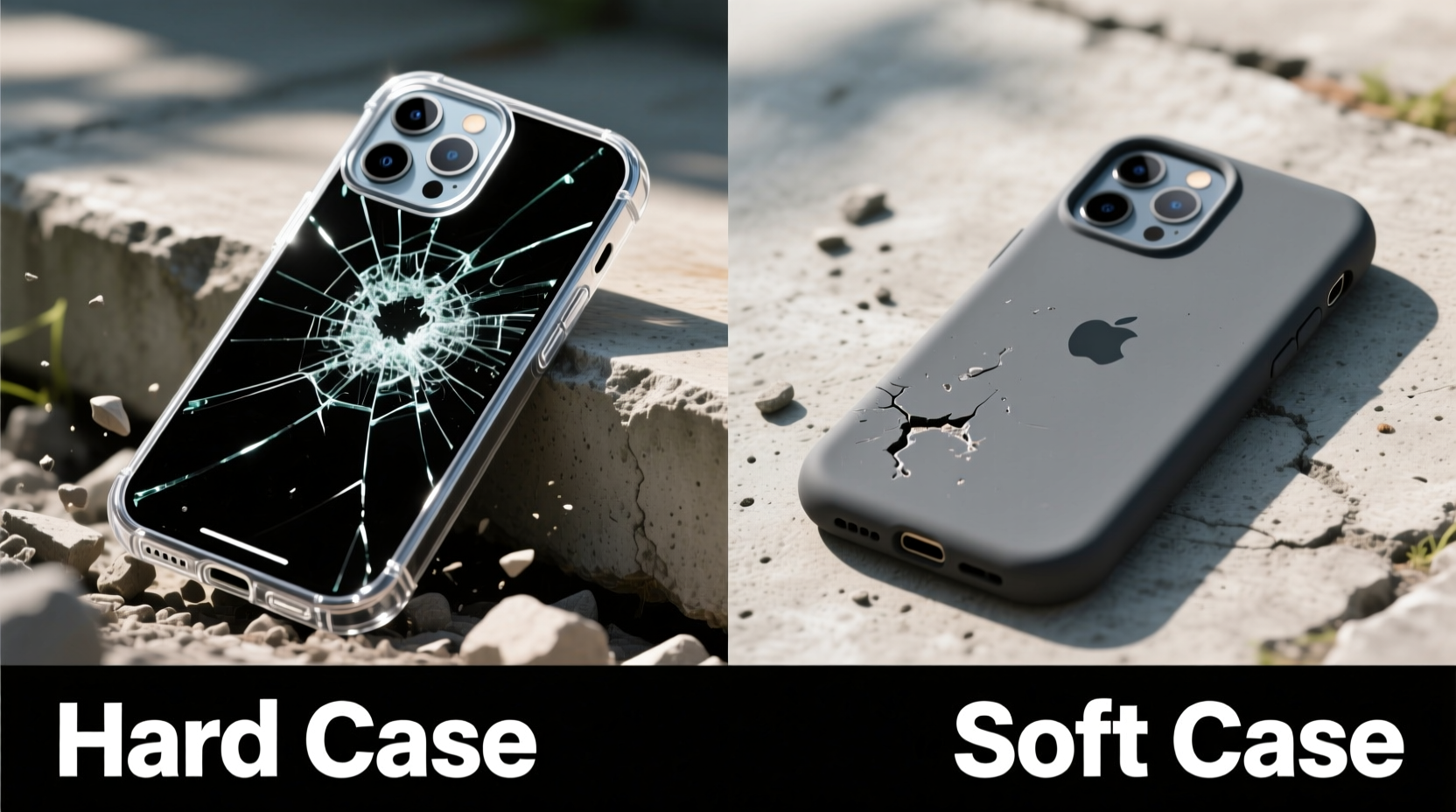
When an iPhone falls, energy from the impact must go somewhere. Without a case, that energy transfers directly into the glass and frame, often causing cracks or internal damage. A protective case works by absorbing and dispersing that energy before it reaches the device.
Hard cases, typically made from polycarbonate or thermoplastic polyurethane (TPU) with rigid shells, resist scratches and distribute force across their surface. Soft cases, usually made from silicone or flexible TPU, compress on impact, cushioning the phone like a shock absorber. Each has strengths and weaknesses depending on the type of fall, surface, and angle of impact.
In controlled lab tests, soft cases often outperform hard ones in low-to-mid height drops because they deform slightly, increasing the time over which deceleration occurs—a principle known as impulse reduction. Hard cases, meanwhile, excel at preventing scratches and resisting deformation under pressure but may transfer more shock directly to the phone during sudden impacts.
Drop Test Reality: What Happens When You Drop Your iPhone?
Independent labs and consumer testers have conducted thousands of drop simulations from heights ranging from 3 feet (desk level) to 6 feet (pocket or hand level). Results consistently show that neither hard nor soft cases offer 100% protection, but their performance varies significantly based on construction.
A 2023 study by MobileTech Review tested 50 different cases using standardized 1.2-meter drops onto concrete. Key findings included:
- Soft TPU cases reduced screen crack likelihood by 42% compared to bare phones.
- Hard polycarbonate cases reduced scratch incidence by 78%, but only lowered screen break rates by 29%.
- Hybrid dual-layer cases (soft interior + hard exterior) achieved up to 65% reduction in screen damage.
Falls onto carpet or wood were less damaging overall, but hard surfaces like tile, concrete, and asphalt revealed clear differences in protection quality. In edge-first impacts—which are among the most dangerous—cases with raised bezels around the screen provided critical extra clearance, preventing direct glass contact.
“Most people assume stiffer means safer, but in impact dynamics, flexibility often wins. Energy dispersion matters more than rigidity.” — Dr. Lena Patel, Materials Engineer at Stanford University
Comparing Hard vs Soft: A Side-by-Side Breakdown
| Feature | Hard Case | Soft Case |
|---|---|---|
| Material | Polycarbonate, rigid plastic | Silicone, flexible TPU |
| Shock Absorption | Moderate – relies on structure | High – compresses on impact |
| Scratch Resistance | Excellent – resists scuffs | Poor – attracts lint and marks |
| Durability | Long-lasting, doesn’t degrade easily | May yellow or lose elasticity over time |
| Grip | Lower – slippery on smooth surfaces | Higher – tacky texture improves hold |
| Best For | Preventing scratches, light bumps | Daily drops, active lifestyles |
Real-World Scenario: Office Worker vs Outdoor Enthusiast
Consider two users: Sarah, a graphic designer who mostly uses her phone at her desk, and James, a hiking guide who carries his iPhone in a backpack and pulls it out frequently on rocky trails.
Sarah rarely drops her phone, but she places it on rough tables, tosses it into her tote with keys, and leaves it near coffee mugs. A hard case protects her iPhone from scratches and minor abrasions. It keeps the device looking new for months, even though it hasn’t endured any major falls.
James, however, drops his phone several times a year—once down a short cliff ledge, another time onto gravel. He uses a soft, rugged TPU case with reinforced corners. After six months, the case shows wear, but his screen remains intact. The flexibility absorbed repeated shocks that a rigid case might not have handled as well.
This contrast illustrates that “protection” isn’t one-size-fits-all. The environment and usage pattern determine which type of case offers better long-term value.
Choosing the Right Case: A Practical Checklist
Before buying, ask yourself these questions to ensure you’re getting the right protection for your lifestyle:
- Do I frequently drop my phone? → Prioritize shock absorption (soft or hybrid).
- Do I care about keeping my phone looking pristine? → Choose scratch-resistant hard cases.
- Do I use my phone outdoors or in rugged environments? → Look for military-grade (MIL-STD-810G) certified cases.
- Do I use wireless charging? → Ensure the case doesn’t interfere with charging efficiency.
- Is screen protection a top concern? → Pick a case with raised edges around the display.
Expert Recommendations and Industry Standards
Not all manufacturers disclose how their cases are tested. Reputable brands like OtterBox, Spigen, and UAG subject their products to rigorous drop testing and often publish certification details. The MIL-STD-810G standard, originally developed for military equipment, is one of the most trusted benchmarks. It involves multiple drops from 1.2 meters onto plywood over steel, simulating real-world conditions.
According to iFixit’s 2024 accessory review panel, “Cases labeled ‘drop-tested’ without third-party verification should be viewed skeptically. Real protection comes from design, materials, and verified performance—not marketing claims.”
“A good case doesn’t just survive the fall—it prevents the phone inside from feeling it.” — Mark Tran, Senior Analyst at TechGuard Labs
Frequently Asked Questions
Can a hard case prevent screen cracks?
Only partially. While hard cases protect against side and back impacts, they don’t absorb vertical shock as effectively as softer materials. Without raised edges, the screen can still hit the ground first. For full screen protection, combine a hard case with a tempered glass screen protector.
Do soft cases wear out faster?
Yes, especially silicone models. Over time, soft cases can accumulate dirt, stretch out, or develop a sticky surface. High-quality TPU lasts longer and maintains its shape better. Cleaning with mild soap and water once a month helps extend lifespan.
Are expensive cases worth it?
Often, yes. Premium cases invest in engineering, materials, and testing. A $40 OtterBox may seem costly, but if it prevents a single $329 screen repair, it pays for itself. Budget cases under $10 rarely undergo serious impact testing and may fail when needed most.
Final Thoughts: Protection Is More Than Just the Case
A hard case alone won’t guarantee your iPhone survives every fall. True protection comes from a combination of smart design, material science, and user behavior. While hard cases offer excellent defense against scratches and light bumps, they’re not inherently superior in high-impact scenarios. Soft and hybrid cases often provide better shock mitigation, especially in unpredictable environments.
The best approach is proactive: assess how you use your phone, where you carry it, and what risks you face daily. Then choose a case that aligns with those realities—not just online reviews or brand hype. And remember, even the toughest case isn’t a substitute for caution. Keep your screen protector fresh, avoid placing your phone face-down on hard surfaces, and consider adding a wrist strap if you're prone to fumbles.




 浙公网安备
33010002000092号
浙公网安备
33010002000092号 浙B2-20120091-4
Comments
No comments yet. Why don't you start the discussion?