
When the sky opens up and a downpour begins, your outerwear choice can mean the difference between staying comfortable and arriving soaked. The debate between hardshell and softshell jackets often centers on protection versus comfort—but when it comes to heavy rain, one question cuts through all others: which actually keeps you dry? The answer isn’t as simple as “go with the heavier one,” but understanding the materials, construction, and intended use of each will help you make the right decision for wet-weather conditions.
Outdoor enthusiasts, hikers, climbers, and even urban commuters face this dilemma regularly. While both jackets offer weather resistance, their performance under sustained or intense rainfall varies dramatically. This article breaks down the technical differences, real-world performance, and ideal scenarios for each type—so you can choose confidently the next time storm clouds gather.
Understanding Hardshell Jackets
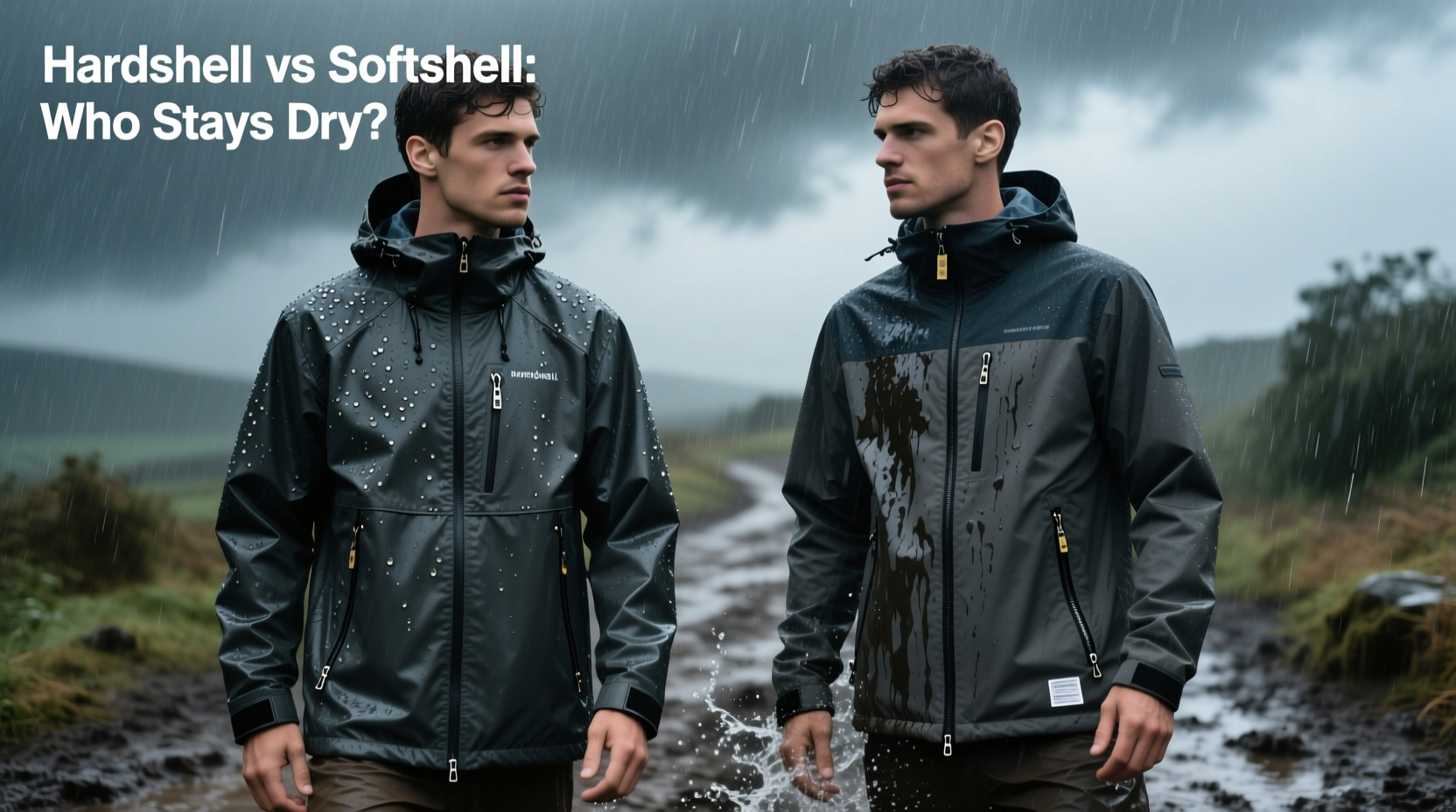
Hardshell jackets are engineered for maximum protection against the elements. They are typically constructed from tightly woven synthetic fabrics like nylon or polyester, laminated with a waterproof breathable membrane such as Gore-Tex, eVent, or proprietary equivalents (e.g., Patagonia’s H2No, The North Face’s DryVent). These membranes are designed to block liquid water while allowing moisture vapor (sweat) to escape.
The key feature of a hardshell is its ability to be fully waterproof. Most models have a hydrostatic head rating of at least 10,000 mm—meaning they can withstand a column of water that high before leaking. Premium models exceed 20,000 mm, making them suitable for prolonged exposure to torrential rain.
In addition to the fabric, hardshells include design elements that enhance weatherproofing:
- Taped or sealed seams to prevent water ingress
- Water-resistant zippers (often covered by storm flaps)
- Hood designs compatible with helmets (for climbers)
- Adjustable cuffs and hems to seal out wind and rain
Because of their focus on protection, hardshells tend to be stiffer, noisier, and less stretchy than softshells. However, their durability and impermeability make them the go-to choice for alpine environments, mountaineering, and any activity where getting wet could become dangerous.
What Defines a Softshell Jacket?
Softshell jackets prioritize mobility, breathability, and moderate weather resistance. They are typically made from a brushed, flexible knit fabric with a Durable Water Repellent (DWR) finish on the exterior. Unlike hardshells, most softshells do not have a waterproof membrane. Instead, they rely on tight weave construction and surface treatments to shed light rain and block wind.
The strength of a softshell lies in its comfort. It feels more like a fleece or athletic wear, offering excellent freedom of movement and minimal noise. Many models incorporate stretch panels or elastane fibers, making them ideal for dynamic activities like scrambling, trail running, or backcountry skiing in dry or lightly damp conditions.
However, softshells have limits. While they handle drizzle and short bursts of rain reasonably well, they eventually saturate under heavy or prolonged precipitation. Once the DWR wears off or the fabric becomes overwhelmed, water soaks through—a process known as \"wetting out.\" When this happens, the jacket loses much of its breathability and insulation value.
“Softshells excel in variable conditions where mobility and moisture management matter more than absolute waterproofing.” — Dr. Lena Torres, Outdoor Gear Materials Scientist, University of Colorado Boulder
Hardshell vs Softshell: Performance in Heavy Rain
To determine which jacket truly keeps you dry in heavy rain, we need to evaluate three critical factors: waterproofing, breathability, and longevity under stress.
| Feature | Hardshell Jacket | Softshell Jacket |
|---|---|---|
| Waterproofing | Fully waterproof with membrane; resists >10,000 mm hydrostatic pressure | Water-resistant only; relies on DWR and fabric density |
| Rain Duration Tolerance | Hours of continuous rain without leakage | 5–30 minutes before wetting out in heavy rain |
| Breathability (when dry) | Moderate to high, depends on membrane technology | Excellent; minimal resistance to vapor transfer |
| Wind Resistance | Very high | High (with wind-blocking variants) |
| Durability in Storms | High; abrasion-resistant, reinforced in key areas | Lower; softer fabric prone to scuffing and saturation |
The data shows a clear winner when it comes to staying dry in heavy rain: the hardshell. Its construction is specifically designed to keep water out, regardless of duration or intensity. A quality hardshell will maintain its integrity even in tropical downpours or mountain squalls lasting several hours.
Softshells, on the other hand, perform best in mixed conditions—such as windy but mostly dry alpine ridges, or during fast-paced hikes where sweat management is crucial. Some hybrid softshells now include lightweight membranes, blurring the line between categories, but these still generally fall short of full hardshell performance in sustained rain.
Real-World Example: Hiking the Pacific Northwest Trail
Consider a multi-day trek along Washington’s Cascade Mountains in late October. The forecast calls for steady rain over 48 hours, with temperatures hovering near 45°F (7°C). Two hikers set out: one wearing a premium softshell, the other in a three-layer Gore-Tex Pro hardshell.
By the end of the first day, the softshell wearer reports feeling damp—not from direct leakage, but because the jacket \"wetted out\" early in the hike. Once saturated, the fabric stopped breathing effectively, leading to internal condensation. Their base layer began clinging uncomfortably, and by camp, moisture had seeped into their backpack through contact with the damp shoulders.
The hardshell user, despite hiking at the same pace, remained dry inside and out. Pit zips allowed heat regulation during climbs, and the helmet-compatible hood deflected rain even in strong winds. Though the jacket was slightly noisier and stiffer, the trade-off for dryness was unquestionably worth it.
This scenario illustrates a common pitfall: choosing comfort over protection in environments where rain is persistent. Softshells aren’t failures—they’re tools for different jobs. But when the rain doesn’t stop, only a hardshell delivers consistent dryness.
How to Extend the Performance of Your Outerwear
Even the best jacket won’t perform well if neglected. Both hardshells and softshells require maintenance to preserve their water-repellent properties and breathability.
Over time, DWR coatings degrade due to dirt, oils, and repeated washing. When water stops beading on your jacket’s surface and instead spreads out, it’s a sign the DWR has worn off. This leads to wetting out—even in hardshells, which may remain technically waterproof but lose breathability when the face fabric saturates.
- Wash Regularly: Use a technical cleaner (like Nikwax Tech Wash or Grangers Performance Wash) every 3–5 uses in wet conditions. Household detergents leave residues that clog membranes.
- Reapply DWR: After cleaning, use a spray-on or wash-in DWR revitalizer to restore water beading.
- Avoid Fabric Softeners: These coat fibers and destroy water-repellent finishes.
- Store Properly: Hang your jacket in a dry closet—never compressed in a stuff sack long-term.
- Inspect Seams and Zippers: Re-tape delaminating seams if needed, and lubricate zippers with wax-based products.
When to Choose Each Jacket: A Practical Checklist
Choosing between a hardshell and softshell shouldn’t be arbitrary. Use this checklist to match your jacket to your environment and activity:
- ✅ Choose a Hardshell If:
- You’ll be exposed to heavy or prolonged rain
- You’re in cold, wet conditions where staying dry is critical
- You need maximum wind protection
- You’re carrying a pack and need abrasion resistance
- Your activity involves minimal sweating (e.g., waiting at belays)
- ✅ Choose a Softshell If:
- You’re engaging in high-output activities (running, ski touring)
- Rain is expected to be light or intermittent
- Mobility and comfort are top priorities
- You want a single layer for cool, dry days with wind
- You’re layering over insulation and need flexibility
For many outdoor users, the optimal solution is owning both. A softshell serves as a versatile mid- or outer-layer in fair to mixed conditions, while a compact hardshell lives in the pack for when the weather turns severe.
Frequently Asked Questions
Can a softshell keep me dry in a thunderstorm?
No. While some softshells resist light rain for a short time, they are not designed for thunderstorms. In heavy downpours, softshells will wet out within minutes, losing breathability and allowing moisture to seep through. A hardshell is essential for true storm protection.
Are all hardshells noisy?
Many traditional hardshells make a crinkly sound when moving, especially older Gore-Tex models. However, newer generations—like Gore-Tex Shakedry, Pertex Shield+, or Schoeller fabrics—are significantly quieter and more flexible. Advances in textile engineering have reduced this drawback considerably.
Is there a jacket that combines both softshell comfort and hardshell waterproofing?
Yes—hybrid jackets exist, though they come with compromises. Some brands offer \"softshell-style\" garments with waterproof membranes (e.g., Arc’teryx Beta LT with a soft face fabric). Others use stretch-woven waterproof materials. These hybrids work well in moderate conditions but may sacrifice durability or breathability compared to dedicated shells.
Final Verdict: What Keeps You Dry in Heavy Rain?
If your priority is staying dry during heavy rain, the answer is unequivocal: a hardshell jacket. Its waterproof membrane, sealed construction, and weather-ready features are engineered precisely for this purpose. No softshell, regardless of branding or price, can match a true hardshell’s ability to keep you dry over hours of sustained downpours.
That said, softshells have earned their place in the outdoor wardrobe. They shine in active, variable conditions where breathability and freedom of movement outweigh the need for total waterproofing. But they are not substitutes for hardshells in serious rain.
The smartest approach is layered preparedness. Wear a softshell when conditions allow, but always carry a lightweight hardshell in your pack when storms are possible. Think of it like insurance: you hope you won’t need it, but when the rain hits, you’ll be glad it’s there.




 浙公网安备
33010002000092号
浙公网安备
33010002000092号 浙B2-20120091-4
Comments
No comments yet. Why don't you start the discussion?