
When it comes to choosing the right suitcase, travelers often face a critical decision: go with the sleek, rigid protection of a hardshell or opt for the flexible, lightweight appeal of a softshell. Marketing campaigns have long touted hardshell luggage as the ultimate in durability—impervious to impact, immune to crushing, and built to last decades. But is that reputation truly deserved? Or has the durability of hard cases been exaggerated into a modern travel myth?
This article dissects the real-world performance of both types under common travel conditions. From airport handling abuse to long-term wear, we’ll examine materials, construction, user habits, and actual failure points to determine whether hardshells truly outlast their fabric-wrapped counterparts—or if softshells are quietly winning the longevity game.
The Hardshell Promise: Rigid Protection and Structural Integrity
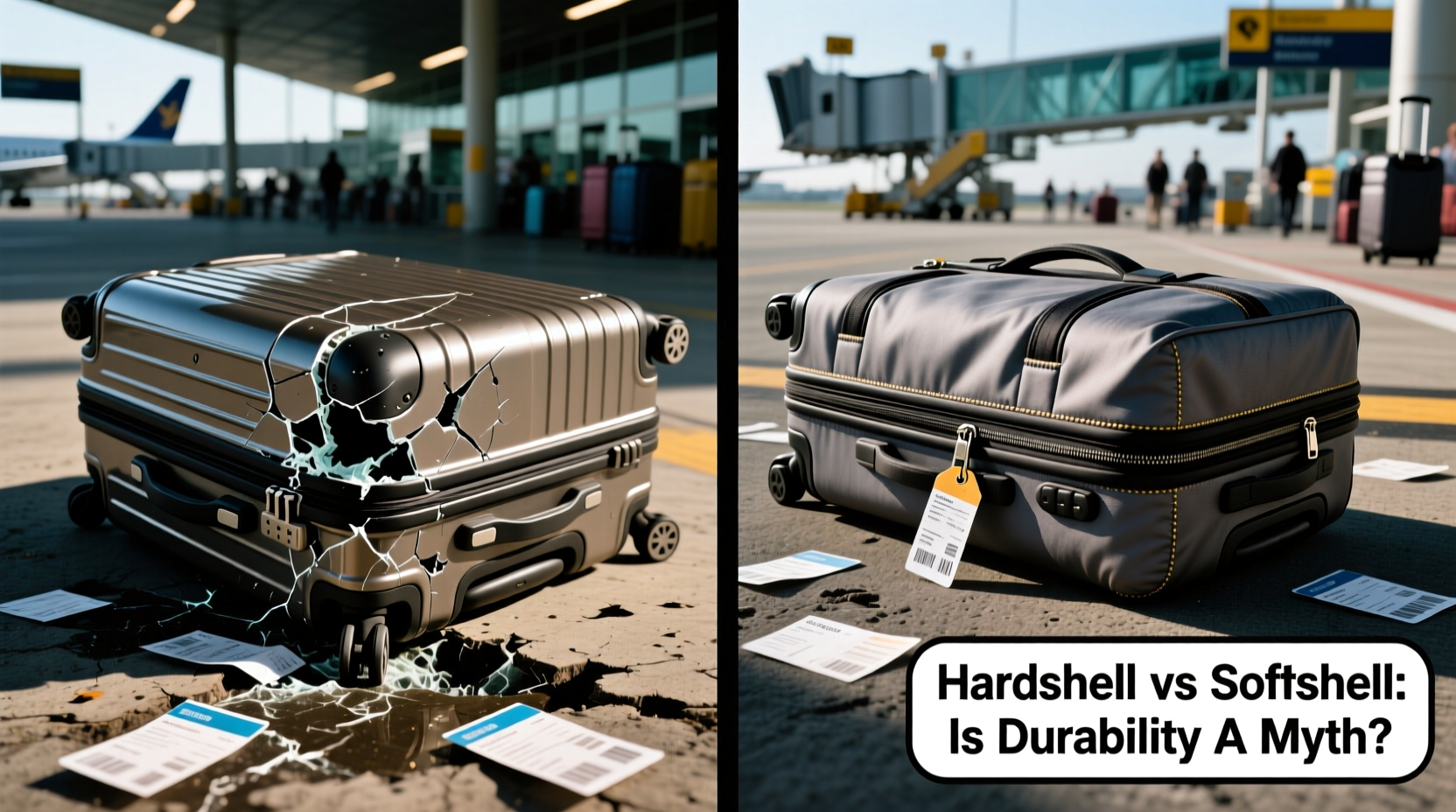
Hardshell suitcases are typically made from polycarbonate, ABS plastic, or composite blends. Their primary selling point is structural rigidity. Because they don’t flex, manufacturers claim they resist compression, shield contents from impact, and maintain shape regardless of how roughly they’re handled.
In theory, this makes sense. A polycarbonate shell can absorb shock by distributing force across its surface, bouncing back from dents that would permanently deform softer materials. This resilience is why many premium brands like Samsonite, Rimowa, and Travelpro use polycarbonate in their flagship models.
However, real-world conditions often expose limitations. While hardshells excel at resisting minor scrapes and pressure, they are vulnerable to catastrophic failure under certain stresses. A single sharp impact—such as being dropped from height onto a concrete floor—can crack or split a polycarbonate case irreparably. Unlike softshells, which may tear but remain functional, a cracked hardshell compromises both security and weather resistance.
“Polycarbonate is excellent for energy dispersion, but it has a fatigue threshold. After repeated stress, even small impacts can lead to sudden fractures.” — Dr. Alan Zhou, Materials Engineer, MIT Luggage Lab
Softshell Strengths: Flexibility, Resilience, and Repairability
Softshell luggage is constructed from high-denier nylon, polyester, or ballistic fabrics, often with reinforced stitching and water-resistant coatings. While lacking the visual armor of hardshells, softshells offer distinct advantages in durability—particularly over time.
Fabric-based luggage absorbs shocks differently. Instead of resisting impact, it flexes and redistributes force. This elasticity allows softshells to survive drops, tumbles, and being stacked under heavier bags without sustaining permanent damage. Even when punctured or torn, many softshells can be repaired with patch kits or simple sewing—something impossible with a shattered polycarbonate panel.
Additionally, softshells tend to age more gracefully. Scratches fade into character rather than becoming glaring flaws. Zippers, while historically a weak point, have improved dramatically with YKK and self-repairing coil designs. Modern softshells also feature abrasion-resistant panels on high-contact areas like bases and corners.
Another overlooked factor is weight distribution. Softshells conform slightly to uneven loads, reducing strain on seams and frames. Hardshells, by contrast, transfer all internal pressure directly to their weakest structural joints—typically around zippers and handle mounts.
Comparative Breakdown: Hardshell vs Softshell Durability Factors
| Factor | Hardshell (Polycarbonate) | Softshell (Ballistic Nylon) |
|---|---|---|
| Impact Resistance | High for glancing blows; fails catastrophically under sharp impact | Moderate to high; absorbs energy through flexing |
| Scratch & Scuff Resistance | Poor—scratches show easily and cannot be removed | Good—fabric hides wear, fades naturally |
| Water Resistance | Excellent—seamless shells prevent moisture ingress | Variable—depends on coating integrity and zipper seals |
| Repairability | Nearly impossible to fix cracks without visible damage | Tears and broken zippers often repairable in minutes |
| Lifespan (Under Frequent Use) | 3–5 years average; shorter if subjected to rough handling | 5–7+ years with proper care; longer due to modularity |
| Weight | Heavier, especially larger sizes | Lighter, more carry-on friendly |
Real-World Case Study: Two Suitcases, One Year Apart
Consider Sarah, a freelance consultant who travels an average of 180 days per year. In 2022, she purchased a premium polycarbonate spinner, drawn by its glossy finish and brand reputation. By mid-2023, after multiple checked-bag journeys and one incident where her bag was dropped from a baggage cart, the corner developed a hairline crack. Within weeks, the fracture widened, compromising the zipper seal. Dust and moisture entered during a rainy layover, damaging electronics inside.
She replaced it with a high-end softshell model made from recycled 1680D ballistic nylon. Despite similar usage patterns—including overhead bin shoves, conveyor belt jams, and being used as an impromptu seat at airports—the softshell remained intact. One zipper pull broke in early 2024, but a five-minute replacement using a spare part from the manufacturer restored full function. After 14 months, the bag showed scuffs but no structural issues.
Sarah’s experience isn’t unique. Independent luggage forums and consumer reports consistently show higher long-term satisfaction rates among frequent flyers using softshells, particularly those who check their bags regularly.
Beyond Materials: How User Behavior Impacts Longevity
Durability isn’t just about what a suitcase is made of—it’s also shaped by how it’s used. Many hardshell failures stem not from inherent weakness, but from misuse:
- Overpacking: Stuffed beyond capacity, hardshells bulge at seams, stressing hinges and zippers until they fail.
- Poor handling: Dragging instead of rolling increases friction on edges, accelerating micro-cracks.
- Temperature exposure: Leaving a polycarbonate case in extreme heat (e.g., car trunks) causes material degradation over time.
- Lack of storage care: Stacking heavy objects on top of stored luggage warps shells permanently.
Softshells, while more forgiving, aren’t immune. Exposure to mold-prone environments, failure to clean after beach trips, or ignoring small tears can shorten their lifespan significantly.
Action Checklist: Maximizing Suitcase Lifespan Regardless of Type
- Never exceed the manufacturer’s weight limit.
- Use packing cubes to distribute weight evenly and protect delicate items.
- Clean exterior surfaces every 3–4 trips with mild soap and water.
- Inspect zippers, wheels, and handles monthly for early signs of wear.
- Store empty, open, and in a dry, ventilated space—not compressed under furniture.
- Apply waterproofing spray annually to softshell fabrics.
- Avoid leaving luggage in direct sunlight or humid basements.
Expert Consensus: Durability Is Contextual
No single luggage type wins across all scenarios. Industry experts emphasize that “durability” must be defined by usage context.
For infrequent travelers who prioritize appearance and protection of fragile items (cameras, glassware), hardshells make sense. Their sealed interiors guard against spills and dust, and their smooth surfaces are easy to wipe down.
But for road warriors, backpackers, or anyone checking bags routinely, softshells offer superior long-term value. They withstand unpredictable handling, adapt to irregular storage spaces, and survive incidents that would retire a hardshell.
“The idea that hardshell equals durable is outdated. We now measure durability by service life, not initial toughness. In that metric, well-made softshells often outperform.” — Lena Patel, Senior Editor, *Travel Gear Review*
FAQ: Common Questions About Luggage Durability
Can a cracked hardshell be repaired effectively?
While temporary fixes exist—like epoxy resin or plastic welding patches—they rarely restore structural integrity or aesthetics. Most manufacturers recommend replacement once a crack forms, especially near seams or wheels.
Do softshells get dirty faster than hardshells?
Surface dirt is more visible on light-colored softshells, but modern fabrics are treated with stain-resistant coatings. Hardshells show scuffs more prominently, and these cannot be cleaned away. Regular wiping maintains both types well.
Which type survives airline check-in better?
Data from luggage damage claims suggests softshells file fewer successful insurance claims for structural failure. Their flexibility helps them endure stacking, tossing, and conveyor impacts. Hardshells, while protective internally, suffer more external damage requiring replacement.
Conclusion: Rethinking the Myth of Hardshell Superiority
The belief that hardshell luggage is inherently more durable than softshell is rooted in early 2000s marketing, not modern evidence. While hardshells offer excellent protection for contents and perform well under controlled conditions, their fragility under sharp impact and poor repairability undermine long-term resilience.
Softshells, once seen as flimsy alternatives, have evolved into sophisticated travel tools. With advanced textiles, robust zippers, and modular designs, they now represent a smarter choice for most travelers—especially those who value longevity, adaptability, and practical maintenance.
Durability isn’t just about surviving a single drop test. It’s about enduring hundreds of flights, adapting to changing needs, and remaining functional despite inevitable wear. In that broader definition, softshell luggage doesn’t just compete—it often wins.




 浙公网安备
33010002000092号
浙公网安备
33010002000092号 浙B2-20120091-4
Comments
No comments yet. Why don't you start the discussion?