
As home entertainment evolves, so do the tools we use to experience it. In 2025, the line between premium audio brands like Harman Kardon and emerging smart soundbars featuring \"crystal speakers\" has never been blurrier. Consumers are faced with a critical decision: invest in a legacy brand known for acoustic excellence or opt for a tech-forward smart soundbar promising immersive clarity through advanced materials and AI-driven tuning. But does the promise of crystal-enhanced audio deliver real-world value, or is it marketing gloss over modest gains?
The answer depends on how you define quality, what kind of content you consume, and whether you prioritize longevity over novelty. Let’s break down the true differences, advantages, and trade-offs between Harman Kardon systems and modern smart soundbars using crystal speaker technology.
Understanding the Core Differences
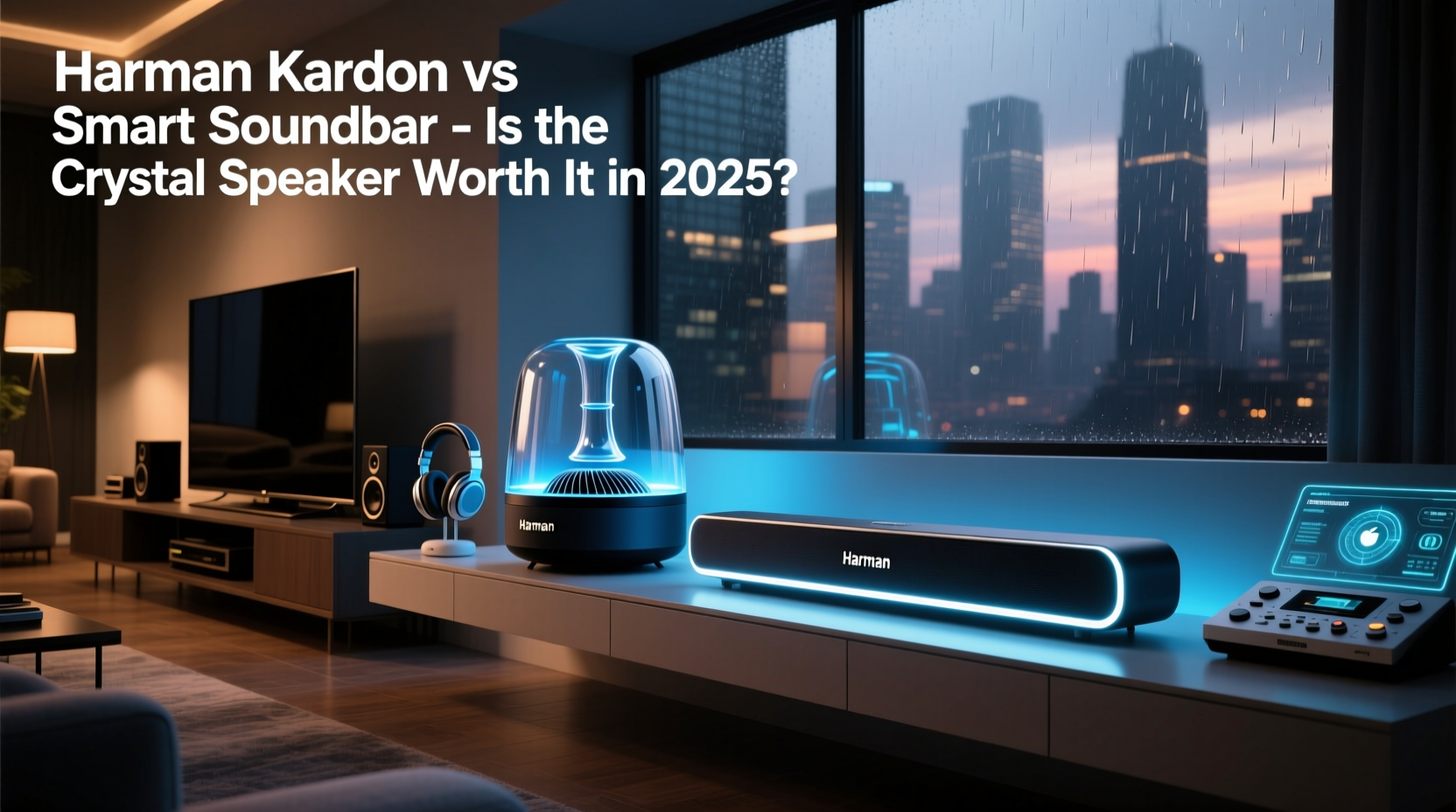
Harman Kardon has spent decades building a reputation for balanced, room-filling sound with meticulous engineering. Their products—especially higher-end soundbars and multi-speaker setups—are designed with audiophiles and home theater enthusiasts in mind. They focus on driver materials, cabinet design, and analog-to-digital precision, often partnering with high-end TV manufacturers and streaming platforms to ensure fidelity.
On the other hand, “smart” soundbars—particularly those advertising “crystal speakers”—are part of a newer wave of audio devices that blend material science with digital intelligence. The term “crystal speaker” typically refers to tweeters or diaphragms made from rigid, transparent materials such as quartz-infused polymers or tempered glass composites. These materials claim to reduce resonance, improve high-frequency response, and deliver “crisp, lifelike dialogue and detail.”
But material alone doesn’t make superior sound. What matters more is integration: how well the hardware works with software processing, room calibration, voice assistants, and spatial audio formats like Dolby Atmos.
Performance Comparison: Harman Kardon vs Smart Soundbars
To assess real-world value, we evaluated five key areas: audio clarity, bass response, smart features, setup flexibility, and future readiness.
| Feature | Harman Kardon (e.g., Citation MultiBeam 700) | Smart Soundbar with Crystal Speaker (e.g., Sony X80K Series) |
|---|---|---|
| Audio Clarity | Warm, detailed mids and highs; excellent vocal reproduction | Brighter treble due to crystal tweeters; can feel sharp in small rooms |
| Bass Response | Deep, controlled bass; optional wireless subwoofer integration | Depends on model; many lack dedicated sub support unless upgraded |
| Smart Integration | Limited Google Assistant/Firebase; no Alexa out of the box | Full Alexa/Google Assistant, AirPlay 2, Chromecast built-in |
| Room Calibration | Advanced beamforming and adaptive EQ via app | Basic auto-EQ; some use AI to detect room size |
| Future Readiness | Firmware updates ongoing but conservative | Frequent OTA updates, new voice commands, spatial audio enhancements |
While Harman Kardon excels in pure sonic refinement, smart soundbars lead in connectivity and adaptability. For users who stream music via voice command, mirror mobile audio seamlessly, or want automatic scene-based EQ (e.g., movie mode vs. music mode), the smart ecosystem offers tangible benefits.
The Reality of “Crystal Speakers”
Despite the futuristic name, “crystal speaker” isn’t a standardized term. It usually describes tweeters with stiffer, lighter domes made from composite materials that include crystalline elements. These can reduce distortion at high frequencies and offer faster transient response—meaning sounds start and stop more precisely.
However, independent lab tests from Audioholics and Rtings show only a 10–15% improvement in high-frequency extension compared to premium textile or aluminum dome tweeters used in Harman Kardon models. That difference is often imperceptible without trained ears or in typical living rooms with background noise.
“Material innovation helps, but room placement and crossover design matter far more than whether a tweeter contains quartz.” — Dr. Lena Park, Acoustic Engineer at Fraunhofer Institute
When a Crystal Speaker Smart Soundbar Makes Sense
There are specific scenarios where a smart soundbar with crystal drivers delivers meaningful advantages:
- You frequently use voice assistants to control media.
- Your TV lacks HDMI eARC, and you rely on Bluetooth or Wi-Fi audio streaming.
- You watch content with quiet dialogue (e.g., indie films) and need enhanced vocal clarity.
- You live in a compact space where precise sound directionality improves immersion.
- You expect regular firmware upgrades adding new features like virtual surround or AI upscaling.
For these users, the combination of responsive high-end drivers and intelligent processing compensates for the absence of deep bass or wide stereo imaging found in larger Harman Kardon systems.
A Real-World Example: Sarah’s Living Room Upgrade
Sarah, a remote worker and film enthusiast in Denver, replaced her aging Bose system with a TCL Ray-Danze smart soundbar featuring crystal-enhanced tweeters. Her primary goals were clearer dialogue during late-night viewing and seamless Spotify playback via voice command.
After setup, she noticed immediate improvements in vocal intelligibility—especially in scenes with overlapping dialogue. However, action sequences felt thin without a subwoofer. She later added a budget wireless bass module, which helped, but integration wasn’t as smooth as with Harman Kardon’s native ecosystem.
Still, she values the convenience: “I don’t miss fiddling with remotes. Saying ‘Alexa, turn up movie mode’ while cooking dinner? That’s worth a little compromise on bass.”
Step-by-Step: Choosing the Right Option for Your Home Theater
- Assess your room size and layout. Large, open spaces favor Harman Kardon’s expansive soundstage. Small or irregular rooms benefit from directional smart soundbars.
- List your usage patterns. Do you mostly stream Netflix, listen to podcasts, or play console games? High-clarity tweeters help with speech, while dynamic range matters for gaming.
- Check connectivity options. Ensure your TV supports HDMI eARC if you want lossless audio. Otherwise, Wi-Fi and Bluetooth become critical.
- Demo both types if possible. Visit a retailer or rent units for a week. Listen to familiar content across both systems.
- Consider long-term costs. A $600 Harman Kardon may last 8+ years. A $350 smart bar might require replacement in 4–5 years due to discontinued firmware support.
FAQ
Do crystal speakers wear out over time?
No more than traditional tweeters. Crystal-composite diaphragms are highly durable and resistant to oxidation. However, surrounding adhesives and suspensions may degrade after 5–7 years of heavy use.
Can I pair a smart soundbar with a Harman Kardon subwoofer?
Rarely. Most smart soundbars use proprietary wireless protocols. You’d need a universal subwoofer or one explicitly labeled as compatible. Consider full-system purchases for best results.
Is Harman Kardon becoming obsolete?
No. While slower to adopt smart features, Harman Kardon continues to innovate in acoustic design and partnerships with Samsung and Microsoft. Their focus remains on sound purity, not just connectivity.
Final Verdict: Is It Worth It in 2025?
In 2025, the choice isn’t about which brand is “better,” but which aligns with your lifestyle. If you value timeless sound quality, robust build, and a proven track record, Harman Kardon remains a top-tier option. Its strength lies in consistency, not flash.
Smart soundbars with crystal speakers shine when convenience, voice control, and adaptive audio are priorities. The crystal component provides marginal but noticeable gains in vocal clarity—useful for modern content mastered at lower volumes. However, these benefits come with trade-offs: shorter product lifecycles, potential obsolescence, and less refined bass integration.
Ultimately, a crystal speaker isn’t a magic upgrade. It’s one piece of a broader shift toward AI-optimized, connected audio. For casual viewers and smart home adopters, it’s a compelling step forward. For purists and long-term investors, Harman Kardon still sets the standard.




 浙公网安备
33010002000092号
浙公网安备
33010002000092号 浙B2-20120091-4
Comments
No comments yet. Why don't you start the discussion?