
Flickering headlights are more than just an annoyance—they can compromise visibility, reduce driving safety, and signal deeper electrical issues in your vehicle. While occasional dimming might seem harmless, persistent or sudden flickering often points to a malfunction that should not be ignored. Understanding the root causes and knowing how to diagnose them can save you from costly repairs and potentially dangerous situations on the road.
Modern vehicles rely on complex electrical systems to power lighting, sensors, and onboard computers. Headlights, especially high-output LED or HID types, demand consistent voltage. Any fluctuation in this supply can result in flickering. The good news is that most causes are diagnosable with basic tools and a methodical approach.
Common Causes of Flickering Headlights
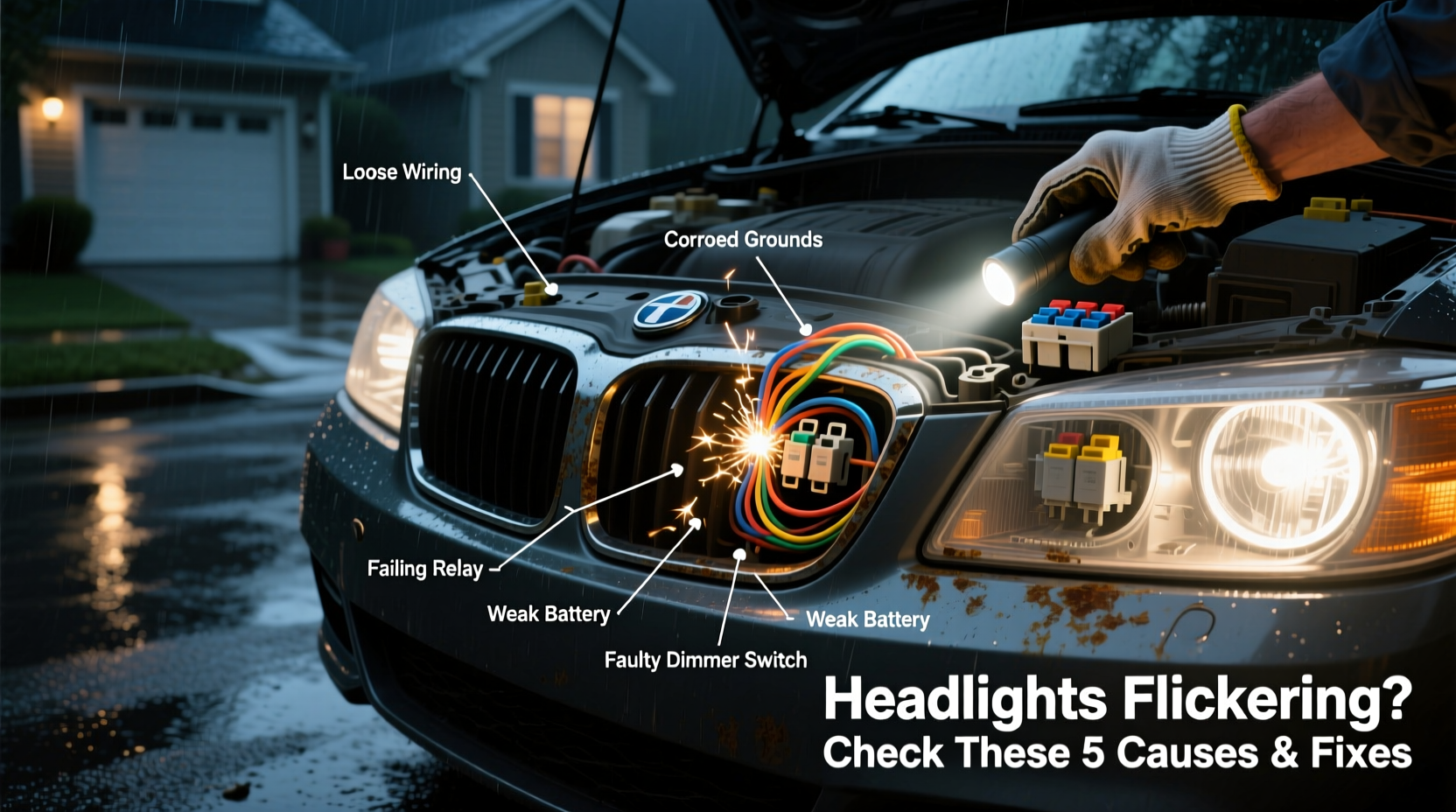
Flickering headlights rarely occur without reason. Several components within your car’s electrical system may contribute to inconsistent lighting output. Identifying the source starts with understanding the most frequent culprits.
- Loose or corroded connections: Wires, connectors, and ground points exposed to moisture and vibration can degrade over time, leading to intermittent contact.
- Failing alternator: If the alternator isn’t supplying steady voltage, lights may dim or flicker—especially at idle or under load.
- Weak or dying battery: A battery unable to hold charge disrupts the entire electrical system, including headlight stability.
- Headlight switch or relay issues: Internal wear in switches or relays can interrupt current flow to the lights.
- Voltage regulator problems: Often integrated into the alternator, a faulty regulator causes erratic voltage delivery.
- Aftermarket lighting upgrades: Poorly installed LED or HID kits may draw irregular current or conflict with CANBUS systems.
- Parasitic drain or circuit overload: Other electrical devices drawing excess power can destabilize lighting circuits.
Step-by-Step Troubleshooting Guide
Diagnosing flickering headlights doesn't require advanced expertise. With a multimeter and some patience, you can systematically isolate the issue.
- Observe the pattern: Does flickering happen only at idle? When accelerating? Only one side affected? This helps narrow down potential causes.
- Inspect bulbs and sockets: Remove each headlight bulb and check for darkening, loose filaments (in halogen), or corrosion. Clean socket contacts with electrical contact cleaner.
- Check wiring and grounds: Trace the wiring harness from the battery to the headlights. Look for frayed wires, melted insulation, or loose ground straps near the chassis or radiator support.
- Test battery voltage: With the engine off, measure voltage across terminals. A healthy battery reads 12.4–12.7 volts. Below 12.2 indicates a weak charge.
- Test charging system: Start the engine and recheck voltage. It should rise to 13.8–14.7 volts. Lower readings suggest alternator or regulator failure.
- Monitor voltage under load: Turn on headlights, AC, radio, and wipers. Voltage should remain stable. A significant drop (below 13.5V) indicates insufficient alternator output.
- Swap relays: If headlights flicker intermittently, try replacing the headlight relay with a known-good one from another circuit (e.g., horn relay).
- Scan for error codes: Use an OBD2 scanner to check for stored electrical or lighting-related fault codes, even if no warning light is on.
Do’s and Don’ts: Electrical System Maintenance
| Do’s | Don’ts |
|---|---|
| Regularly clean battery terminals with baking soda and water | Ignore corrosion or white powder buildup on terminals |
| Tighten all ground connections annually | Use non-OEM bulbs without checking compatibility |
| Replace aging wiring harnesses showing brittleness | Jump-start incorrectly—reverse polarity can fry electronics |
| Install surge-protected LED drivers for aftermarket kits | Overload circuits with multiple high-draw accessories |
| Keep a digital multimeter in your toolkit | Assume flickering is “normal” due to cold weather |
Real-World Case: Resolving Persistent Flickering in a 2016 Honda Civic
A driver reported that their 2016 Honda Civic’s headlights would flicker erratically after about 15 minutes of driving. The issue worsened in stop-and-go traffic but improved slightly at highway speeds. Initial inspection revealed clean bulbs and proper alignment. Battery voltage was strong at rest (12.6V), and the alternator output measured 14.2V while idling.
The mechanic decided to monitor voltage during a test drive. Under city driving conditions, voltage dropped to 12.9V when the AC and headlights were on—below the optimal range. Further investigation found a loose serpentine belt causing inconsistent alternator rotation. After tightening the tensioner and replacing the worn belt, voltage stabilized at 14.1V under full load, and the flickering stopped completely.
This case illustrates how mechanical components like belts indirectly affect electrical performance. A seemingly electrical problem had a mechanical root cause.
“Voltage instability is often a symptom, not the disease. You need to trace upstream—from the battery to the alternator, then through the grounding system—to find the real culprit.” — Marcus Reed, ASE-Certified Master Technician
When to Seek Professional Help
While many flickering issues can be resolved at home, certain scenarios demand professional diagnostics. These include:
- Recurring flickering after replacing bulbs, fuses, and relays
- Multiple electrical systems acting up simultaneously (e.g., dashboard lights, radio, power windows)
- Burning smells, smoke, or visible melting in fuse boxes or wiring
- Vehicle failing to start or stalling frequently
Dealerships and auto electric specialists use advanced diagnostic tools like oscilloscopes and circuit analyzers to detect subtle voltage fluctuations that a standard multimeter might miss. They can also perform load testing on the entire charging system under simulated driving conditions.
Frequently Asked Questions
Can a bad ground cause headlights to flicker?
Yes. A poor ground connection creates resistance in the circuit, leading to inconsistent current flow. This is one of the most common causes of flickering, especially when both headlights are affected simultaneously. Check the ground strap connecting the engine block to the chassis and ensure it’s clean and tightly secured.
Why do my headlights flicker when I accelerate?
Flickering during acceleration often indicates an alternator issue. As engine RPM increases, the alternator should produce more power. If flickering occurs instead, it could mean worn brushes, a failing diode, or voltage regulator malfunction. Have the alternator bench-tested at an auto parts store.
Is it safe to drive with flickering headlights?
Short-term driving may be possible, but it’s not recommended. Flickering reduces visibility and may signal broader electrical instability. In extreme cases, it could lead to complete headlight failure or battery drain. Address the issue promptly to maintain safety and prevent further damage.
Final Thoughts and Action Steps
Flickering headlights should never be dismissed as a minor quirk. They are a warning sign that something in your vehicle’s electrical ecosystem is out of balance. Whether it’s a simple loose wire or a failing alternator, early detection prevents escalation.
Start with a visual inspection and basic voltage checks. Use the troubleshooting steps outlined here to rule out common faults. Keep a log of when flickering occurs—this information can help mechanics pinpoint intermittent issues faster.
If you’re unsure or lack the tools, don’t hesitate to consult a qualified technician. Your headlights are critical to nighttime and adverse-weather safety. Ensuring they operate reliably isn’t just about convenience—it’s about protecting yourself and others on the road.




 浙公网安备
33010002000092号
浙公网安备
33010002000092号 浙B2-20120091-4
Comments
No comments yet. Why don't you start the discussion?