
Emerging from a relationship with a narcissist can feel like waking up in a foreign land—familiar yet disorienting. The emotional manipulation, gaslighting, and cycles of idealization and devaluation leave deep psychological imprints. Healing isn’t just about cutting contact; it’s about reconstructing your identity, restoring your boundaries, and reclaiming the autonomy that was systematically undermined. This process demands patience, courage, and deliberate action. Below are practical, evidence-based steps to guide you through recovery and into a future defined by self-respect and peace.
Understand the Nature of Narcissistic Abuse
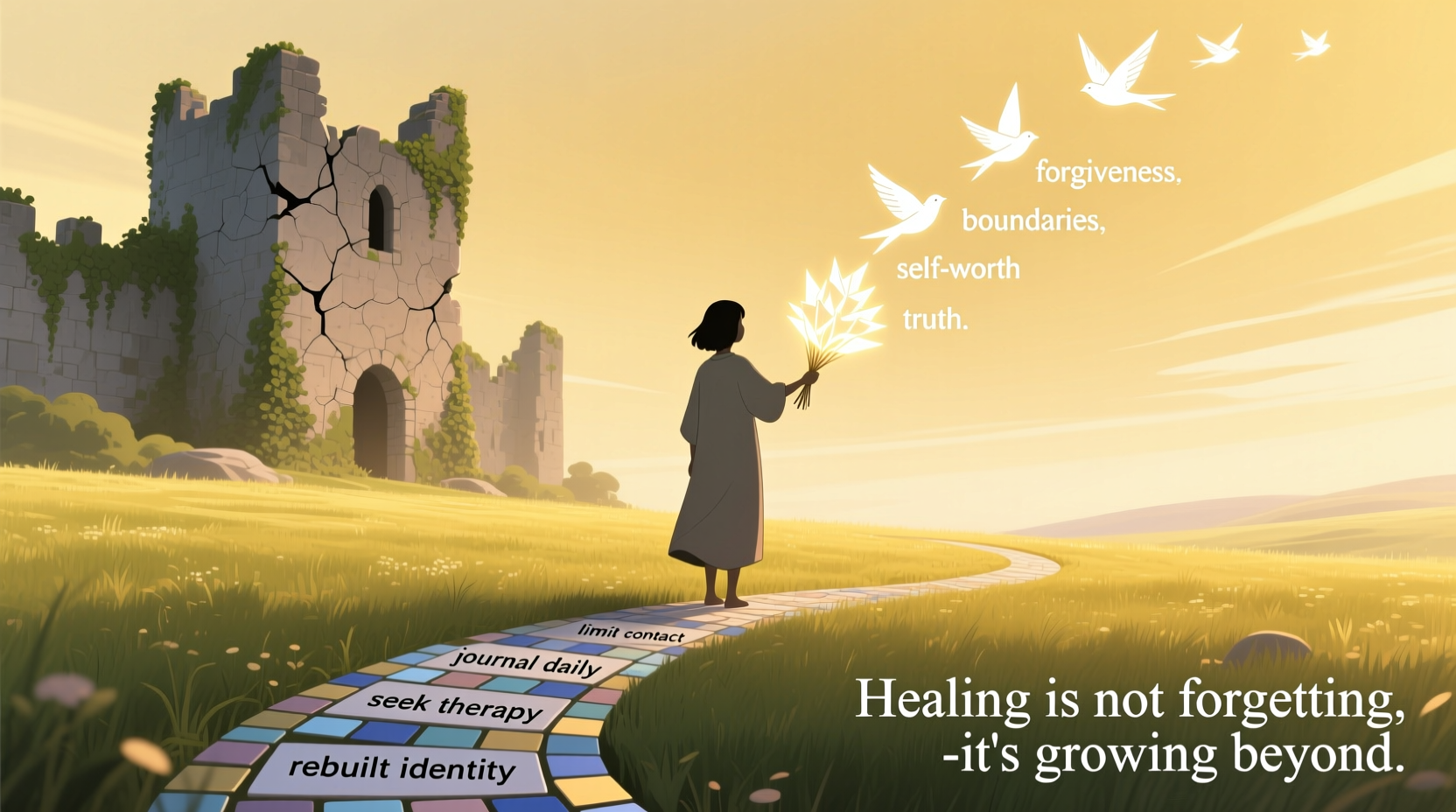
Narcissistic abuse is not merely conflict or poor communication—it is a pattern of control rooted in exploitation and emotional dominance. Unlike typical relationship disagreements, interactions with a narcissist often follow a predictable cycle: love-bombing, devaluation, discard, and sometimes hoovering (attempts to re-engage). Recognizing this pattern is crucial because it shifts the narrative from “What did I do wrong?” to “This was a form of psychological manipulation.”
Dr. Ramani Durvasula, a clinical psychologist and expert on narcissism, explains:
“Narcissistic abuse erodes self-trust. Victims begin to doubt their memory, perception, and sanity. Recovery starts when they realize the problem wasn't them—it was the dynamic.”
Understanding this helps dismantle guilt and shame, which are commonly weaponized by narcissists to maintain control even after the relationship ends.
Step-by-Step Guide to Emotional Recovery
Healing is not linear, but having a structured approach increases the likelihood of lasting recovery. Follow these stages at your own pace, allowing space for setbacks without judgment.
- Establish No Contact (or Gray Rock if Necessary)
Cut off all communication. This includes social media, texts, calls, and third-party updates. If complete no contact isn’t possible (e.g., co-parenting), adopt the “gray rock” method—be emotionally unresponsive and uninteresting to discourage engagement. - Deactivate Triggers
Unfollow, mute, or block the person on all platforms. Remove photos, gifts, and reminders that evoke emotional responses. Your environment should support healing, not retraumatize. - Validate Your Experience
Write down key events, conversations, and feelings during the relationship. Compare notes with a therapist or trusted friend to counteract gaslighting effects. Documentation restores cognitive clarity. - Reconnect With Your Identity
List activities, values, and goals you suppressed during the relationship. Reintroduce small ones first—like listening to music you once loved or revisiting an old hobby. - Build a Support System
Seek out trauma-informed therapists, support groups (online or in-person), or communities focused on narcissistic abuse recovery. Isolation is a tool abusers use; connection breaks it.
Do’s and Don’ts During Recovery
| Do’s | Don’ts |
|---|---|
| Seek therapy with a licensed professional experienced in trauma | Engage in arguments or debates trying to make them see reason |
| Educate yourself about narcissism and emotional abuse patterns | Rely solely on friends or social media for validation of your experience |
| Set firm boundaries with mutual acquaintances who minimize your pain | Blame yourself for not leaving sooner |
| Practice self-compassion through affirmations and mindfulness | Jump into a new relationship to fill the emotional void |
| Allow yourself to grieve the loss—even if it was toxic | Expect closure from the narcissist; true closure comes from within |
A Real Path to Healing: A Mini Case Study
Sarah, a 34-year-old graphic designer, spent six years in a relationship with someone who alternated between excessive praise and sudden coldness. She began doubting her creativity, constantly apologizing for things she didn’t say, and isolating from friends who questioned the relationship. After ending it, she felt lost—not relieved, but empty.
She started therapy specializing in complex PTSD from emotional abuse. Her therapist guided her through grounding techniques and cognitive restructuring to challenge distorted beliefs like “I’m too sensitive” or “I ruined everything.” Over nine months, Sarah rebuilt routines: morning walks, reconnecting with art, and joining a survivors’ group. She created a “reality check” document listing abusive incidents with dates and witnesses to combat lingering self-doubt.
Today, Sarah says, “I don’t miss him. I miss who I thought he was. But I love who I’ve become—someone who trusts herself again.”
Essential Checklist for Moving Forward
- ✅ Cut off all direct and indirect contact
- ✅ Remove triggering reminders from your home and devices
- ✅ Begin therapy or join a narcissistic abuse recovery group
- ✅ Journal daily to process emotions and track progress
- ✅ Identify and reclaim personal values and goals
- ✅ Practice saying “no” in low-stakes situations to rebuild boundary confidence
- ✅ Celebrate small wins—getting out of bed, cooking a meal, setting a limit
Frequently Asked Questions
Why do I still miss them even though they hurt me?
You’re not missing the reality of the person—you’re mourning the potential, the moments of kindness, and the future you believed in. The brain bonds to intensity, not just positivity. Missing them is normal, but it doesn’t mean returning is healthy.
Can a narcissist change?
Genuine change requires self-awareness, accountability, and long-term therapy—qualities rarely present in narcissistic personality disorder. While behavior can shift temporarily, core traits like lack of empathy and need for control typically persist. Focus on changing your response, not hoping for theirs.
How long does healing take?
There’s no timeline. For some, significant progress happens in 6–12 months. For others, especially after long-term or childhood exposure, it may take years. Progress isn’t measured by forgetting, but by reduced emotional charge and regained agency.
Rebuild With Purpose
Moving forward doesn’t mean pretending it never happened. It means integrating the experience without letting it define you. You were targeted not because you were weak, but because your empathy, loyalty, and capacity for love made you a source of supply. Those same qualities, now protected by awareness and boundaries, become your greatest strengths.
Healing is an act of rebellion against manipulation. Every time you choose yourself—by resting instead of over-explaining, by walking away instead of begging for fairness, by trusting your gut despite past conditioning—you reclaim power. This isn’t just recovery; it’s transformation.




 浙公网安备
33010002000092号
浙公网安备
33010002000092号 浙B2-20120091-4
Comments
No comments yet. Why don't you start the discussion?