
For many people, hearing a rhythmic whooshing or thumping sound in sync with their pulse can be unsettling—especially when it happens in quiet environments or at night. This phenomenon, known as pulsatile tinnitus, differs from the more common form of tinnitus characterized by constant ringing or buzzing. Unlike typical tinnitus, pulsatile tinnitus is often audible to others during a physical exam, making it a \"objective\" type of tinnitus. While sometimes benign, it can also signal underlying vascular or neurological conditions that require prompt medical attention.
Understanding the potential causes, recognizing warning signs, and knowing when to seek help are essential steps toward effective management and peace of mind.
What Is Pulsatile Tinnitus?
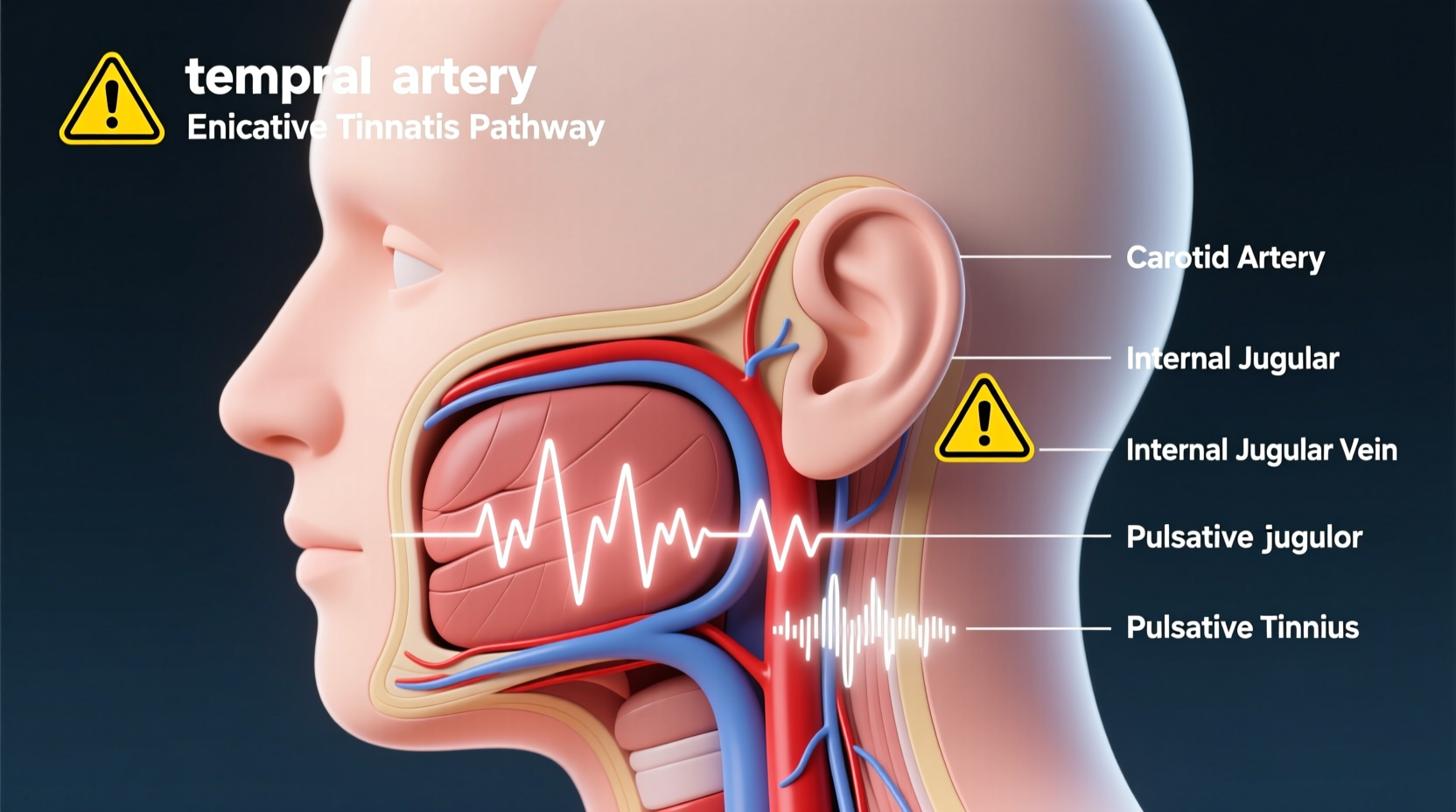
Pulsatile tinnitus refers to the perception of a rhythmic noise—often described as a whooshing, thumping, or beating sound—that matches the individual’s heartbeat. It typically occurs in one or both ears and may be more noticeable when lying down or in a quiet room. Unlike subjective tinnitus (which only the patient hears), pulsatile tinnitus can sometimes be heard by a healthcare provider using a stethoscope, classifying it as objective tinnitus.
The sound arises due to blood flow near the ear structures. When blood moves through narrowed, malformed, or unusually positioned vessels close to the cochlea or auditory nerve, the motion generates audible vibrations. These are then interpreted by the brain as sound.
Common Causes of Hearing Your Heartbeat in the Ear
Several factors can contribute to pulsatile tinnitus. Some are relatively harmless, while others point to serious health issues. Below are the most frequent causes:
- High Blood Pressure (Hypertension): Elevated blood pressure increases the force of blood flow through arteries, making vascular sounds more prominent near the ear.
- Conductive Hearing Loss: Conditions like middle ear infections or otosclerosis (abnormal bone growth in the middle ear) can amplify internal body sounds, including blood flow.
- Superior Semicircular Canal Dehiscence (SSCD): A rare condition where a thinning or opening in the skull bone over the inner ear allows increased transmission of internal noises.
- Carotid Artery Disease: Narrowing (stenosis) or irregularities in the carotid artery, which runs close to the ear, can produce turbulent blood flow and audible pulsations.
- Idiopathic Intracranial Hypertension (IIH): Also known as pseudotumor cerebri, this condition involves elevated pressure within the skull and is commonly seen in obese women of childbearing age. Pulsatile tinnitus is a hallmark symptom.
- Vascular Tumors: Rarely, glomus tumors (paragangliomas) located near the middle or inner ear can cause pulsatile tinnitus due to their rich blood supply.
- Anemia: Reduced red blood cell count increases cardiac output and blood velocity, potentially leading to audible flow sounds.
- Thyroid Disorders: Hyperthyroidism can increase blood flow and metabolic rate, contributing to pulsatile sensations in the ear.
“Pulsatile tinnitus should never be dismissed as ‘just stress’ or aging. It’s a symptom that demands investigation.” — Dr. Laura Chen, Neurotologist at Boston Hearing Institute
When to Worry: Red Flags and Warning Signs
While occasional awareness of blood flow isn’t always dangerous, certain symptoms indicate the need for immediate evaluation. The following are clinical red flags:
| Symptom | Potential Concern | Action Required |
|---|---|---|
| New-onset pulsatile tinnitus | Underlying vascular issue | See an ENT specialist within 2 weeks |
| Unilateral (one-sided) pulsing | Possibility of tumor or stenosis | Imaging recommended (MRI/MRA) |
| Associated headaches, vision changes, or nausea | Intracranial hypertension | Urgent neurology consult |
| Dizziness or hearing loss | Inner ear disorder or tumor | Audiogram and vestibular testing |
| History of head trauma | Arteriovenous fistula or dissection | CT angiography advised |
Mini Case Study: Recognizing IIH Early
Sarah, a 32-year-old teacher, began noticing a rhythmic pounding in her left ear six months after gaining 30 pounds post-pregnancy. Initially dismissing it as fatigue, she later developed daily headaches and transient vision blurring. After visiting an ENT, she underwent an MRI which revealed no tumor but showed empty sella and distended optic nerves—classic signs of idiopathic intracranial hypertension. With weight loss guidance, diuretic therapy, and regular monitoring, her symptoms significantly improved within three months. Her case underscores the importance of not ignoring pulsatile tinnitus, especially when combined with other neurological symptoms.
Diagnostic Process and Medical Evaluation
If you experience persistent pulsatile tinnitus, a structured diagnostic approach helps identify the root cause. Here’s what to expect:
- Clinical History: Your doctor will ask about onset, duration, laterality (one or both ears), associated symptoms, and risk factors such as hypertension, anemia, or thyroid disease.
- Physical Examination: Includes auscultation (listening with a stethoscope over the eyes, neck, and around the ears) to detect bruits or vascular sounds.
- Hearing Test (Audiometry): Determines if there’s conductive or sensorineural hearing loss.
- Imaging Studies:
- MRI/MRA: To evaluate brain structures and blood vessels.
- CT Angiography: Useful for detecting carotid stenosis or bony abnormalities like SSCD.
- Lumbar Puncture: Performed if IIH is suspected, to measure cerebrospinal fluid pressure.
Checklist: What You Should Do Now
- ✅ Monitor when the sound occurs and its relation to posture, activity, or time of day.
- ✅ Check your blood pressure regularly at home.
- ✅ Schedule an appointment with an otolaryngologist (ENT) or audiologist.
- ✅ Avoid loud noise exposure and ototoxic medications (e.g., aspirin in high doses).
- ✅ Prepare a list of all medications, supplements, and pre-existing conditions.
Treatment Options Based on Cause
There is no one-size-fits-all treatment for pulsatile tinnitus. Management depends entirely on the underlying condition:
- Blood Pressure Control: Medications like ACE inhibitors or beta-blockers, along with lifestyle changes (low-sodium diet, exercise), can reduce turbulent flow.
- Surgical Intervention: For structural issues such as glomus tumors or superior canal dehiscence, surgery may be curative.
- Weight Management and Diuretics: In IIH, weight loss and acetazolamide are first-line treatments.
- Vascular Procedures: Carotid endarterectomy or stenting may be needed for severe stenosis.
- Sound Therapy and Cognitive Behavioral Therapy (CBT): For chronic cases without reversible causes, these strategies help manage perception and distress.
Frequently Asked Questions
Can anxiety cause pulsatile tinnitus?
Anxiety doesn’t directly cause pulsatile tinnitus, but it can heighten awareness of bodily sensations, making existing symptoms feel worse. People under stress may focus more on internal sounds, creating a feedback loop. However, anxiety alone does not generate a heartbeat-synchronized noise—there must be an underlying physiological source.
Is pulsatile tinnitus life-threatening?
Not always, but it can be a warning sign of serious conditions such as arterial aneurysms, arteriovenous malformations, or increased intracranial pressure. While many cases are benign, any new or worsening pulsatile tinnitus warrants medical evaluation to rule out dangerous causes.
Will it go away on its own?
In some cases—such as temporary high blood pressure or mild anemia—symptoms may resolve once the underlying issue is corrected. However, persistent pulsatile tinnitus rarely disappears without identifying and treating the root cause.
Conclusion: Take Action Before It Escalates
Hearing your heartbeat in your ear is not something to ignore. While it may stem from manageable conditions like hypertension or hearing changes, it can also be the earliest clue to a significant vascular or neurological problem. Early detection leads to better outcomes—sometimes preventing irreversible damage or complications.
Don’t wait for symptoms to worsen. If you’re experiencing pulsatile tinnitus, especially with headaches, vision changes, or unilateral onset, seek specialized care promptly. Whether it’s adjusting your lifestyle, undergoing imaging, or starting targeted treatment, taking action today can protect your hearing, your health, and your quality of life tomorrow.




 浙公网安备
33010002000092号
浙公网安备
33010002000092号 浙B2-20120091-4
Comments
No comments yet. Why don't you start the discussion?