
There are few dishes that deliver the same level of comfort and nourishment as a well-made pot of beef and barley soup. When prepared in a slow cooker, this classic dish transcends simplicity, transforming humble ingredients into a deeply savory, soul-warming meal. Ideal for busy weekdays or weekend meal prep, the slow cooker version requires minimal hands-on time while maximizing flavor development over several hours. This recipe is not only satisfying but also nutritionally balanced, featuring lean protein, fiber-rich whole grains, and a medley of vegetables. For home cooks seeking a reliable, flavorful, and filling soup that improves with time, this slow-cooked preparation stands as a benchmark in rustic American cuisine.
Definition & Overview
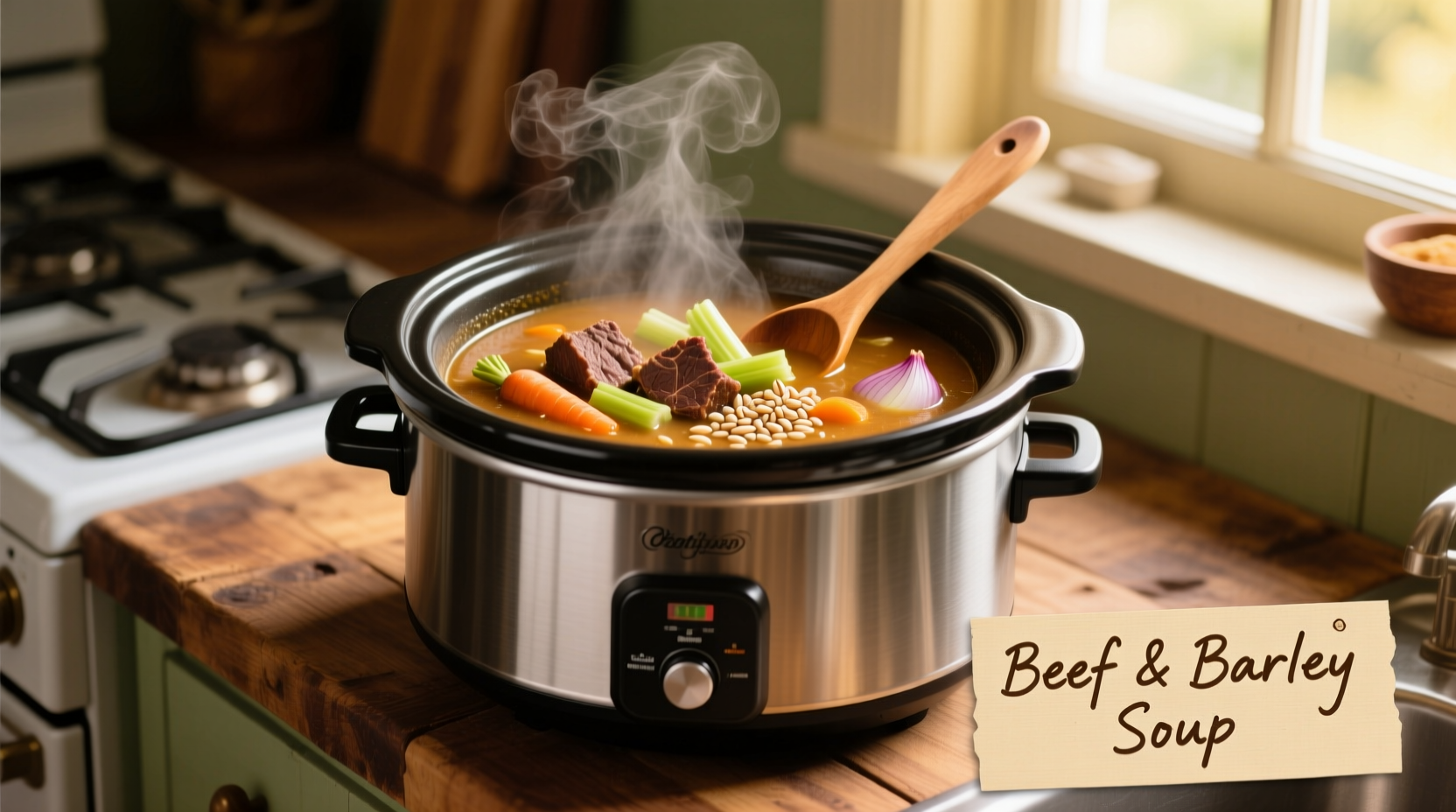
Beef and barley soup is a traditional stew-like dish originating in Northern European and North American culinary traditions, particularly associated with colder climates where long-simmered soups provided sustenance through winter months. It combines seared or browned beef (typically chuck or round), pearl barley, onions, carrots, celery, garlic, and herbs such as thyme and bay leaf, all simmered in beef broth until tender. The result is a thick, hearty soup with a rich umami base, chewy grain texture, and soft vegetables.
When adapted for the slow cooker, the method shifts from stovetop attention to passive cooking. This allows collagen in the beef to break down gradually, yielding exceptionally tender meat, while the barley absorbs liquid slowly, preventing mushiness. Unlike quick-cooked versions, slow cooking enhances depth of flavor by enabling spices and aromatics to meld seamlessly over time. The dish functions equally well as a standalone meal or as part of a rotation of weekly comfort foods, often praised for its leftovers improving on day two.
Key Characteristics
- Flavor Profile: Deeply savory (umami), slightly sweet from vegetables, earthy from barley, with herbal undertones from thyme and bay.
- Aroma: Warm, meaty, and inviting, with toasted onion, garlic, and herb notes.
- Texture: Tender chunks of beef, soft yet distinct vegetables, and plump, chewy barley grains suspended in a thick, silky broth.
- Color: Rustic amber to deep brown broth with visible flecks of green herbs and orange carrots.
- Culinary Function: Serves as a complete meal-in-a-bowl; ideal for batch cooking, freezing, and reheating.
- Shelf Life: Refrigerated for up to 5 days; freezes well for up to 3 months.
- Nutritional Value: High in protein, dietary fiber, iron, and B vitamins due to combination of beef and whole grain barley.
Pro Tip: For maximum flavor extraction, always brown the beef before adding it to the slow cooker. This Maillard reaction builds foundational taste that cannot be replicated by raw addition.
Practical Usage: How to Make Slow Cooker Beef and Barley Soup
Creating an excellent beef and barley soup in a slow cooker hinges on technique, ingredient quality, and timing. Below is a detailed, step-by-step approach designed for consistent results and optimal flavor development.
- Ingredients List (Serves 6–8):
- 1.5 lbs (680g) boneless beef chuck roast, cut into 1-inch cubes
- 1 cup (200g) pearl barley, rinsed
- 1 large yellow onion, diced
- 3 medium carrots, peeled and sliced into rounds
- 3 celery stalks, chopped
- 4 cloves garlic, minced
- 8 cups (2 quarts / 1.9L) low-sodium beef broth
- 1 tbsp tomato paste
- 1 tsp dried thyme (or 4 sprigs fresh)
- 2 bay leaves
- 1 tsp smoked paprika (optional, for depth)
- Salt and freshly ground black pepper to taste
- 2 tbsp olive oil or vegetable oil (for browning)
- Optional additions: frozen peas (added at end), chopped parsley (garnish), splash of Worcestershire sauce
- Browning the Beef: Heat oil in a large skillet over medium-high heat. Pat beef dry with paper towels—this ensures proper browning. Work in batches to avoid overcrowding. Sear each piece until deeply browned on all sides, about 6–8 minutes total. Transfer to the slow cooker insert.
- Building Flavor Base: In the same skillet, add onions, carrots, and celery. Cook over medium heat for 6–7 minutes until softened and lightly caramelized. Stir in garlic and tomato paste; cook for 1 minute more until fragrant. Deglaze the pan with ½ cup of beef broth, scraping up any browned bits (fond)—this step captures immense flavor. Pour entire mixture into the slow cooker.
- Combining Ingredients: Add rinsed barley, remaining broth, thyme, bay leaves, smoked paprika, salt, and pepper to the slow cooker. Stir gently to combine. Do not stir again during cooking to prevent clouding and starch release.
- Cooking Time & Settings:
- Low Setting: 7–8 hours (preferred for best texture and flavor integration)
- High Setting: 4–5 hours (acceptable if short on time)
- Final Adjustments: Remove bay leaves and any large thyme sprigs. Taste and adjust seasoning—add more salt, pepper, or a dash of Worcestershire for brightness. If desired, stir in 1 cup frozen peas during the last 30 minutes of cooking for added color and sweetness.
- Serving Suggestions: Ladle hot soup into bowls. Garnish with chopped fresh parsley. Serve with crusty bread, oyster crackers, or a simple green salad. A drizzle of extra virgin olive oil adds richness.
Storage Note: The soup thickens significantly upon cooling due to barley absorbing liquid. Reheat with additional broth or water to restore desired consistency.
Variants & Types
While the core concept remains consistent, regional and personal adaptations offer variety. Understanding these forms helps tailor the dish to dietary needs or flavor preferences.
| Variant | Description | Best Used When |
|---|---|---|
| Traditional Beef & Pearl Barley | Uses hulled or semi-pearled barley; chewy texture, moderate cooking time. | Standard preparation; ideal for most home cooks. |
| Instant Pot Version | Pressure-cooked in 35–40 minutes; faster but less nuanced flavor development. | Time-constrained settings; acceptable substitute when slow cooking isn’t possible. |
| Vegetarian Adaptation | Replace beef with mushrooms or lentils; use vegetable broth. | Dietary restrictions; retains heartiness without meat. |
| Gluten-Free Alternative | Substitute barley with hulled farro, brown rice, or gluten-free grains like sorghum. | For those with celiac disease or gluten sensitivity. |
| Smoky Chipotle Variation | Add 1–2 canned chipotles in adobo and smoked paprika for bold, spicy depth. | Seeking bolder flavor profile; pairs well with cornbread. |
Pearl barley itself comes in different forms:
- Pearl Barley: Most common type; outer hull and bran layers partially removed. Cooks in 1–1.5 hours unsoaked. Preferred for soups due to creamy texture and ability to absorb flavors.
- Hulled Barley (Whole Grain): Only the inedible outer husk removed. Higher fiber and nutrients but requires longer cooking (up to 3 hours). May become too soft in extended slow cooking unless added later.
- Quick-Cooking Barley: Pre-steamed and flattened. Cooks in 10–15 minutes. Not recommended for slow cookers—will disintegrate.
For slow cooker applications, **pearl barley** is optimal—it holds shape well over long durations without turning gummy or dissolving.
Comparison with Similar Ingredients
Barley is sometimes confused with other small grains used in soups. Understanding distinctions ensures correct usage and expected outcomes.
| Grain | Texture | Cooking Time (Slow Cooker) | Flavor | Best Substitute For Barley? |
|---|---|---|---|---|
| Barley (pearl) | Chewy, slightly nutty, creamy when cooked | 7–8 hrs on Low | Earthy, mild sweetness | N/A – Gold standard |
| Farro | Firm, al dente bite | 6–7 hrs on Low | Wheat-like, nuttier than barley | Yes – similar chew, but pricier |
| Brown Rice | Softer, less chewy | 6–8 hrs on Low | Mild, neutral | Limited – breaks down more easily |
| Oats (steel-cut) | Creamy, porridge-like | 6 hrs on Low | Sweet, malty | No – turns mushy in savory context |
| Quinoa | Light, fluffy, slight crunch | 3–4 hrs on Low | Mild, slightly bitter | No – too delicate; overcooks quickly |
Unlike rice or quinoa, barley contributes both substance and viscosity to soup. Its high beta-glucan content—a soluble fiber—naturally thickens the broth, creating a luxurious mouthfeel absent in grain-free or lighter alternatives.
Practical Tips & FAQs
Should I pre-soak barley before adding to the slow cooker?
No soaking is required for pearl barley. Rinsing under cold water removes excess starch and prevents clumping. Hulled barley benefits from a 1–2 hour soak to reduce cooking time and improve digestibility.
Can I use leftover roast beef?
Yes, but add it during the last 1–2 hours of cooking. Pre-cooked beef added at the beginning will overcook and turn dry or stringy. Leftover beef works best in reheated batches rather than initial assembly.
Why did my soup turn out too thick?
Barley continues to absorb liquid even after cooking. Allow soup to rest covered for 10–15 minutes post-cooking, then assess consistency. Thin with additional warm broth or water before serving. Store leftovers with a little extra liquid to compensate for reabsorption.
Is this soup freezer-friendly?
Yes. Cool completely, then portion into airtight containers, leaving 1-inch headspace for expansion. Freeze for up to 3 months. Thaw overnight in refrigerator and reheat gently on stove or in microwave, adding broth as needed.
Can I make this vegetarian or vegan?
Absolutely. Replace beef with portobello mushrooms, lentils, or textured vegetable protein (TVP). Use mushroom or vegetable broth instead of beef broth. Add 1 tbsp soy sauce or tamari for umami depth. Omit dairy garnishes.
How do I prevent the vegetables from becoming mushy?
Cut root vegetables into uniform, slightly larger pieces (¾ inch). Avoid adding softer vegetables like zucchini or tomatoes early—they break down too quickly. Add frozen peas or corn in the final 30 minutes.
What cuts of beef work best?
Chuck roast is ideal—well-marbled, rich in connective tissue that breaks down into gelatin during slow cooking. Round steak can be used but yields drier results unless monitored closely. Stew meat labeled “chuck” is acceptable; avoid pre-cut “stew beef” from leaner cuts.
Can I skip browning the beef?
You can, but you sacrifice significant flavor. Browning creates complex compounds via the Maillard reaction that define the soup’s character. If skipping, increase tomato paste to 2 tbsp and add 1 tsp soy sauce to boost umami.
How much soup does this yield?
Approximately 2.5 to 3 quarts (10–12 cups), suitable for feeding a family of four twice or providing individual portions for a week.
Does barley lose nutritional value when cooked slowly?
Minimal nutrient loss occurs. Barley retains most of its fiber, B vitamins, and minerals during slow cooking. Prolonged heat may degrade some heat-sensitive vitamins (e.g., vitamin C from vegetables), but overall nutritional density remains high.
\"The magic of beef and barley soup lies in its patience. You’re not just cooking dinner—you’re coaxing flavor from time itself.\" — Chef Eleanor Reeves, Culinary Institute of America
Batch Cooking Strategy: Double the recipe and freeze half. Label with date and contents. Use within three months for peak quality. Ideal for emergency meals, post-illness recovery, or winter rotation.
Summary & Key Takeaways
Hearty Beef and Barley Soup made in a slow cooker exemplifies the power of passive cooking: minimal effort, maximum reward. By leveraging time rather than constant attention, home cooks achieve a dish that rivals professional kitchen output. The synergy between seared beef, chewy pearl barley, and slow-released vegetable sweetness creates a deeply satisfying experience, both physically and emotionally.
Key points to remember:
- Browning the beef is non-negotiable for optimal flavor.
- Pearl barley is the preferred grain for texture and stability.
- Slow cooking on low for 7–8 hours produces superior tenderness and broth integration.
- The soup thickens upon standing—reheat with added liquid.
- Freezes exceptionally well, making it ideal for meal prep.
- Variations exist for dietary needs, including vegetarian, gluten-free, and smoky profiles.
This soup is more than sustenance—it's resilience in a bowl. Whether served after a long day, during convalescence, or as a centerpiece of Sunday dinner, it communicates care, tradition, and culinary wisdom. Once mastered, it becomes a permanent fixture in the home cook’s repertoire, passed down through generations not by recipe card alone, but by memory and aroma.
Try This Next: Transform leftovers into a shepherd’s pie topping—spread soup in a baking dish, top with mashed potatoes, and bake at 375°F (190°C) for 25 minutes until golden.




 浙公网安备
33010002000092号
浙公网安备
33010002000092号 浙B2-20120091-4
Comments
No comments yet. Why don't you start the discussion?