
One of the most satisfying transformations in home cooking is turning a humble ham bone—often discarded after a holiday meal—into a deeply flavorful, nourishing pot of soup. When simmered with potatoes, vegetables, and aromatic herbs, the ham bone releases gelatinous richness and smoky depth that forms the soul of a classic comfort dish. This soup isn’t just economical; it’s a masterclass in resourcefulness, maximizing flavor from leftovers while delivering a meal that warms both body and spirit. Whether you're feeding a family on a cold evening or preserving culinary tradition, a hearty soup made with ham bone and potatoes stands as a testament to slow-cooked simplicity and layered taste.
Definition & Overview
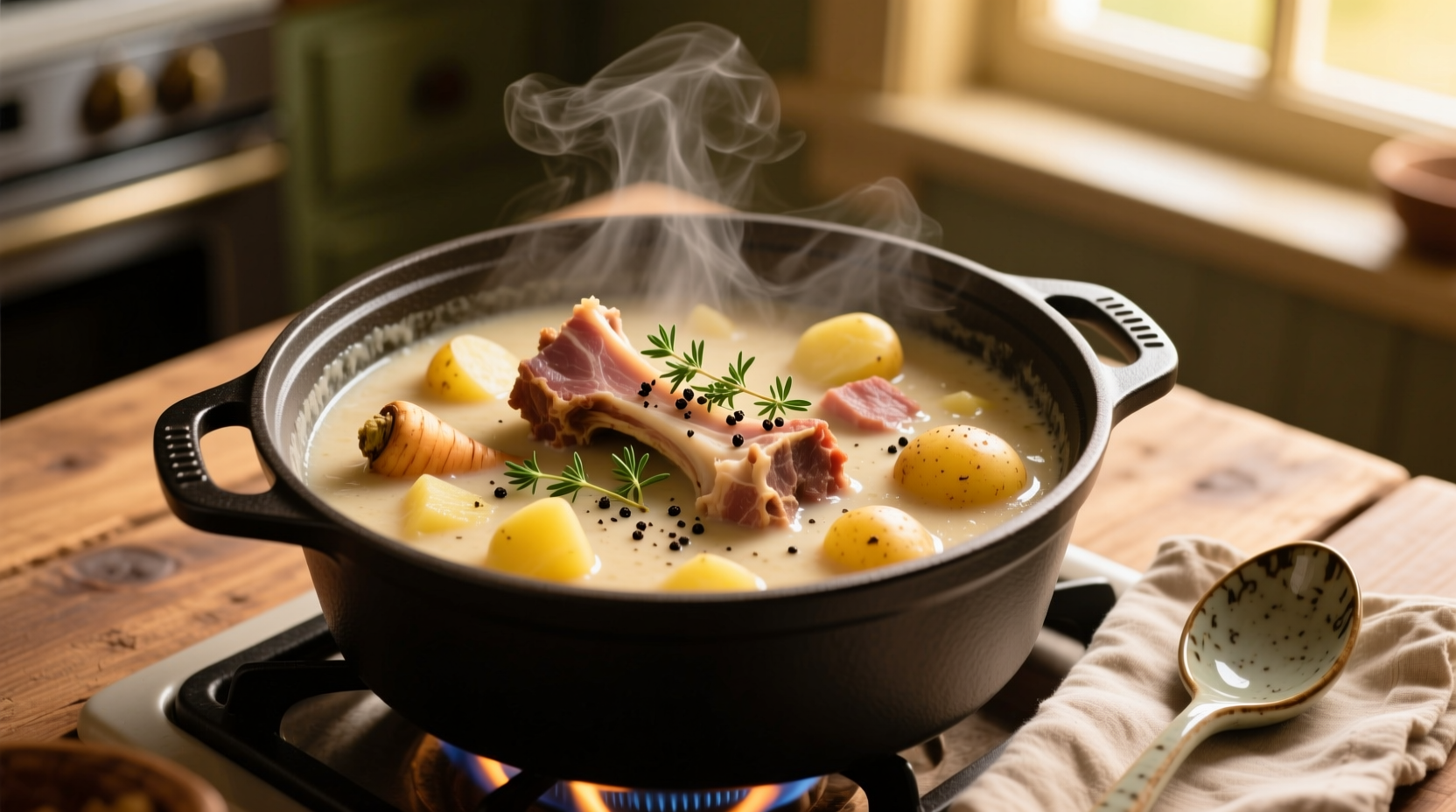
A hearty soup made with ham bone and potatoes is a rustic, slow-simmered broth-based dish rooted in farmhouse and Southern American cuisine, though variations appear across European and global culinary traditions. At its core, it combines the collagen-rich marrow and residual meat of a smoked or cured ham bone with starchy potatoes, onions, carrots, celery, and herbs. The long cooking process extracts gelatin from the bone, giving the soup body, while the ham imparts a savory, slightly salty, and often smoky flavor profile.
This soup transcends mere sustenance—it embodies nose-to-tail eating and seasonal cooking, where nothing goes to waste. It’s commonly prepared after holidays like Easter or Christmas when whole hams are served, but it can be made anytime using a reserved or purchased ham bone. The result is a thick, satisfying stew-like consistency, ideal for serving with crusty bread or a green salad.
Culinary historians trace similar soups to Appalachian kitchens, where preservation and frugality shaped daily meals. In France, a comparable preparation appears as *soupe au pistou* with beans and ham; in Portugal, *caldo verde* uses chouriço and kale, but the foundational principle remains: build flavor from cured pork and root vegetables. The version centered on ham bone and potatoes is particularly beloved in the American South, Midwest, and rural Northeast, where robust, one-pot meals dominate winter menus.
Key Characteristics
| Attribute | Description |
|---|---|
| Flavor Profile | Savory, umami-rich, mildly smoky, with subtle saltiness from the ham; sweetness from carrots and onions balances the salt. |
| Aroma | Warm, meaty, herbal (especially if thyme or bay leaf is used), with earthy notes from potatoes and vegetables. |
| Color & Texture | Opaque golden-brown broth; chunky with tender potatoes and shredded ham pieces; silky mouthfeel due to gelatin extraction. |
| Heat Level | None inherently, though black pepper adds mild warmth. Not spicy unless adjusted. |
| Culinary Function | Comfort food, main-course soup, flavor base for other dishes, method for utilizing leftovers. |
| Shelf Life | 3–4 days refrigerated; up to 3 months frozen. Flavor often improves after 24 hours. |
Practical Usage: How to Make the Best Ham Bone and Potato Soup
The success of this soup hinges not on complexity, but on technique—specifically, how you treat the ham bone and manage cooking time. Follow these steps to ensure maximum flavor and ideal texture.
- Start with the right bone: Choose a ham bone with visible meat still clinging to it. Smoked or spiral-cut bones work best. Avoid overly lean or dry bones. If fresh ham isn’t available, a small ham hock or shank can substitute.
- Simmer, don’t boil: Place the ham bone in a large stockpot with 8–10 cups of water or low-sodium broth. Bring to a gentle simmer—never a rolling boil—to avoid clouding the broth and toughening proteins.
- Add aromatics early: Include one chopped onion, two chopped carrots, two celery stalks, 2–3 garlic cloves, and one bay leaf at the beginning. These mirepoix vegetables infuse the liquid gradually.
- Skim impurities: In the first 15–20 minutes, foam may rise to the surface. Skim it off with a spoon for a cleaner-tasting broth.
- Cook low and slow: Simmer uncovered for 1.5 to 2 hours. This draws out collagen, creating a naturally thickened, glossy broth.
- Add potatoes: Use waxy or all-purpose potatoes (Yukon Gold, red bliss) cut into ¾-inch cubes. Add them during the last 25–30 minutes of cooking to prevent disintegration.
- Remove and shred the meat: After simmering, take the bone out. Let it cool slightly, then pick off all edible meat. Discard fat, cartilage, and bone fragments. Return shredded ham to the pot.
- Season wisely: Taste before salting—the ham contributes significant sodium. Adjust with salt only if needed. Finish with freshly ground black pepper, a splash of apple cider vinegar (½ tsp), or a pat of butter for richness.
- Optional enhancements: Stir in cream, milk, or coconut milk for a creamy version. For heartier texture, add white beans, kale, or cabbage in the final 10 minutes.
Pro Tip: Freeze leftover ham bones immediately after roasting. Keep them in a labeled freezer bag and accumulate several for an extra-rich batch later. A double bone equals double flavor.
Variants & Types
While the basic formula remains consistent, regional and household variations reflect ingredient availability and cultural preferences. Understanding these types helps tailor the soup to your pantry and palate.
- Classic Southern Style: Features yellow potatoes, a touch of tomato paste, and sometimes a diced green bell pepper (the \"holy trinity\" influence). Often finished with a sprinkle of chopped parsley.
- Creamy Version: After removing the ham bone, blend 1–2 cups of the soup (mostly potatoes and broth) and return to the pot. Stir in ½ cup heavy cream or half-and-half for a velvety texture.
- Bean-Enhanced: Adds soaked and cooked navy beans, cannellini, or Great Northern beans. This turns the soup into a complete protein source and increases fiber. Ideal for vegetarian ham-flavored broths using smoked paprika and liquid smoke.
- Green Vegetable Twist: Incorporates collard greens, kale, or cabbage during the last 10–15 minutes. Common in coastal Southern and soul food traditions.
- Irish-Inspired: Uses parsnips alongside potatoes and finishes with a dollop of sour cream and chives. Reflects historical use of preserved meats in Irish peasant cooking.
- Smoky Paprika Version: For those without a smoked ham bone, use a raw ham hock and boost flavor with ½ tsp smoked paprika or a pinch of chipotle powder.
| Variant | Best Used When | Key Ingredient Addition |
|---|---|---|
| Classic Potato & Ham | Leftover ham bone available; seeking comfort food | Potatoes, mirepoix, bay leaf |
| Creamy Puréed | Serving guests or wanting restaurant-style texture | Heavy cream, immersion blender |
| Bean & Ham Bone | Stretching meals or increasing nutrition | Navy or cannellini beans |
| Greens-Infused | Adding vitamins or following soul food tradition | Kale, collards, or cabbage |
| Dairy-Free / Vegan Adaptation | Accommodating dietary restrictions | Smoked tofu, liquid smoke, coconut milk |
Comparison with Similar Ingredients
Ham bones are often confused with other pork bones or flavoring agents. Knowing the differences ensures proper usage and avoids flavor imbalances.
| Item | Differences from Ham Bone | When to Use Instead |
|---|---|---|
| Ham Hock | Uncured or smoked pig’s ankle; more connective tissue, less meat. Requires longer cooking. | If no ham bone available; yields similar gelatin but milder flavor unless smoked. |
| Bacon Ends & Pieces | Smaller, pre-chopped, very salty. Cooks quickly but lacks structural bone for simmering. | For quick stovetop versions; sauté first, then proceed. |
| Chicken Bones | Milder flavor, less salt, lower collagen yield. Broth is lighter in color and body. | When avoiding pork or seeking neutral base. |
| Canned Ham Broth | Convenient but often high in sodium and additives. Lacks depth of homemade. | In a pinch; always dilute and enhance with real vegetables. |
| Smoked Turkey Wing/Neck | Poultry-based, leaner, smoky but less fatty. Good for lighter soups. | Thanksgiving leftovers; lower-fat option with similar smokiness. |
“The ham bone is the unsung hero of the kitchen. It doesn’t shine on the table, but in the pot, it sings.”
— Clara Jenkins, Appalachian Home Cooking Archive
Practical Tips & FAQs
Can I make this soup without a ham bone?
Yes. Substitute with 1 cup of diced smoked ham or 6 oz of ham hock. To mimic depth, add 1 tsp smoked paprika and a 3-inch piece of kombu (seaweed) during simmering. Remove kombu before serving.
How do I prevent the potatoes from turning mushy?
Use waxy potatoes and add them late—only 20–30 minutes before the soup finishes. Avoid over-stirring once added. Yukon Gold holds shape well under heat.
Is this soup gluten-free?
Yes, provided no flour-based thickeners are used. Naturally gluten-free if made with vegetables, ham, and broth. Always check labels on store-bought broth or ham if cross-contamination is a concern.
Can I use sweet potatoes instead of white potatoes?
You can, but expect a sweeter, denser soup. Sweet potatoes break down faster, so reduce cooking time to 15–20 minutes. Best in fusion or modernized versions.
How do I store and reheat leftovers?
Cool completely within 2 hours. Store in airtight containers for up to 4 days in the refrigerator. Reheat gently on the stove over medium-low heat. Add a splash of water or broth if too thick. Freeze for up to 3 months in portioned containers.
Why skim the foam from the broth?
The initial scum consists of coagulated proteins and impurities. Skimming produces a clearer, cleaner-tasting broth. It’s optional but recommended for refined results.
Can I cook this in a slow cooker or Instant Pot?
Absolutely. In a slow cooker, combine all ingredients except potatoes and cream, cook on Low for 8 hours or High for 4. Add potatoes in the last 2 hours. In an Instant Pot, use the Soup/Bone Broth setting: 45 minutes high pressure, natural release. Add potatoes and cook 5 minutes more on Manual.
What herbs pair best with ham bone soup?
Thyme, rosemary, bay leaf, and parsley are ideal. Thyme enhances earthiness; rosemary adds pine-like depth (use sparingly); bay leaf contributes background complexity. Avoid strong herbs like oregano or sage, which overpower.
How much soup does one ham bone yield?
A standard ham bone (from a 7–10 lb ham) makes 6–8 cups of soup, depending on added liquid. Scale vegetables and potatoes accordingly.
Storage Checklist:
☐ Cool soup within 2 hours
☐ Use shallow containers for rapid cooling
☐ Label with date
☐ Refrigerate ≤4 days or freeze ≤3 months
☐ Leave headspace in freezer containers (soup expands)
Summary & Key Takeaways
A hearty soup made with ham bone and potatoes is far more than a way to use leftovers—it’s a culinary tradition grounded in wisdom, economy, and deep flavor. The ham bone serves as a flavor engine, releasing gelatin and smoky savoriness through slow simmering. Potatoes add substance and balance, transforming thin broth into a filling meal. With proper technique—skimming, seasoning thoughtfully, and timing potato addition—you achieve a restaurant-quality result at home.
Variations abound, from creamy purées to bean-enriched stews, allowing adaptation to dietary needs and seasonal ingredients. Compared to substitutes like bacon or canned broth, the ham bone offers unmatched depth and authenticity. Whether made on a stovetop, in a slow cooker, or under pressure, this soup rewards patience and attention to detail.
Ultimately, this dish exemplifies sustainable cooking: honoring the animal, minimizing waste, and maximizing taste. It connects generations, evokes memory, and satisfies hunger in the most fundamental way. Keep a ham bone in your freezer, and you’ll always have the foundation for a meal that comforts, nourishes, and impresses.




 浙公网安备
33010002000092号
浙公网安备
33010002000092号 浙B2-20120091-4
Comments
No comments yet. Why don't you start the discussion?