
For years, heat styling has dominated the beauty world. The curling iron, in particular, remains a go-to for creating bouncy waves and defined spirals in minutes. But as awareness grows about heat damage and hair health, more people are turning to heatless alternatives—especially the ribbon method. This technique, which involves wrapping sections of damp hair around thin strips of fabric, promises soft, natural-looking curls without any thermal exposure. But does it hold up throughout the day? And how does it truly compare to the speed and reliability of a curling iron? Let’s break down both methods with an eye toward longevity, ease of use, and hair integrity.
The Science Behind Heat Styling and Heatless Curls
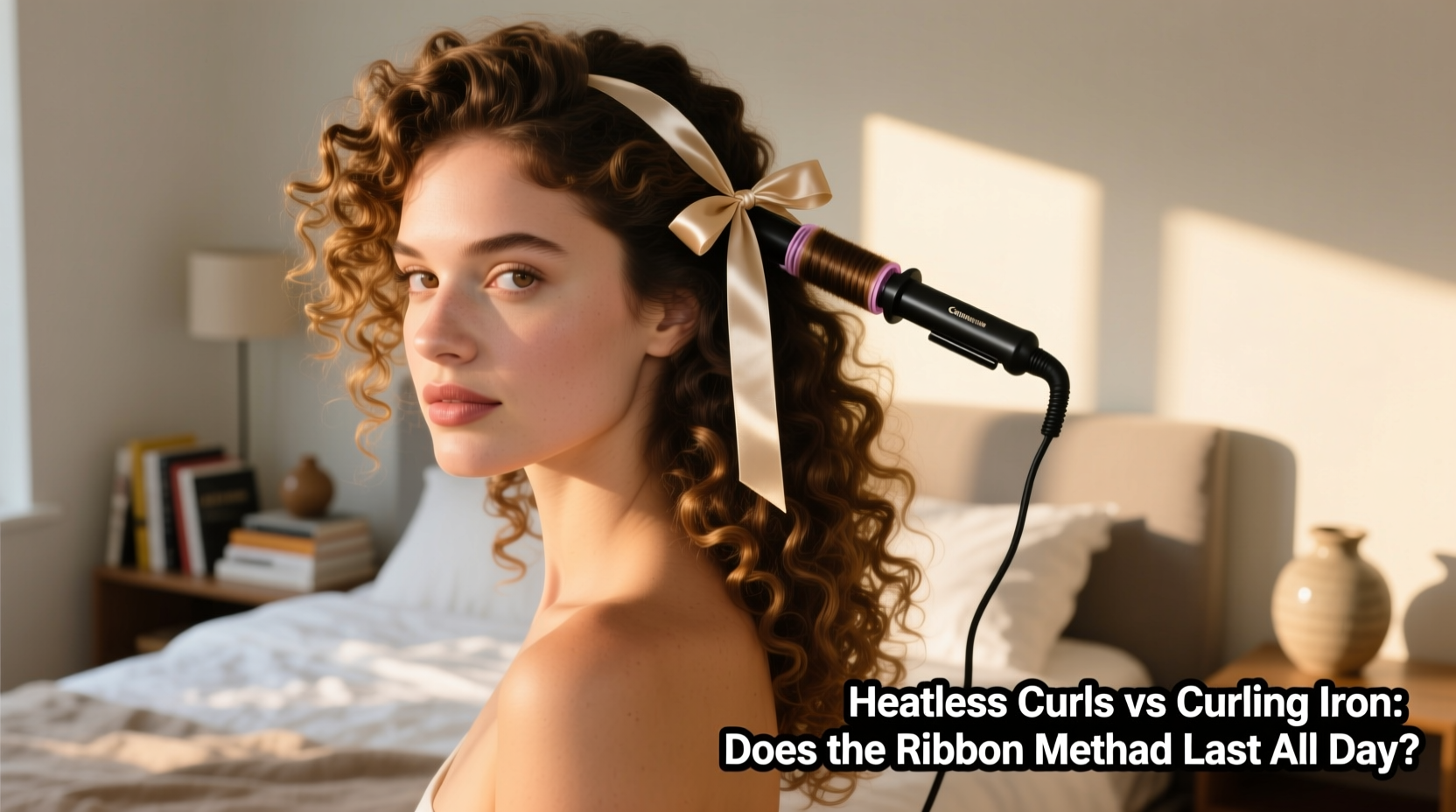
Curling irons work by applying direct heat to alter the hydrogen bonds in your hair. When heated, these bonds temporarily break and reform into a new shape—curled or waved—as the hair cools. Most modern tools range from 300°F to 400°F, depending on hair type. While effective, repeated exposure to high temperatures can degrade keratin, strip moisture, and lead to split ends over time.
In contrast, heatless methods like the ribbon technique rely solely on mechanical tension and drying. By wrapping damp hair tightly around a soft fabric strip, you’re shaping the hair as it dries, allowing the cuticle to set in place without structural damage. This process mimics what happens when you sleep with braids or use foam rollers—but with finer control and less frizz.
Because no heat is involved, the ribbon method preserves the hair’s natural proteins and lipids. It’s particularly beneficial for those with fine, fragile, or already-damaged strands. However, the trade-off lies in timing and consistency. Unlike a curling iron that delivers instant results, heatless styles require planning and patience.
How Long Do Ribbon Method Curls Really Last?
The central question—do ribbon curls last all day—isn’t one with a universal answer. Duration depends on several factors: hair texture, humidity, product use, and how well the curls were secured during drying.
On average, properly executed ribbon curls can maintain their shape for 12 to 18 hours under normal conditions. In low-humidity environments and with light hold products (like sea salt spray or mousse), many users report curls still holding by bedtime. However, in humid climates or during physical activity, loosening typically begins after 6–8 hours, especially near the roots.
A key advantage of the ribbon method is its resilience to touch-ups. Even if curls begin to fall, a quick spritz of water and scrunch can revive them. Since the hair hasn’t been exposed to heat, there’s no risk of over-processing during reactivation. This makes it ideal for events or long days where you want flexibility without compromising hair health.
“Over the past decade, we’ve seen a significant shift toward heat-free styling among clients with chronic breakage. The ribbon method, when done correctly, offers one of the most natural-looking and sustainable curl patterns.” — Dr. Lena Torres, Trichologist & Hair Wellness Specialist
Direct Comparison: Ribbon Method vs Curling Iron
| Feature | Ribbon Method | Curling Iron |
|---|---|---|
| Time Required | 20–30 min setup + 4–8 hrs drying | 15–30 minutes total |
| Longevity (Average) | 12–18 hours | 6–10 hours |
| Heat Exposure | None | High (300–400°F) |
| Hair Damage Risk | Very Low | Moderate to High |
| Frizz Control | Good (with proper prep) | Excellent (with heat seal) |
| Suitability for Fine Hair | High | Low (without protection) |
| Learning Curve | Moderate | Low to Moderate |
| Reusability of Style | Easy to refresh | Limited; re-curling causes damage |
The data shows a clear divergence: the curling iron wins in speed and immediate polish, while the ribbon method excels in sustainability and safety. If your priority is waking up with ready-to-go curls for a weekend brunch or a travel day, the ribbon approach fits perfectly. But if you need camera-ready volume for a photoshoot or presentation within an hour, the curling iron remains unmatched.
Step-by-Step: Achieving All-Day Ribbon Curls
To maximize the staying power of the ribbon method, follow this tested routine:
- Wash and condition: Use a moisturizing shampoo and deep conditioner. Avoid heavy silicones that can weigh hair down.
- Towel dry gently: Squeeze out excess water with a microfiber towel. Hair should be damp, not dripping.
- Apply curl-enhancing product: Use a lightweight mousse or curl cream. Focus on mid-lengths to ends.
- Section hair: Divide into 6–8 sections using clips. Smaller sections yield tighter curls.
- Cut satin ribbons: Use 1-inch wide, 24-inch long satin strips. Avoid cotton—they absorb moisture and cause frizz.
- Wrap each section: Take a strand, place the ribbon at the root, fold hair over, and twist the ribbon downward while enclosing the hair. Secure the end with a knot or clip.
- Dry completely: Air dry overnight or use a cool blow dryer setting. Never rush with heat.
- Unwrap carefully: Remove ribbons slowly. Finger-coil any loose ends for uniformity.
- Lock in the style: Spritz with flexible-hold hairspray and apply a pea-sized amount of oil to smooth flyaways.
Following this process consistently increases the odds of achieving 12+ hour wear. Skipping steps—especially product application or complete drying—leads to limp, uneven results.
Real-World Test: A 14-Hour Wear Trial
Maya, a 29-year-old teacher with shoulder-length wavy hair, tested both methods over two consecutive weekends. On Saturday, she used a 1-inch curling iron on clean, dry hair, applying heat protectant first. By 9 a.m., her curls were tight and shiny. By noon, they began to loosen at the crown. After lunch in a humid cafeteria, the waves dropped significantly. She re-touched three sections by 3 p.m., adding further heat stress.
The following Saturday, Maya tried the ribbon method. She wrapped her hair Friday night before bed. Upon waking, she unwrapped her hair and refreshed with a water-mist and light serum. Her curls were softer, more defined, and had a natural bounce. Throughout the school day—including outdoor recess and a post-work gym session—her style held remarkably well. At 11 p.m., nearly 14 hours later, she still had visible wave patterns, especially in the lower layers.
Her conclusion: “The ribbon curls didn’t have that ‘just-styled’ crunch, but they lasted longer and felt healthier. I didn’t worry about touching my hair or sweating. I’ll definitely use this more often during busy weeks.”
Common Mistakes That Shorten Curl Life
Even with the right tools, poor habits can sabotage both heatless and heat-based styles. Here are frequent errors that reduce longevity:
- Wrapping hair too wet: Causes longer drying times and potential mildew smell. Dampness weakens tension needed for curl formation.
- Using non-satin ribbons: Cotton or polyester blends create friction, leading to frizz and unraveling.
- Skipping setting products: Without mousse or gel, hair lacks memory and structure.
- Applying heat to heatless curls: Blow-drying wrapped hair can shrink the ribbon and distort the curl pattern.
- Over-handling styled hair: Constant touching disrupts the curl clumps and accelerates flattening.
- Not sealing the ends: Open ends fray and lose shape quickly. A tiny bit of oil helps lock them in.
FAQ: Your Top Questions Answered
Can the ribbon method work on short hair?
Yes, but with limitations. Hair should be at least 4–5 inches long to wrap effectively. For shorter styles, consider twist-outs with silk scarves or use flexi rods instead.
Do ribbon curls create creases?
Occasionally, especially if the ribbon is tied too tightly or left in too long. To minimize creasing, use wider ribbons (1.5 inches) and avoid pulling excessively at the roots. Gently finger-fluff after removal to blend any lines.
Is the ribbon method safe for color-treated hair?
Absolutely. In fact, it’s recommended. Heat from curling irons can accelerate color fading, particularly with vibrant or bleached tones. The ribbon method preserves pigment integrity and reduces porosity changes.
Final Checklist Before You Try the Ribbon Method
- Choose high-quality satin or silk ribbons (at least 1” wide)
- Start with damp, not soaking wet, hair
- Apply a curl-defining product before wrapping
- Section hair evenly for consistent results
- Allow hair to dry completely before unwrapping
- Use a light-hold hairspray to extend longevity
- Store ribbons clean and dry for reuse
Conclusion: Balancing Beauty, Health, and Practicality
The ribbon method isn’t just a trend—it’s a thoughtful alternative to daily heat styling. While it demands more time and preparation than a curling iron, its ability to produce soft, lasting curls without damage makes it a worthwhile addition to any hair care routine. For those seeking a sustainable way to enhance natural texture, it often outperforms traditional tools in both endurance and hair health.
That said, the curling iron still has its place. When time is limited or a polished look is essential, heat provides unmatched precision. The smartest approach? Combine both. Use the ribbon method for everyday wear and reserve the curling iron for special occasions. This hybrid strategy protects your hair while keeping your style options open.




 浙公网安备
33010002000092号
浙公网安备
33010002000092号 浙B2-20120091-4
Comments
No comments yet. Why don't you start the discussion?