
In a world increasingly dominated by digital reminders and cloud-based task managers, there’s still something undeniably satisfying about putting pen to paper. Two humble tools stand out in the analog productivity space: the Hello Kitty notepad and the classic sticky note. One brings whimsy and charm, the other offers convenience and ubiquity. But when it comes to balancing cuteness with practicality, which truly wins? This article dives deep into their design, functionality, emotional appeal, and everyday usefulness to help you decide where your loyalty should lie.
Design and Aesthetic Appeal
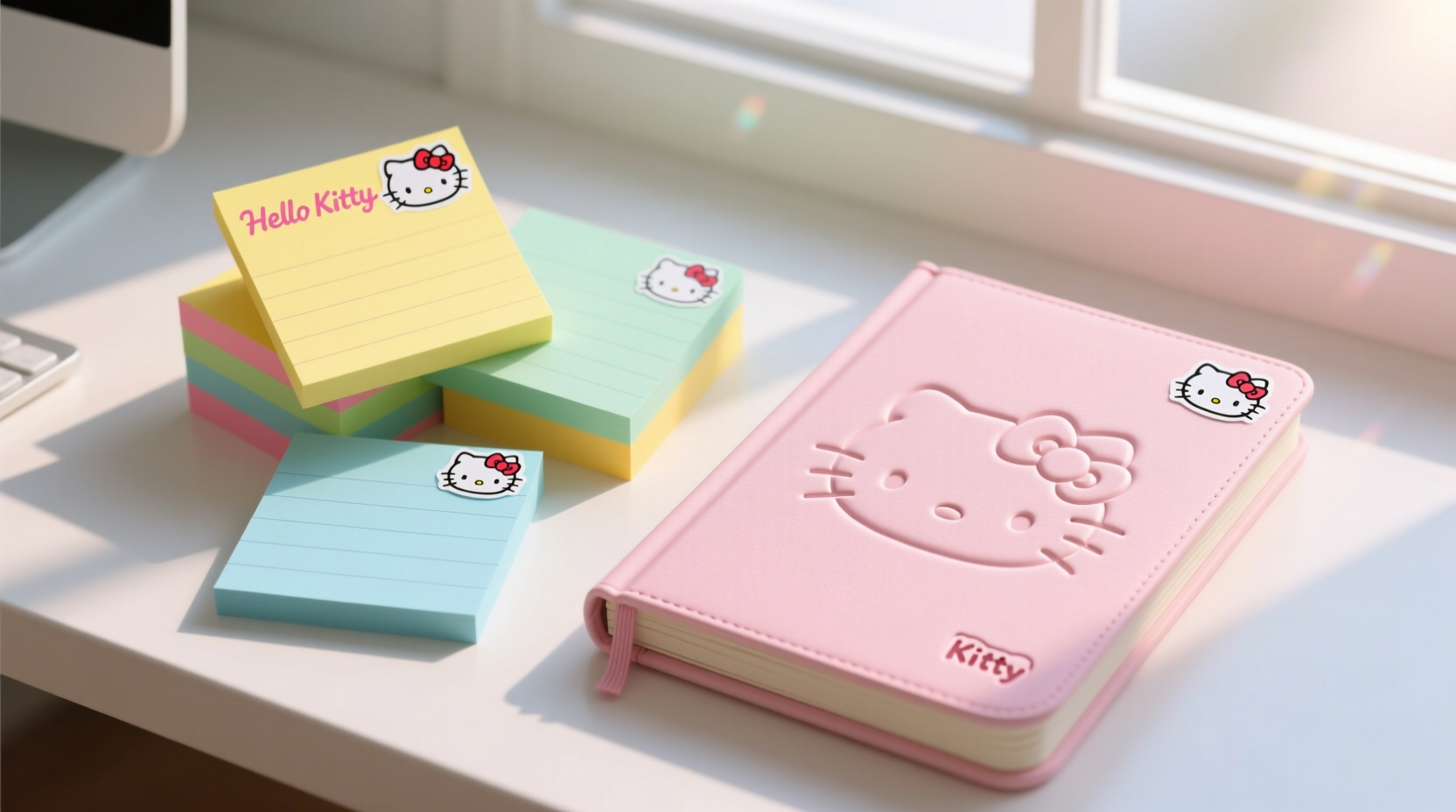
The first point of differentiation lies in visual presentation. The Hello Kitty notepad is unmistakably designed for charm. Typically featuring pastel colors, rounded corners, and multiple illustrations of Sanrio’s iconic character—often waving, holding a bow, or surrounded by stars and hearts—it’s an object that doubles as decor. These notepads often come in themed sets: schoolgirl Kitty, astronaut Kitty, or even seasonal editions like Valentine’s or Halloween variants.
In contrast, standard sticky notes are minimalist by design. Bright yellow remains the most common hue, though neon pinks, greens, and blues are widely available. Their aesthetic is functional—sharp edges, uniform size, and no imagery beyond the brand logo (usually in small print). While some specialty brands offer patterned or illustrated sticky notes, the default version prioritizes visibility over visual delight.
Practicality and Daily Use
When evaluating practicality, three factors matter most: adhesion, size flexibility, portability, and longevity. Sticky notes excel in adaptability. Their adhesive backing allows them to cling to monitors, file cabinets, books, and fridge doors. You can reposition them multiple times before the glue wears out, making them ideal for temporary reminders, collaborative workspaces, or shifting priorities.
Hello Kitty notepads, while adorable, are generally bound pads without adhesive. Pages must be torn off and taped, clipped, or handed to someone else. Some versions include a light magnetic backing or fold-over cover, but they lack the instant stick-and-move versatility of Post-it-style notes. However, their pages are often thicker and less prone to curling or flying away in a breeze.
For quick memos, last-minute changes, or office collaboration, sticky notes have the edge. For thoughtful journaling, personal lists, or gift messages, the Hello Kitty notepad provides a more intentional, tactile experience.
Comparison Table: Key Features at a Glance
| Feature | Hello Kitty Notepad | Sticky Notes |
|---|---|---|
| Cuteness Factor | ★★★★★ (Highly decorative, character-driven) | ★☆☆☆☆ (Minimalist, functional) |
| Adhesive Function | None (or limited on select models) | Strong, repositionable glue |
| Portability | Moderate (compact but requires storage) | High (small stacks fit anywhere) |
| Paper Quality | Thicker, smoother, less translucent | Thin, slightly waxy, prone to ink bleed |
| Best Use Case | Personal notes, gifts, desk decoration | Quick reminders, teamwork, labeling |
| Lifespan per Pad | 50–100 sheets, long-term use | 20–75 sheets, fast turnover |
User Experience: Who Uses What and Why?
A mini case study from a Tokyo-based stationery café illustrates how context shapes preference. Observations over six weeks showed that customers under 25 overwhelmingly chose Hello Kitty notepads for personal use—writing diaries, gratitude lists, or love letters. Meanwhile, freelancers and remote workers favored sticky notes for time-blocking tasks on their laptops or sketching workflow diagrams on table surfaces.
One university student, Yumi Tanaka, shared: “I use my strawberry-milk-themed Hello Kitty pad every morning to write my intentions. It feels special, like I’m treating myself kindly. But if I need to remind my roommate to buy milk, I grab a neon pink sticky note and slap it on the fridge.”
This reflects a broader trend: emotionally resonant stationery enhances mindfulness and self-care, while utilitarian tools support efficiency and external communication.
“Cute objects aren’t just frivolous—they can improve cognitive engagement and reduce stress. When people enjoy using a tool, they’re more likely to use it consistently.” — Dr. Lena Park, Cognitive Psychologist & Design Researcher
Environmental and Economic Considerations
Both products face scrutiny over sustainability. Traditional sticky notes often use non-recyclable adhesive compounds and are frequently discarded after single use. While some brands now offer plant-based glue and recycled paper, mainstream options remain less eco-friendly.
Hello Kitty notepads, typically made in Asia and sold globally, involve longer supply chains and packaging that often includes plastic windows or laminated covers. However, because they encourage slower, more deliberate writing, they tend to generate less waste per user over time. A single notepad might last months, whereas a pack of sticky notes can vanish in weeks.
Checklist: Choosing the Right Tool for Your Needs
- Do you value emotional connection and aesthetics? → Choose Hello Kitty notepad
- Need to attach reminders directly to objects or screens? → Choose sticky notes
- Prefer thick, high-quality paper for handwriting? → Hello Kitty notepad
- Work in a fast-paced environment with changing priorities? → Sticky notes
- Want a gift that delights visually? → Hello Kitty notepad
- Looking for budget-friendly, bulk options? → Sticky notes
Hybrid Solutions and Creative Workarounds
Why choose one when you can blend both? Many users adopt a dual-system approach. For example:
- Daily Planning: Start with a Hello Kitty notepad to draft your schedule in a cheerful, focused mindset.
- Task Execution: Transfer top three priorities to color-coded sticky notes and place them on your monitor.
- Reflection: At day’s end, jot insights back into the notepad for continuity.
Some crafty individuals even affix double-sided tape to the back of Hello Kitty notepad sheets, turning them into custom decorative sticky notes. Others use washi tape to mount sticky notes inside Hello Kitty journals, combining cuteness with modularity.
Frequently Asked Questions
Can I make a Hello Kitty notepad sticky?
Yes—using roll-on adhesive or glue dots, you can add temporary stickiness to individual sheets. Alternatively, look for hybrid products like \"Kitty Memo Pads\" with peel-off backs, available through Japanese import retailers.
Are Hello Kitty notepads only for kids?
No. While marketed with youthful energy, these notepads are popular among adults who embrace kawaii culture as a form of self-expression and mental wellness. In Japan, many professionals keep cute stationery on hand to balance serious work environments.
Which lasts longer—a sticky note or a Hello Kitty page?
In terms of physical durability, Hello Kitty notepad pages are usually thicker and resist tearing better. However, sticky notes are designed for short-term use and degrade faster when exposed to moisture or sunlight. For archival purposes, the notepad is superior.
Final Verdict: Cuteness vs. Practicality
If cuteness were the sole criterion, the Hello Kitty notepad would win hands down. Its joyful design, cultural resonance, and emotional warmth elevate it beyond mere utility. It’s not just a tool—it’s a tiny act of self-kindness.
But practicality favors sticky notes. Their adhesive innovation, universal compatibility, and speed of use make them indispensable in dynamic environments. They’re the duct tape of the office world: simple, reliable, and everywhere you need them.
The truth is, neither fully replaces the other. They serve different psychological and functional roles. The Hello Kitty notepad nurtures intentionality and joy. The sticky note enables agility and clarity. The most effective users don’t pick sides—they integrate both into a personalized system that balances heart and efficiency.




 浙公网安备
33010002000092号
浙公网安备
33010002000092号 浙B2-20120091-4
Comments
No comments yet. Why don't you start the discussion?