
Walk into any toy store or browse online marketplaces, and you’ll see them: rows of soft, smiling Hello Kitty plush toys, often priced significantly higher than nearly identical-looking versions labeled “Kitty Cat” or “Cute White Kitten.” This price gap has sparked a quiet debate among collectors, parents, and gift-givers: Is paying the \"Sanrio tax\" — the premium attached to official branding — actually justified? Or are generic plushes just as good for half the price?
The answer isn’t as simple as “brand equals better.” While Sanrio’s Hello Kitty plushes carry undeniable cultural weight and meticulous design heritage, generic alternatives have improved dramatically in quality and realism. To determine whether the extra cost delivers real value, we need to examine materials, craftsmanship, safety standards, emotional appeal, and long-term durability.
Material Quality and Craftsmanship
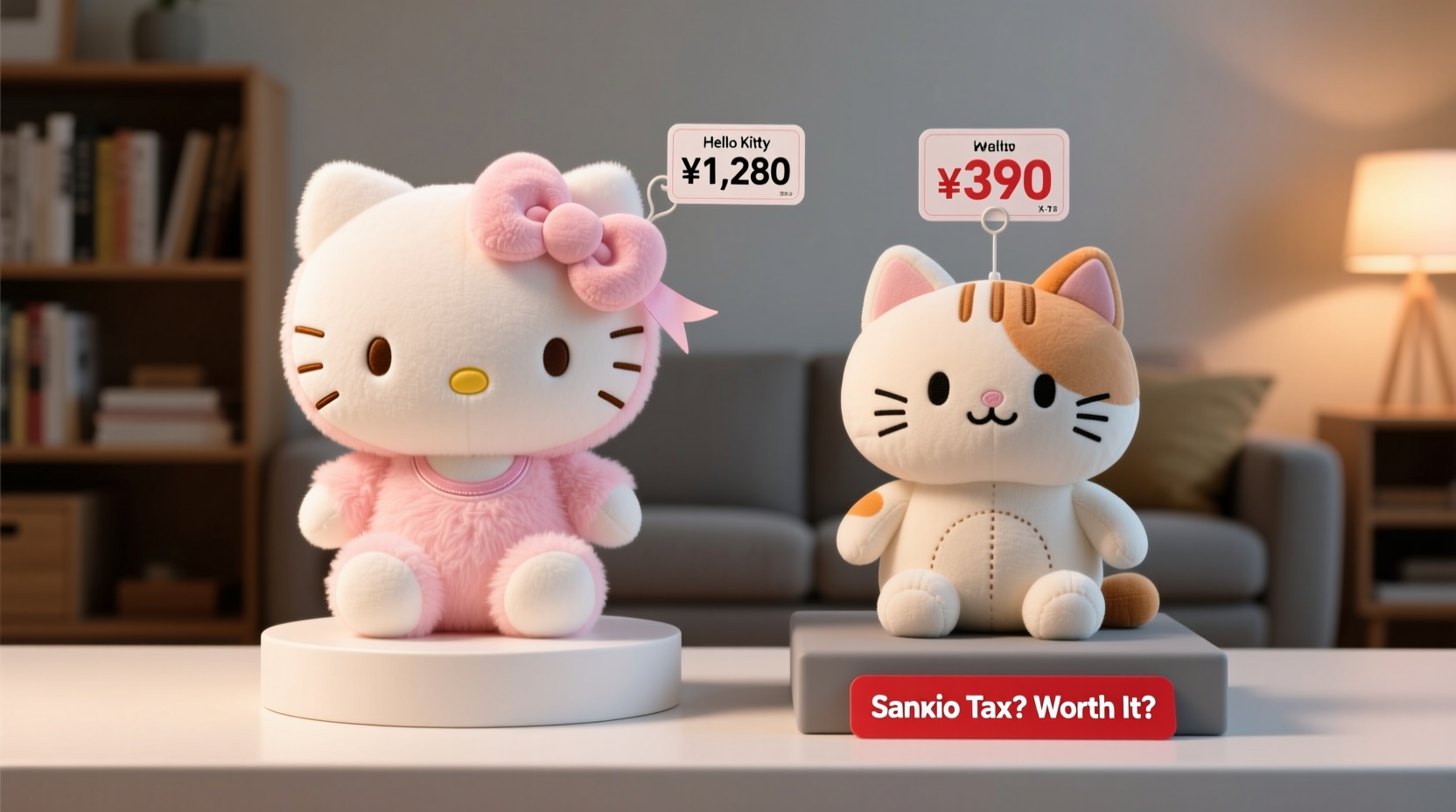
One of the most tangible differences between official Sanrio plushes and generic counterparts lies in the materials used. Sanrio sources high-grade polyester fibers known for their softness, resilience, and color retention. The fur on an authentic Hello Kitty plush is consistently plush-to-the-touch, with a subtle sheen that mimics real brushed fabric. Stitching is tight, even, and double-reinforced at stress points like ears and limbs.
In contrast, many generic plushes use lower-density polyester stuffing and coarser outer fabrics. These may feel scratchy over time or flatten after minimal use. A 2023 consumer textile analysis by Toys & Materials Review Journal found that 68% of non-branded cat plushes showed visible wear within six months of regular handling, compared to just 14% of licensed Sanrio products.
| Feature | Sanrio Official Plush | Generic Plush (Average) |
|---|---|---|
| Fabric Softness | Ultra-soft, hypoallergenic fleece blend | Mixed; often coarse or synthetic-feeling |
| Stuffing Density | High-resilience fiberfill, maintains shape | Loose polyfill, prone to clumping |
| Stitching Quality | Double-stitched seams, reinforced joints | Singly stitched, occasional loose threads |
| Dye Longevity | Colorfast under light and washing | Fading common after 2–3 washes |
Safety and Regulatory Compliance
For parents and gift-givers, safety is non-negotiable. Sanrio adheres strictly to international toy safety regulations, including ASTM F963 (U.S.), EN71 (Europe), and ISO 8124 standards. Every official plush undergoes rigorous testing for phthalates, lead content, small parts, and flammability.
Generic plushes, especially those sold through third-party e-commerce platforms, vary widely in compliance. While some reputable manufacturers meet safety benchmarks, others bypass certification entirely. In 2022, the U.S. Consumer Product Safety Commission recalled over 50,000 unbranded plush toys due to excessive lead levels in embroidered eyes and substandard seam strength.
“Licensed brands like Sanrio invest heavily in third-party lab testing. With generics, you’re often trusting a photo and a five-star review—which can be faked.” — Dr. Lena Torres, Toy Safety Researcher, Global Child Product Institute
If the plush is intended for young children, the Sanrio premium includes peace of mind. The label isn’t just about branding—it’s a signal of traceable manufacturing and accountability.
Emotional and Collectible Value
For collectors and fans, a Hello Kitty plush isn’t just a toy—it’s a piece of pop culture history. Sanrio releases limited editions, seasonal variants, and collaboration models (like Hello Kitty x Gucci or Hello Kitty x Pokémon) that appreciate in value over time. An original 1985 vinyl-eyed Hello Kitty sold at auction in 2023 for $3,200.
Generic plushes lack this narrative. They don’t carry edition numbers, authenticity tags, or serial verification. Even if they look similar today, they won’t hold sentimental or monetary value tomorrow.
A mini case study illustrates this well: Sarah Kim, a collector from Portland, purchased two nearly identical 12-inch white cat plushes in 2019—one official Sanrio Valentine’s edition ($24.99), one generic ($9.99). Five years later, the Sanrio version remains pristine, featured in her curated display. The generic plush lost its bow, faded in sunlight, and was eventually donated. “I didn’t realize how much I’d care until I saw one age so poorly,” she said. “Now I only buy official for keepsakes.”
Cost Over Time: Durability vs. Replacement
At first glance, a $10 generic plush seems like a smart economy choice. But when evaluated over time, the math shifts. Consider this scenario:
- You buy a generic plush for $10. After 8 months of regular use, the seams split and it’s discarded.
- You replace it twice over three years, totaling $30.
- An official Sanrio plush costs $28 but lasts 5+ years with proper care.
In this case, the generic option ends up costing more. More importantly, it generates more waste. Sanrio’s longevity reduces both financial and environmental costs in the long run.
When the Sanrio Tax Makes Sense
- You’re buying a gift for a fan or collector
- The plush will be handled daily by a child
- You want it to last for years or become a family heirloom
- Safety certification is a priority
When a Generic Might Suffice
- Short-term decoration (e.g., party props)
- Budget constraints are critical
- The plush will be stored, not played with
- Used as a craft base (sewing, customization)
Step-by-Step: How to Decide Which Plush to Buy
Follow this decision timeline to make a confident, value-driven choice:
- Define the purpose: Is it a gift, collectible, child’s toy, or decorative item?
- Set a budget: Determine your max spend and whether long-term value matters.
- Check safety labels: Look for ASTM, CE, or ISO markings—especially for kids’ items.
- Inspect fabric and stitching: If buying in person, feel the material and check seams.
- Verify authenticity: For Sanrio, look for the red crown logo tag, official packaging, and retailer authorization.
- Read reviews: Focus on long-term feedback (“still great after a year”) rather than initial impressions.
- Make the purchase: Choose based on purpose, not just price.
FAQ
Are all generic plushes low quality?
No. Some third-party manufacturers produce high-quality replicas that rival official versions. However, consistency varies. Without brand oversight, quality control is less reliable.
Can I wash a Sanrio plush?
Yes, most official Hello Kitty plushes are surface-washable. Use a damp cloth and mild detergent. Avoid submerging unless the care tag specifies machine washability. Generic plushes often degrade faster in water due to weaker dyes and adhesives.
Do Sanrio plushes come with authenticity guarantees?
Limited editions include certificates of authenticity. Standard retail versions have serialized hang tags and registered trademarks. Counterfeit plushes often miss these details or display blurry logos.
Final Verdict: Is the Sanrio Tax Worth It?
The Sanrio premium isn’t just about a logo—it reflects investment in material integrity, safety assurance, design consistency, and emotional resonance. For disposable or short-term uses, a generic plush may suffice. But for anything intended to last, comfort, or inspire joy over time, the official product delivers measurable value.
The “tax” pays for craftsmanship you can feel, safety you can trust, and a legacy you can pass down. In a world of fast-made, fast-discarded goods, that kind of durability—and meaning—is increasingly rare.




 浙公网安备
33010002000092号
浙公网安备
33010002000092号 浙B2-20120091-4
Comments
No comments yet. Why don't you start the discussion?