
In a world where personal expression meets practicality, the choice between a high-capacity handbag and a sleek, minimalist clutch isn’t just about fashion—it’s about lifestyle. Every woman has faced the dilemma: Do I carry everything I might possibly need, or do I streamline for elegance and ease? The answer depends on your day, your priorities, and how much you value convenience over aesthetics.
While oversized totes promise organization and preparedness, clutches whisper sophistication and intentionality. But when does style become a liability? And when does practicality tip into excess? This article dissects the real trade-offs between volume and visual appeal, helping you make informed decisions that align with both your wardrobe and your way of life.
The Functionality Factor: What You Carry Matters
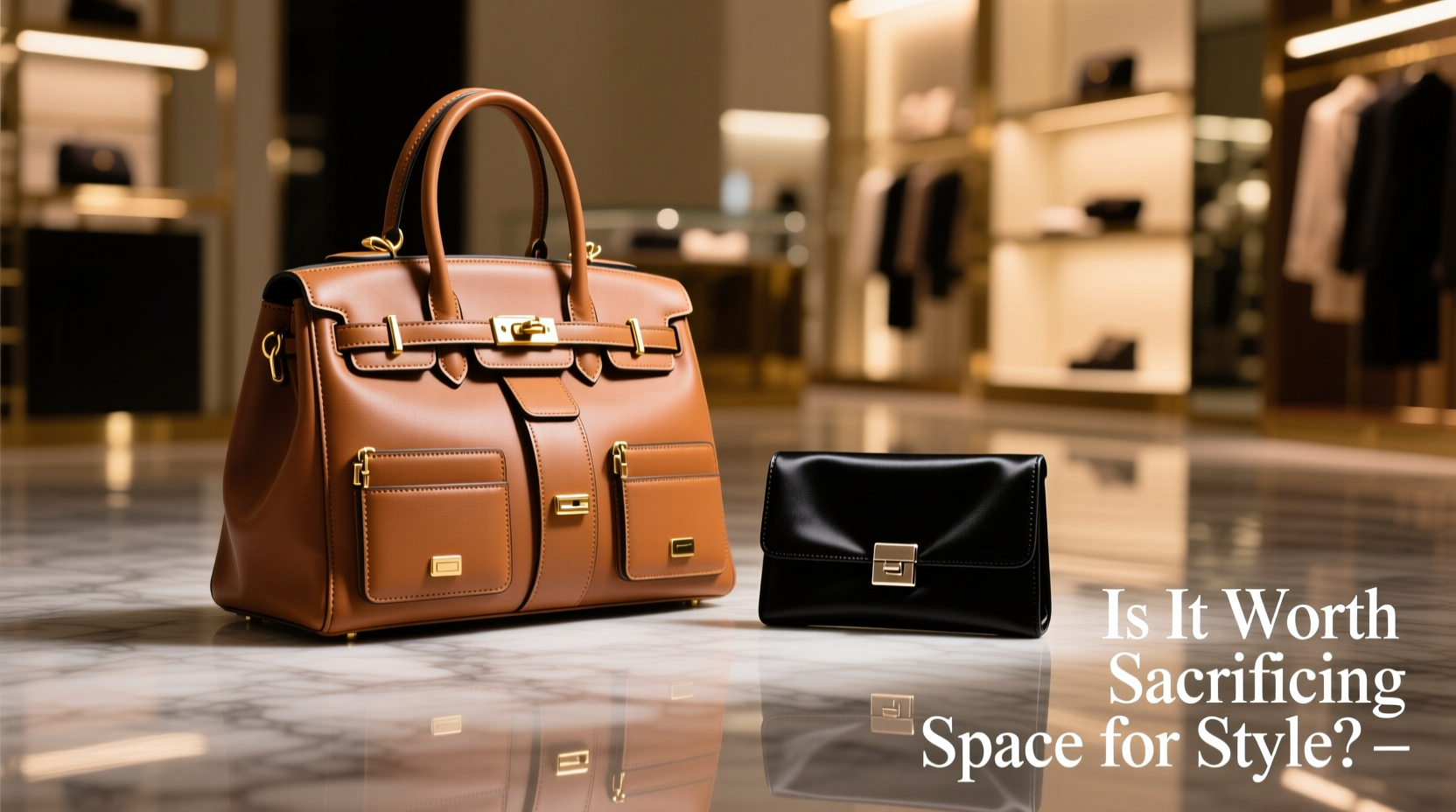
A high-capacity handbag—be it a tote, satchel, or structured shoulder bag—offers room for essentials and then some. Think wallet, phone, keys, makeup, sunglasses, a water bottle, snacks, a light sweater, and even a tablet. For professionals, parents, travelers, or anyone navigating unpredictable days, this kind of utility is non-negotiable.
On the other hand, a small clutch limits contents to the absolute basics: phone, lipstick, cardholder, and perhaps keys. This forces minimalism, which can be liberating. Without the clutter of multiple compartments and overstuffed pockets, retrieval becomes faster and more intuitive.
When Space Wins: Scenarios That Demand Capacity
- Work commutes: Carrying laptops, notebooks, and lunch containers requires structural support and volume.
- Parenting duties: Diapers, wipes, toys, and extra clothes don’t fit in eveningwear accessories.
- Travel days: From boarding passes to chargers, bulk reduces stress when logistics pile up.
- Errand-heavy schedules: Grocery lists, reusable bags, and returns all require carrying capacity.
In these cases, sacrificing space for style doesn’t just inconvenience—it can disrupt efficiency.
The Allure of the Clutch: Style as a Statement
Clutches are more than accessories; they’re fashion artifacts. Their compact form emphasizes clean lines, luxurious materials, and bold design. Often seen at galas, weddings, or cocktail parties, they signal intentionality and polish. When paired correctly—with a gown, tailored suit, or elegant dress—they elevate an entire look.
Fashion designers like Marc Jacobs have long championed the clutch as a “final touch” rather than a utility tool. As he once noted:
“Accessories should speak last—and loudest—in an outfit. A clutch isn’t meant to carry your life. It’s meant to complete your look.” — Marc Jacobs, Fashion Designer
This philosophy resonates in editorial spreads and red carpets, where function often bows to form. But outside those contexts, the limitations become apparent.
Real-Life Example: The Dinner Outing Dilemma
Sophie, a marketing executive in Chicago, planned a post-work dinner with clients followed by a rooftop bar. She opted for a sequined clutch to match her silk jumpsuit. By 9 p.m., she’d lost her lip balm, couldn’t find her phone charger (left behind), and had no room for the business cards she collected. Her stylish choice impressed visually—but hindered professionalism.
The next week, she brought a slim crossbody with similar elegance but added interior pockets. Same aesthetic, greater functionality. Her takeaway? “You don’t have to sacrifice style to be prepared.”
Comparative Breakdown: Handbag vs Clutch
| Feature | High-Capacity Handbag | Small Clutch |
|---|---|---|
| Storage Capacity | High – fits 10+ items comfortably | Low – limited to 3–5 essentials |
| Style Flexibility | Moderate – often casual or professional | High – easily transitions from day to night |
| Comfort & Portability | Can be heavy; may cause shoulder strain | Lightweight; easy to hold or tuck underarm |
| Security | More zipped compartments reduce theft risk | Easily misplaced; harder to monitor contents |
| Lifespan & Durability | Often built with reinforced stitching and hardware | Fragile closures and delicate materials common |
| Cost per Use | Lower over time due to frequent use | Higher if reserved for rare occasions |
The table reveals a key insight: while clutches score high on style and portability, their functional constraints limit versatility. High-capacity bags, though less glamorous, offer better long-term value through consistent usability.
Smart Compromises: Blending Form and Function
You don’t have to choose one extreme over the other. Modern accessory design increasingly embraces hybrid solutions. Consider these strategies:
- Invest in structured mini-bags with internal organization—think padded phone slots, card sleeves, and zippered coin pockets.
- Use a clutch as an insert within a larger bag during the day, then remove it for evening wear.
- Opt for luxe materials in medium-sized silhouettes, such as a satin-finish crossbody or a leather envelope with chain strap.
- Choose color-blocking or metallic finishes on practical shapes to add flair without compromising space.
Checklist: Choosing the Right Bag for Your Lifestyle
- ✅ Assess your daily routine: How many stops do you make?
- ✅ List essential items you carry daily (e.g., phone, wallet, keys, hygiene products).
- ✅ Determine frequency of formal events vs. active days.
- ✅ Evaluate comfort: Can you carry weight for hours?
- ✅ Prioritize security features: Zippers, RFID protection, anti-theft design.
- ✅ Match material to climate: Avoid suede in rainy cities; steer clear of vinyl in hot regions.
- ✅ Test proportions: Does the bag balance your frame without overwhelming it?
FAQ: Common Questions About Handbags vs Clutches
Can a clutch be practical for everyday use?
Only if your lifestyle demands minimal carrying. Urban professionals who rely on digital wallets, public transit, and drop-off services may manage with a clutch. However, most people will find it limiting over time.
Are large handbags outdated in modern fashion?
No. While micro-bags trend on runways, mainstream fashion has embraced \"quiet luxury,\" where understated, spacious designs in premium leathers dominate. Brands like The Row and Polène prove that size doesn’t negate sophistication.
How do I prevent my large bag from looking frumpy?
Focus on structure and proportion. Choose clean lines, neutral tones, and quality hardware. Avoid overstuffing—keep only what you need. A well-organized interior maintains shape and elegance.
Conclusion: Balance Beats Extremes
The debate between high-capacity handbags and small clutches isn’t about declaring a winner—it’s about alignment. Style matters, but so does readiness. Sacrificing space purely for appearance may win fleeting compliments, but it risks frustration when you’re left searching for a pen, missing a charging cable, or lugging a coat because there’s no room to fold it.
The most empowered choices come not from trends, but from self-awareness. Know your rhythm. Honor your responsibilities. Then select accessories that reflect both your taste and your truth.




 浙公网安备
33010002000092号
浙公网安备
33010002000092号 浙B2-20120091-4
Comments
No comments yet. Why don't you start the discussion?