
Every winter, the same question resurfaces: should you invest in a high-end designer coat or stick with a durable, functional commuting jacket? The allure of a tailored wool overcoat from an Italian atelier is undeniable. But when faced with rain-soaked sidewalks, crowded subways, and early-morning coffee spills, does luxury hold up—or just become a liability?
The answer isn’t binary. It depends on your lifestyle, climate, budget, and how you define value. A $2,000 cashmere-blend coat might be the smartest investment for someone who walks short distances in mild winters. For another person braving icy winds and hour-long bike commutes, that same coat could be impractical within days.
This article breaks down the real differences between high-end coats and commuting-focused outerwear, weighing durability, cost-per-wear, style longevity, and performance in real-world conditions.
Defining the Two Categories
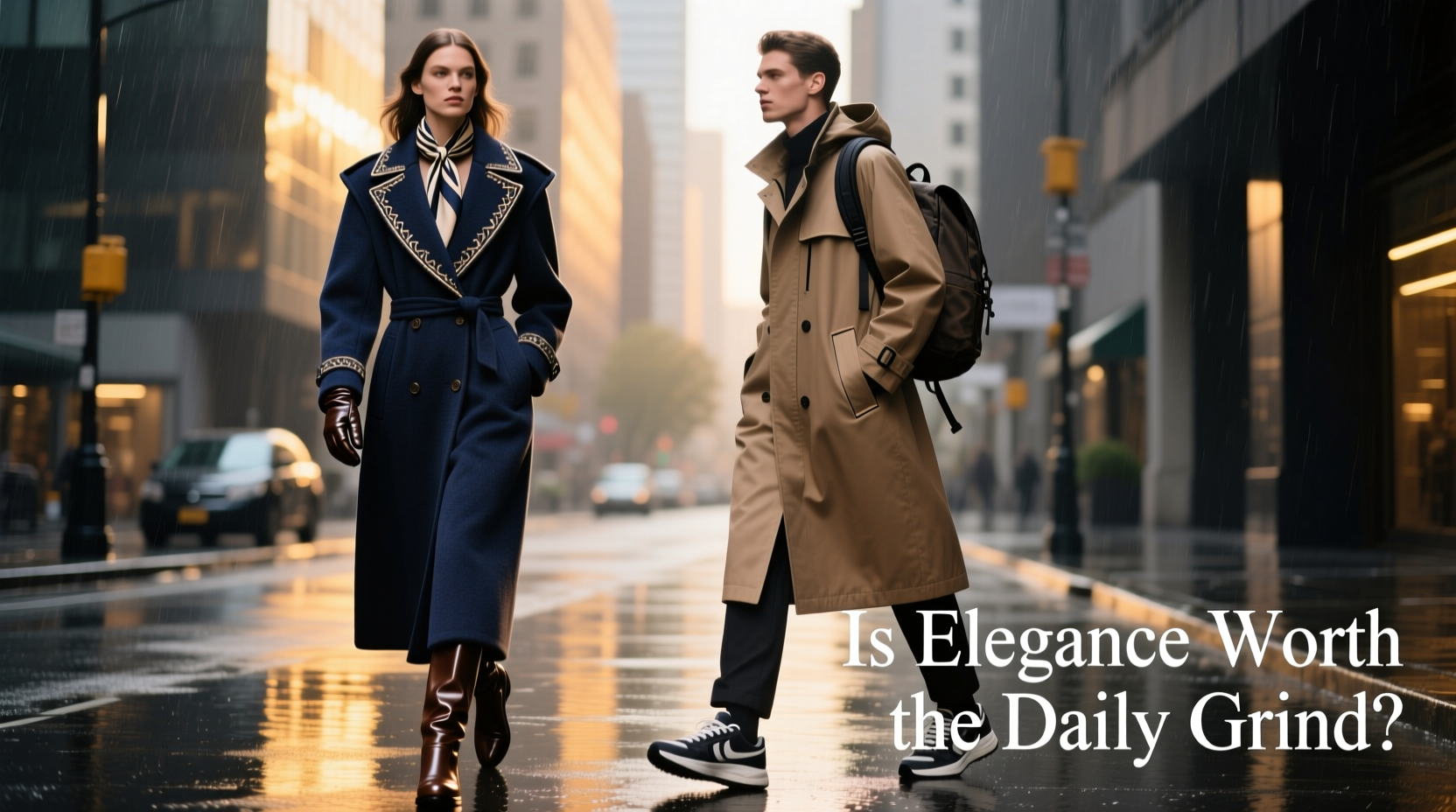
Before comparing, it’s essential to clarify what we mean by “high-end” and “commuting” coats.
- High-end coats are typically crafted from premium materials like virgin wool, cashmere, or camel hair. They’re designed for aesthetics—clean lines, structured shoulders, minimalist elegance—and often produced by heritage brands (think Max Mara, Loro Piana, or Brunello Cucinelli). These pieces prioritize fit, fabric quality, and timeless design over weather resistance.
- Commuting coats, on the other hand, are built for function. Think waterproof membranes, taped seams, storm flaps, insulated linings, and breathable fabrics like Gore-Tex. Brands such as Arc’teryx, Canada Goose, or even Uniqlo focus on performance: keeping you dry, warm, and mobile during transit, regardless of appearance.
The divide isn't just about price—it's about intent. One is made to impress; the other, to endure.
Cost vs. Value: Is Expensive Always Better?
A common misconception is that high price equals high value. In fashion, this isn’t always true—especially when utility matters.
Take a $1,800 wool-cashmere coat. It may last 5–7 years with careful use and proper storage. If worn 60 days per year, that’s roughly $5.70 per wear. Now consider a $300 technical parka worn 120 days annually in harsh conditions. Over five years, that’s just $0.50 per wear. Despite the lower upfront cost, its real-world value exceeds the luxury piece for someone with an active commute.
“Luxury garments are investments in craftsmanship, not necessarily in resilience. You pay for what goes into them—not what they go through.” — Daniel Reed, Menswear Archivist & Textile Historian
Performance Comparison: Weather, Wear, and Maintenance
To understand which coat suits everyday life, consider three key factors: weather protection, daily wear tolerance, and maintenance needs.
| Factor | High-End Coat | Commuting Coat |
|---|---|---|
| Water Resistance | Limited; most wool absorbs moisture and stains easily | High; often features waterproof shells and DWR coatings |
| Wind Protection | Moderate; dense wool helps, but no sealed construction | Excellent; engineered with wind-blocking layers |
| Durability (abrasion, friction) | Low to moderate; delicate fabrics prone to pilling and tears | High; reinforced stress points, rugged textiles |
| Maintenance | Frequent dry cleaning required; sensitive to humidity and moths | Machine washable or wipe-clean; low upkeep |
| Comfort in Motion | Rigid cut; less flexibility for biking, carrying bags | Ergonomic design; articulated sleeves, stretch panels |
If your daily routine includes public transport, walking under bridges, or cycling, a high-end coat will show wear quickly. Spills, scuffs, and dampness degrade fine fabrics faster than synthetic blends built to repel them.
Real-Life Scenario: Two Professionals, Two Choices
Consider two professionals living in rainy Seattle:
- Sarah works in finance and commutes 15 minutes by car. She values polished appearances and attends client meetings regularly. She bought a $1,600 double-breasted wool coat. Worn 40–50 days per season, stored properly, and professionally cleaned twice a year, it has lasted six winters and still looks sharp. For her, the investment was justified.
- Jamal is a city planner who bikes 45 minutes each way, rain or shine. He initially wore his $1,400 Italian topcoat but found it waterlogged after two months, stained from road spray, and too stiff to layer over thick sweaters. He switched to a $275 Arc’teryx Beta LT shell with a mid-layer system. It keeps him dry, moves with him, and survives daily abuse. His cost-per-wear is lower, and functionality far exceeds aesthetics.
Their experiences aren’t about right or wrong choices—they reflect alignment between garment purpose and personal demands.
When a High-End Coat Makes Sense
Luxury outerwear isn’t obsolete for daily wear—but it shines under specific conditions:
- You live in a dry or temperate climate where precipitation is rare.
- Your commute is short and sheltered (e.g., garage to office).
- You prioritize sartorial consistency and professional image.
- You practice meticulous care: rotating wear, using garment bags, avoiding overuse.
In these cases, a well-chosen high-end coat can serve as both outerwear and wardrobe centerpiece—a piece that elevates any outfit and lasts a decade with respect.
Building a Balanced Wardrobe: The Hybrid Approach
The most practical solution isn’t choosing one over the other—it’s owning both.
Think of your outerwear like footwear: you wouldn’t wear dress shoes to hike. Similarly, different coats serve different roles.
- Primary commuter jacket: A weather-ready, low-maintenance piece for daily use in adverse conditions.
- Luxury overcoat: Reserved for dry days, evening events, or shorter trips where style matters more than survival.
- Transitional layer: A versatile mid-weight coat (like a field jacket or wool blend trench) for shoulder seasons.
Checklist: Choosing the Right Coat for Your Lifestyle
Answer these questions before buying:
- How many days per week do I walk, bike, or wait outdoors?
- What’s the average rainfall/snowfall in my city?
- Do I carry a backpack or briefcase that rubs against my back?
- Am I willing to clean or service this coat regularly?
- Will I wear it mostly to work, social events, or mixed settings?
- Can I layer underneath without compromising fit?
If most answers lean toward exposure, motion, and weather, prioritize function. If your environment is controlled and appearance is paramount, luxury becomes viable.
FAQ
Can I wear a high-end coat in the rain?
Not recommended. While some wool resists light mist, prolonged exposure causes water spots, shrinkage, and internal staining. If caught in rain, hang to dry naturally—never near heat—and brush gently once dry. Consider a protective spray for limited use, but avoid relying on it.
Are expensive coats warmer than cheaper ones?
Not necessarily. Warmth depends on insulation, layering, and fit—not price. A $400 down parka with 700-fill power will outperform a $2,000 unlined wool coat in freezing temperatures. Luxury coats rely on fabric density and tailoring, not thermal engineering.
How long should a good commuting coat last?
A well-maintained technical coat should last 5–8 years with daily use. Signs of failure include delaminated membranes, broken zippers, or persistent odor from trapped moisture. Most performance brands offer repair programs to extend lifespan.
Conclusion: Worth It Depends on Your World
A fancy jacket isn’t inherently better or worse—it’s a tool. And like any tool, its worth is measured by how well it serves its intended job.
For those navigating urban chaos, battling wind, and juggling transit schedules, a high-end coat may be more burden than benefit. But for others whose days unfold in climate-controlled spaces and short exposures, that same coat can be a symbol of refinement and restraint.
The smartest choice isn’t about brand names or Instagram appeal. It’s about honesty: what do you actually need when you step outside?




 浙公网安备
33010002000092号
浙公网安备
33010002000092号 浙B2-20120091-4
Comments
No comments yet. Why don't you start the discussion?