
For makeup artists, beauty enthusiasts, or anyone who values a polished daily routine, the right vanity setup can transform both efficiency and confidence. A dedicated makeup table isn’t just furniture—it’s a personal studio. But when it comes to choosing one, a growing number of people are torn between investing in a high-end pre-built model and taking the DIY route. While the allure of customization and cost savings draws many toward building their own, the reality involves more than just assembling wood and mirrors. The real question is: does the DIY option truly deliver value, or do premium makeup tables offer benefits that justify their price?
The Allure of the High-Value Makeup Table
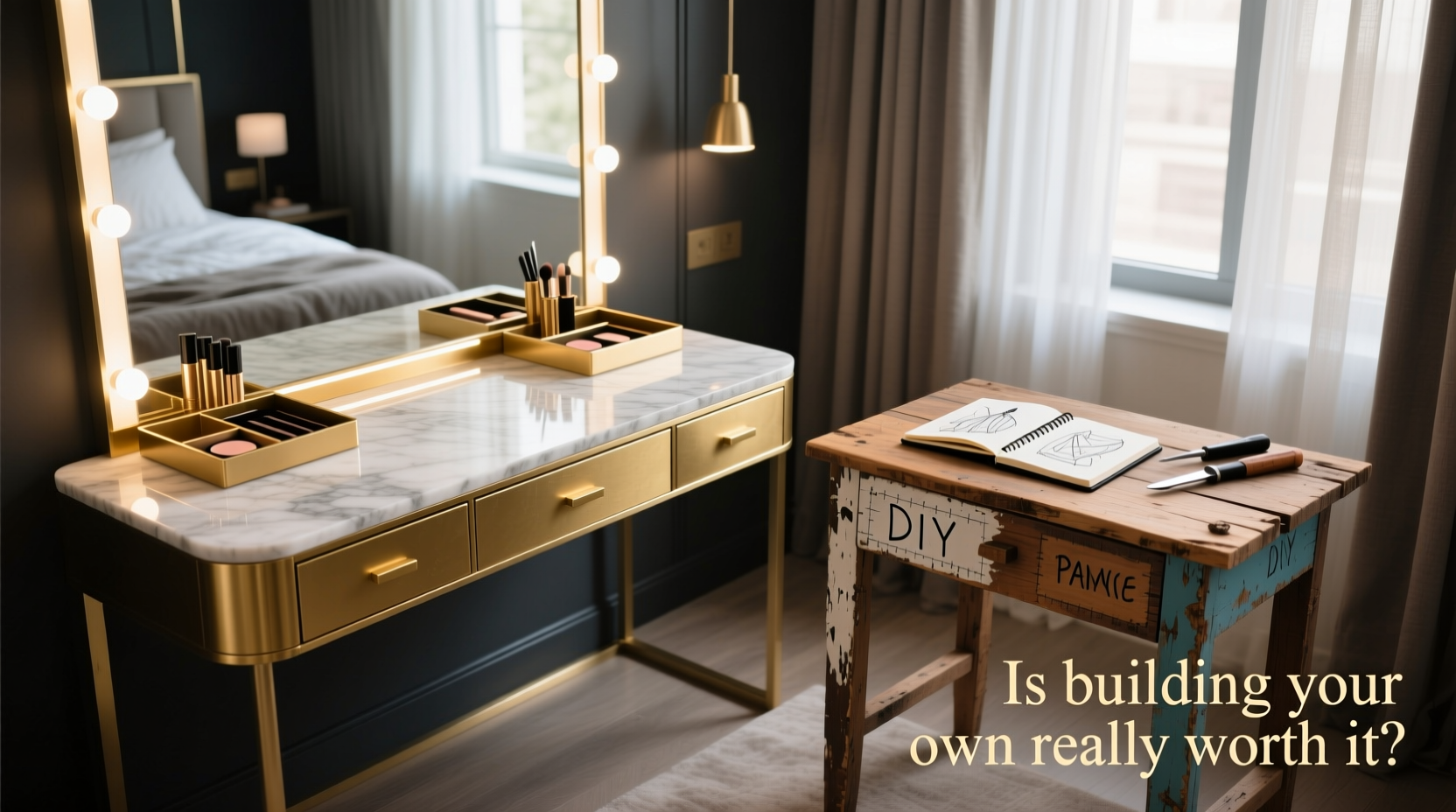
Premium makeup tables—often priced from $300 to over $1,500—are designed with precision, aesthetics, and functionality in mind. Brands like vanityart, IKEA’s higher-tier models, and custom luxury designers focus on ergonomics, lighting integration, storage optimization, and materials that resist wear from cosmetics and daily use.
These tables frequently come with features such as built-in LED lighting with adjustable color temperatures, power outlets, mirrored trays, soft-close drawers, and cable management systems. More importantly, they’re engineered for stability; wobbling mirrors or shaky surfaces are rare due to reinforced frames and balanced weight distribution.
“Professional-grade vanities reduce fatigue during long makeup sessions and improve application accuracy through consistent lighting and posture support.” — Lila Chen, Beauty Studio Designer & Interior Consultant
Another overlooked advantage is resale value and design cohesion. A well-chosen high-value table integrates seamlessly into a bedroom or dressing area, enhancing the room’s aesthetic rather than looking like an afterthought.
The DIY Approach: Flexibility at What Cost?
Drawing inspiration from Pinterest and YouTube tutorials, many opt to build their own makeup station using repurposed dressers, floating shelves, or custom cabinetry. The appeal is clear: full control over size, layout, color, and features. You can incorporate vintage legs, choose non-toxic paint finishes, or integrate smart lighting exactly where you want it.
However, DIY projects often underestimate time, skill, and hidden expenses. While a basic frame might cost $100 in lumber and hardware, adding quality lighting (like dimmable LEDs with CRI 90+), a distortion-free mirror, drawer glides, and power access can push the total close to—or even above—the cost of a mid-range commercial vanity.
Cost Comparison: Breaking Down the Numbers
| Component | DIY Estimated Cost | Premium Pre-Built Cost |
|---|---|---|
| Frame & Surface | $80–$150 | Included |
| LED Lighting Kit (CRI 90+) | $60–$120 | Included |
| Full-Length Mirror | $40–$100 | Included |
| Drawers & Hardware | $70–$130 | Included |
| Electrical Setup (outlets, wiring) | $50–$150 (if not professional) | Pre-wired & safe |
| Total Average | $300–$650+ | $400–$1,200 |
As shown, while DIY starts cheaper, comparable quality components bring the final cost surprisingly close to store-bought alternatives—especially when factoring in tools you may need to purchase once, like a drill, saw, or wire stripper.
Real Example: Sarah’s DIY Dream Turned Frustration
Sarah, a freelance makeup artist in Portland, spent three weekends building her dream vanity from reclaimed wood and a vintage mirror. She budgeted $200 but ended up spending $580 after buying better hinges, rewiring a faulty LED strip twice, and replacing a warped desktop. “I thought I was saving money,” she said. “But I didn’t account for my time—over 18 hours—and the stress of getting the lighting right. My clients noticed the shadows under their eyes because the lights weren’t evenly distributed.”
She eventually mounted a ring light on a stand to compensate. “It works, but it looks clunky. If I had to do it again, I’d buy a pre-lit vanity and customize only the decor around it.”
Step-by-Step: How to Decide Which Route Suits You
- Assess Your Space: Measure your available area. Do you need compact design, corner fitting, or maximum surface?
- Determine Your Skill Level: Are you comfortable with electrical work, precise measurements, and finishing techniques?
- Define Your Must-Have Features: List essentials—e.g., lighting, mirror tilt, outlet access, storage for brushes and products.
- Set a Realistic Budget: Include all materials, tools, and potential fixes. Add 20% buffer for unexpected costs.
- Compare to Market Options: Research high-value vanities that meet your criteria. Many now offer modular upgrades.
- Make the Call: Choose DIY if customization is critical and you enjoy building. Opt for premium if reliability, safety, and time efficiency matter most.
When DIY Makes Sense (And When It Doesn’t)
- DIY is Worth It If: You have woodworking experience, want a unique aesthetic, already own tools, or are on a tight initial budget.
- Stick with Premium If: You use the space professionally, prioritize ergonomic design, want plug-and-play setup, or lack time for troubleshooting.
Frequently Asked Questions
Can I add LED lights to a regular dresser?
Yes, adhesive LED strips with remote controls are widely available and easy to install. Look for ones with high Color Rendering Index (CRI >90) for accurate makeup application.
Are expensive makeup tables durable?
Generally, yes. High-value tables use engineered wood, metal frames, or solid hardwoods with protective coatings that resist cosmetic stains, moisture, and daily wear better than DIY counterparts unless those are also sealed properly.
Is it safe to DIY electrical lighting for a vanity?
If you're not experienced with low-voltage wiring or outlet installation, it’s safer to use plug-in kits or battery-powered lights. Improper wiring can pose fire hazards or damage electronics.
Final Verdict: Value Beyond the Price Tag
The decision between a high-value makeup table and a DIY build isn’t just about dollars—it’s about how you value your time, comfort, and results. A professionally designed vanity offers tested ergonomics, reliable lighting, and structural integrity out of the box. For busy individuals or professionals, this consistency translates into better makeup, less strain, and fewer frustrations.
On the other hand, DIY shines when personal expression and craftsmanship are priorities. There’s undeniable satisfaction in creating something uniquely yours. But it’s essential to go in with eyes open: research thoroughly, budget realistically, and respect the complexity of integrating functional elements like lighting and power.
In the end, the “worth” of building your own depends on your goals. If your aim is performance, longevity, and ease, a high-quality pre-built table likely delivers superior return. If creativity, learning, and customization drive you, then DIY can be deeply rewarding—provided you’re prepared for the challenges.




 浙公网安备
33010002000092号
浙公网安备
33010002000092号 浙B2-20120091-4
Comments
No comments yet. Why don't you start the discussion?