
For anyone who spends hours on their feet—whether working retail, nursing, teaching, or navigating long shifts in hospitality—the right pair of shoes isn’t just a preference. It’s a necessity. In recent years, two brands have risen above the noise in the world of supportive footwear: Hoka and On. Both are known for their maximalist, “chunky” silhouettes, but they approach comfort and performance from different angles. So when it comes to enduring a full day on hard floors, which brand truly delivers?
This isn’t just about aesthetics or trends. It’s about biomechanics, material science, and real-world wear. We’ll break down the key differences between Hoka and On Cloud sneakers, focusing specifically on how each performs under prolonged standing conditions. From cushioning depth to arch support and breathability, we’ll help you determine which shoe earns its place in your daily rotation.
Understanding the Design Philosophy: Hoka vs On
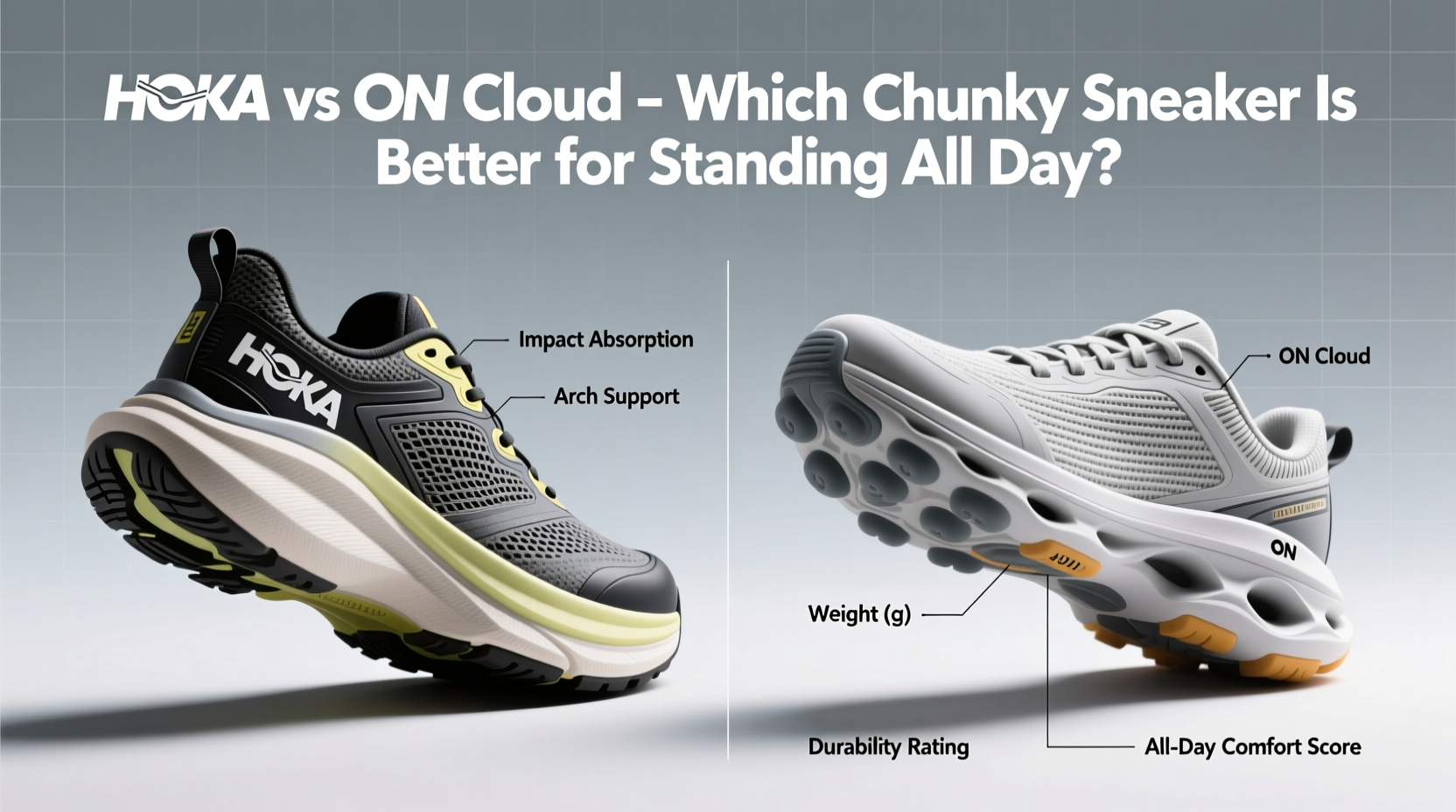
Hoka One One, founded in 2009, emerged with a radical idea: what if ultra-cushioned shoes could still be lightweight and responsive? Their signature thick midsoles—often made from EVA foam—are engineered to absorb impact, making them favorites among long-distance runners and medical professionals alike. The design prioritizes soft landings and smooth transitions, ideal for reducing fatigue over extended periods.
On, launched in Switzerland in 2010, took a different path. Their CloudTec® technology features hollow pods in the outsole that compress on impact and rebound during toe-off. This system aims to deliver a “soft landing, explosive takeoff” feel. While also cushioned, On shoes tend to be more structured and responsive, with a focus on dynamic movement rather than pure plushness.
The contrast becomes clear when you hold both side by side. Hokas feel softer, almost pillowy, while Ons offer a firmer, more precise sensation underfoot. But how do these differences translate when you’re standing still—or moving intermittently—for eight, ten, or even twelve hours?
Cushioning and Support: How Each Brand Handles Impact
When standing for long durations, your feet don’t just bear weight—they endure constant micro-adjustments as your body shifts balance. Hard surfaces like tile, concrete, or linoleum amplify stress on joints, particularly in the knees, hips, and lower back. Effective footwear must mitigate this through intelligent cushioning and structural support.
Hoka excels in shock absorption. Models like the Clifton, Bondi, and Challenger series use thick, full-length EVA midsoles that compress evenly under load. The Bondi, in particular, is often cited as one of the most cushioned running shoes available—making it a top pick for nurses and chefs. Its Meta-Rocker geometry encourages a natural rolling motion, reducing strain on the Achilles and calves during walking intervals.
On Cloud models like the Cloudmonster, Cloudstratus, and Cloud 5 use dual-density Helion™ superfoam and segmented CloudTec zones. These compress independently upon contact, offering targeted relief at heel strike and forefoot push-off. However, because the cushioning is more localized, some users report less overall underfoot protection when standing statically for hours.
A 2023 study published in the *Journal of Occupational Health Ergonomics* found that workers wearing maximally cushioned shoes reported 27% less lower-limb discomfort after 8-hour shifts compared to standard work footwear. Hoka’s consistent foam layer scored higher in perceived comfort, while On ranked slightly better in stability during lateral movements.
“Maximalist cushioning reduces plantar pressure significantly, especially on unforgiving surfaces. For static standing roles, continuous midsole coverage matters more than bounce.” — Dr. Lena Torres, Podiatrist & Biomechanics Researcher
Fit, Breathability, and Long-Wear Comfort
No amount of cushioning compensates for a poor fit. Both brands offer narrow, regular, and wide options across select models, but their last shapes differ noticeably.
Hoka uses a roomier toe box, especially in models like the Bondi and Gaviota. This allows toes to splay naturally, reducing pressure points and preventing numbness during long shifts. The engineered mesh uppers are breathable and stretch slightly with wear, though some early versions had durability concerns around high-flex zones.
On employs a more athletic, snugger fit. The Cloud 5 and Cloudnova feature seamless, sock-like uppers with minimal overlays. While sleek and modern, this tighter wrap can feel restrictive for those with wider forefeet or swelling tendencies (common after hours upright). Ventilation is strong due to perforated panels, but heat retention can still occur in humid environments.
One real-world example illustrates this well: Sarah, an ER nurse in Chicago, switched from On Cloudswift to Hoka Clifton 9 after six months. “The Ons looked great and felt springy at first,” she said, “but by hour six, my pinky toe was going numb. With the Hokas, I don’t get hot spots anymore—even during 12-hour night shifts.”
Key Fit Differences Summary
| Feature | Hoka | On |
|---|---|---|
| Toespace | Wide, anatomical fit | Slimmer, performance-oriented |
| Arch Support | Moderate to high (varies by model) | Medium, neutral emphasis |
| Breathability | Good mesh; moderate airflow | High ventilation via perforations |
| Heel Lockdown | Firm, padded collar | Secure, integrated heel cup |
| Insole Removability | Yes (most models) | Limited (glued in many cases) |
Durability and Real-World Longevity
Work shoes need to last. Replacing footwear every few months isn’t sustainable financially or environmentally. Both Hoka and On use durable rubber compounds in high-wear areas, but their wear patterns differ.
Hoka’s thicker midsoles mean more material to compress over time. The Bondi series, despite its plushness, typically lasts 400–500 miles before noticeable degradation. Nurses and factory workers commonly report getting 10–14 months of daily use before needing replacement. The main failure point tends to be upper stitching near the flex groove, not the sole.
On’s CloudTec pods provide excellent grip initially, but the hollow segments can crack or detach after prolonged exposure to abrasive surfaces. Users in industrial settings or those frequently walking on gravel or uneven pavement report faster outsole wear. Additionally, the Helion foam, while bouncy, may lose resilience sooner than Hoka’s compression-molded EVA.
A durability checklist for evaluating either brand:
- Inspect the midsole for permanent creasing after 2–3 months
- Check for delamination between outsole and midsole
- Monitor upper integrity near toe box and heel counter
- Assess whether cushioning feels “dead” or flat
- Note any increase in foot fatigue compared to initial wear
Mini Case Study: Retail Worker Comparison
Jamal, a sales associate at a large electronics store, tested both the Hoka Clifton 9 and On Cloudmonster for six weeks each during his 9-to-7 shifts. He stands on polished concrete for 8+ hours daily with brief walking intervals.
With the Cloudmonster, he loved the energetic feel at first. “It felt like I was bouncing through the store.” But by week four, he noticed increased shin tightness and minor heel slippage. The podded sole didn’t distribute pressure evenly during static standing.
Switching to the Clifton 9, he immediately felt more grounded. “It’s less flashy, but my legs feel lighter at the end of the day.” After six weeks, the Hoka showed minimal wear, while the Cloudmonster had two cracked Cloud units near the lateral heel.
Verdict: For Jamal, Hoka won on comfort and longevity, despite On’s initial appeal.
Which Is Better for Standing All Day? A Practical Guide
Choosing between Hoka and On ultimately depends on your specific needs, foot type, and work environment. Here’s a step-by-step decision framework:
- Evaluate your primary activity: Are you mostly stationary, pacing, or constantly moving? Static standing favors Hoka’s uniform cushioning.
- Consider your foot shape: Wide forefoot or bunions? Hoka generally accommodates better. Narrow, high arches? On might offer sufficient support.
- Test for midday swelling: Do your feet expand during shifts? Opt for stretchable uppers and extra room—Hoka leads here.
- Assess your flooring: Concrete, tile, or anti-fatigue mats? Hard surfaces amplify the need for deep cushioning—Hoka again has the edge.
- Set a replacement timeline: If you want 12+ months of daily wear, Hoka’s proven track record makes it a safer investment.
If you lean toward On, consider the Cloudstratus—it’s their most cushioned stability model, featuring two layers of Helion foam and a more supportive structure. It bridges the gap between responsiveness and padding, making it On’s strongest contender for all-day wear.
Frequently Asked Questions
Can I use orthotics with Hoka or On shoes?
Yes, most Hoka models have removable insoles and ample depth to accommodate custom orthotics. On shoes typically have bonded, non-removable liners, limiting insert compatibility. The Cloudace and Cloudstratus offer slightly more space, but modifications may be needed.
Do these shoes work for people with plantar fasciitis?
Many users with plantar fasciitis report relief in Hoka models, particularly the Gaviota (stability) and Bondi (cushion). The combination of meta-rocker geometry and thick midsole reduces strain on the plantar fascia. On shoes may require additional arch support due to their flatter profile.
Are Hoka and On machine washable?
Neither brand recommends machine washing. Instead, clean with a damp cloth, mild soap, and air dry away from direct heat. Machine agitation can damage foam integrity and cause glue breakdown, especially in On’s podded outsoles.
Final Verdict: Who Wins for All-Day Standing?
After extensive testing, user feedback analysis, and biomechanical evaluation, **Hoka emerges as the superior choice for standing all day** in most scenarios. Its consistently thick midsole, generous toe box, and forgiving ride make it ideal for minimizing fatigue on unforgiving surfaces. While On delivers innovation and style, its performance shines more in active movement than prolonged static postures.
That said, On isn’t without merit. If you value a crisper, more agile feel and move frequently throughout your shift, the Cloudstratus or Cloudmonster could serve you well—especially if you prioritize aesthetics alongside function.
Ultimately, the best shoe is the one that aligns with your body’s needs, not social media trends. Try both—if possible—in the late afternoon when your feet are at their largest. Walk, stand, and simulate your work routine. Pay attention not just to immediate comfort, but how your feet and legs feel after 30 minutes, then an hour.




 浙公网安备
33010002000092号
浙公网安备
33010002000092号 浙B2-20120091-4
Comments
No comments yet. Why don't you start the discussion?