
In urban apartments, tiny homes, or shared living spaces, every square foot counts—especially during the holidays. The traditional Christmas tree, while beloved, demands floor space, storage room, and seasonal assembly. Enter the holographic projection Christmas tree: a futuristic alternative that promises festive cheer without the footprint. But how do these two options truly compare when it comes to saving space? This in-depth analysis explores physical trees and their digital counterparts across dimensions, practicality, aesthetics, and long-term usability.
Understanding Space Requirements
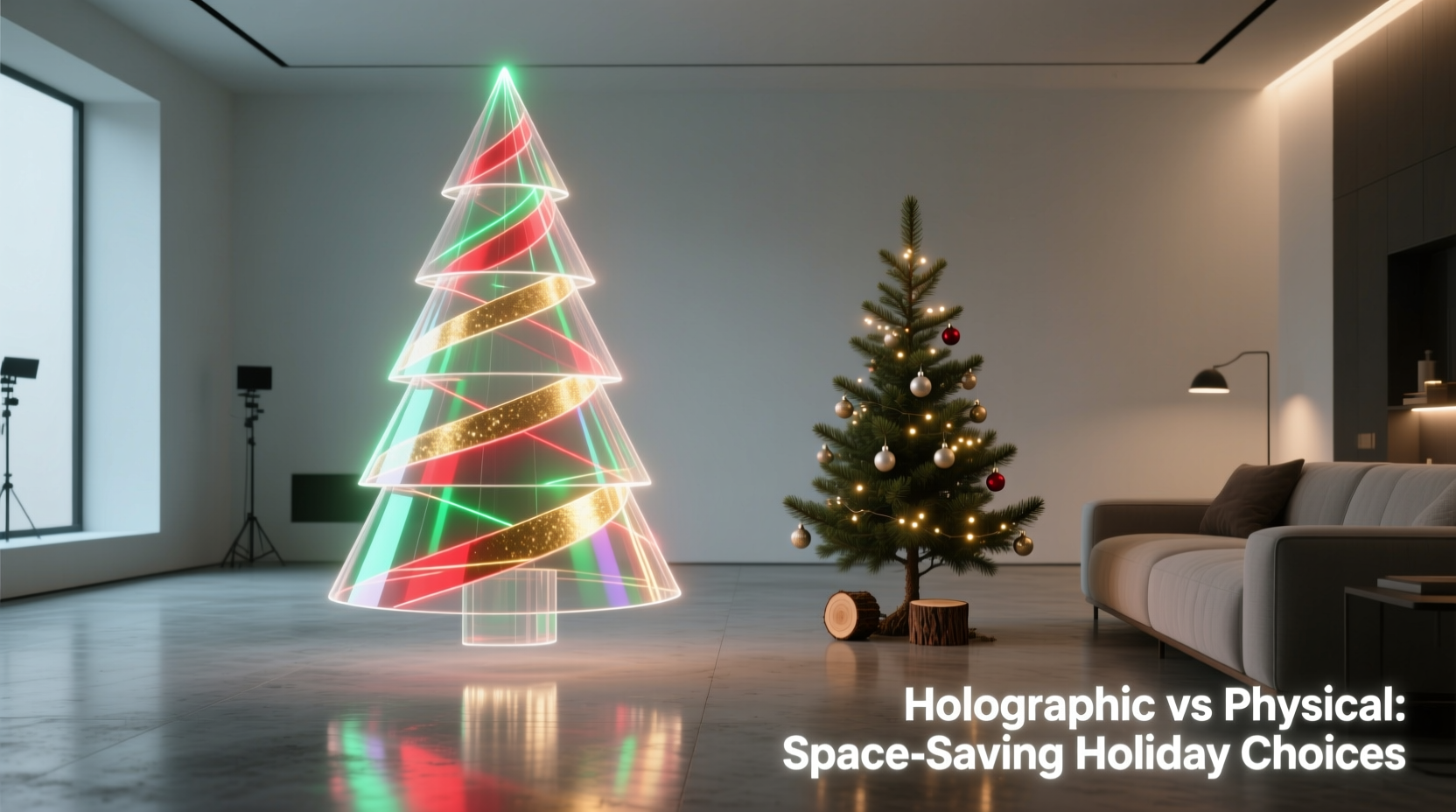
When evaluating what \"saves space,\" it’s essential to consider both active and passive space usage. Active space refers to the area the tree occupies during the holiday season. Passive space includes storage needs during the remaining 11 months of the year. Physical trees consume both types of space; holographic projections primarily affect only active space—and even then, minimally.
A standard tabletop artificial tree ranges from 3 to 5 feet in height and requires a base diameter of at least 18–24 inches. Floor models can span over 6 feet wide, dominating living rooms or corners. In contrast, a holographic projection system typically consists of a small projector unit (about the size of a coffee mug) that casts a 3D image onto open air or a reflective surface. The \"tree\" exists as light, requiring no physical footprint beyond where the device is placed.
Comparative Analysis: Physical Trees vs Holographic Projections
| Feature | Physical Tree (Artificial) | Holographic Projection Tree |
|---|---|---|
| Floor Space Used | High (1–4 sq ft depending on size) | Negligible (only projector base) |
| Storage Space Required | Large (box + stand + ornaments) | Minimal (small device + power cable) |
| Setup Time | 20–60 minutes | Under 5 minutes |
| Lifespan | 5–10 years with care | 7+ years (electronics dependent) |
| Mobility | Low (bulky, fragile) | High (portable, lightweight) |
| Customization (Lights, Ornaments) | High (physical decoration) | Moderate (digital themes, color shifts) |
| Energy Use | Moderate (LED lights) | Low (LED projector) |
| Kid/Pet Safety | Risk of tipping, broken ornaments | No tripping hazard, no breakables |
The data shows a clear advantage for holographic systems in spatial efficiency. However, trade-offs exist—particularly in tactile experience and tradition.
Real-World Application: A Case Study in Urban Living
Sophie Chen, a graphic designer living in a 550-square-foot studio apartment in downtown Seattle, switched from a physical tree to a holographic model three years ago. “I used to dread setting up my 5-foot pre-lit tree,” she explains. “It took up half my living area, blocked the hallway, and I had to store the box under my bed for 11 months.”
After researching compact holiday solutions, Sophie invested in a consumer-grade holographic projector designed for festive displays. She mounts it on a bookshelf, projects the tree onto an empty corner, and uses ambient lighting to enhance the glow. “It takes up zero floor space. My cat can walk right through it—literally,” she laughs. “And when guests come over, they’re amazed. It feels like something out of a sci-fi movie, but cozy at the same time.”
Her transition highlights a growing trend among city dwellers who value minimalism without sacrificing seasonal spirit. While she misses hanging her grandmother’s handmade ornament, Sophie now incorporates augmented reality apps that let her “place” digital versions around the projected tree using her phone.
“Spatial efficiency in modern homes isn’t just about square footage—it’s about flexibility and multi-functionality. Holographic decor represents a shift toward dynamic, temporary environments.” — Dr. Alan Reeves, Urban Design Researcher, MIT Senseable City Lab
Practical Tips for Choosing the Right Option
Deciding between a physical and holographic tree depends on lifestyle, space constraints, and emotional connection to tradition. Below are key considerations to guide your decision.
Choose a Physical Tree If:
- You enjoy hands-on decorating with family.
- You have dedicated storage space (closet, attic, basement).
- Tactile elements—smell of pine, texture of branches—are important to you.
- You host large gatherings where a centerpiece tree enhances ambiance.
Opt for a Holographic Projection Tree If:
- You live in a studio, dorm, or micro-apartment.
- Storage space is extremely limited or nonexistent.
- You move frequently and need portable holiday decor.
- You want a tech-forward, customizable display with minimal cleanup.
Step-by-Step Guide to Setting Up a Space-Saving Holiday Display
- Evaluate Your Space: Measure available floor area and identify unused vertical or dark zones ideal for projections.
- Determine Your Priorities: Decide whether tradition, interactivity, or minimalism matters most.
- Research Projector Models: Look for units with 360-degree projection, adjustable brightness, and Bluetooth speakers for carols.
- Test Placement: Position the projector to cast onto an open area, avoiding reflective surfaces that distort the image.
- Enhance the Atmosphere: Pair the hologram with soft ambient lighting, scented candles, or a digital fireplace loop to create warmth.
- Store Smartly: After the season, unplug and place the device in a padded pouch—no bulky boxes or tangled wires.
This approach ensures a festive environment without compromising daily functionality—a crucial benefit for those in tight quarters.
Environmental and Economic Considerations
While space is the primary concern, long-term costs and sustainability also matter. Artificial physical trees are often marketed as eco-friendly because they’re reusable. However, studies show that unless a tree is used for at least nine years, its environmental impact exceeds that of buying a fresh-cut natural tree annually due to plastic production and transportation.
Holographic systems, though electronic, have a smaller material footprint. Most are made from recyclable plastics and LEDs, with energy consumption comparable to a nightlight. Over a decade, one projector could replace multiple physical trees, reducing waste and shipping emissions. Additionally, digital updates can refresh the tree’s appearance without new purchases—imagine switching from a classic evergreen to a snowflake-themed animation with a button press.
Financially, initial costs vary. Entry-level holographic projectors range from $80 to $150, while high-end models with sound and app control exceed $200. Mid-tier artificial trees cost $60–$120, but premium flocked or LED-integrated versions can reach $300. Factor in storage containers, replacement bulbs, and ornament replacements, and the long-term expense of physical trees adds up.
Common Misconceptions About Holographic Trees
Despite their advantages, holographic trees face skepticism. Some believe they lack authenticity or appear “cheap.” Others assume the technology is unreliable or too dim for effective display. These concerns are not unfounded—but context matters.
Early consumer holograms (circa 2010–2015) often produced flat, flickering images with poor depth perception. Today’s models use advanced diffraction optics and rotating mirror systems to generate convincing 3D illusions visible from multiple angles. Brands like Holixel, LightFX, and LumiOrb have refined the technology for home use, offering realistic branch structures, twinkling lights, and even simulated snowfall effects.
Another myth is that holograms can't be personalized. While you can't hang a child’s handprint ornament on a light beam, many systems support custom animations. Users can upload family photos, display rotating messages (“Joy to the World”), or sync the tree’s colors to music. For tech-savvy families, this opens creative avenues beyond tinsel and glass balls.
FAQ: Holographic vs Physical Trees
Can you decorate a holographic Christmas tree?
Not physically. However, many projectors allow digital decoration via companion apps. You can add virtual ornaments, change light patterns, or overlay animated elements like falling snow or reindeer. Some users combine the projection with a small physical shelf nearby to display favorite ornaments, blending real and digital decor.
Do holographic trees work in daylight?
Visibility depends on brightness and ambient light. Most perform best in dim or evening settings. High-lumen models (800+ lumens) can maintain clarity in moderately lit rooms, but direct sunlight will wash out the image. For daytime use, position the projection away from windows or use blackout curtains temporarily.
Are holographic trees safe around children and pets?
Yes. Since the tree is made of light, there’s no risk of tipping, needle shedding, or electrical hazards from tangled cords (the projector itself is low-voltage). Pets cannot knock it over or chew on branches, making it ideal for homes with curious animals. Just ensure the projector unit is placed securely to prevent accidental knocks.
Checklist: Choosing Your Space-Efficient Holiday Tree
- ✅ Measure available floor and storage space
- ✅ Assess household preferences (tradition vs. innovation)
- ✅ Determine budget for initial purchase and long-term use
- ✅ Research projector specs: brightness, projection angle, sound features
- ✅ Read user reviews focusing on durability and ease of setup
- ✅ Test the display in your actual environment before finalizing
- ✅ Plan complementary decor to enhance the festive atmosphere
Conclusion: Rethinking Tradition in Compact Spaces
The choice between a holographic projection Christmas tree and a physical one ultimately reflects evolving lifestyles. For those in spacious homes with attics full of holiday memorabilia, a real or artificial tree remains a cherished ritual. But for urbanites, renters, minimalists, or frequent movers, holographic alternatives offer a compelling upgrade—one that respects spatial limits without sacrificing celebration.
Space-saving doesn’t mean compromise. It means innovation. As technology blends seamlessly into daily life, our traditions can evolve too. Whether you gather around a fragrant fir or a shimmering light sculpture, the heart of the season lies in connection, not cubic feet.




 浙公网安备
33010002000092号
浙公网安备
33010002000092号 浙B2-20120091-4
Comments
No comments yet. Why don't you start the discussion?