
Garlic salad dressing transforms simple greens into a vibrant, aromatic meal with minimal effort. Unlike store-bought versions loaded with preservatives and artificial flavors, a homemade garlic dressing delivers bold, fresh taste and allows complete control over ingredients. Whether you're dressing a crisp romaine wedge, drizzling over roasted vegetables, or using it as a marinade, mastering this staple elevates everyday cooking. The pungency of raw garlic mellows when emulsified with oil and acid, creating a balanced, complex flavor that enhances rather than overwhelms. This guide provides a foundational recipe, explores variations, and offers professional insights to help home cooks craft the perfect garlic dressing every time.
Definition & Overview
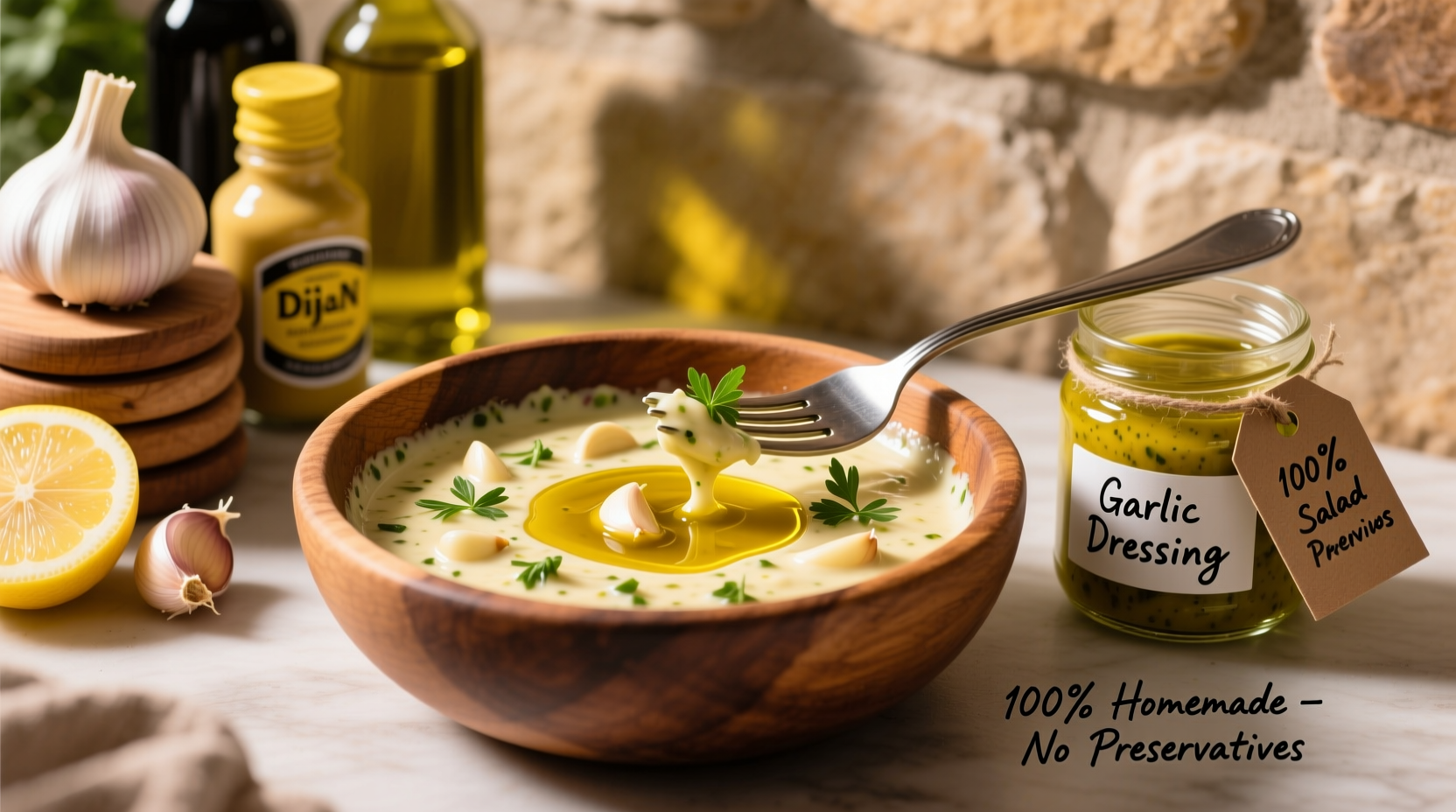
Homemade garlic salad dressing is a cold sauce typically based on a combination of garlic, oil, acid (usually vinegar or lemon juice), and emulsifiers like mayonnaise or mustard. It belongs to the broader category of creamy vinaigrettes and is closely related to Caesar, ranch, and Thousand Island dressings. What distinguishes it is its pronounced garlic character—earthy, sharp, and warming—without being harsh when properly balanced.
The origins of garlic-based dressings trace back to Mediterranean and Middle Eastern cuisines, where garlic has long been used as both a flavor enhancer and preservative. Ancient Greeks rubbed garlic on bread before adding olive oil and vinegar, an early form of what we now recognize as a vinaigrette. Over time, European chefs incorporated dairy or egg-based thickeners, leading to modern creamy iterations. Today’s version often blends French technique with American preferences for richness and convenience.
A well-made garlic dressing functions as more than just a salad accompaniment; it acts as a flavor bridge between ingredients, unifying textures and tastes in a dish. Its versatility makes it a kitchen essential, suitable for dipping, marinating, and finishing.
Key Characteristics
| Characteristic | Description |
|---|---|
| Flavor Profile | Bold garlic upfront, rounded by tangy acidity and creamy richness. Can range from mildly aromatic to intensely pungent depending on preparation. |
| Aroma | Pronounced garlicky scent, slightly sulfurous when raw, mellowing into nutty warmth when aged or cooked slightly. |
| Color/Form | Creamy white to pale ivory, sometimes with a faint yellow tint from mustard or egg yolks. Smooth, pourable consistency. |
| Heat Level | Mild to moderate pungency; not spicy in the chili sense but can cause a warming sensation on the tongue and palate. |
| Culinary Function | Dressing, dip, marinade, sauce base. Enhances umami and depth in plant-based and protein dishes. |
| Shelf Life | 5–7 days refrigerated in a sealed container. Degrades faster if made with fresh garlic due to enzymatic activity. |
Practical Usage: How to Use Garlic Salad Dressing
Garlic dressing excels in applications where robust flavor is desired without heaviness. Its primary use is tossing leafy greens—especially crisp varieties like romaine, iceberg, or Little Gem—but its utility extends far beyond salads.
Tossing Greens
For a classic presentation, chill the bowl and greens first. Add dressing gradually—start with half the intended amount—and toss gently using tongs or clean hands. Overdressing drowns delicate leaves; the goal is even coating, not saturation. Let dressed salads rest for 2–3 minutes before serving to allow flavors to meld.
As a Marinade
Use undiluted garlic dressing to marinate chicken breasts, shrimp, or portobello mushrooms for 30 minutes to 2 hours. The acidity tenderizes proteins slightly while the garlic infuses deeply. Discard any leftover marinade that contacted raw meat.
Dipping Sauce
Serve chilled garlic dressing alongside vegetable crudités, fried calamari, or grilled artichokes. For parties, present it in a small bowl surrounded by dippers on a platter. Thin slightly with water or milk if too thick.
Sandwich Spread
Spread on paninis, wraps, or burgers for extra moisture and bite. Combines especially well with roasted red peppers, grilled chicken, and provolone cheese.
Grain Bowls & Slaws
Drizzle over quinoa, farro, or cabbage slaw to add richness and brightness. Adjust thickness by adding a splash of buttermilk or yogurt for lighter body.
Pro Tip: Always season your dressing after emulsification. Salt draws moisture from garlic and can alter texture over time. Taste and adjust seasoning just before use for optimal balance.
Classic Homemade Garlic Salad Dressing Recipe
This foundational recipe yields approximately 1 cup and takes under 10 minutes to prepare. It balances creaminess with bright acidity and assertive garlic flavor.
Ingredients
- 2 large cloves garlic, finely minced or pressed
- 1 tablespoon Dijon mustard
- 1 teaspoon Worcestershire sauce
- 1 tablespoon fresh lemon juice (about ½ lemon)
- 1 tablespoon white wine vinegar
- ½ teaspoon kosher salt (adjust to taste)
- ¼ teaspoon freshly ground black pepper
- ½ cup mayonnaise (preferably full-fat)
- ¼ cup extra-virgin olive oil
- 2 tablespoons sour cream or Greek yogurt (optional, for tang)
- 1 tablespoon chopped fresh parsley (optional, for freshness)
Instructions
- In a medium bowl, combine minced garlic, Dijon mustard, Worcestershire sauce, lemon juice, vinegar, salt, and pepper. Whisk until smooth.
- Add mayonnaise and sour cream (if using). Whisk vigorously to blend.
- Slowly drizzle in olive oil while whisking continuously to create a stable emulsion. The dressing should thicken slightly.
- Stir in parsley. Transfer to an airtight container.
- Refrigerate for at least 30 minutes before serving to allow flavors to meld. Stir well before use.
Yield: 1 cup | Prep Time: 8 minutes | Chill Time: 30 minutes
Emulsion Tip: To prevent breaking, always add oil slowly and whisk constantly. If the dressing separates, start over with a teaspoon of water and a fresh spoonful of mustard, then slowly incorporate the broken mixture.
Variants & Types
Garlic dressing adapts easily to dietary needs and flavor preferences. Below are common variants, each suited to specific uses.
1. Vegan Garlic Dressing
Replace mayonnaise with silken tofu, cashew cream, or vegan mayo. Substitute maple syrup for Worcestershire (which contains anchovies). Use apple cider vinegar for a fruitier note.
2. Lighter Yogurt-Based Version
Swap all mayonnaise for plain Greek yogurt. Add a touch of honey to offset tartness. Ideal for spring salads and grain bowls. Keeps for up to 5 days.
3. Roasted Garlic Dressing
Use 3–4 cloves of roasted garlic instead of raw. Sweeter, mellower, less aggressive. Perfect for autumn salads with beets, apples, and walnuts.
4. Lemon-Garlic Vinaigrette (Oil-Free Option)
Omit oil and mayo. Blend 2 cloves garlic, juice of one lemon, 1 tsp honey, 1 tsp Dijon, salt, and pepper with ¼ cup water until frothy. Best used immediately.
5. Spicy Garlic Ranch Fusion
Add ½ teaspoon smoked paprika and ¼–½ teaspoon cayenne or hot sauce. Incorporates herbs like chives and dill for complexity. Great for taco salads or buffalo cauliflower wraps.
| Variant | Best For | Texture | Shelf Life |
|---|---|---|---|
| Classic Creamy | Wedge salads, chicken salads | Rich, thick | 7 days |
| Vegan Cashew | Raw food bowls, vegan tacos | Creamy, slightly grainy | 5 days |
| Roasted Garlic | Warm grain salads, roasted veg | Smooth, velvety | 6 days |
| Yogurt-Based | Spring mixes, slaws | Light, tangy | 5 days |
| Lemon-Garlic Vinaigrette | Kale massaging, detox bowls | Thin, bright | 1 day |
Comparison with Similar Ingredients
Garlic dressing is often confused with other creamy condiments. Understanding differences ensures proper use.
| Dressing Type | Garcin Content | Base Ingredient | Primary Use | Distinctive Feature |
|---|---|---|---|---|
| Garlic Dressing | High (2+ cloves per ½ cup) | Mayo + oil | Green salads, dips | Garlic-forward, minimal herbs |
| Ranch Dressing | Moderate (1 clove) | Buttermilk + mayo | Dipping, salads | Herb-heavy: dill, parsley, chives |
| Caesar Dressing | High (raw or anchovy-blended) | Anchovies + egg yolk + oil | Romaine only | Umami-rich from fish sauce/Worcestershire |
| Thousand Island | Low to none | Mayo + ketchup | Burgers, Reubens | Sweet, chunky with relish |
“Many people reach for ranch when they want garlic flavor, but they’re missing the point. True garlic dressing lets the allium shine—unobscured by herbs or sweetness. It’s about purity of flavor.” — Chef Elena Torres, Culinary Institute of America
Practical Tips & FAQs
How do I reduce the sharpness of raw garlic?
Soak minced garlic in lemon juice or vinegar for 10 minutes before mixing. The acid denatures enzymes responsible for pungency. Alternatively, blanch cloves in boiling water for 20 seconds, then shock in ice water.
Can I freeze garlic salad dressing?
No. Emulsions break upon freezing and thawing, resulting in separation and grainy texture. Dairy and eggs do not freeze well in this context. Store only in the refrigerator.
Why did my dressing separate?
Common causes include adding oil too quickly, using cold ingredients, or insufficient whisking. Re-emulsify by placing 1 tsp water and ½ tsp mustard in a clean bowl, then slowly whisking in the broken dressing a few drops at a time.
Is fresh garlic necessary, or can I use powder?
Fresh garlic provides superior aroma and depth. Garlic powder lacks volatile oils and gives a flat, dusty taste. If substituting, use ⅛ teaspoon powder per clove and increase lemon juice to compensate.
How long does homemade garlic dressing last?
Up to 7 days in a sealed jar in the refrigerator. Discard if mold appears, smell turns sour, or texture becomes watery. Label with date made.
Can I make it without mayonnaise?
Yes. Use alternatives like mashed avocado, blended silken tofu, or soaked cashews. These yield a looser texture but work well in grain bowls or as sauces.
What salads pair best with garlic dressing?
Strong-flavored greens stand up to bold dressings: romaine, escarole, radicchio, endive, and Belgian endive. Also excellent with crisp vegetables like cucumber, celery, and fennel.
Does garlic dressing raise cholesterol?
While olive oil and egg yolks contain fats, they are predominantly heart-healthy monounsaturated types. When consumed in moderation as part of a balanced diet, garlic dressing does not pose a significant risk. Opt for light mayo or yogurt bases if concerned.
Checklist: Perfect Garlic Dressing Every Time
- ✔ Mince garlic finely or press for even distribution
- ✔ Whisk acid and emulsifier (mustard) first
- ✔ Add oil in a slow, steady stream
- ✔ Chill before serving for flavor integration
- ✔ Store in glass jar with tight lid
- ✔ Stir—not shake—to recombine before use
Summary & Key Takeaways
Homemade garlic salad dressing is a powerful tool in the home cook’s arsenal—simple to make, endlessly adaptable, and capable of transforming basic ingredients into memorable meals. The key lies in balancing the intense flavor of fresh garlic with creamy richness and bright acidity. By mastering emulsification techniques and understanding how different bases affect texture and shelf life, cooks can tailor the dressing to suit any dish or dietary need.
The classic version, built on mayonnaise, olive oil, and Dijon mustard, remains the gold standard for its luxurious mouthfeel and depth. Variants such as roasted garlic, vegan cashew, or yogurt-based offer inclusive options without sacrificing flavor. Unlike ranch or Thousand Island, true garlic dressing prioritizes the allium itself, allowing its complex, warming character to lead.
Storage is straightforward: refrigerate in a sealed container for up to one week. Avoid freezing, and always check for spoilage signs before use. With proper handling, this dressing remains safe and delicious.
Whether drizzled over a crisp wedge salad, used as a marinade for grilled proteins, or served as a party dip, homemade garlic dressing reflects culinary intentionality. It represents a rejection of processed alternatives in favor of transparency, freshness, and flavor integrity. Once mastered, it becomes a go-to component in weekly meal prep—a small act of kitchen craftsmanship with outsized impact.
Ready to elevate your salads? Try the recipe today and experiment with one variation—roasted garlic or yogurt-based—to expand your repertoire. Share your results with friends; few things impress like a perfectly balanced, handcrafted dressing.




 浙公网安备
33010002000092号
浙公网安备
33010002000092号 浙B2-20120091-4
Comments
No comments yet. Why don't you start the discussion?