
Choosing the right SUV for a growing family means balancing space, comfort, safety, and practicality. When comparing two popular midsize Honda models—the Passport and the Pilot—dimensions play a crucial role in determining which vehicle fits your lifestyle. While both offer three-row seating options, their size, interior layout, and cargo capacity differ significantly. Understanding these differences helps ensure you select the model that aligns with your daily routines, passenger needs, and long-term plans.
Key Dimensional Differences at a Glance
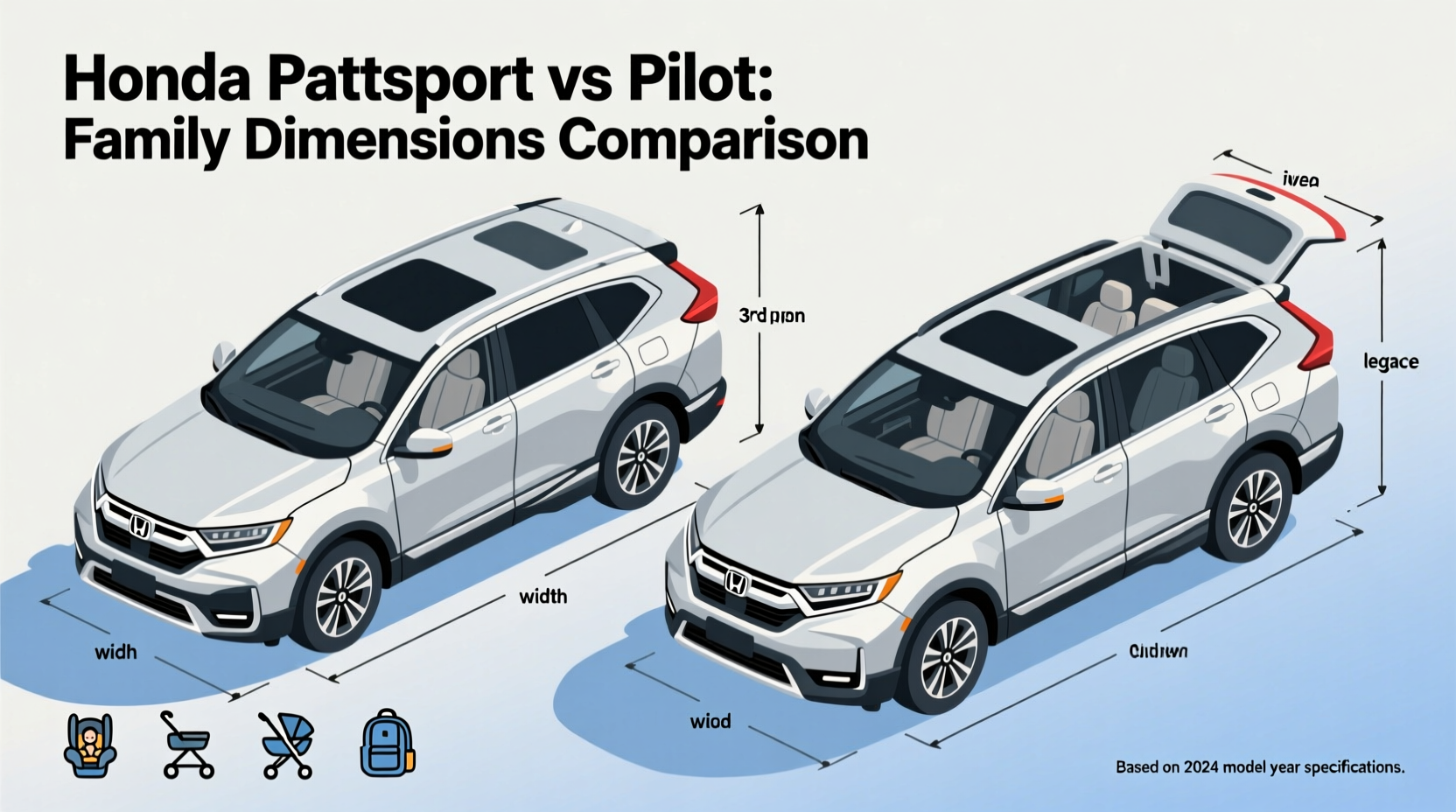
The most immediate distinction between the Honda Passport and Pilot lies in their overall footprint. The Pilot is larger in nearly every measurable way, making it more suitable for families needing maximum room. The Passport, while still spacious, leans toward a sportier, more maneuverable design ideal for smaller families or those who prioritize driving dynamics over sheer volume.
| Dimension | Honda Passport (2023) | Honda Pilot (2023) |
|---|---|---|
| Length | 190.5 inches | 200.4 inches |
| Width (w/o mirrors) | 78.6 inches | 79.8 inches |
| Height | 70.5–70.9 inches | 70.2–70.5 inches |
| Wheelbase | 110.2 inches | 110.8 inches |
| Passenger Volume | 141.3 cu ft | 165.5 cu ft |
| Cargo Capacity (behind 3rd row) | 41.2 cu ft | 18.5 cu ft |
| Cargo Capacity (2nd & 3rd rows folded) | 77.9 cu ft | 83.4 cu ft |
| Seating Capacity | 5 (standard), 7 (optional Elite trim) | 8 (cloth), 7 (leather) |
The data shows a clear trend: the Pilot offers more passenger space and greater flexibility in seating configuration, while the Passport provides deeper cargo utility behind the third row—a notable advantage if you frequently carry gear without folding seats.
Third-Row Usability: Comfort vs Practicality
Both SUVs offer a third row, but real-world usability varies dramatically. The Pilot’s extended length translates into significantly more legroom and headroom in the rearmost seats. For children under 12, both vehicles provide acceptable comfort, but older kids and adults will find the Pilot far more tolerable on longer trips.
- Pilot third-row legroom: 32.9 inches
- Passport third-row legroom: 27.7 inches
- Pilot third-row headroom: 38.2 inches
- Passport third-row headroom: 35.5 inches
The Pilot also includes available captain’s chairs in the second row, reducing total seating from eight to seven but improving access to the third row via a center aisle. This layout is ideal for families with three or more children who need easier entry and exit.
“For families regularly carrying five or more passengers, the Pilot’s third row isn’t just an option—it’s a necessity. The extra six inches of legroom make a tangible difference in comfort.” — Mark Tran, Automotive Family Lifestyle Analyst
Cargo Space and Daily Practicality
Cargo volume is where the Passport surprises many buyers. Despite its shorter overall length, it offers nearly double the storage behind the third row compared to the Pilot. This makes it an excellent choice for active families who prioritize gear over rear-seat occupancy.
Imagine a weekend trip with soccer bags, coolers, and camping chairs. With all seats in use:
- The Honda Passport holds four large duffel bags or multiple strollers upright.
- The Honda Pilot manages one or two suitcases, depending on size.
However, when the third row is folded, the Pilot gains the upper hand with 83.4 cubic feet of space—about 7% more than the Passport. For road trips requiring maximum packing efficiency, this edge matters.
Real-Life Example: The Thompson Family's Weekend Routine
The Thompsons, a family of five in Colorado, initially considered the Passport for its rugged look and improved fuel economy. But after test-driving both models with their twin toddlers and infant in car seats, they realized the Pilot’s wider second-row opening and deeper third row made loading children significantly easier. They also found that the Pilot could accommodate their double jogging stroller and diaper bag behind the third seat only when fully collapsed—something the Passport managed effortlessly. Ultimately, they chose the Passport because they rarely used the third row and valued trunk accessibility during ski season.
Maneuverability and Parking Considerations
In urban environments or tight garages, size impacts convenience. The Passport is nearly 10 inches shorter than the Pilot, making it noticeably easier to park, navigate narrow streets, and handle in crowded school zones.
Turning radius is another factor:
- Passport: 19.3 feet curb-to-curb
- Pilot: 19.7 feet curb-to-curb
While the difference seems minor, drivers accustomed to compact crossovers often report feeling more confident in the Passport during parallel parking or U-turns. Taller ceilings don’t compromise visibility—the Pilot maintains good sightlines thanks to its upright greenhouse design.
Family-Focused Features and Seating Layout
Beyond raw measurements, interior design affects daily life. The Pilot includes standard second-row sliding seats (up to 9.5 inches of travel), allowing fine-tuning between legroom and cargo space. The Passport offers 5.5 inches of adjustment—still useful but less flexible.
Other family-friendly considerations:
- Available CabinWatch (Pilot): A rear-facing camera lets drivers monitor sleeping children without turning around.
- Power liftgate: Available on both, but especially helpful when hands are full with groceries or kids.
- LATCH system: Both have anchors in the second row; the Pilot adds them in the third row for expanded child seat placement.
- USB ports: Pilot offers up to six, Passport up to five—both sufficient for modern device demands.
Checklist: Choosing Based on Your Family’s Needs
- Count how many people regularly ride together (include car seats).
- Measure your largest recurring cargo items (stroller, cooler, pet carrier).
- Assess your garage or parking situation for clearance.
- Determine frequency of long-distance travel with full occupancy.
- Test both models with your actual car seats installed.
- Evaluate ease of accessing the third row with children present.
- Compare fuel economy expectations (Passport averages 1–2 mpg better).
Frequently Asked Questions
Can the Honda Passport comfortably fit three car seats across the second row?
Yes, but tightly. Most users report success with narrower infant seats, though installing three booster seats simultaneously can be cramped. The Pilot’s wider cabin allows more spacing and easier buckling.
Is the Honda Pilot too big for city driving?
It depends on experience and infrastructure. Drivers familiar with full-size SUVs adapt quickly. Those used to compact vehicles may find parking and alley navigation challenging. However, available front and rear parking sensors, blind-spot monitoring, and a multi-angle camera system help mitigate size-related stress.
Does the Passport’s higher cargo space mean less headroom in the third row?
Slightly. While the Passport’s cargo area is taller, the third-row headroom remains adequate for children under 5'6\". Adults will feel confined during extended rides. The trade-off favors gear storage over adult passenger comfort.
Final Recommendation: Matching Size to Lifestyle
If your family regularly travels with five or more members—or plans to grow—the Honda Pilot’s superior dimensions, flexible seating, and enhanced third-row comfort make it the logical choice. Its combination of space, technology, and ease of access caters directly to large-family logistics.
Conversely, if you typically carry fewer than five passengers but value outdoor adventures, the Honda Passport delivers robust cargo utility, improved agility, and a more dynamic driving feel—all within a slightly more efficient package.
Ultimately, neither vehicle is objectively “better.” The decision hinges on how you define family utility: maximum occupancy and long-haul comfort (Pilot), or gear-first versatility with occasional third-row use (Passport).




 浙公网安备
33010002000092号
浙公网安备
33010002000092号 浙B2-20120091-4
Comments
No comments yet. Why don't you start the discussion?