
Honey has been used for centuries as a natural remedy for respiratory discomfort, especially coughs. Long before modern medicine, ancient civilizations like the Egyptians, Greeks, and Ayurvedic practitioners relied on honey to soothe sore throats and calm persistent coughing. Today, scientific research supports what traditional wisdom already knew: honey is not only effective but often safer than over-the-counter medications—especially for children. This article dives deep into the mechanisms behind honey’s effectiveness, its proven benefits, best practices for usage, and real-world applications.
The Science Behind Honey’s Cough-Relieving Properties
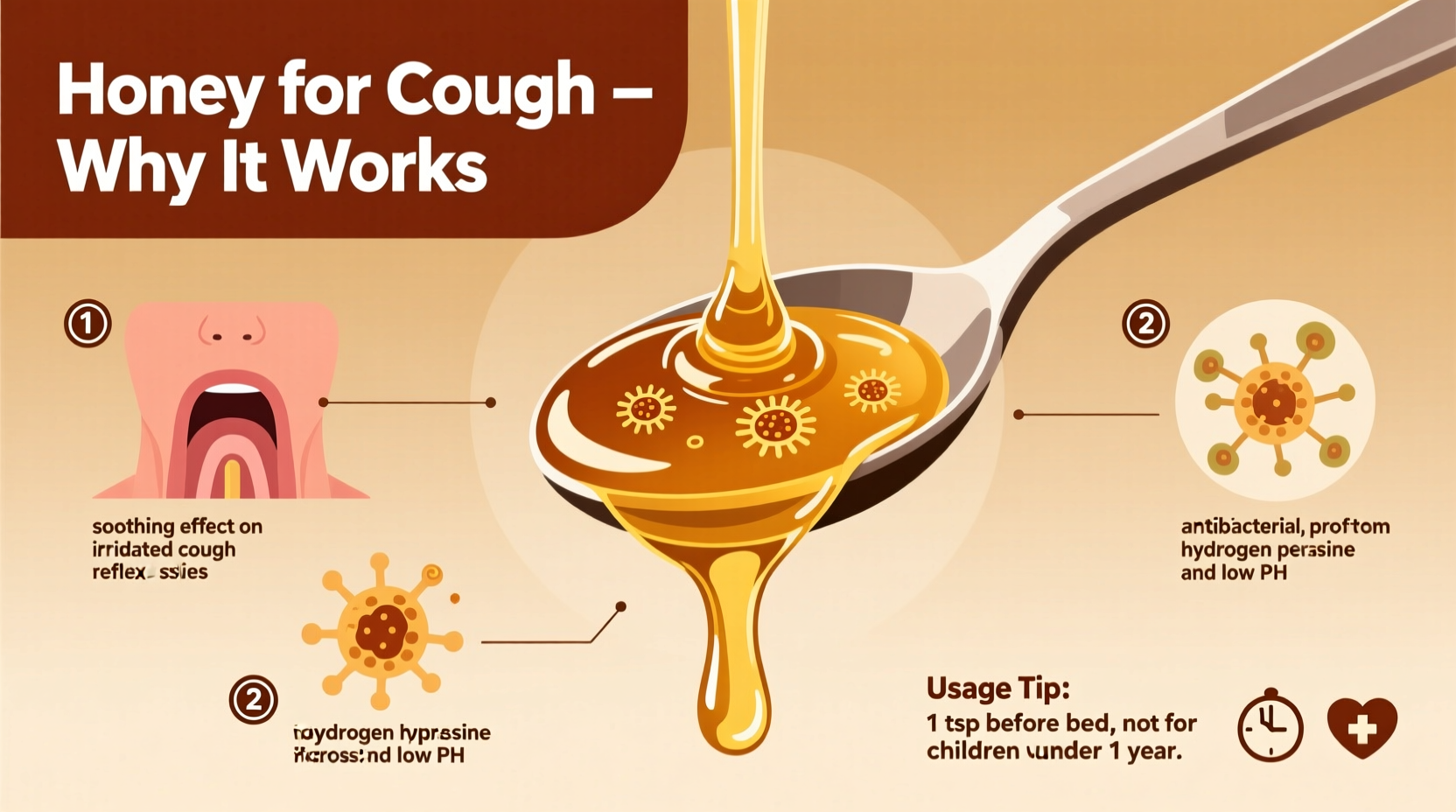
Honey isn’t just a sweetener—it’s a biologically active substance with antimicrobial, anti-inflammatory, and demulcent properties. These characteristics make it uniquely suited for addressing coughs, particularly those caused by upper respiratory infections.
A demulcent is a substance that coats and soothes irritated mucous membranes. When you consume honey, it forms a protective film over the throat lining, reducing irritation and the urge to cough. This effect is especially helpful at night when dry coughs can disrupt sleep.
Research published in the Archives of Pediatrics & Adolescent Medicine found that honey was more effective than dextromethorphan (a common cough suppressant) and no treatment at reducing nighttime coughing and improving sleep quality in children with upper respiratory infections.
“Honey appears to be at least as effective as—and possibly superior to—common over-the-counter preparations for cough.” — Dr. Ian Paul, Pediatric Researcher, Penn State College of Medicine
Key Benefits of Using Honey for Coughs
- Natural cough suppression: Reduces frequency and severity of coughing, especially at night.
- Anti-inflammatory action: Soothes inflamed throat tissues and reduces swelling.
- Antibacterial effects: Raw honey contains hydrogen peroxide and low moisture levels, inhibiting bacterial growth.
- Immune support: Contains antioxidants and polyphenols that support immune function.
- Sleep improvement: Helps both children and adults sleep better by minimizing nighttime coughing.
How to Use Honey for Cough: Best Practices and Methods
Using honey correctly maximizes its benefits while minimizing risks. Here’s a step-by-step guide for optimal results:
- Determine the right dosage: For adults, 1–2 teaspoons as needed. For children over 1 year, ½ to 1 teaspoon before bedtime.
- Choose high-quality honey: Opt for raw, dark varieties like manuka, buckwheat, or wildflower, which have higher antioxidant levels.
- Administer directly: Let honey coat the throat by swallowing it slowly. Avoid mixing with very hot liquids, which can degrade beneficial compounds.
- Combine with warm drinks: Mix with warm water, herbal tea (like chamomile or ginger), or lemon for added soothing effects.
- Use before bed: A dose 30 minutes before sleeping can reduce nighttime coughing episodes.
Effective Home Remedies with Honey
| Remedy | Ingredients | Instructions | Best For |
|---|---|---|---|
| Honey-Lemon Tea | 1 tsp honey, ½ lemon (juiced), warm water | Mix and sip slowly | Dry cough, sore throat |
| Ginger-Honey Infusion | 1 tsp honey, 1 tsp grated ginger, hot water | Steep 5 mins, strain, add honey | Cough with congestion |
| Honey-Cinnamon Soother | 1 tsp honey, ¼ tsp cinnamon | Stir and consume before bed | Nighttime cough |
Who Should Avoid Honey? Important Safety Notes
While honey is safe for most people, there are critical exceptions:
- Infants under 1 year: Honey may contain spores of Clostridium botulinum, which can cause infant botulism—a rare but serious condition.
- People with bee allergies: May react to certain proteins in honey.
- Diabetics: Should monitor intake due to honey’s natural sugars, though it has a lower glycemic index than table sugar.
Real-World Example: How One Family Reduced Cough Medication Use
The Thompson family in Vermont had a recurring issue every winter: their two young children developed lingering coughs after colds. Frustrated with ineffective OTC syrups and worried about side effects like drowsiness, they consulted their pediatrician, who suggested trying honey instead.
They began giving each child ¾ teaspoon of raw buckwheat honey 20 minutes before bedtime. Within three nights, both children experienced fewer coughing fits and slept through the night. Over the season, they avoided all cough suppressants and relied solely on honey and hydration. The parents noted not only improved sleep but also faster recovery times.
This case mirrors clinical findings: honey offers a practical, low-risk alternative to pharmaceutical options in non-infant populations.
Expert Insights: What Medical Professionals Say
Dr. Sarah Lin, a family physician and integrative medicine advocate, emphasizes that honey should be viewed as part of a holistic approach to respiratory care.
“Parents often reach for medicine bottles first. But sometimes the simplest solutions—like a spoonful of honey—are backed by stronger evidence than many commercial products.” — Dr. Sarah Lin, MD, Family Practice
The World Health Organization (WHO) and the American Academy of Pediatrics (AAP) both list honey as a recommended cough remedy for children over one year, reflecting growing consensus in the medical community.
Frequently Asked Questions
Can I use honey if I have a productive (wet) cough?
Yes. While honey is most praised for dry, irritating coughs, it can still soothe the throat during a wet cough. However, avoid suppressing a productive cough entirely, as it helps clear mucus. Use honey for comfort, not to completely stop mucus expulsion.
Is store-bought honey as effective as raw honey?
Pasteurized or processed honey may have reduced enzyme activity and lower antioxidant levels due to heat treatment. Raw honey retains more bioactive compounds. If possible, choose raw, unfiltered varieties from trusted sources for medicinal use.
How quickly does honey work for coughs?
Many people notice relief within 20–30 minutes of consumption, especially when taken before bed. Consistent use over 2–3 nights typically leads to significant improvement in cough frequency and sleep quality.
Checklist: Using Honey Safely and Effectively for Cough Relief
- ✅ Confirm the person is over 1 year old
- ✅ Choose raw, dark-colored honey when possible
- ✅ Use ½ to 1 teaspoon for children, 1–2 for adults
- ✅ Administer 30 minutes before bedtime
- ✅ Avoid mixing with excessively hot liquids
- ✅ Monitor for allergic reactions (rare but possible)
- ✅ Consult a doctor if cough persists beyond 7–10 days
Conclusion: A Time-Tested Remedy Worth Revisiting
In an age of complex medications and synthetic treatments, honey stands out as a simple, effective, and accessible solution for one of the most common health complaints: coughing. Supported by both tradition and science, it offers a safer, natural alternative—particularly valuable for families seeking gentler remedies.
Whether used alone or combined with warming herbs and citrus, honey’s ability to soothe, protect, and even fight infection makes it a staple worth keeping in every household medicine cabinet. Start using it wisely, follow safety guidelines, and experience the difference a spoonful of nature’s syrup can make.




 浙公网安备
33010002000092号
浙公网安备
33010002000092号 浙B2-20120091-4
Comments
No comments yet. Why don't you start the discussion?