
Choosing an iPhone case isn’t just about protection—it’s a personal style statement. As minimalist aesthetics dominate tech accessories, many users face a subtle but meaningful decision: go bold with a classic pattern like houndstooth, or stick to the timeless simplicity of a solid color? While houndstooth carries heritage and sophistication in fashion, its translation onto a small accessory like a phone case can raise questions about taste, quality, and perceived value. Some argue that patterns cheapen the look; others see them as expressive and intentional. The real answer lies not in the pattern itself, but in execution, context, and alignment with personal style.
The Psychology of Pattern Perception
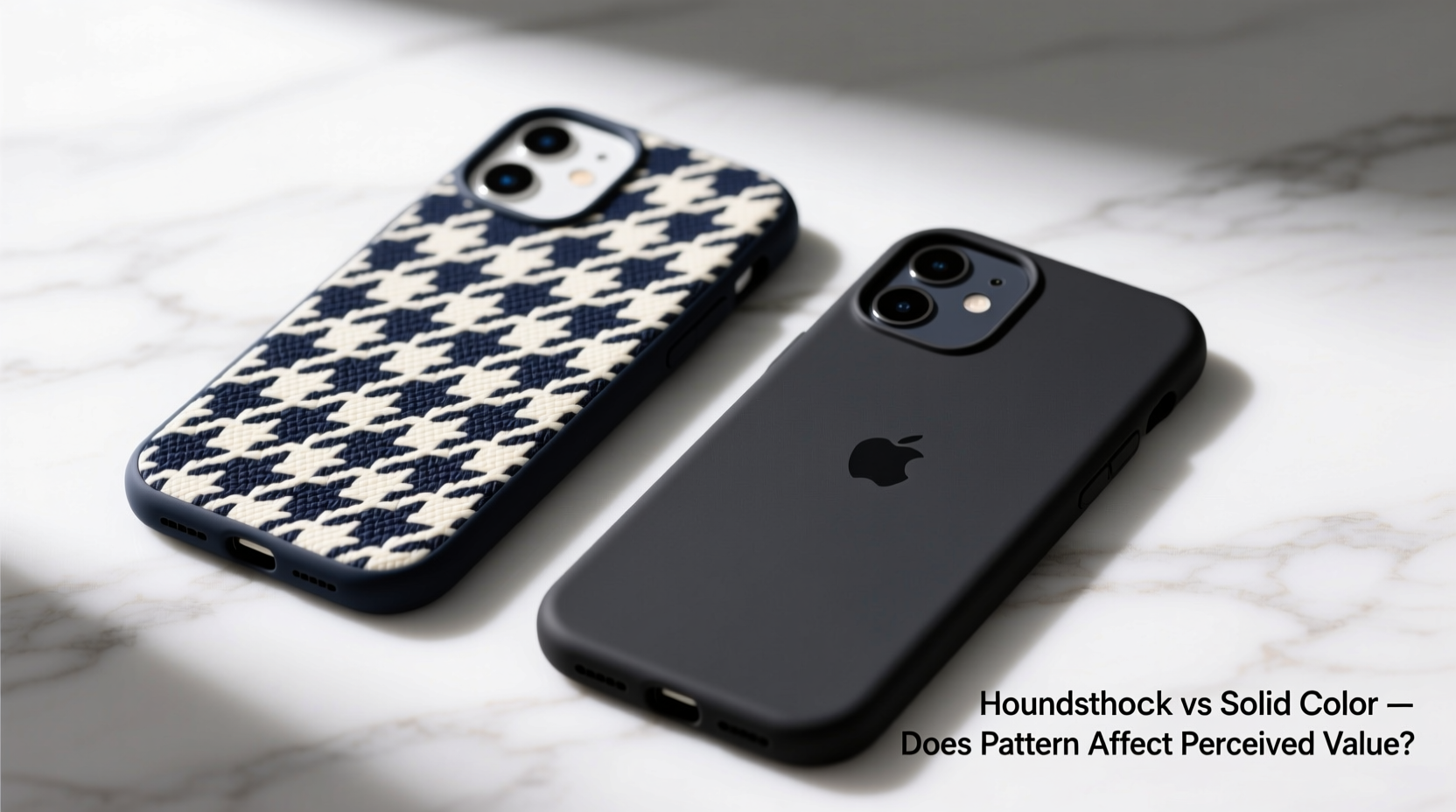
Visual patterns trigger immediate subconscious reactions. Houndstooth—a two-tone broken check design traditionally woven in wool—originated in 19th-century Scottish textiles and gained global fame through mid-century fashion icons like Coco Chanel. Its sharp contrast and geometric repetition signal structure, authority, and sartorial awareness. When applied to clothing, especially tailored pieces, it conveys confidence and refinement.
But scale matters. On a full suit or coat, houndstooth commands attention appropriately. On a 6-inch smartphone, the same pattern is compressed, potentially appearing busy or even pixelated if poorly rendered. This compression can lead some viewers to interpret the design as low-effort or mass-produced, particularly if the print lacks crisp edges or uses synthetic materials that mimic fabric poorly.
Solid colors, by contrast, offer visual neutrality. Black, navy, gray, or muted earth tones are associated with minimalism, modernity, and discretion. They don’t compete with your outfit or environment. A matte black case, for instance, blends seamlessly into professional settings, while a deep burgundy adds subtle flair without distraction. The absence of pattern removes ambiguity—there’s no risk of “clashing” or looking “too much.”
Material Quality Determines Perceived Value
A houndstooth case doesn’t inherently look cheap—but a poorly made one definitely will. The key differentiator is material integrity and printing precision. Many budget cases use thin plastic with a printed overlay that scratches easily, causing the pattern to fade or peel within weeks. This degradation reinforces the idea that “patterned = disposable.”
High-end houndstooth cases, however, use premium materials such as genuine leather with embossed patterns, or polycarbonate shells with laser-etched designs. These retain their appearance over time and feel substantial in hand. The texture mimics real fabric, enhancing authenticity. In such cases, the houndstooth becomes a deliberate design choice, not a cost-cutting decoration.
Solid color cases benefit from simpler production, making high-quality finishes more accessible. A soft-touch matte finish, for example, resists fingerprints and feels luxurious regardless of brand. But even here, quality varies: glossy plastics attract smudges, while flimsy TPU bends easily and collects lint.
“Pattern doesn’t diminish value—poor craftsmanship does. A well-executed houndstooth on genuine leather reads as curated, not cluttered.” — Marcus Lin, Product Designer at Form & Function Studio
Comparing Houndstooth and Solid Color: A Practical Breakdown
| Feature | Houndstooth Case | Solid Color Case |
|---|---|---|
| Style Expression | Strong, distinctive, fashion-forward | Neutral, understated, versatile |
| Durability (Print/Finish) | Depends on printing method; prone to wear if surface-level | More consistent; matte finishes resist fading |
| Scratch Visibility | Less noticeable due to pattern complexity | More visible on glossy or light shades |
| Professional Suitability | Context-dependent; better with smart-casual attire | Broadly acceptable in formal environments |
| Long-Term Appeal | Risk of trend fatigue; may feel dated | Timeless; easier to keep long-term |
Real-World Example: The Office Hybrid
Consider James, a marketing consultant who splits his week between client meetings and remote work. He owns both a charcoal houndstooth leather case and a slate-gray solid rubber case. During presentations, he swaps to the solid case, noting that clients rarely comment on it—exactly what he wants. But on casual Fridays or creative brainstorming sessions, he uses the houndstooth version. Colleagues have complimented it multiple times, calling it “sharp” and “unexpected.”
James doesn’t see the houndstooth as flashy; he sees it as a conversation starter aligned with his personal brand. The difference? His case is made by a boutique brand using top-grain leather with a debossed pattern—not a sticker-like print. The tactile quality elevates the entire impression.
This illustrates a crucial point: context and audience shape perception. In creative industries or social settings, a patterned case can enhance individuality. In conservative fields like law or finance, subtlety often wins.
How to Choose Without Regret: A Decision Checklist
- Evaluate your daily environments: Do you attend formal meetings, or work in a relaxed setting?
- Assess material first: Prioritize cases where the pattern is integrated (embossed, woven, or etched), not just printed.
- Test the tactile feel: Run your fingers over the case. Does it feel premium, or like promotional swag?
- Consider wardrobe synergy: Does the houndstooth match your usual jacket or bag textures?
- Think long-term: Will you still like this design in six months, or is it a passing whim?
- Check reviews for durability: Look for user feedback on yellowing, peeling, or edge wear.
When Patterns Work—and When They Don’t
Houndstooth succeeds when treated as part of a cohesive aesthetic. Pairing a black-and-white houndstooth case with a tweed blazer or oxford shoes creates visual harmony. It becomes an extension of your outfit, not an isolated oddity.
It fails when mismatched with context or low-quality materials. A bright blue houndstooth print on a flimsy plastic shell, for example, looks like a novelty item. Similarly, pairing a busy case with already-patterned clothing (stripes, plaids) creates visual conflict.
Solid colors win in universality. They’re safe, easy to replace, and never clash. But they also lack personality. Over time, using only solid cases might make your accessories feel interchangeable and forgettable.
Frequently Asked Questions
Does houndstooth look outdated on a phone case?
Not inherently. Houndstooth is a timeless textile pattern, but its modernity depends on color and scale. Monochrome black-and-white or charcoal-gray versions feel classic. Neon-colored or oversized repeats may appear kitschy. Stick to traditional proportions and muted tones for lasting appeal.
Are patterned cases harder to clean?
Generally, no. Most modern cases—patterned or not—are wiped clean with a damp cloth. However, textured or embossed surfaces may trap dust in crevices. Avoid abrasive cleaners that could strip printed layers. Matte-finished solids may show fewer smudges, but patterns hide minor scratches better.
Will a houndstooth case lower my phone’s resale value?
Unlikely. Resale value is driven by device condition, model, and storage capacity—not the case. Most buyers remove and replace the case anyway. That said, arriving at a trade-in with a cracked, peeling patterned case might signal neglect, so present your phone in clean, functional packaging regardless.
Final Thoughts: Style Is Intentional, Not Accidental
The belief that houndstooth iPhone cases look cheap is a generalization—one that overlooks nuance in design, material, and personal expression. A poorly made patterned case will always underperform, just as a glossy, fingerprint-prone solid case can feel tacky. What separates good from bad isn’t color or pattern, but intentionality.
If you choose a houndstooth case because you appreciate its history, texture, and sartorial link, and you invest in a well-made version, it won’t look cheap—it’ll look considered. Conversely, grabbing a $5 solid black case off a rack without checking the finish might save money but sacrifice dignity.
Your phone is one of the most handled objects in your life. Its case should reflect your standards, not just protect your screen. Whether you go bold with houndstooth or quiet with a solid hue, let the choice be deliberate, informed, and aligned with how you want to move through the world.




 浙公网安备
33010002000092号
浙公网安备
33010002000092号 浙B2-20120091-4
Comments
No comments yet. Why don't you start the discussion?