
Pattern mixing in interior design can elevate a room from predictable to personality-rich—when done right. But when you’re staring at a houndstooth cushion beside a sharply angular geometric one, wondering if they’ll wage war against your neutral sofa, hesitation is understandable. Bold patterns like houndstooth and geometric prints bring energy, texture, and visual interest, but their intensity demands thoughtful pairing. The good news: these designs don’t have to clash. With the right approach to color, scale, rhythm, and cohesion, you can create a layered, dynamic look that feels intentional rather than chaotic.
The Anatomy of Pattern Conflict
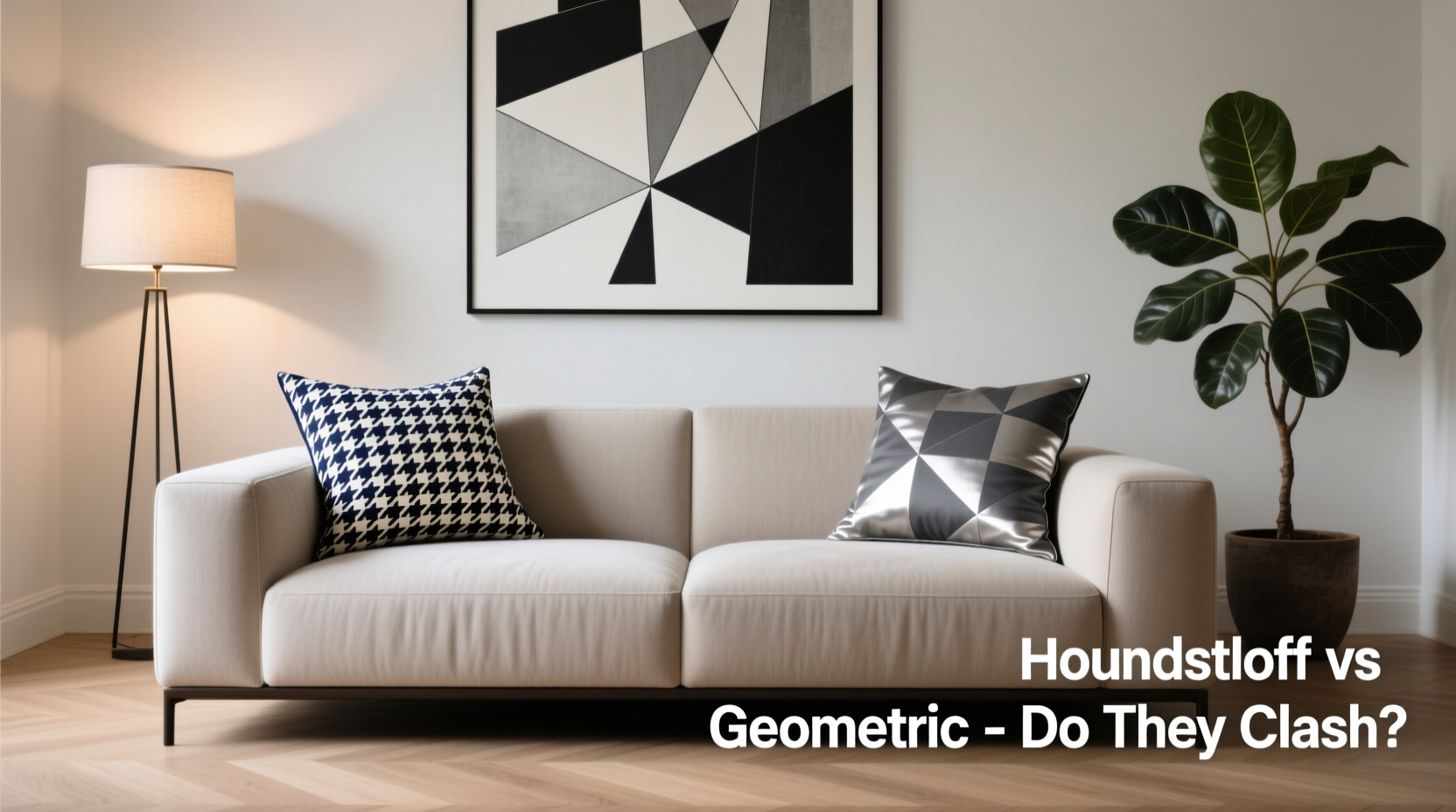
Clashing doesn’t happen because patterns are inherently incompatible—it happens when design principles are ignored. Two major culprits behind pattern clashes are mismatched scale and competing color temperatures. Houndstooth, a classic textile pattern with interlocking broken checks, typically operates at a medium scale and carries a traditional or tailored vibe. Geometric cushions, on the other hand, span a broad spectrum—from small tessellations to large, abstract shapes—and often feel modern or avant-garde.
When both patterns are equally dominant and lack a unifying element, the eye struggles to find a resting point. This sensory overload is what we perceive as “clashing.” But introduce a common thread—such as a shared base color or complementary tones—and the same combination can sing.
Color as the Peacemaker
Color is the most powerful tool for harmonizing seemingly conflicting patterns. Even if houndstooth and geometric prints differ in shape and origin, aligning their palettes creates instant cohesion. Begin by identifying the dominant and accent colors in your sofa fabric. If your sofa is beige or gray, use it as a neutral canvas and let the cushions introduce contrast through a shared color family.
For example, pair a black-and-white houndstooth cushion with a geometric one that features charcoal triangles and ivory diamonds. The monochrome scheme acts as a bridge. Alternatively, if your sofa leans warm (e.g., camel or taupe), select cushions that incorporate rust, terracotta, or mustard within their patterns—this keeps the overall temperature consistent.
“Pattern harmony isn’t about matching—it’s about resonance. When two designs echo each other in tone or hue, they create rhythm, not rivalry.” — Lena Patel, Interior Stylist & Textile Curator
Mastering Scale and Proportion
One of the golden rules of mixing patterns is to vary the scale. Avoid pairing two large-scale patterns head-on. Instead, combine a bold houndstooth (medium scale) with a smaller, intricate geometric print, or vice versa. This hierarchy gives the eye a path to follow.
Think of it like typography: a headline needs body text to make sense. Similarly, a large houndstooth cushion can act as the “headline,” while smaller geometric toss pillows serve as supporting detail. If both patterns are large and busy, insert a solid-colored buffer—a velvet or linen cushion in a transitional shade—to break the visual tension.
| Pattern Type | Typical Scale | Best Paired With |
|---|---|---|
| Houndstooth | Medium | Small geometrics, solids, or fine stripes |
| Geometric (angular) | Small to Large | Medium-scale classics like houndstooth or ticking stripe |
| Solid Cushion (buffer) | N/A | Any two competing patterns |
A Real-Life Balancing Act: The Mid-Century Living Room
In a recent project, designer Marcus Tran worked with a client who loved bold patterns but feared overwhelming her light-gray sectional. She owned a vintage-inspired houndstooth cushion and wanted to add a set of hexagonal teal-and-charcoal geometric pillows. At first glance, the mix felt jarring—the sharp angles of the hexagons clashed with the soft rhythm of the houndstooth.
Marcus introduced a third cushion in deep slate blue, solid velvet, placed centrally between the two patterned ones. He also replaced the existing throw with one that subtly echoed the teal from the geometric pillow. The result? The solid cushion acted as a visual breather, while the repeated teal tone tied the ensemble together. The sofa gained character without losing composure.
Step-by-Step Guide to Mixing Houndstooth and Geometric Cushions
Follow this sequence to confidently layer patterns on your sofa:
- Assess your sofa’s base color and undertone. Is it warm (beige, cream) or cool (gray, blue-gray)? Choose cushion colors that align with this temperature.
- Select a dominant pattern. Decide whether houndstooth or geometric will take center stage. Use it on one primary cushion.
- Add a secondary pattern of contrasting scale. If your main cushion is medium-scale houndstooth, pick a smaller or larger geometric design.
- Introduce a unifying color. Ensure at least one hue appears in both patterns, even if in different proportions.
- Insert a solid or textured neutral. A wool blend, bouclé, or velvet cushion in a mid-tone provides balance.
- Step back and evaluate. View the arrangement from across the room. Adjust placement or swap one piece if the composition feels too loud.
Checklist: Pattern-Mixing Success
- ✅ Sofa color and undertone identified
- ✅ One dominant pattern chosen
- ✅ Secondary pattern selected with varied scale
- ✅ At least one shared color across all pieces
- ✅ Neutral or solid-texture cushion included
- ✅ Arrangement tested in natural and artificial light
- ✅ Overall balance confirmed (not top-heavy or lopsided)
Common Mistakes to Avoid
Even seasoned decorators misstep when combining strong patterns. Watch out for these pitfalls:
- Overcommitting to contrast: Too many opposing angles and directions create visual noise.
- Ignoring room context: A pattern that works on a loveseat might overwhelm a large sectional.
- Skipping texture: Flat fabrics amplify pattern intensity. Introduce tactile variety with bouclé, corduroy, or wool.
- Forgetting function: Highly patterned cushions show dirt and pet hair more. Consider washable covers if practicality matters.
Frequently Asked Questions
Can I mix houndstooth and geometric patterns if my sofa is already patterned?
Proceed with caution. If your sofa has a subtle texture (like a herringbone weave), you can layer in cushions with bolder patterns—just keep the color palette tight. However, if your sofa has a prominent print, opt for solid cushions to avoid sensory overload.
How many patterned cushions are too many?
On a standard three-seater sofa, three to four cushions is typical. Limit yourself to two patterned ones—one houndstooth, one geometric—and fill the rest with solids or textured neutrals. In larger arrangements, never let patterned cushions exceed 60% of the total.
Are there specific geometric styles that work better with houndstooth?
Yes. Angular geometrics like chevrons, triangles, or asymmetric lines contrast nicely with houndstooth’s structured rhythm. Avoid overly complex tessellations unless they share a clear color link. Simple, bold shapes integrate more easily.
Final Thoughts: Confidence Over Caution
Interior design thrives on contrast and courage. Houndstooth and geometric cushions don’t have to be adversaries—they can be allies in creating a space that feels curated and alive. The key lies not in avoiding boldness, but in guiding it with intention. Use color as your compass, scale as your editor, and neutral textures as your pause points. When balanced thoughtfully, these “dizzying” patterns don’t clash—they converse.




 浙公网安备
33010002000092号
浙公网安备
33010002000092号 浙B2-20120091-4
Comments
No comments yet. Why don't you start the discussion?