
The phone case you choose does more than protect your device—it communicates something about your taste, lifestyle, and attention to detail. As minimalist aesthetics gain popularity, many consumers wonder: does opting for a patterned case, like houndstooth, undermine perceived sophistication? Specifically, is a houndstooth phone case inherently less elegant—or even “cheap”—compared to a solid color alternative? The answer isn’t as straightforward as it seems. Design, material, context, and execution all play pivotal roles in how a case is perceived.
The Psychology of Pattern and Perception
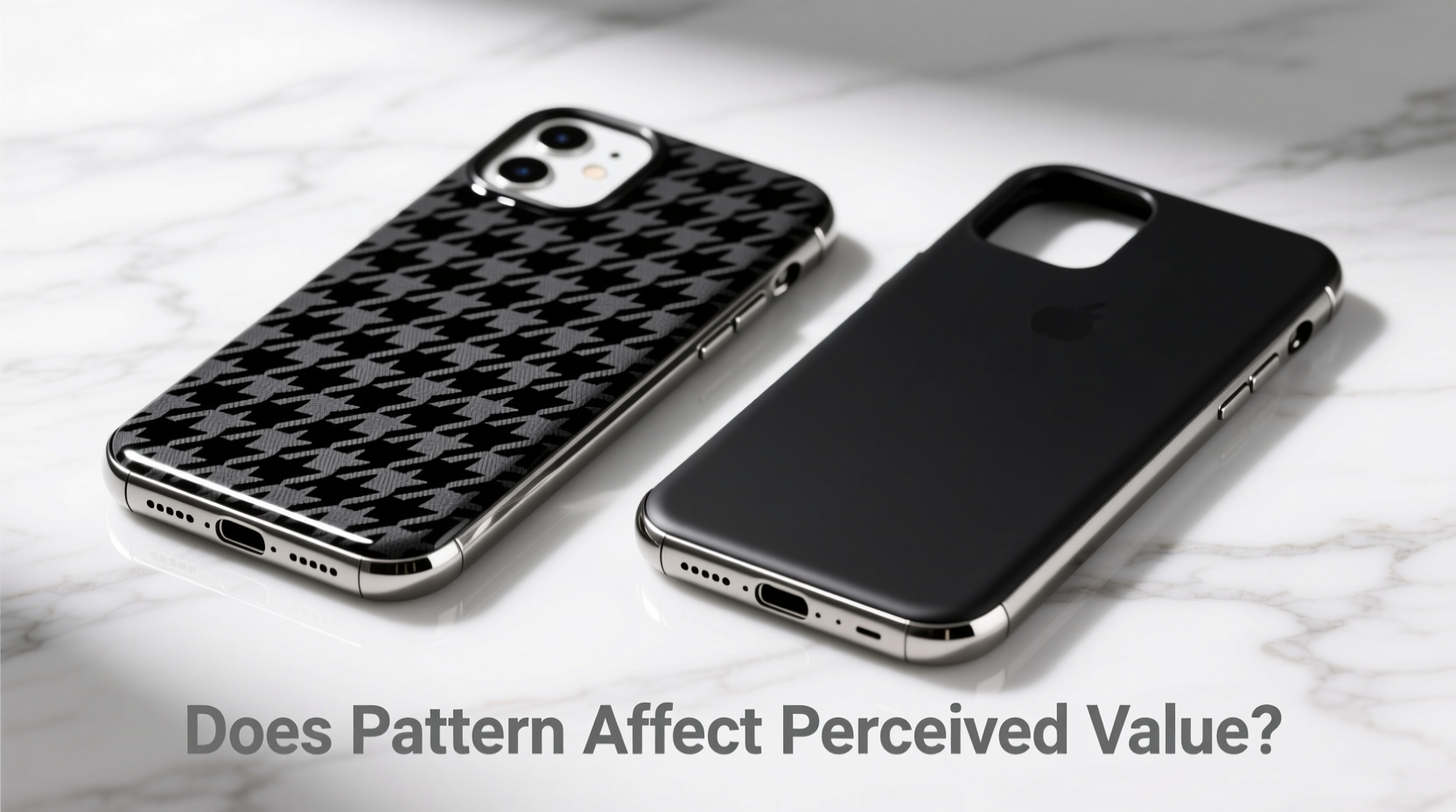
Patterns carry cultural and psychological weight. Houndstooth, with its distinctive broken-check design, has roots in traditional Scottish woolen cloth dating back to the 19th century. Over time, it evolved into a symbol of tailored elegance—worn by fashion icons from Coco Chanel to Don Draper. In high-end fashion, houndstooth appears on suits, coats, and accessories, often rendered in premium materials like wool or silk. When translated to smaller items like phone cases, however, the same pattern can face a credibility gap.
Why? Because scale and context matter. A bold pattern on a tiny accessory can appear busy or costumed if not executed well. On the other hand, a solid color—especially in muted tones like matte black, deep navy, or soft beige—signals restraint and modern minimalism. These are qualities often associated with luxury and intentionality.
That said, calling any pattern inherently \"cheap\" overlooks the role of craftsmanship. A poorly printed, flimsy houndstooth case with misaligned seams will look low-quality—not because of the design, but because of the build. Conversely, a precision-printed case with crisp lines and durable materials can elevate the pattern into a statement of curated taste.
Material Quality: The Real Determinant of Value
The most critical factor in whether a phone case looks expensive isn’t the presence of a pattern—it’s the quality of the materials used. A $35 leather case with a subtle houndstooth embossing will almost always look more refined than a $10 glossy plastic solid black case with visible mold lines.
Common materials in phone cases include:
- Polycarbonate: Durable and lightweight, often used in clear or semi-transparent cases.
- TPU (Thermoplastic Polyurethane): Flexible, shock-absorbent, but prone to yellowing over time.
- Silicone: Soft to the touch, available in vibrant colors, but can feel tacky if low-grade.
- Leather (genuine or synthetic): Offers texture and aging potential; premium options develop a patina.
- Recycled fabrics: Increasingly popular in eco-conscious brands, often paired with geometric or heritage patterns.
A houndstooth pattern printed on recycled fabric or debossed into genuine leather immediately gains legitimacy. The texture supports the design language, making it feel intentional rather than decorative.
“Pattern doesn’t cheapen an object—poor execution does. A well-made houndstooth case can be just as timeless as a solid black one.” — Marcus Lin, Product Designer at Form & Function Studio
Comparative Analysis: Houndstooth vs Solid Color
To better understand the trade-offs, consider the following comparison across key decision factors.
| Feature | Houndstooth Case | Solid Color Case |
|---|---|---|
| Visual Impact | High—stands out, draws attention | Low to moderate—blends in or makes subtle statement |
| Versatility | Moderate—best with neutral or matching outfits | High—pairs easily with any wardrobe |
| Durability Perception | Depends on material; pattern may hide scratches | Matte finishes suggest durability; gloss may show wear faster |
| Style Association | Classic, retro, fashion-forward | Minimalist, modern, professional |
| Longevity of Appeal | Risk of looking dated if trend fades | Timeless, especially in neutrals |
| Scratch & Scuff Visibility | Pattern helps conceal minor wear | Scratches more noticeable, especially on glossy or light colors |
When Houndstooth Works—and When It Doesn’t
There are scenarios where a houndstooth case enhances your image, and others where it might clash with expectations.
For instance, in creative industries—fashion, design, media—a patterned case can reflect personality and confidence. It signals that you’re comfortable with visual language and aren’t afraid to stand out. In contrast, in conservative fields like law, finance, or corporate management, a solid color case may align better with unspoken dress codes and professionalism norms.
Consider this real-world example:
The lesson? Context is everything. A pattern works when it feels like part of a deliberate ensemble, not an afterthought.
How to Choose Without Compromising Style or Sophistication
If you're drawn to houndstooth but wary of appearing less polished, follow this step-by-step guide to make a discerning choice.
- Assess Your Lifestyle: Do you work in a creative field? Travel frequently? Attend formal meetings? Match the case to environments where individuality is welcomed.
- Prioritize Material: Opt for cases made from premium materials—leather, textured polycarbonate, or fabric composites. Avoid thin, glossy plastics.
- Check Print Precision: Zoom in on product images. Are the lines sharp? Is the alignment consistent around corners? Poor printing undermines even the best design.
- Match to Your Wardrobe: If you often wear neutrals, monochrome, or tailored pieces, a grayscale houndstooth can complement your style. Avoid clashing with already busy outfits.
- Test in Natural Light: Order one case first. View it under daylight conditions. Does it look refined or cartoonish? Trust your instinct.
FAQ
Does patterned mean lower quality?
Not necessarily. Many high-end brands offer patterned cases using advanced printing techniques and durable materials. The perception of low quality often stems from mass-market, budget options with blurry prints or flimsy construction.
Can I pair a houndstooth case with a minimalist phone?
Absolutely. The contrast between a sleek device and a textured case can create visual interest. Just ensure the pattern is subtle and well-integrated—avoid oversized or garish versions.
Are solid colors more professional?
In traditional office settings, yes. Solid colors—especially dark neutrals—are seen as discreet and serious. However, professionalism is increasingly defined by competence, not accessories. If your work allows for self-expression, a tasteful pattern can enhance your personal brand.
Actionable Checklist Before Buying
- ✅ Confirm the case is made from durable, non-yellowing material
- ✅ Verify the houndstooth pattern is symmetrical and precisely printed
- ✅ Check customer reviews for comments on appearance and longevity
- ✅ Ensure compatibility with wireless charging and port access
- ✅ Compare price point with known reputable brands (e.g., Bellroy, Incipio, Mujjo)
- ✅ Consider whether the design complements your daily attire
Final Thoughts
The idea that a houndstooth phone case looks “cheap” is outdated and overly simplistic. What truly determines value is not the presence of a pattern, but the care put into its design and production. A thoughtfully crafted houndstooth case can be just as sophisticated as a solid black one—if not more so, given its ability to convey personality and sartorial awareness.
Instead of defaulting to minimalism out of fear of judgment, ask yourself: what do I want my everyday objects to say about me? If you appreciate classic patterns and well-made goods, there’s no reason to shy away from houndstooth. Choose quality, pay attention to detail, and let your accessories reflect the full spectrum of your taste.




 浙公网安备
33010002000092号
浙公网安备
33010002000092号 浙B2-20120091-4
Comments
No comments yet. Why don't you start the discussion?