
Replacing a smartphone battery is a common necessity as devices age, and many users turn to third-party sellers for replacements labeled as \"original\" Samsung batteries. However, counterfeit Samsung batteries are widespread in the market, often mimicking genuine products with alarming precision. Using a fake battery isn’t just about poor performance—it can pose serious safety risks, including overheating, swelling, or even fire. Knowing how to distinguish a real Samsung battery from a counterfeit is essential for protecting your device, data, and personal safety.
1. Examine the Packaging and Labeling Details
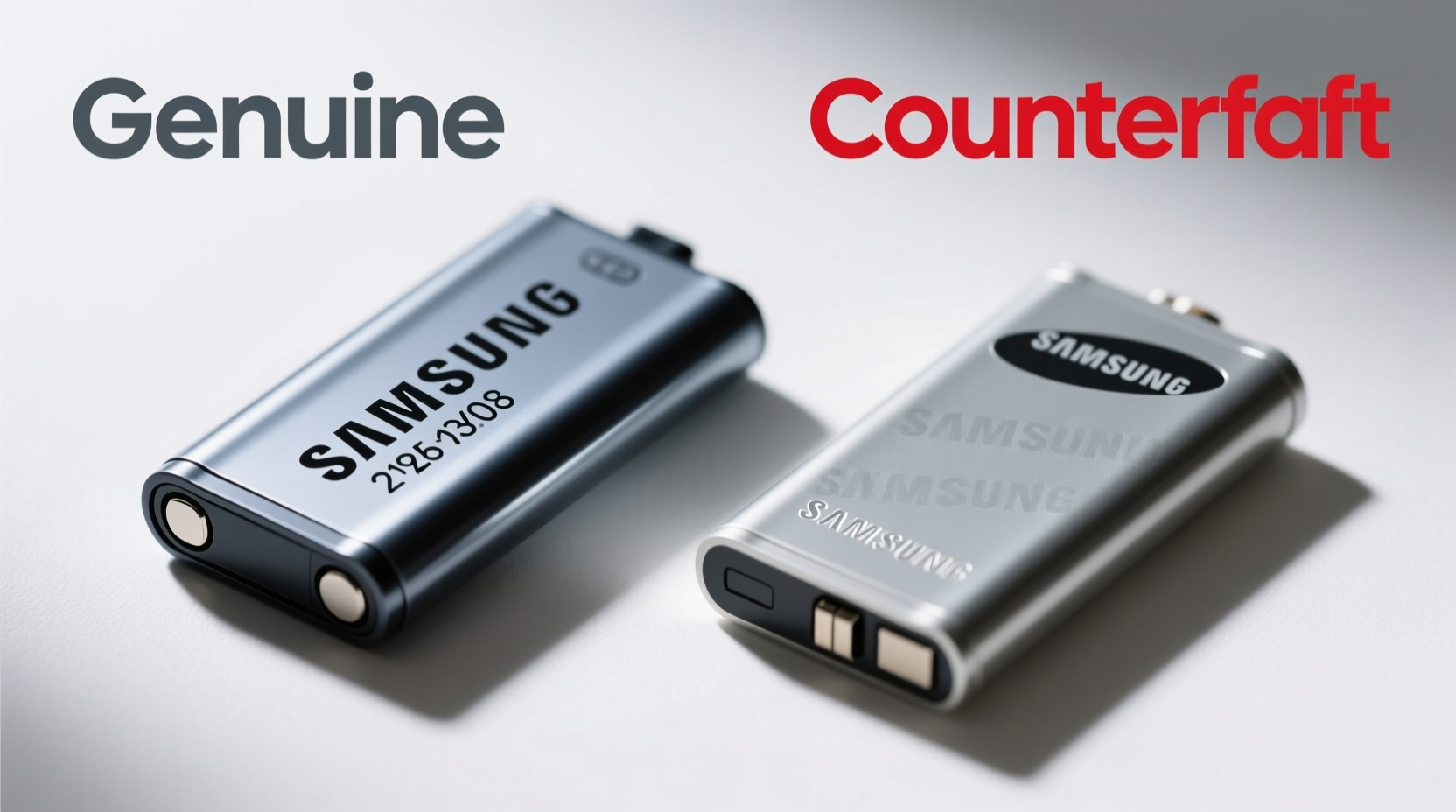
Genuine Samsung batteries come in consistent, high-quality packaging that follows strict branding standards. Counterfeit versions often cut corners here, making this one of the easiest places to spot fakes.
Original Samsung replacement batteries—especially those sold through authorized retailers—typically arrive in minimalist white boxes with clean black text. The packaging includes:
- The official Samsung logo (not misspelled or stylized)
- Model number compatibility (e.g., EB-BT910ABE for Galaxy S6)
- Barcode and serial number matching the battery
- Manufacturing and expiry dates
- Safety certifications (CE, FCC, RoHS)
Be cautious of listings that claim “OEM” or “original quality”—these are red flags. Only trust packaging that clearly states “Samsung” and includes verifiable batch information.
2. Inspect the Battery's Physical Build and Markings
The battery itself should reflect Samsung’s attention to detail. Counterfeits often fail under close scrutiny.
Lift the battery carefully and check the following features:
- Label Quality: Genuine batteries have laser-etched or finely printed labels. Text is sharp, aligned, and free of smudges. Fake labels may be sticker-based, slightly misaligned, or use incorrect fonts.
- Serial Number and Model: Every authentic Samsung battery has a unique serial number and model code (e.g., EB-BG935ABC). Cross-reference this with Samsung’s database or known valid models online.
- Color and Finish: Real Samsung batteries have a smooth, matte finish in pure black. Fakes often appear glossy or have uneven coloring.
- Seams and Edges: Originals are tightly sealed with no visible glue or rough edges. Poorly bonded seams indicate low-quality manufacturing.
“Counterfeit batteries frequently skip internal safety circuits to cut costs. That makes them unpredictable under load.” — Dr. Lena Park, Electronics Safety Researcher at UL Solutions
3. Compare Voltage, Capacity, and Performance Metrics
A key indicator of authenticity lies in the technical specifications printed on the battery.
Real Samsung batteries list precise voltage (usually 3.85V or 3.87V for modern phones) and capacity in mAh (e.g., 3000mAh). Be wary if:
- The voltage is listed as 3.7V only (older standard, less accurate for newer models)
- The capacity is exaggerated (e.g., “4000mAh” when the original was 3000mAh)
- Specs are missing or printed faintly
| Feature | Authentic Samsung Battery | Fake Battery (Common Traits) |
|---|---|---|
| Voltage | 3.85V or 3.87V | 3.7V or unspecified |
| Capacity | Matches original device spec exactly | Often inflated (e.g., +20%) |
| Production Date | Clearly printed, within 1–2 years | Missing or outdated |
| Safety Labels | Includes CE, FCC, PSE marks | Faked logos or missing |
Beyond specs, monitor actual performance. A real Samsung battery charges efficiently, maintains stable voltage, and lasts through typical daily use. Fakes degrade quickly—often within weeks—and may cause unexpected shutdowns even at 30% charge.
4. Verify Purchase Source and Seller Reputation
Where you buy the battery matters more than you might think. Even if a product looks authentic, its origin can reveal the truth.
Authorized Samsung service centers, Samsung.com, and certified electronics retailers (like Best Buy or Amazon’s “Ships from/Sold by Amazon”) are reliable sources. Avoid:
- Unknown third-party sellers on eBay or AliExpress
- Marketplaces offering “original” batteries at suspiciously low prices
- Vague descriptions like “compatible with Galaxy S21” without model-specific details
Mini Case Study: Maria’s Galaxy Note8 Experience
Maria purchased a “genuine Samsung” replacement battery online for her Galaxy Note8. It arrived in a plain plastic bag with no box. The label had a slight tilt, and the font looked off. After installation, her phone shut down randomly at 40%. Within two weeks, the battery began swelling, pushing the screen outward. She took it to a repair shop, where the technician confirmed it was a counterfeit using substandard lithium cells. Samsung does not sell loose batteries without packaging—this alone should have been a warning sign.
5. Step-by-Step Guide to Authenticating a Samsung Battery
Follow this practical sequence when evaluating a new or replacement battery:
- Check the Retailer: Confirm the seller is authorized by Samsung or a reputable electronics provider.
- Inspect the Box: Look for correct branding, model compatibility, and safety certifications.
- Examine the Battery: Check for precise labeling, proper model number, and build quality.
- Verify Specifications: Ensure voltage and mAh match the original device specs.
- Test Performance: Monitor charging speed, battery drain, and temperature during use.
- Contact Samsung: Use the serial number to inquire via customer support if authenticity is in doubt.
“Samsung does not manufacture replacement batteries for consumer resale under normal circumstances. Most ‘original’ loose batteries are either salvaged or counterfeit.” — Samsung Support Statement, 2023
Frequently Asked Questions
Can I use a third-party battery instead of Samsung?
Yes, but only from reputable brands with built-in protection circuits. While not “fake,” third-party batteries vary in quality. Stick to brands like Anker, RAVPower, or Energizer that comply with safety standards. Avoid no-name brands.
Do real Samsung batteries have expiration dates?
Yes. Genuine Samsung batteries include a manufacturing date, and their chemical lifespan begins from that point. A battery over two years old—even unused—may hold less charge due to natural degradation.
Is it safe to install a Samsung battery myself?
If you’re experienced with phone repairs and use proper tools, yes. However, puncturing a lithium-ion battery—even a real one—can lead to fire. For most users, professional installation at an authorized center is safer and ensures warranty compliance.
Final Checklist: Is Your Samsung Battery Real?
- ✅ Purchased from an authorized retailer or Samsung service center
- ✅ Comes in branded, undamaged packaging with safety marks
- ✅ Matches the exact model number of your device (e.g., EB-BG930BBE)
- ✅ Has a clear manufacturing date within the last 1–2 years
- ✅ Features precise, non-sticker labeling with correct voltage and capacity
- ✅ Performs reliably without overheating or rapid drain
Conclusion
Distinguishing a fake Samsung battery from a real one requires attention to detail, knowledge of specifications, and careful sourcing. The risks of counterfeits go beyond inconvenience—they threaten device integrity and personal safety. By verifying packaging, inspecting physical traits, checking technical data, and buying from trusted channels, you protect not just your phone, but yourself.




 浙公网安备
33010002000092号
浙公网安备
33010002000092号 浙B2-20120091-4
Comments
No comments yet. Why don't you start the discussion?