
Soup is one of the most versatile and economical dishes in home cooking—ideal for meal prep, using leftovers, or feeding a family with minimal effort. Yet, despite its simplicity, improper storage leads to one of the most common food safety mistakes in kitchens: keeping soup too long in the refrigerator. Understanding how long soup remains safe—and palatable—is essential not only for avoiding foodborne illness but also for preserving flavor and texture. The answer isn't universal; it depends on ingredients, cooling speed, container type, and whether the soup contains meat, dairy, or seafood. This guide breaks down the science and standards behind refrigerated soup storage, offering clear timelines, expert-backed handling techniques, and practical strategies to maximize both safety and quality.
Definition & Overview
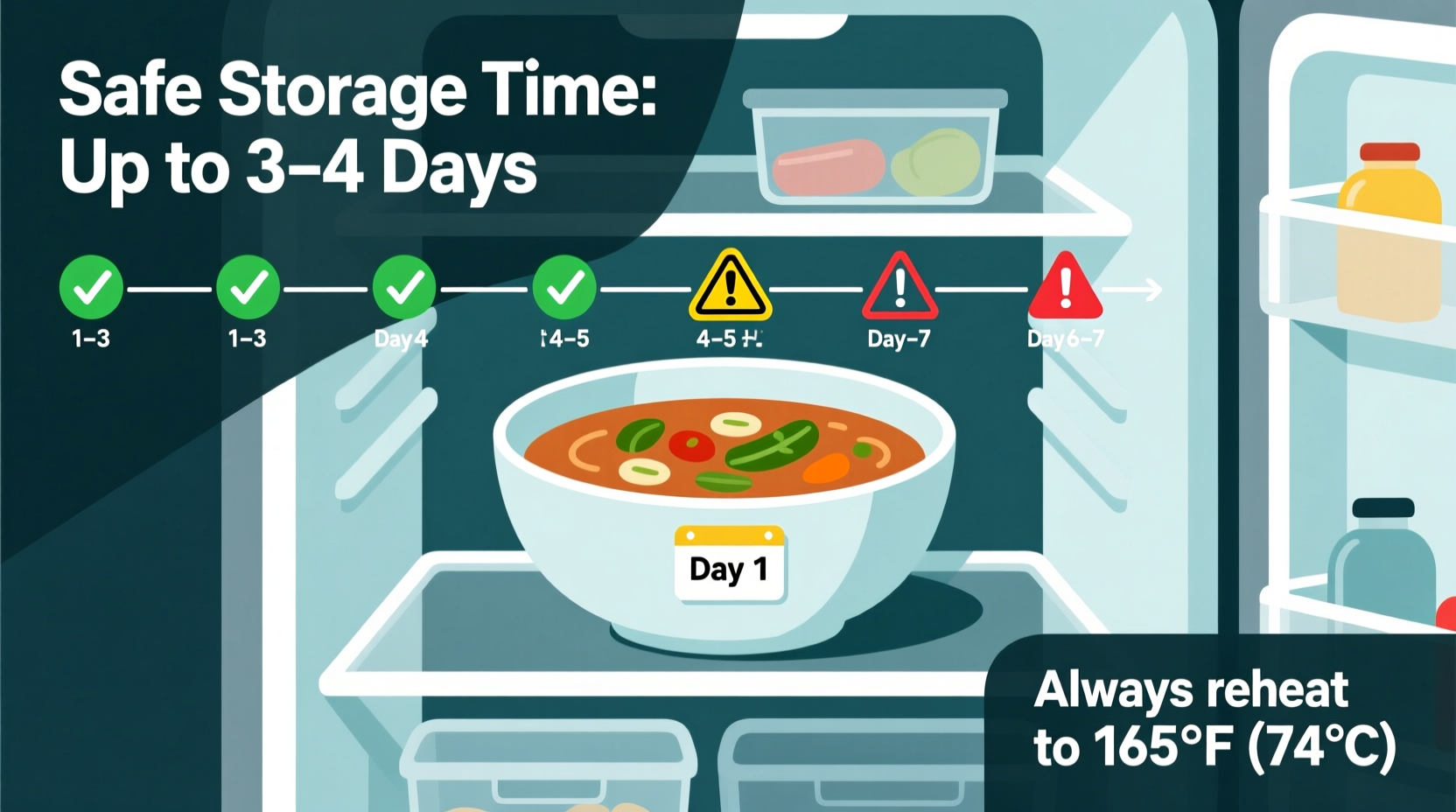
Soup is a liquid-based food typically made by simmering ingredients such as vegetables, meats, legumes, grains, or noodles in water or stock. It spans countless global cuisines—from French potages and Italian minestrone to Thai tom yum and West African okra soups. Broadly categorized into clear soups (like consommé), thickened soups (such as chowders), and puréed soups (like butternut squash), each variation presents unique storage considerations. While soup’s high moisture content makes it nourishing and hydrating, it also creates an ideal environment for bacterial growth if not handled correctly. Refrigeration slows microbial activity, but does not stop it entirely. Therefore, time-limited storage is critical to prevent pathogens like *Listeria*, *Salmonella*, and *Clostridium perfringens* from proliferating to dangerous levels.
Key Characteristics Affecting Shelf Life
The longevity of soup in the refrigerator hinges on several interrelated factors. These characteristics determine both safety and sensory degradation over time:
- Ingredient composition: Soups with meat, poultry, seafood, or dairy have shorter shelf lives than vegetable-only versions due to higher protein content and susceptibility to spoilage.
- pH level: Acidic soups (e.g., tomato-based, lentil with lemon) resist bacterial growth longer than neutral or alkaline ones.
- Moisture and fat content: High moisture supports microbial growth; fat can go rancid over time, affecting taste even if the soup remains safe.
- Presence of starches and thickeners: Noodles, rice, or potatoes may break down after 2–3 days, leading to mushy textures.
- Cooling speed: Rapid cooling prevents bacteria from multiplying during the “danger zone” (40°F–140°F / 4°C–60°C).
| Soup Type | Safe Refrigerated Storage Time | Primary Risk Factors |
|---|---|---|
| Vegetable soup (no dairy or pasta) | 4–7 days | Bacterial contamination from poor cooling |
| Chicken soup (with meat) | 3–4 days | Poultry spoilage, pathogen growth |
| Beef or meat stew | 3–4 days | Fat oxidation, texture breakdown |
| Seafood soup (e.g., clam chowder) | 2–3 days | Rapid spoilage of shellfish/fish proteins |
| Cream-based soup (e.g., broccoli cheddar) | 3 days | Dairy separation, souring, curdling |
| Soup with pasta, rice, or dumplings | 2–3 days | Starch absorption, sogginess |
| Legume-based (lentil, bean) | 5–7 days | Gas development, softening |
Practical Usage: Maximizing Safety and Quality
Storing soup properly begins the moment it comes off the stove. How quickly and effectively you cool and contain it determines whether it stays fresh for four days or spoils within two. Follow these evidence-based steps to ensure optimal results:
- Cool rapidly before refrigerating: Leaving soup at room temperature for more than two hours invites rapid bacterial multiplication. To accelerate cooling:
- Divide large batches into shallow containers (no more than 2 inches deep).
- Place the pot in an ice-water bath, stirring occasionally.
- Use stainless steel containers, which conduct heat better than plastic or ceramic.
- Use airtight, food-safe containers: Glass or BPA-free plastic with tight-fitting lids minimize air exposure and odor transfer. Fill containers nearly full to reduce headspace, which limits oxygen contact.
- Label and date every batch: Use masking tape or a reusable label to mark contents and the date stored. This simple habit prevents guesswork and reduces waste.
- Store toward the back of the fridge: Temperatures are most stable here, unlike the door where fluctuations occur with frequent opening.
- Reheat thoroughly: Bring soup to a rolling boil (165°F / 74°C minimum) to kill any bacteria that may have developed during storage.
Pro Tip: If you don’t plan to eat your soup within three days, freeze it immediately after cooling. Freezing halts microbial growth and preserves flavor far better than extended refrigeration. Use portion-sized freezer bags or containers, leaving ½ inch of headspace for expansion.
Variants & Types: Storage Differences by Category
Not all soups behave the same way in cold storage. Recognizing how different formulations affect shelf life allows for smarter planning and fewer spoiled meals.
Clear Broths and Stock-Based Soups
These include chicken noodle, miso, pho broth, and vegetable consommé. Lean broths last longer than creamy ones—up to five days if meat-free. However, once noodles or cooked vegetables are added, consume within 3–4 days to avoid sogginess and microbial risk. Strain out delicate ingredients like tofu or herbs before storing, then add them fresh upon reheating.
Cream-Based and Dairy-Containing Soups
Alfredo soups, potato leek, and corn chowder rely on milk, cream, or cheese. These are prone to curdling and souring after three days. To improve stability:
- Add dairy at the end of cooking, not during prolonged simmering.
- When reheating, warm slowly over low heat and stir frequently to prevent separation.
- Consider omitting cream before storage and adding it fresh when serving.
Starchy and Grain-Loaded Soups
Soups containing rice, barley, quinoa, or pasta absorb liquid over time, becoming overly thick or mushy. For best texture:
- Cook grains separately and add portions when reheating.
- If already incorporated, expect significant softening after 48 hours.
- Thin with fresh broth when reheating to restore consistency.
Bean, Lentil, and Pulse-Based Soups
High in fiber and protein but low in fat, these soups (e.g., minestrone, dal, borscht) often improve in flavor over 2–3 days as spices meld. They can remain safe for up to seven days if properly cooled and sealed. Watch for excessive gas formation or sour smell—signs of fermentation beyond safe limits.
Seafood and Fish-Based Soups
Due to the fragility of seafood proteins, soups like bouillabaisse, cioppino, or fish chowder should be eaten within 48 hours. Shellfish, in particular, degrades quickly and poses a high risk of *Vibrio* contamination if kept too long. Remove delicate seafood before storing and add it during reheating whenever possible.
Comparison with Similar Dishes
Soup is often confused with stews, sauces, and braising liquids—all of which share ingredients but differ in concentration, cooking method, and storage behavior. Understanding these distinctions helps apply correct safety guidelines.
| Dish Type | Liquid Ratio | Texture | Fridge Life |
|---|---|---|---|
| Soup | High (brothy) | Fluid, pourable | 3–7 days |
| Stew | Low to moderate (coats spoon) | Thick, chunky | 4–5 days |
| Sauce (e.g., marinara, gravy) | Moderate, reduced | Coating consistency | 5–7 days |
| Braising liquid | Medium (partially absorbed) | Rich, concentrated | 3–4 days (if reused) |
Note that while stews and sauces may last slightly longer due to lower water activity and higher salt or acid content, they still require the same cooling protocols. Never assume thicker = safer without considering ingredients.
Practical Tips & FAQs
Q: Can I leave soup out overnight to cool?
A: No. The USDA advises discarding any perishable food left at room temperature for more than two hours (one hour if ambient temperature exceeds 90°F / 32°C). Overnight cooling allows dangerous bacteria to multiply exponentially. Use rapid cooling methods instead.
Q: How do I know if soup has gone bad?
A: Look for these unmistakable signs:
- Off or sour smell (distinct from fermented aromas in intentionally cultured soups)
- Visible mold (fuzzy spots in white, green, or black)
- Bubbling, sliminess, or unnatural cloudiness
- Swollen container lids (in glass jars), indicating gas production
Q: Can I freeze soup after 4 days in the fridge?
A: Not recommended. Freezing stops bacteria but does not reverse prior growth. If soup has been refrigerated beyond its safe window, freezing will preserve—not eliminate—existing pathogens. Freeze soup within 2–3 days of cooking for maximum safety and quality.
Q: Does reheating kill all bacteria in old soup?
A: Reheating to 165°F (74°C) kills active bacteria, but some pathogens produce heat-stable toxins (e.g., *Staphylococcus aureus*) that survive boiling. If soup has been improperly stored, reheating won’t make it safe. Time and temperature control are irreplaceable.
Q: Are homemade soups less stable than canned?
A: Yes. Canned soups undergo commercial sterilization (retort processing) that destroys spores and creates a vacuum seal. Homemade versions lack this protection and must follow strict refrigeration timelines. Always treat homemade soup as perishable.
Expert Insight: \"I always tell my students: 'When in doubt, throw it out.' It's not worth risking a hospital visit over a container of week-old chowder. Trust your nose, but don’t rely on it exclusively—some harmful bacteria don’t produce obvious odors.\" — Chef Elena Rodriguez, Culinary Safety Instructor, National Institute of Food Technology
Summary & Key Takeaways
Knowing how long you can safely store soup in the fridge is fundamental to food safety and culinary efficiency. Most soups last 3–4 days when properly cooled and sealed, though exceptions exist based on ingredients. Vegetable and legume-based soups may last up to a week, while seafood, dairy-rich, or starch-heavy versions should be consumed within 2–3 days. Rapid cooling, airtight containers, labeling, and consistent fridge temperatures below 40°F (4°C) are non-negotiable for preventing spoilage. Freezing extends usability indefinitely, but only if done promptly. Never attempt to salvage questionable soup through reheating—some bacterial toxins cannot be destroyed by heat. By applying these principles, home cooks can enjoy the convenience of soup without compromising health or flavor.
Make smart storage a habit. Your future self—and your immune system—will thank you.




 浙公网安备
33010002000092号
浙公网安备
33010002000092号 浙B2-20120091-4
Comments
No comments yet. Why don't you start the discussion?