
Navigating the U.S. fiancé visa process can feel overwhelming. With fluctuating processing times, strict documentation, and high stakes, many couples wonder: how long will this actually take? While some sources claim six months, others report over a year of waiting. The truth lies somewhere in between — and depends heavily on preparation, location, and current immigration workloads.
This guide breaks down the entire K-1 fiancé visa journey into clear, actionable steps. You’ll learn realistic timeframes, common pitfalls, and strategies to keep your application moving efficiently from start to approval.
Understanding the K-1 Fiancé Visa Process
The K-1 nonimmigrant visa allows foreign fiancés of U.S. citizens to enter the United States for the purpose of marriage. Once married, the spouse can apply for a green card and lawful permanent residence. Unlike spousal visas, the K-1 requires the couple to marry within 90 days of entry.
The process begins with the U.S. citizen filing Form I-129F, Petition for Alien Fiancé, with U.S. Citizenship and Immigration Services (USCIS). From there, the case moves through several stages: USCIS review, National Visa Center (NVC) processing, consular interview, and finally, visa issuance.
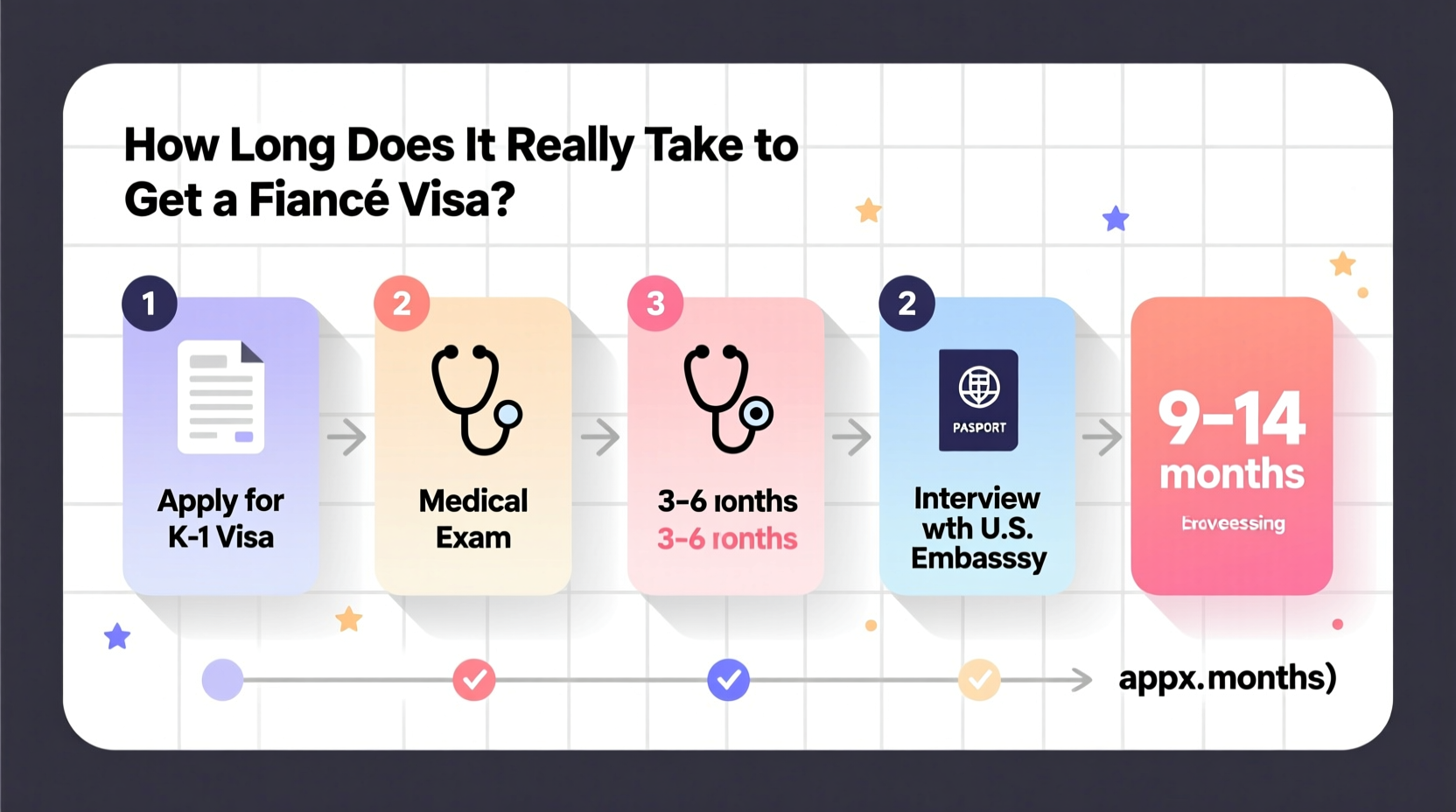
According to the U.S. Department of State, the average total processing time currently ranges from **7 to 15 months**, though individual cases vary widely based on country of origin, completeness of documentation, and administrative backlogs.
Step-by-Step Timeline Breakdown
Here’s a detailed look at each phase of the fiancé visa process, including average durations and key actions required.
- Preparation & Filing I-129F (1–2 months)
Gather evidence of your relationship (photos, communication logs, travel records), complete Form I-129F, and submit it to USCIS with supporting documents and fees (~$535 as of 2024). Rush processing is not available, so accuracy is critical. - USCIS Processing (5–8 months)
This is typically the longest stage. USCIS reviews the petition for eligibility and authenticity. Premium processing is not offered for I-129F, so applicants must wait for standard adjudication. You may receive a Request for Evidence (RFE) if information is missing or unclear. - National Visa Center (NVC) Review (1–2 months)
Once approved, USCIS forwards the case to the NVC. The foreign fiancé receives instructions to complete DS-160 (Online Nonimmigrant Visa Application), pay fees (~$265), and schedule a medical exam and embassy interview. - Consular Interview & Visa Issuance (1–3 months)
After submitting documents and attending the medical exam, the applicant attends an interview at the U.S. embassy or consulate. If approved, the visa is typically issued within a few days to weeks. - Travel to the U.S. & Marriage (within 6 months of visa issuance)
The visa is valid for six months from issuance. Upon arrival, U.S. Customs and Border Protection (CBP) grants admission. The couple must marry within 90 days of entry.
Factors That Affect Processing Time
No two fiancé visa cases are identical. Several variables influence how quickly your application progresses.
- Country of Origin: Some embassies have longer wait times for interview slots. For example, cases processed in Manila or Lagos often face higher demand than those in smaller consulates.
- Completeness of Application: Incomplete forms or insufficient relationship evidence lead to RFEs, which can add 2–4 months to the timeline.
- Medical Exam Availability: Delays in scheduling or receiving results from panel physicians can slow down the final steps.
- USCIS Workload: Regional service centers experience fluctuating caseloads. Check current processing times on the USCIS website using your receipt number.
“We’ve seen well-documented cases approved in under seven months, while others with minor errors stretched beyond 18 months due to avoidable delays.” — Sarah Nguyen, Immigration Attorney with over 12 years of family visa experience
Fiancé Visa Checklist: Key Actions to Stay on Track
To minimize delays, follow this essential checklist:
- Confirm both parties are legally free to marry (no prior marriages pending dissolution)
- Ensure you’ve met in person within the last two years (waivers are rare but possible)
- Collect at least 6–8 months of communication history (texts, calls, emails, video chats)
- Gather third-party evidence: shared travel receipts, hotel bookings, affidavits from friends/family
- Complete Form I-129F accurately and include all required supplements (G-325A for both parties)
- Respond immediately to any USCIS RFE or NVC request
- Schedule the medical exam early once instructed — don’t wait until the last minute
- Prepare for the consular interview with honest, consistent answers about your relationship
Do’s and Don’ts During the Fiancé Visa Process
| Do’s | Don’ts |
|---|---|
| Maintain regular communication with your partner throughout the process | Stop communicating frequently — inconsistent contact raises red flags |
| Keep digital and physical copies of every form and receipt | Lose track of confirmation numbers or payment proofs |
| Be truthful and consistent in all forms and interviews | Exaggerate or fabricate details about meetings or plans |
| Update USCIS/NVC promptly if your address or email changes | Miss correspondence because of outdated contact info |
| Hire an experienced immigration attorney if complications arise | Use unlicensed consultants who promise “guaranteed” approvals |
Real Example: A Successful Case from Colombia
Diego, a software engineer from Medellín, and Lisa, a teacher from Austin, began their K-1 process in January 2023. They had met twice in person — once in Miami and again in Cartagena — and maintained daily video calls.
Lisa filed the I-129F in February, including extensive evidence: flight itineraries, WhatsApp message screenshots, joint Airbnb reservations, and letters from mutual friends. USCIS approved the petition in July (5 months).
The NVC stage took six weeks. Diego completed his medical exam in Bogotá within two weeks of receiving instructions. His interview was scheduled for October, and he received his visa two weeks later.
Total time: **9 months** from filing to arrival in the U.S. They married in November, and Diego began his adjustment of status process shortly after.
Their success came from thorough documentation and prompt responses at every stage — a model approach for other couples.
Frequently Asked Questions
Can I speed up the fiancé visa process?
There is no official expedited processing for the I-129F petition. However, you can reduce delays by submitting a complete, well-documented application and responding quickly to requests. In rare cases involving humanitarian needs or military deployment, USCIS may consider expedited review upon request.
What happens if we don’t marry within 90 days?
The K-1 visa holder must marry the U.S. petitioner within 90 days of entering the U.S. If the marriage doesn’t happen, the individual cannot adjust status and must leave the U.S. before the 90-day period expires. Overstaying could result in future inadmissibility.
Can my fiancé work after arriving in the U.S.?
Not immediately. After entry, your fiancé must marry you and file Form I-485 (Adjustment of Status). At that point, they can apply for Employment Authorization (Form I-765), which typically takes 3–5 months to process. Until then, they are not authorized to work.
Final Steps and Moving Forward
Once your fiancé arrives and you marry, the journey continues. Within a few months, you should file for adjustment of status so your spouse can obtain a green card. This involves additional forms (I-485, I-765, I-131), biometrics, and possibly another interview.
The entire path — from I-129F to green card — often takes 12 to 20 months. Patience, organization, and attention to detail remain crucial throughout.




 浙公网安备
33010002000092号
浙公网安备
33010002000092号 浙B2-20120091-4
Comments
No comments yet. Why don't you start the discussion?