
Data entry remains a foundational skill in today’s digital economy. From healthcare to finance, organizations rely on accurate, timely data input to function efficiently. While the role is often seen as an entry point into the workforce, many wonder: how long does it actually take to get trained and begin working? The answer isn’t one-size-fits-all—it depends on your educational path, learning pace, and career goals. Understanding the timeline and requirements helps you make informed decisions and enter the job market confidently.
Understanding Data Entry Education Pathways
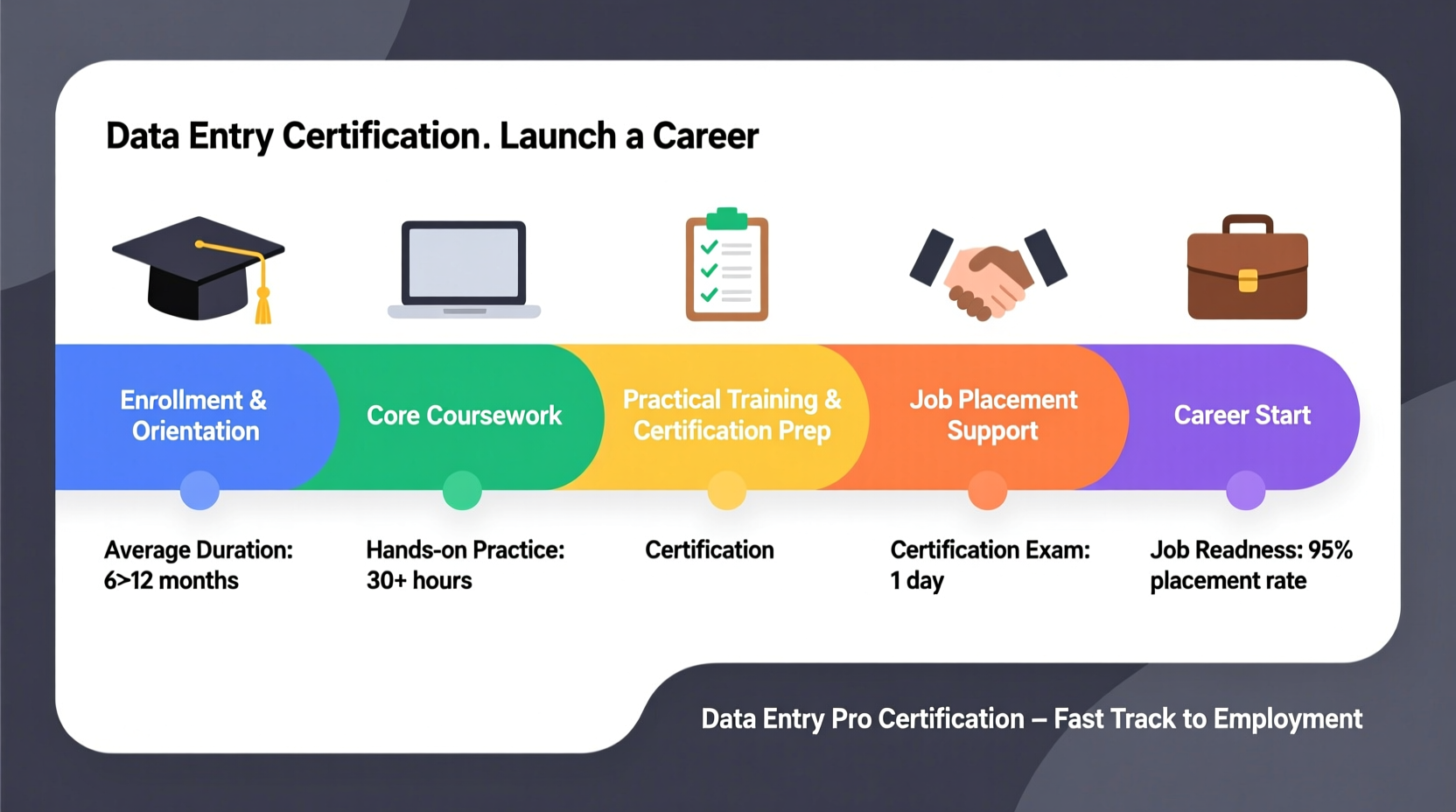
First, it's important to clarify that “data entry degree” is a bit of a misnomer. There is no standard bachelor’s degree titled “Data Entry.” Instead, most professionals enter the field through certificate programs, vocational training, or associate degrees in office administration, business technology, or information systems—fields that include core data entry components.
The typical routes include:
- Certificate Programs: Offered by community colleges or online platforms, these focus on keyboarding, software proficiency (like Excel and Google Sheets), and basic database management. Duration: 3–6 months.
- Associate Degree: A two-year program covering broader administrative skills, communication, and introductory IT concepts. Often includes internships or capstone projects.
- On-the-Job Training: Some employers train new hires directly, especially for short-term or remote roles. This can take 1–8 weeks depending on complexity.
If your goal is to work quickly and affordably, a certificate is often the best starting point. For those aiming at long-term growth into administrative management or IT support, an associate degree may offer better advancement opportunities.
Typical Timeline to Enter the Workforce
Here’s a realistic step-by-step breakdown of how long it takes to go from zero experience to landing your first data entry job:
- Research & Enrollment (1–2 weeks): Compare programs based on cost, accreditation, and curriculum. Enroll in a certificate or degree track.
- Training (3–24 months): Complete coursework in typing, spreadsheet software, data validation, and file management.
- Skill Certification (Optional, 1–2 weeks): Earn credentials like Microsoft Office Specialist (MOS) or Certified Data Professional (CDP).
- Resume & Application (1–3 weeks): Build a resume highlighting technical skills and any relevant projects or volunteer work.
- Job Search & Interviews (2–6 weeks): Apply to entry-level roles, complete assessments, and secure an offer.
In total, a motivated learner can go from beginner to employed in as little as **10 weeks** with a fast-track certificate and aggressive job search. Most people, however, spend between **4 to 8 months** preparing and transitioning into their first role.
Accelerated vs. Traditional Paths Compared
| Path | Duration | Cost Range | Best For |
|---|---|---|---|
| Online Certificate (e.g., Coursera, edX) | 3–6 months | $100–$500 | Quick entry, remote work seekers |
| Community College Program | 6–12 months | $1,000–$3,000 | Hands-on learners, local job markets |
| Associate Degree | 2 years | $5,000–$15,000 | Career advancement, office leadership roles |
| Self-Taught + Practice | 2–6 months | $0–$100 | Highly disciplined individuals |
Essential Skills You’ll Need
While formal education provides structure, employers prioritize demonstrable skills over credentials alone. Core competencies include:
- Typing Speed & Accuracy: Aim for 60–80 words per minute with minimal errors.
- Software Proficiency: Mastery of Microsoft Excel, Google Workspace, and database tools like Access or Airtable.
- Attention to Detail: Spotting inconsistencies in numbers, dates, and formats is critical.
- Time Management: Meeting daily quotas without sacrificing quality.
- Basic IT Literacy: Navigating file systems, understanding cloud storage, and troubleshooting minor software issues.
Many training programs incorporate timed data entry drills and real-world simulations to build these abilities under pressure. Practice regularly using free tools like TypingClub or 10FastFingers to improve speed and reduce mistakes.
“Accuracy matters more than speed. A single misplaced decimal can cost a company thousands.” — Lisa Tran, Senior Data Coordinator at Midwest Financial Group
Real-World Example: Maria’s Journey to a Data Entry Role
Maria, a 28-year-old single mother, wanted to re-enter the workforce after several years away. She enrolled in a six-month online certificate program through a local community college’s extension division. The course covered advanced Excel functions, data cleansing techniques, and professional communication.
She practiced typing daily, increasing her speed from 38 to 72 WPM. During the final month, she completed a mock project entering patient records into a HIPAA-compliant system—a scenario that mirrored real healthcare data workflows.
After earning her certificate, she applied to 15 remote positions and landed a part-time role with a medical billing company within three weeks. Within nine months of starting her training, she was earning $18/hour with flexible hours—enough to support her family while planning further education in health informatics.
Maria’s story shows that with focused effort, the timeline from training to employment can be both short and transformative.
Action Plan: How to Start Your Career Efficiently
To minimize time-to-hire and maximize employability, follow this checklist:
- Choose a reputable certificate program (accredited or employer-recognized).
- Practice typing 20 minutes daily to build speed and muscle memory.
- Master Excel formulas (VLOOKUP, IF statements, pivot tables).
- Create a clean, skills-focused resume with measurable achievements.
- Apply to entry-level roles on platforms like Indeed, LinkedIn, and Upwork.
- Prepare for data entry tests (timed input, attention-to-detail quizzes).
- Consider freelance gigs to build experience and references.
Frequently Asked Questions
Do I need a degree to work in data entry?
No, most data entry roles require only a high school diploma or equivalent plus demonstrable skills. Certificates enhance credibility but are not mandatory. Employers typically test typing speed and accuracy during hiring.
Can I learn data entry skills in less than 3 months?
Yes. With dedicated practice (1–2 hours daily), you can gain essential skills in under 12 weeks. Free resources like Khan Academy, GCFGlobal, and YouTube tutorials cover Excel and typing basics. Pair learning with hands-on practice using sample datasets.
Are remote data entry jobs legitimate?
Some are, but beware of scams. Legitimate companies don’t ask for upfront fees. Research the employer, check reviews on Glassdoor or the Better Business Bureau, and avoid offers that seem too good to be true (e.g., “Earn $30/hour typing at home with no experience”).
Conclusion: Start Now, Advance Strategically
Entering the data entry field doesn’t require years of study. With the right approach, you can become job-ready in as little as three months. Whether you choose a structured program or self-directed learning, consistency and precision are key. As you gain experience, consider upskilling into related areas like data analysis, bookkeeping, or database administration to increase earning potential.
The demand for accurate, reliable data handlers continues to grow across industries. By investing a few focused months in training, you open doors to stable, flexible work—with room to grow. Begin today: pick a learning path, set a schedule, and take your first step toward a dependable career built on essential digital skills.




 浙公网安备
33010002000092号
浙公网安备
33010002000092号 浙B2-20120091-4
Comments
No comments yet. Why don't you start the discussion?