
The idea that it takes exactly 21 days to form a habit is one of the most persistent myths in self-improvement circles. While appealing in its simplicity, real-world research tells a more nuanced story. Habits are powerful drivers of behavior, shaping up to 40% of our daily actions according to neuroscientists at Duke University. Understanding the actual timeline—and the factors that influence it—can make the difference between short-lived enthusiasm and lasting change.
Forming a new habit isn’t about rigid timelines; it’s about consistency, context, and psychological reinforcement. This article explores the scientific evidence behind habit formation, breaks down realistic timeframes, and offers actionable strategies grounded in behavioral psychology.
The Myth of the 21-Day Rule
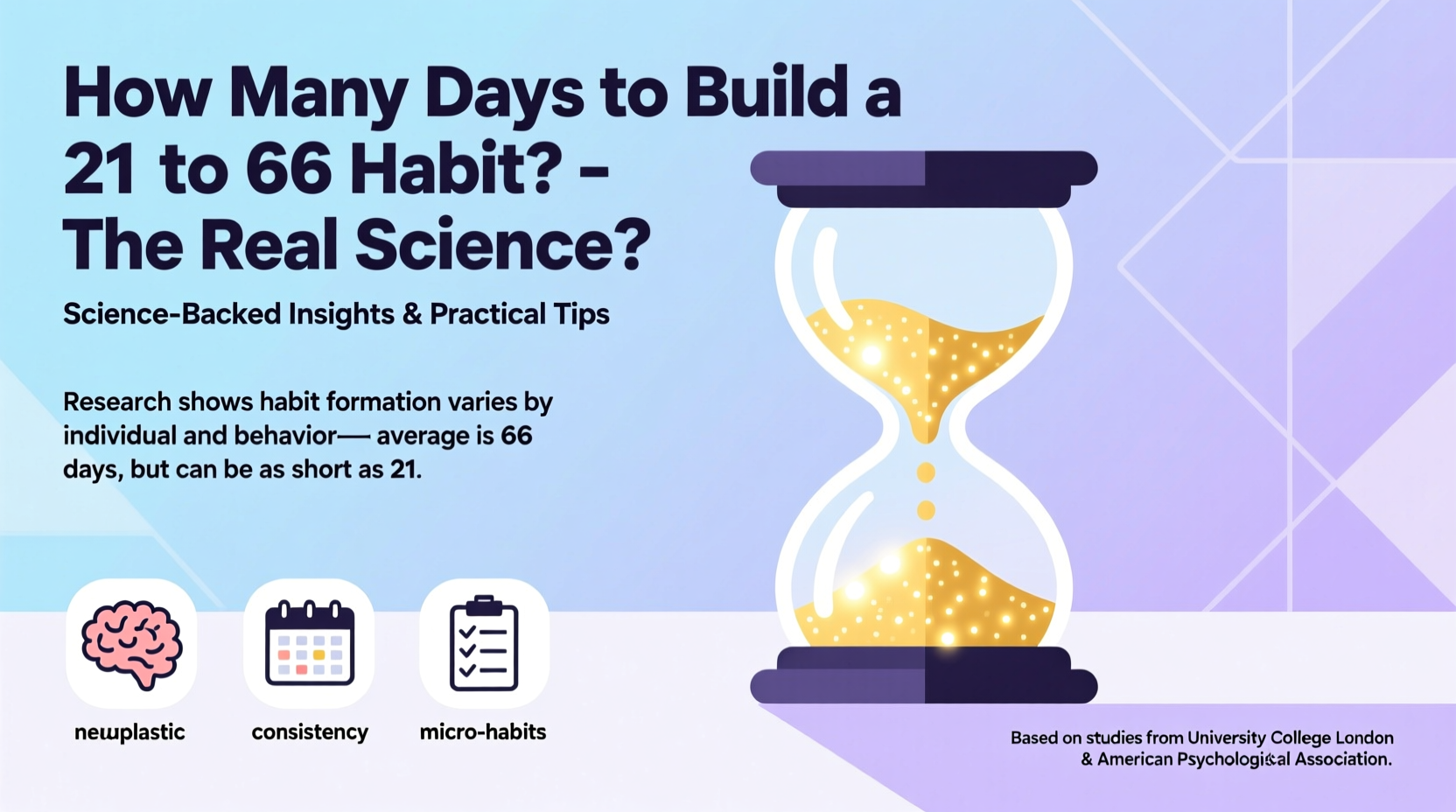
The belief that habits form in 21 days traces back to Dr. Maxwell Maltz, a plastic surgeon in the 1960s. In his book *Psycho-Cybernetics*, he observed that patients took about 21 days to adjust to changes in their appearance. He extrapolated this into a broader principle about habit formation, but his comments were observational, not experimental.
It wasn’t until 2009 that researchers at University College London put the timeline to the test. In a landmark study published in the European Journal of Social Psychology, 96 participants chose a new eating, drinking, or activity habit—such as drinking a glass of water after breakfast or walking for 10 minutes after lunch—and tracked their progress over 12 weeks.
The results? On average, it took **66 days** for a behavior to become automatic—but with wide variation. Some people formed habits in as few as 18 days, while others took over 250 days. The type of behavior mattered: simple actions like drinking water became habitual faster than complex ones like running.
“Habit formation is not a race. It’s a process shaped by repetition, reward, and routine.” — Dr. Phillippa Lally, lead researcher, UCL Habit Formation Study
Factors That Influence Habit Formation Time
No single number applies universally. Several key variables determine how quickly a behavior becomes automatic:
- Behavior complexity: Simple actions (e.g., flossing one tooth) integrate faster than multi-step routines (e.g., a full evening workout).
- Consistency: Performing the behavior daily accelerates automation. Skipping days increases the total time needed.
- Motivation and reward: Immediate positive feedback—like feeling energized after a walk—strengthens neural pathways.
- Environmental cues: A stable trigger (e.g., brushing teeth right after coffee) anchors the habit in context.
- Individual differences: Personality, stress levels, and existing routines affect learning speed.
Realistic Timeline for Habit Formation
Based on the UCL study and subsequent research, here’s a data-driven breakdown of what to expect:
| Behavior Type | Average Time to Automate | Examples |
|---|---|---|
| Simple & Low Effort | 18–30 days | Drinking water after waking, taking vitamins |
| Moderate Effort | 40–70 days | 10-minute walk, reading before bed |
| High Effort / Complex | 90+ days | Daily 30-minute workout, meditation for 20 minutes |
Note that \"automaticity\" doesn’t mean perfect adherence. It means the behavior feels natural and requires little conscious effort. Missing a day doesn’t reset the clock, but frequent breaks delay progress.
Step-by-Step Guide to Building a Lasting Habit
Follow this science-backed sequence to increase your odds of success:
- Define a micro-habit: Reduce the action to its smallest viable form. Want to run? Start with putting on your running shoes.
- Attach it to an existing cue: Use a current habit as a trigger. Example: “After I pour my morning coffee, I will meditate for one minute.”
- Perform it consistently: Aim for daily repetition. Use a calendar or app to track streaks.
- Reinforce with immediate rewards: Celebrate small wins. Say “Good job” aloud or enjoy a favorite tea after completing the task.
- Gradually increase difficulty: Once the habit feels automatic, scale up. Turn one minute of meditation into five.
“The secret to building habits is making them so easy you can’t say no.” — James Clear, author of *Atomic Habits*
Mini Case Study: Sarah’s Morning Routine Transformation
Sarah, a 34-year-old project manager, wanted to start journaling every morning. She tried writing three pages at once but quit within a week due to time pressure. Using the micro-habit approach, she revised her goal: write one sentence after brushing her teeth.
She used her bathroom mirror as a visual cue and placed a notebook beside the sink. For the first two weeks, she wrote just one line—sometimes only “Today will be good.” By day 25, she was writing full paragraphs without thinking. After 70 days, journaling became a non-negotiable part of her morning.
Sarah’s success wasn’t due to willpower—it came from reducing friction, using a strong cue, and celebrating consistency over volume.
Common Mistakes That Delay Habit Formation
Avoid these pitfalls that sabotage long-term progress:
- Starting too big: Trying to exercise for an hour daily overwhelms motivation.
- Ignoring environment: Keeping junk food visible makes healthy eating harder.
- Expecting linear progress: Plateaus and setbacks are normal. Progress isn’t failure.
- Skipping tracking: Without feedback, motivation fades. Use a habit tracker or checklist.
Habit Formation Checklist
Use this checklist to build any new habit effectively:
- ☑ Define a specific, tiny version of the habit
- ☑ Choose a consistent daily trigger (time, location, or existing behavior)
- ☑ Reduce barriers (prepare clothes, tools, or space in advance)
- ☑ Track each completion visibly (calendar, app, or journal)
- ☑ Reward yourself immediately after performing the habit
- ☑ Review weekly: What’s working? What needs adjustment?
- ☑ Scale up only after the behavior feels effortless
Frequently Asked Questions
Is there a magic number of days to form a habit?
No. While the average is around 66 days, individual timelines range from 18 to over 250 days depending on the behavior and person. Focus on consistency, not a fixed deadline.
Do I have to do the habit every single day?
Daily repetition speeds up automation, but missing one day isn’t catastrophic. The key is minimizing gaps. Two missed days in a row increase the risk of quitting, so recommit quickly.
What if I lose motivation?
Motivation fades; systems endure. Rely on cues and environment, not feelings. Lower the bar when discouraged—doing a mini-version of the habit keeps momentum alive.
Conclusion: Build Habits That Stick
Forget the myth of 21 days. Lasting habits emerge through repeated action in stable contexts, reinforced by small wins. Whether you're aiming to drink more water, exercise regularly, or learn a language, the path isn’t about speed—it’s about showing up, even in the smallest way, again and again.
Science confirms that persistence pays off. Neural pathways strengthen with repetition, turning effortful choices into effortless behaviors. Start small, anchor your habit to a reliable cue, and trust the process. Your future self won’t remember how long it took—they’ll only notice the difference it made.




 浙公网安备
33010002000092号
浙公网安备
33010002000092号 浙B2-20120091-4
Comments
No comments yet. Why don't you start the discussion?