
Pink eye, or conjunctivitis, is one of the most common eye conditions affecting people of all ages. Highly contagious and often spreading rapidly in close-contact environments like schools, daycare centers, and offices, it can disrupt daily life and cause discomfort for days or even weeks. While typically not serious, understanding how pink eye spreads is crucial to preventing infection—especially when someone nearby is already affected. This guide breaks down the transmission pathways, identifies high-risk behaviors, and provides actionable strategies to protect yourself and your family.
Understanding How Pink Eye Spreads
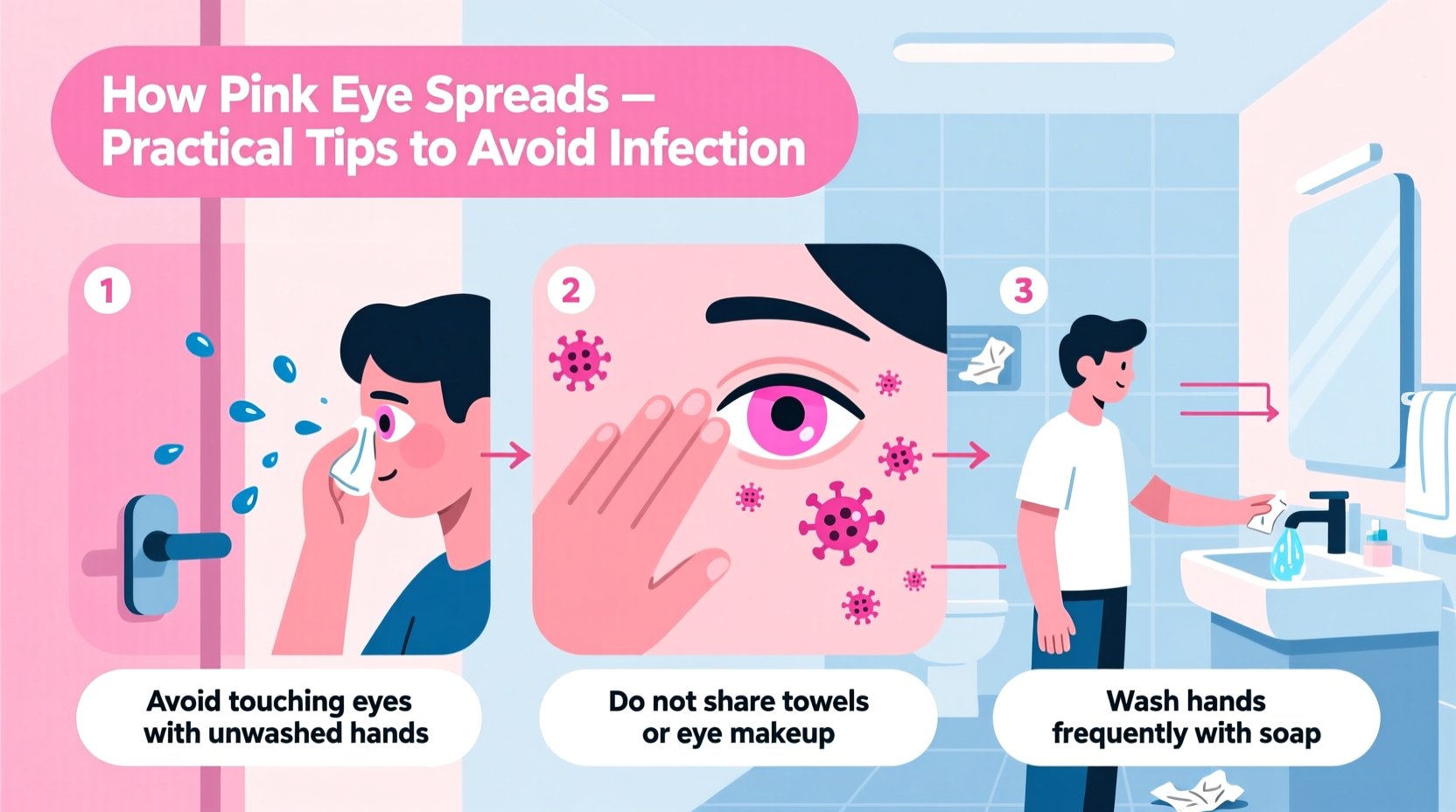
Pink eye occurs when the conjunctiva—the thin, transparent layer covering the white part of the eye and inner eyelid—becomes inflamed. It can be caused by viruses, bacteria, allergens, or irritants. The contagious forms—viral and bacterial conjunctivitis—are the ones that spread easily from person to person.
Viral pink eye is the most common and highly transmissible type. It often accompanies upper respiratory infections like colds or flu. The virus spreads primarily through direct contact with infected eye secretions or contaminated surfaces. For example, if an infected person touches their eye and then a doorknob, another person who touches that same surface and then rubs their eye can become infected.
Bacterial pink eye spreads similarly but tends to produce more noticeable discharge. Both types can survive on surfaces such as countertops, towels, phones, and keyboards for up to several days, making indirect transmission a real threat.
“Conjunctivitis spreads efficiently in communal settings because people frequently touch their faces without realizing it,” says Dr. Lena Torres, an ophthalmologist at the National Eye Health Institute. “The key to prevention isn’t just hygiene—it’s awareness of invisible contamination.”
High-Risk Environments and Behaviors
Certain environments increase the likelihood of exposure. Schools and daycare centers are hotspots due to close physical proximity and shared toys, books, and supplies. Offices with shared equipment—like printers, coffee machines, and conference room tables—also pose risks, especially during cold and flu season.
Everyday behaviors contribute significantly to transmission:
- Touching your eyes after handling public surfaces (elevator buttons, ATMs, shopping carts)
- Sharing personal items like makeup, towels, or eye drops
- Using unwashed hands to adjust contact lenses
- Failing to disinfect commonly touched devices like smartphones and tablets
Children are particularly vulnerable because they touch their faces frequently and have less developed hygiene habits. However, adults are not immune—especially caregivers, teachers, and healthcare workers.
Step-by-Step Guide to Prevent Infection
Preventing pink eye doesn’t require drastic measures. Instead, consistent, small actions can dramatically reduce risk. Follow this timeline-based approach during outbreaks or when someone nearby is infected:
- Day 1 – Awareness & Isolation: If someone in your household is diagnosed, designate separate towels, pillows, and washcloths. Avoid face-to-face closeness, especially during the first 3–5 days when contagion peaks.
- Days 2–4 – Surface Disinfection: Clean high-touch surfaces daily—doorknobs, light switches, remote controls, bathroom fixtures—with a disinfectant containing at least 70% alcohol or bleach solution.
- Ongoing – Hand Hygiene: Wash hands thoroughly with soap and water for at least 20 seconds, especially before eating, after using the restroom, and upon returning home. Use hand sanitizer (alcohol-based) when soap isn’t available.
- Daily – Avoid Face Touching: Consciously stop rubbing your eyes, even if they feel itchy. Keep nails short to reduce bacterial buildup under them.
- At Work or School: Wipe down desks, keyboards, and shared tools before and after use. Carry disinfecting wipes in your bag.
Do’s and Don’ts: Quick Reference Table
| Do’s | Don’ts |
|---|---|
| Wash hands frequently with soap and water | Share towels, eye makeup, or contact lens solutions |
| Replace or clean contact lens cases weekly | Touch your eyes with unwashed hands |
| Use clean pillowcases every 2–3 days | Reuse tissues or paper towels on your face |
| Dispose of used tissues immediately | Sleep next to someone with active pink eye |
| Disinfect phones, glasses, and eyewear daily | Go to work or school while symptomatic |
Real-Life Example: A Daycare Outbreak Contained
In early spring, a preschool in Portland reported five cases of viral conjunctivitis within a week. Staff quickly implemented a protocol: children were taught a “no-touch” face game, toys were disinfected twice daily, and parents received a notice urging sick children to stay home for at least 24 hours after starting treatment. Teachers wore gloves during diaper changes and hand-washing sessions, and each child was assigned color-coded cubbies and towels.
Within 10 days, no new cases emerged. The outbreak was contained not by medication, but by interrupting transmission routes. “We realized that stopping the spread wasn’t about treating the eyes—it was about managing hands and surfaces,” said Maria Chen, the center’s director.
Essential Prevention Checklist
Keep this checklist handy during cold season or when pink eye circulates in your community:
- ✅ Wash hands before and after touching your face or eyes
- ✅ Replace or disinfect contact lens cases weekly
- ✅ Avoid sharing cosmetics, especially mascara or eyeliner
- ✅ Clean eyeglasses daily with soapy water
- ✅ Disinfect smartphones, tablets, and keyboards regularly
- ✅ Change pillowcases every 2–3 days during illness exposure
- ✅ Stay home if you show symptoms until cleared by a doctor
- ✅ Teach children to cough into elbows, not hands
Frequently Asked Questions
Can you catch pink eye from swimming pools?
Chlorinated pools kill most germs, but improper chlorination can allow adenoviruses (a common cause of pink eye) to survive. More often, irritation from chlorine mimics pink eye symptoms. To reduce risk, wear goggles and shower immediately after swimming.
How long is pink eye contagious?
Viral pink eye is contagious as soon as symptoms appear and remains so for 7–14 days, or until redness and discharge resolve. Bacterial pink eye is typically no longer contagious 24 hours after starting antibiotic treatment.
Is it safe to wear contact lenses if someone in my house has pink eye?
No. Contacts can trap bacteria and viruses against the eye, increasing infection risk. Switch to glasses during outbreaks and clean or replace lens cases thoroughly. Never store lenses in tap water.
Protect Yourself Before Exposure Happens
Waiting until someone gets sick to take action is too late. Building preventive habits into your daily routine is the most effective defense. Think of pink eye prevention like brushing your teeth—small, consistent efforts yield long-term protection. Encourage your workplace or school to adopt hygiene protocols, keep disinfectants accessible, and model good behavior for children and coworkers alike.
Remember: you don’t need to panic at the first sign of red eyes in your circle. With informed habits and proactive care, you can significantly lower your risk of catching pink eye—or passing it on.




 浙公网安备
33010002000092号
浙公网安备
33010002000092号 浙B2-20120091-4
Comments
No comments yet. Why don't you start the discussion?