
Lab grown diamond rings have surged in popularity over the past decade, offering consumers a sustainable, ethical, and often more affordable alternative to mined diamonds. However, as demand grows, so does the need for accurate valuation—whether you're considering insurance, resale, or simply understanding what you own. Unlike traditional diamonds, which have long-established pricing models, lab grown stones are still navigating evolving market perceptions. Understanding their true worth requires knowledge of certification standards, market dynamics, and quality metrics unique to synthetic gems.
Understand the 4Cs: The Foundation of Value
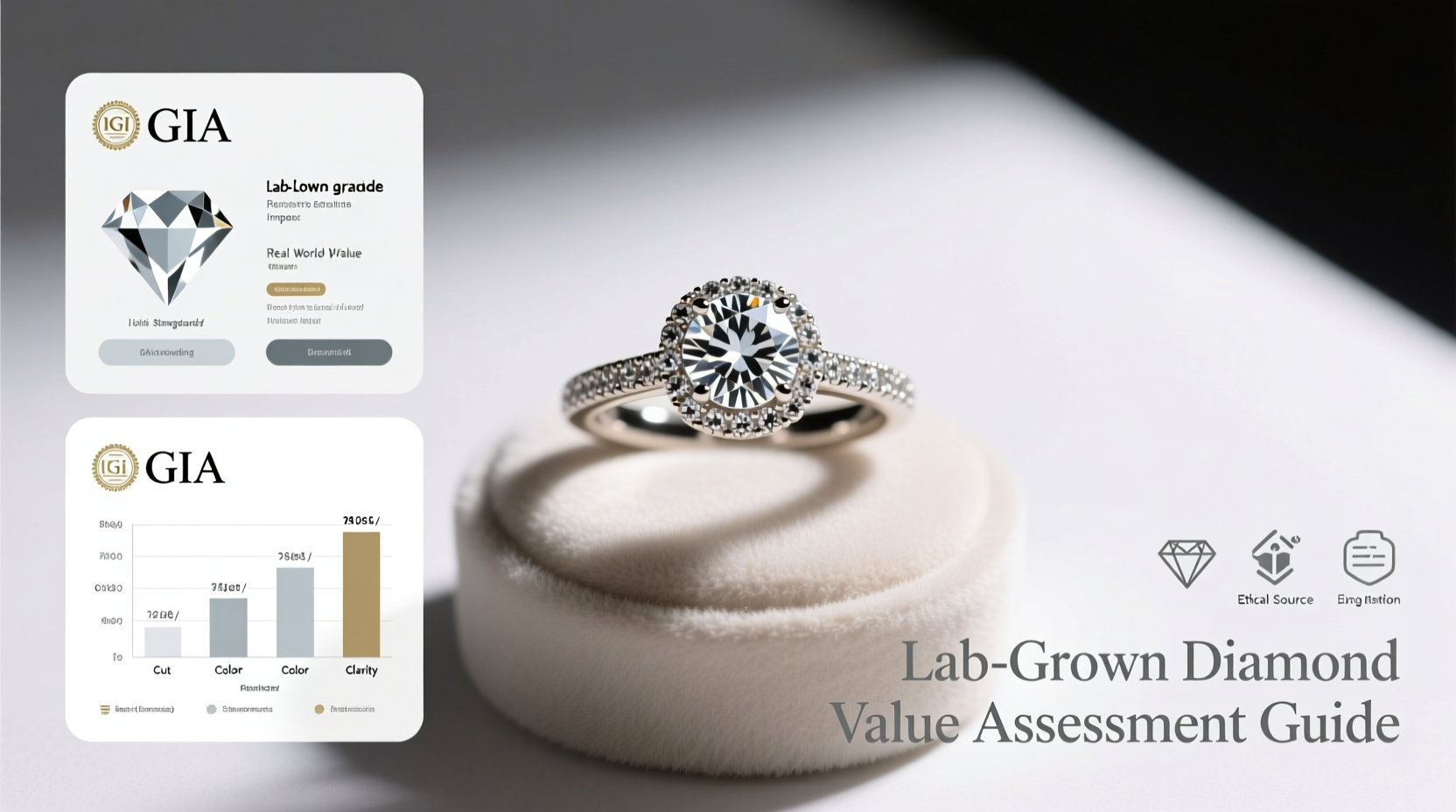
The 4Cs—cut, color, clarity, and carat weight—are just as critical for lab grown diamonds as they are for natural ones. These factors form the backbone of any diamond’s valuation, regardless of origin.
- Cut: Determines brilliance and fire. Excellent cuts maximize light reflection, increasing perceived beauty and value.
- Color: Graded from D (colorless) to Z (light yellow or brown). Colorless and near-colorless stones command higher prices.
- Clarity: Refers to internal flaws (inclusions) and surface blemishes. Flawless (FL) and Internally Flawless (IF) grades are rare and valuable.
- Carat: Weight-based measurement. Larger stones are exponentially more expensive, though not always proportionally more valuable in resale.
Know Your Certification: Why It Matters
A certificate is not just proof of authenticity—it's the primary document used to determine value. Not all labs apply the same standards. For instance, while the Gemological Institute of America (GIA) now grades lab grown diamonds using the same rigorous methodology as natural stones, other labs like the International Gemological Institute (IGI) are more commonly used but may be perceived as slightly less conservative in grading.
“Certification transparency is non-negotiable. A stone without a reliable report is nearly impossible to value objectively.” — Dr. Lena Patel, Gemologist and Diamond Analyst
| Laboratory | Grades Lab Grown? | Reputation | Market Acceptance |
|---|---|---|---|
| GIA | Yes | Excellent | High – most trusted globally |
| IGI | Yes | Good | Widely accepted, especially in retail |
| GCAL | Yes | Very Good | Respected for consumer protection |
| EGL | Limited | Fair | Often criticized for inflated grades |
If your ring lacks certification, consider sending it to an independent lab for evaluation. This step can significantly impact its insurable or resale value.
Market Realities: Resale vs. Retail Value
One of the most misunderstood aspects of lab grown diamond valuation is the gap between purchase price and resale potential. While these stones typically cost 30–50% less than natural diamonds at retail, their secondary market value is even lower—often 20–40% of the original price.
This depreciation stems from several factors:
- Rapid technological advances continue to reduce production costs, lowering future prices.
- Limited emotional premium compared to mined diamonds in resale markets.
- Fewer specialized buyers and auction platforms focused on synthetic gems.
“It’s important to view lab grown diamonds as jewelry first, investment second. Their value lies in wearability and ethics, not appreciation.” — Marcus Tran, Luxury Jewelry Appraiser
Mini Case Study: Sarah’s Ring Assessment
Sarah purchased a 1.5-carat round brilliant lab diamond engagement ring for $4,800 three years ago. She recently considered selling it and received two offers: one for $1,400 from a local jeweler and another for $1,900 through an online consignment platform specializing in sustainable jewelry.
An appraisal revealed the stone was IGI-certified with a D color, VVS1 clarity, and excellent cut. Despite its high quality, the low resale offers reflected market saturation and buyer caution. Ultimately, Sarah decided to keep the ring, realizing its sentimental and stylistic value outweighed financial return.
Step-by-Step Guide to Valuing Your Ring
Follow this sequence to arrive at a realistic estimate of your lab grown diamond ring’s worth:
- Gather documentation: Collect the original receipt, warranty, and grading report.
- Inspect the setting: Evaluate the metal type (platinum, 18K gold), craftsmanship, and condition. Damage reduces value.
- Verify the diamond’s details: Cross-check the 4Cs on the certificate against the physical stone if possible.
- Research current retail prices: Use sites like James Allen, Brilliant Earth, or Ada Diamonds to find comparable new rings.
- Estimate resale value: Apply a 60–70% discount to current retail for like-new condition.
- Seek professional appraisal: For insurance or estate purposes, hire a certified appraiser experienced with lab grown stones.
Do’s and Don’ts of Diamond Valuation
| Do’s | Don’ts |
|---|---|
| Get your ring appraised every 3–5 years for insurance updates | Assume your diamond will appreciate in value |
| Keep original packaging and paperwork | Try to resell without verifying market comparables |
| Use multiple valuation sources (online tools, jewelers, appraisers) | Rely solely on retail price to determine resale worth |
| Consider upgrading instead of selling if value is low | Overlook the sentimental or symbolic value of your piece |
FAQ
Can a jeweler tell if a diamond is lab grown?
Yes, but only with specialized equipment. To the naked eye, lab grown and natural diamonds are virtually identical. Advanced tools detect growth patterns and trace elements unique to each origin.
Does a lab grown diamond lose value faster than a natural one?
Generally, yes. Natural diamonds also depreciate upon purchase, but lab grown stones face steeper declines due to falling production costs and lack of scarcity-driven demand.
Is my lab grown diamond worthless after purchase?
No. While it may not hold monetary value well, it retains aesthetic, emotional, and ethical value. Many owners find greater satisfaction in sustainability and modern sourcing than in investment returns.
Final Thoughts and Action Steps
Valuing a lab grown diamond ring isn’t just about numbers—it’s about context. Are you insuring it? Selling it? Passing it down? Each purpose demands a different approach. Start by securing your certification, then consult trusted professionals who understand the nuances of synthetic gemstones. Stay informed about market shifts, and don’t undervalue the intangible benefits: a smaller environmental footprint, conflict-free sourcing, and cutting-edge science behind your sparkle.




 浙公网安备
33010002000092号
浙公网安备
33010002000092号 浙B2-20120091-4
Comments
No comments yet. Why don't you start the discussion?