
Determining the correct replacement cost for your home is one of the most critical steps in securing adequate homeowners insurance. Unlike market value, which reflects what a buyer might pay for your property, replacement cost estimates what it would take to rebuild your home from the ground up after a total loss—using current labor rates, materials, and local building codes. Underestimating this figure can leave you financially exposed; overestimating may lead to unnecessarily high premiums. Getting it right requires more than a quick online calculator—it demands attention to detail, regional insight, and periodic reassessment.
Understanding Replacement Cost vs. Market Value
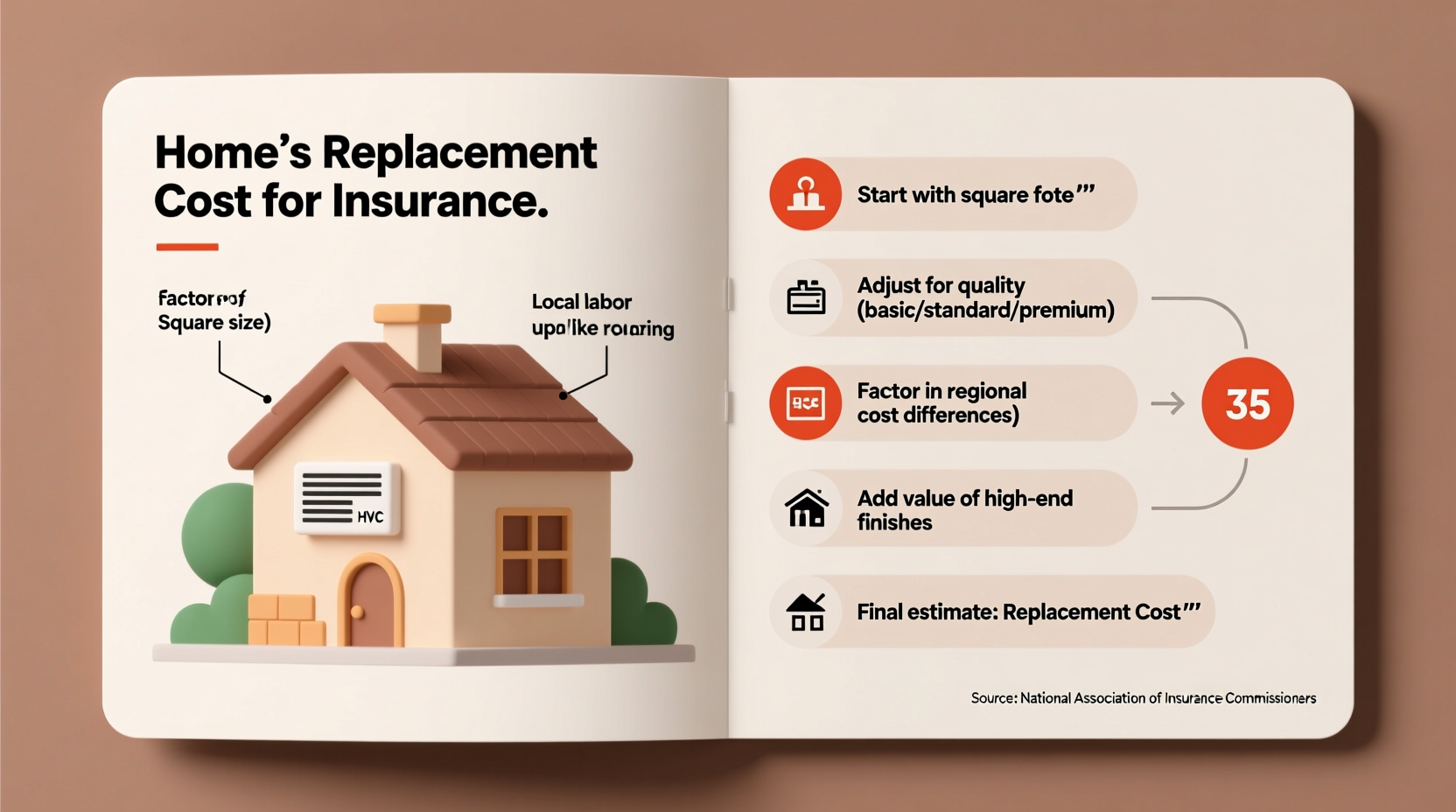
Many homeowners confuse replacement cost with market value, but they are fundamentally different. Market value includes land value, location desirability, neighborhood trends, and real estate demand—all of which have no bearing on rebuilding costs. In contrast, replacement cost focuses solely on construction expenses: framing, roofing, electrical, plumbing, finishes, and compliance with modern building regulations.
For example, a house in a coastal California neighborhood might sell for $1.5 million due to its prime location, yet the actual cost to reconstruct the structure could be closer to $600,000. Conversely, a home in a rural area with low land value might cost significantly more to rebuild if specialized materials or extended labor hours are required.
“Replacement cost isn’t about what your home is worth today—it’s about what it would cost to recreate it tomorrow.” — James Rutherford, Senior Risk Analyst at National Home Insurance Group
Key Factors That Influence Replacement Cost
Several variables affect how much it would cost to rebuild your home. Understanding these helps ensure your estimate is grounded in reality rather than guesswork.
- Size and square footage: Larger homes require more materials and labor. Be sure to measure finished areas only—not garages, porches, or unfinished basements unless they’re habitable spaces.
- Construction type: Frame, masonry, or steel structures carry different price tags. Custom designs often cost more per square foot than standard tract-built homes.
- Roof style and pitch: Complex roofs (e.g., gabled, mansard) require additional labor and materials compared to simple flat or low-slope roofs.
- Interior finishes: High-end flooring, custom cabinetry, granite countertops, and smart-home systems increase replacement value.
- Local labor and material costs: Rebuilding in urban centers like New York or San Francisco typically costs 30–50% more than in smaller towns due to higher wages and supply chain logistics.
- Building code upgrades: After a loss, you must meet current codes—even if your original home predates them. This includes seismic reinforcement, energy efficiency standards, or accessibility requirements.
Step-by-Step Guide to Calculating Your Home’s Replacement Cost
Accurately estimating replacement cost involves gathering specific data and applying realistic pricing models. Follow this process to arrive at a reliable figure.
- Gather detailed home information: Collect floor plans, recent renovation records, and a list of major fixtures. Note unique features such as vaulted ceilings, stone exteriors, or radiant heating.
- Measure total living area: Use interior dimensions to calculate square footage of all heated, enclosed spaces. Exclude unconditioned areas unless specified by your insurer.
- Select a cost-per-square-foot average: Refer to industry benchmarks adjusted for your region. The RSMeans Construction Cost Data provides up-to-date national averages segmented by locale and quality level.
- Multiply square footage by local build rate: For instance, if your home has 2,000 sq ft and the average rebuild cost in your area is $150/sq ft, your base estimate is $300,000.
- Add line-item upgrades: Include allowances for premium finishes, specialty windows, built-in appliances, and site-specific challenges (e.g., steep lot access).
- Factor in demolition and debris removal: Insurers typically add 10–15% to cover clearing the site before reconstruction begins.
- Account for inflation and supply volatility: Materials like lumber, copper, and insulation fluctuate in price. Consider adding a 5–10% buffer for unforeseen increases over policy term.
- Review with your agent annually: Update calculations after renovations, expansions, or significant market shifts.
Do’s and Don’ts When Estimating Replacement Cost
| Do’s | Don’ts |
|---|---|
| Use updated regional construction cost data | Rely solely on your home’s purchase price or tax assessment |
| Hire a professional appraiser for custom or historic homes | Assume last year’s estimate still applies without review |
| Include costs for permits and code compliance | Forget to account for inflation or labor shortages |
| Document upgrades and keep receipts | Overlook detached structures or outdoor living spaces |
Real Example: A Midwest Homeowner’s Near-Miss
Sarah and Tom Miller purchased their two-story colonial in Des Moines five years ago for $375,000. When they renewed their insurance, their agent used an automated tool that estimated replacement cost at $280,000 based on outdated regional averages. After installing hardwood floors, a new kitchen, and finishing their basement, they hadn’t updated their policy.
When a lightning strike caused a fire that destroyed the upper floor, their insurer initially approved repairs based on the existing coverage. But a structural engineer determined that bringing the home up to current egress and insulation standards would cost $342,000—over $60,000 more than their limit. Fortunately, they had scheduled a post-renewal audit with a second insurer who flagged the shortfall. They increased their coverage mid-term (with a prorated premium adjustment) and avoided a massive out-of-pocket expense.
Their experience underscores the danger of static assumptions and the importance of proactive reassessment.
Checklist: Ensuring Accurate Replacement Cost Coverage
- ✅ Measure all finished living areas using interior dimensions
- ✅ Research current per-square-foot rebuild costs in your ZIP code
- ✅ List all recent improvements (kitchen remodel, HVAC upgrade, etc.)
- ✅ Include detached structures and permanent outdoor installations
- ✅ Factor in debris removal and permit fees (typically 10–20%)
- ✅ Consult a licensed contractor or appraisal service for custom homes
- ✅ Review and update your estimate annually or after major renovations
- ✅ Confirm with your insurer whether they offer guaranteed replacement cost coverage
Frequently Asked Questions
Does my mortgage lender determine my required coverage amount?
Lenders often require proof of dwelling coverage equal to at least the loan balance, but this doesn’t guarantee sufficient replacement cost protection. Their concern is collateral value, not rebuilding accuracy. You remain responsible for ensuring the insured amount matches true reconstruction costs.
What is “guaranteed” or “extended” replacement cost coverage?
Some policies offer guaranteed replacement cost, meaning the insurer will cover overages beyond your policy limit if construction costs exceed expectations. Extended replacement cost typically covers up to 125% of the dwelling limit. These options provide valuable peace of mind but may come with higher premiums.
Can I use online calculators to estimate replacement cost?
Many insurers offer digital tools, and while they’re a good starting point, they often rely on broad assumptions. For older, larger, or uniquely designed homes, these tools can underestimate costs by 15–25%. Always verify results with manual calculations or a professional assessment.
Take Control of Your Home’s True Value
Your home is likely your largest financial asset—and one of the most emotionally significant. Protecting it properly means going beyond default insurance settings and taking ownership of your replacement cost calculation. It’s not enough to set it and forget it. Markets shift, materials evolve, and building codes tighten. An accurate, well-documented replacement cost ensures that a disaster doesn’t become a financial catastrophe.




 浙公网安备
33010002000092号
浙公网安备
33010002000092号 浙B2-20120091-4
Comments
No comments yet. Why don't you start the discussion?