
For many, coin collecting is more than a hobby—it’s a journey through history, artistry, and economics. But to truly appreciate and benefit from a collection, you need to understand how to determine a coin's real value. Unlike face value, which is printed on the coin, actual market value depends on rarity, condition, demand, and historical significance. Whether you’ve inherited a box of old coins or are just starting your numismatic journey, knowing how to assess coin worth accurately is essential.
Step 1: Identify the Coin Completely
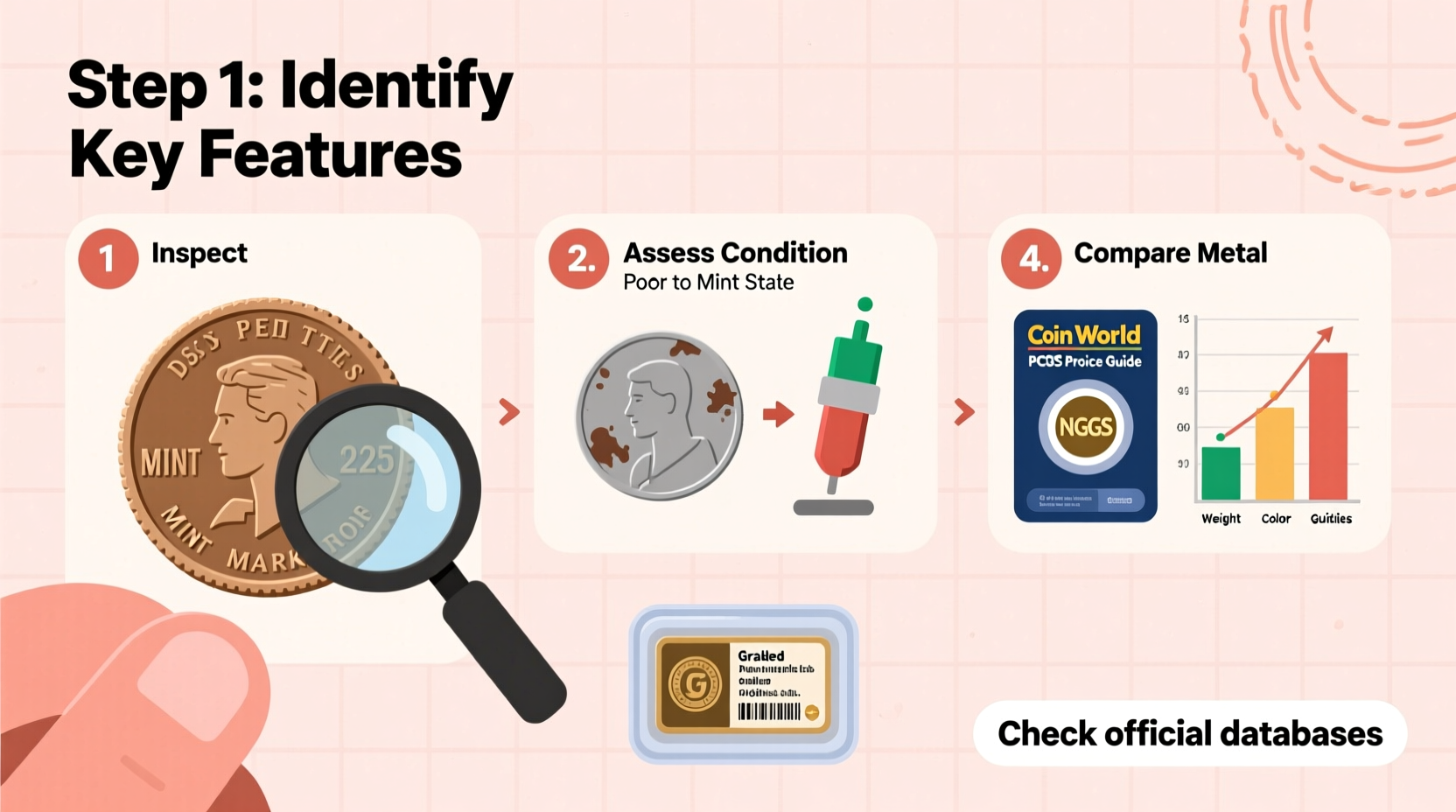
The first step in evaluating any coin is precise identification. This includes noting the country of origin, year of minting, denomination, mint mark (if present), and design variations. These details form the foundation of accurate valuation.
Start by examining both sides of the coin under good lighting. Use a magnifying glass if necessary to read small inscriptions or identify subtle design differences. Mint marks—often tiny letters indicating where the coin was produced—can significantly affect value. For example, a 1922 U.S. Peace Dollar without a mint mark (Philadelphia) is common, but one from Denver (D) or San Francisco (S) may be rarer.
Key Identification Elements
- Country and Year: Critical for determining historical context and mintage numbers.
- Denomination: The face value helps classify the coin within its series.
- Mint Mark: Look near the date or below the main design; even small letters matter.
- Varieties: Some coins have repunched dates, doubled dies, or other errors that increase value.
Step 2: Assess the Coin’s Condition (Grading)
A coin’s grade—its state of preservation—is perhaps the most influential factor in determining value. A well-preserved coin can be worth hundreds or thousands of times more than an identical but worn specimen.
The Sheldon Scale, used widely in North America, grades coins from 1 (Poor) to 70 (Perfect Uncirculated). Beginners should familiarize themselves with key thresholds:
| Grade | Description | Visual Clues |
|---|---|---|
| Good (G-4) | Heavily worn, major features visible | Outline of design remains, but details are flat |
| Very Good (VG-8) | More detail visible, wear still significant | Some peripheral lettering readable |
| Fine (F-12) | Moderate wear, all major elements clear | Full rims, clear legends |
| Extremely Fine (EF-40) | Slight wear on highest points | Most detail sharp, minimal flattening |
| Uncirculated (MS-60+) | No wear, may have bag marks | Luster intact, full original detail |
If you're unsure about grading, compare your coin side-by-side with professionally graded examples from reputable sources like PCGS (Professional Coin Grading Service) or NGC (Numismatic Guaranty Company).
“Accurate grading separates hobbyists from serious collectors. A single point difference on the Sheldon Scale can mean a 50% change in value.” — David Harper, Numismatic Journal Editor
Step 3: Research Market Value Using Trusted Resources
Once you’ve identified and graded your coin, consult reliable pricing guides. Avoid relying solely on auction listings or online marketplaces without context—prices fluctuate based on timing, buyer enthusiasm, and condition accuracy.
Use these authoritative resources:
- Guide Books: Red Book (A Guide Book of United States Coins) is the gold standard for U.S. coins.
- Online Databases: PCGS Price Guide, NGC Coin Explorer, and USA Coin Book offer up-to-date valuations.
- Auction Archives: Heritage Auctions and Stack’s Bowers provide records of recent sales for rare pieces.
When reviewing prices, distinguish between “book value” and “realized sale price.” Book values are estimates; actual auction results reflect what buyers are willing to pay at a given time.
Step 4: Consider Rarity and Demand Factors
Two coins with identical grades can differ drastically in value due to rarity and collector demand. Mintage figures—how many were originally produced—are crucial. Generally, lower mintage means higher potential value, especially if few survive today.
Also consider:
- Historical Significance: Commemorative issues or coins from pivotal years (e.g., 1933 Double Eagle) carry added interest.
- Error Coins: Misprints, off-center strikes, or wrong planchets can make a coin highly desirable.
- Popularity of Series: Lincoln cents and Morgan dollars have massive followings, increasing competition and prices.
Mini Case Study: The 1909-S VDB Lincoln Cent
A beginner once found a 1909 penny among family heirlooms. Most 1909 cents are common, but this one had an “S” mint mark (San Francisco) and the initials “VDB” (designer Victor D. Brenner) on the reverse. Because public backlash led to the quick removal of VDB initials later that year, the 1909-S VDB became one of the rarest and most sought-after Lincoln cents. Graded EF-40, it sold at auction for over $1,200—far above typical pennies worth a few cents.
This case shows why every detail matters. Without checking the mint mark and design variety, the owner might have dismissed it as ordinary change.
Step 5: Get Professional Authentication When Needed
For high-value or potentially rare coins, professional grading and authentication are worth the investment. Services like PCGS, NGC, and ANACS encapsulate coins in tamper-proof holders with a certified grade and authenticity verification.
Here’s when to consider third-party grading:
- You suspect the coin is rare or valuable (e.g., error coin, low-mintage issue).
- You plan to sell and want maximum credibility.
- The coin appears to be in uncirculated or near-pristine condition.
- You’re uncertain about authenticity (counterfeits exist even in common series).
The cost typically ranges from $20 to $100 depending on turnaround time and value, but certification can significantly boost resale price and buyer confidence.
Do’s and Don’ts of Coin Valuation
| Do | Don't |
|---|---|
| Handle coins by the edges | Touch the surface with bare hands |
| Use a magnifier and good light | Rely solely on smartphone photos |
| Consult multiple pricing sources | Trust unverified online forums |
| Store coins in archival-safe holders | Keep them in paper rolls or PVC plastic |
| Record your findings and sources | Guess the grade based on shine alone |
FAQ
How do I know if my coin is silver?
Check the date and country. U.S. dimes, quarters, half-dollars, and dollars minted before 1965 are 90% silver. Look for keywords like “silver war nickels” (1942–1945) or consult a composition chart. A magnet test helps—silver isn’t magnetic.
Can cleaning improve a coin’s value?
No. Cleaning almost always reduces value by causing hairlines, scratches, or removing natural toning. Numismatists prize original surfaces. Never dip, polish, or scrub a coin you intend to collect or sell.
Are all old coins valuable?
No. Age alone doesn’t guarantee value. Many old coins were minted in large quantities and remain common. A well-circulated 19th-century coin may be worth only a few dollars unless it’s rare or in exceptional condition.
Final Checklist: How to Accurately Check Coin Values
- Identify country, year, denomination, and mint mark.
- Examine for varieties or errors using magnification.
- Assess condition using the Sheldon Scale or comparison tools.
- Research value via trusted guides and recent auction data.
- Determine rarity using mintage figures and population reports.
- Consider professional grading for valuable or uncertain pieces.
- Document findings and preserve coins properly.
Conclusion
Accurately checking coin values blends observation, research, and judgment. With patience and attention to detail, anyone—from beginners to seasoned collectors—can learn to evaluate coins confidently. The thrill isn’t just in discovering a rare find, but in understanding the story each coin tells and the care it deserves.




 浙公网安备
33010002000092号
浙公网安备
33010002000092号 浙B2-20120091-4
Comments
No comments yet. Why don't you start the discussion?