
Choosing the right backpack isn’t just about style or brand—it’s about fit, function, and long-term comfort. A poorly sized bag can lead to shoulder strain, back pain, or even damage to your electronics. For daily commuters, selecting the ideal backpack size means balancing capacity with portability, organization with ergonomics. Whether you're walking ten blocks or riding two subway lines, the right backpack makes your routine smoother, safer, and more efficient.
Understand Backpack Volume Measurements
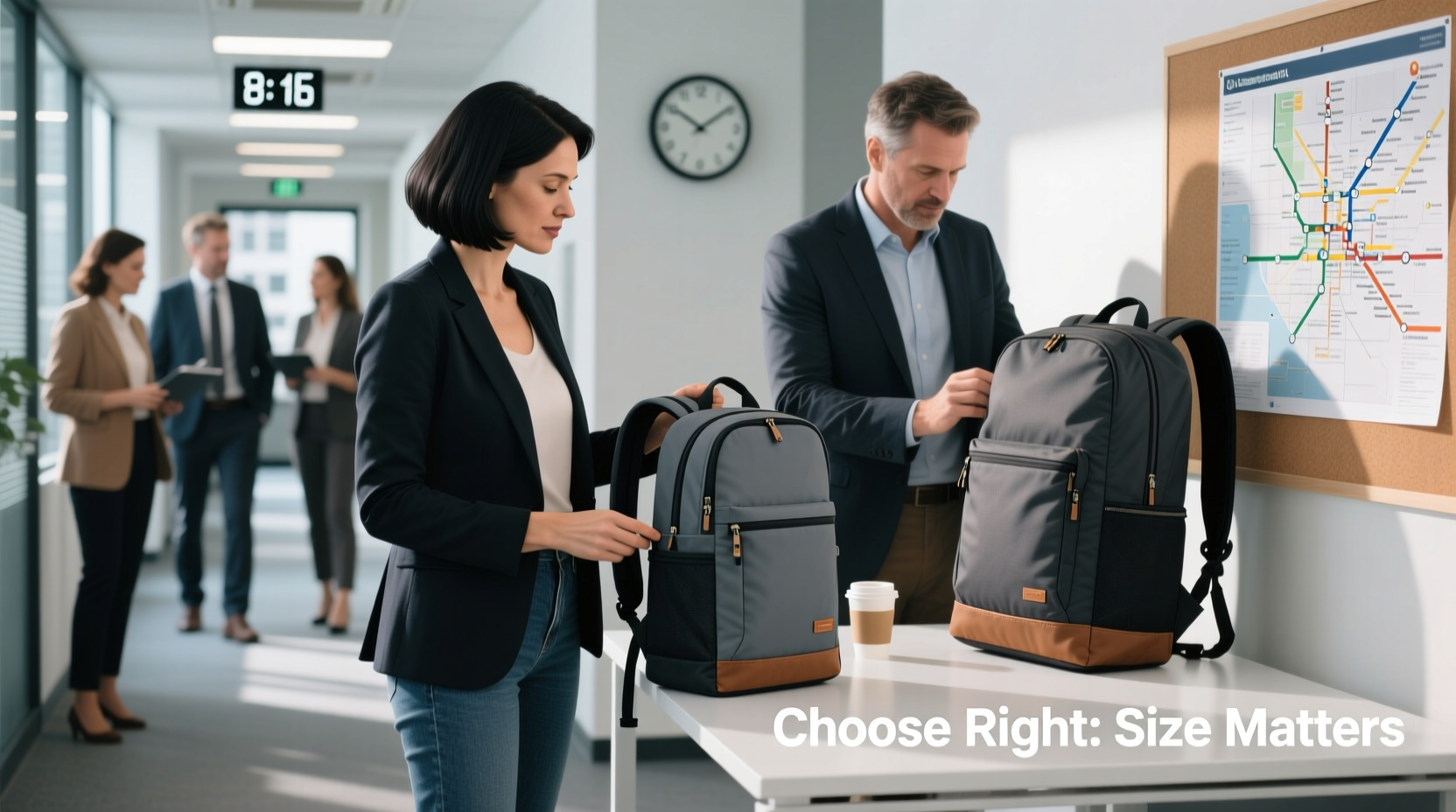
Backpacks are typically measured in liters, indicating their total carrying capacity. This volume determines how much you can fit inside—laptops, notebooks, lunch containers, gym clothes, or rain gear. However, a higher liter count doesn’t always mean better. Oversized packs add unnecessary weight and bulk, while undersized ones force you to carry items externally or make multiple trips.
For most urban commuters, the sweet spot lies between 15 and 30 liters:
- 10–15L: Ideal for minimalists who only carry essentials like a laptop, phone, wallet, and keys.
- 16–22L: Best for average commuters with a 13”–15” laptop, a water bottle, light jacket, and small personal items.
- 23–30L: Suited for those bringing extra layers, gym clothes, larger laptops (up to 17”), or groceries.
- 30L+: Typically overkill for daily commutes unless you’re also biking long distances or traveling directly from work to evening activities.
Assess Your Daily Load: A Step-by-Step Guide
The first step in choosing the right size is understanding exactly what you carry. Follow this timeline to audit your current load:
- Day 1–3: Pack your usual items into your current backpack without editing. Note what goes in and how it feels at the end of the day.
- Day 4: Lay everything out on a table. Categorize items into “Essential,” “Occasional,” and “Unnecessary.”
- Day 5: Re-pack using only essentials. Does this reduce volume significantly? Measure the empty space left in your bag.
- Day 6: Test a smaller or larger bag if available. Pay attention to balance, access, and comfort during transit.
- Day 7: Decide whether your current pack fits your needs—or identify the ideal replacement size.
This method prevents emotional attachment to oversized bags and highlights inefficiencies in packing habits.
Match Size to Commute Type and Transport Mode
Your transportation method influences optimal backpack dimensions. Crowded subways, narrow bus aisles, and bike lanes demand different spatial considerations.
| Commute Type | Recommended Size | Key Features Needed |
|---|---|---|
| Walking (under 2 miles) | 16–22L | Comfortable straps, breathable back panel, secure zippers |
| Public Transit (bus/train) | 18–25L | Anti-theft design, quick-access pockets, slim profile |
| Biking or Scooter | 20–28L | Reflective strips, helmet attachment, waterproof material |
| Driving + Short Walk | 15–20L | Lightweight build, easy stowability in car |
| Mixed Mode (e.g., train + walk + bike) | 22–28L | Versatile compartments, weather resistance, durable frame |
A commuter in Tokyo might prioritize compactness due to crowded trains, while someone cycling through Seattle may need room for a rain jacket and boots. Context shapes necessity.
Fit Matters as Much as Capacity
A well-sized backpack should sit snugly between your shoulders and waist, never extending above the shoulders or below the hips. Straps should be adjustable, with padded shoulder and sternum support for loads over 5 kg (11 lbs). Torso length—not height—is the real indicator of proper fit.
To measure your torso:
- Tilt your head forward and locate the C7 vertebra (the prominent bump at the base of your neck).
- Place one end of a flexible tape measure there.
- Run it down your spine to the top of your hip bones (iliac crest).
- The measurement is your torso length.
Use this guide to match torso length to backpack sizing:
- 16–18 inches: Small/Medium frame (fits most 18–22L packs)
- 18–20 inches: Medium/Large frame (best for 20–26L)
- 20+ inches: Large/X-Large frame (requires 24L+, often with extended harness systems)
“Many people choose packs based on aesthetics, but ignoring torso fit leads to posture issues and chronic discomfort.” — Dr. Lena Torres, Ergonomics Consultant at Urban Mobility Lab
Real Example: Sarah’s Commute Upgrade
Sarah, a graphic designer in Chicago, used a 35L hiking backpack for her daily train commute. It held her 15” laptop, sketchbook, tablet, lunch, and winter coat—but constantly bumped other passengers and strained her right shoulder. After measuring her actual carried items, she realized she only needed 22L of functional space.
She switched to a 20L minimalist commuter pack with a dedicated laptop sleeve, magnetic chest strap, and side water bottle pocket. Though slightly tighter, the bag’s balanced weight distribution and sleeker profile made her commute noticeably easier. She reported reduced fatigue and greater confidence navigating rush hour crowds.
Checklist: How to Choose Your Ideal Commute Backpack
Before purchasing, verify these key points:
- ✅ Measured your torso length and matched it to the backpack’s suspension system
- ✅ Calculated your average carried volume (laptop, accessories, clothing, etc.)
- ✅ Considered transport mode and space constraints (e.g., subway crowding)
- ✅ Tested weight distribution with a loaded bag (if possible)
- ✅ Checked for essential features: padded laptop compartment, external access, durability
- ✅ Ensured the pack doesn’t extend beyond your body when worn
- ✅ Evaluated ease of putting on/taking off in tight spaces
Frequently Asked Questions
Can I use a hiking backpack for commuting?
You can, but it's not ideal. Hiking packs are designed for outdoor terrain with heavy loads and ventilation for sweat. They’re often too bulky, lack smart organization for tech, and draw unwanted attention in urban settings. A dedicated commuter backpack offers better security, streamlined shape, and professional appearance.
How do I know if a backpack is too big?
If the bag extends above your shoulders or below your lower back, it’s too large. Other signs include needing to loosen straps excessively, feeling top-heavy, or having difficulty moving through narrow spaces. Overpacking a large bag also shifts your center of gravity forward, encouraging slouching.
Is a 15L backpack enough for a workday?
Yes—for minimalists. If you carry only a laptop, notebook, charger, and personal items, 15L is sufficient. But if you bring headphones, a sweater, lunchbox, or umbrella, consider upgrading to 18–22L. Always prioritize organized compartments over raw volume.
Final Thoughts: Size Is Personal, Not Universal
There’s no single “perfect” backpack size for all commuters. The right choice depends on your body, route, gear, and priorities. What works for a lawyer in Manhattan won’t suit a teacher biking across Portland. Accuracy comes from self-assessment, not trends.
By measuring your load, matching it to your commute type, and prioritizing ergonomic fit, you’ll find a backpack that feels invisible during transit—supportive, secure, and seamlessly integrated into your day.




 浙公网安备
33010002000092号
浙公网安备
33010002000092号 浙B2-20120091-4
Comments
No comments yet. Why don't you start the discussion?