
Transcribing spoken content from videos into written text is no longer a tedious chore reserved for stenographers or media professionals. With advancements in speech recognition and artificial intelligence, converting video voice to text has become faster, more accurate, and accessible to everyone—from content creators and educators to researchers and business teams. However, not all transcriptions are created equal. Accuracy depends on preparation, tool selection, and post-processing. This guide walks you through the entire process of achieving precise, reliable transcripts without unnecessary effort.
Why Accurate Transcription Matters
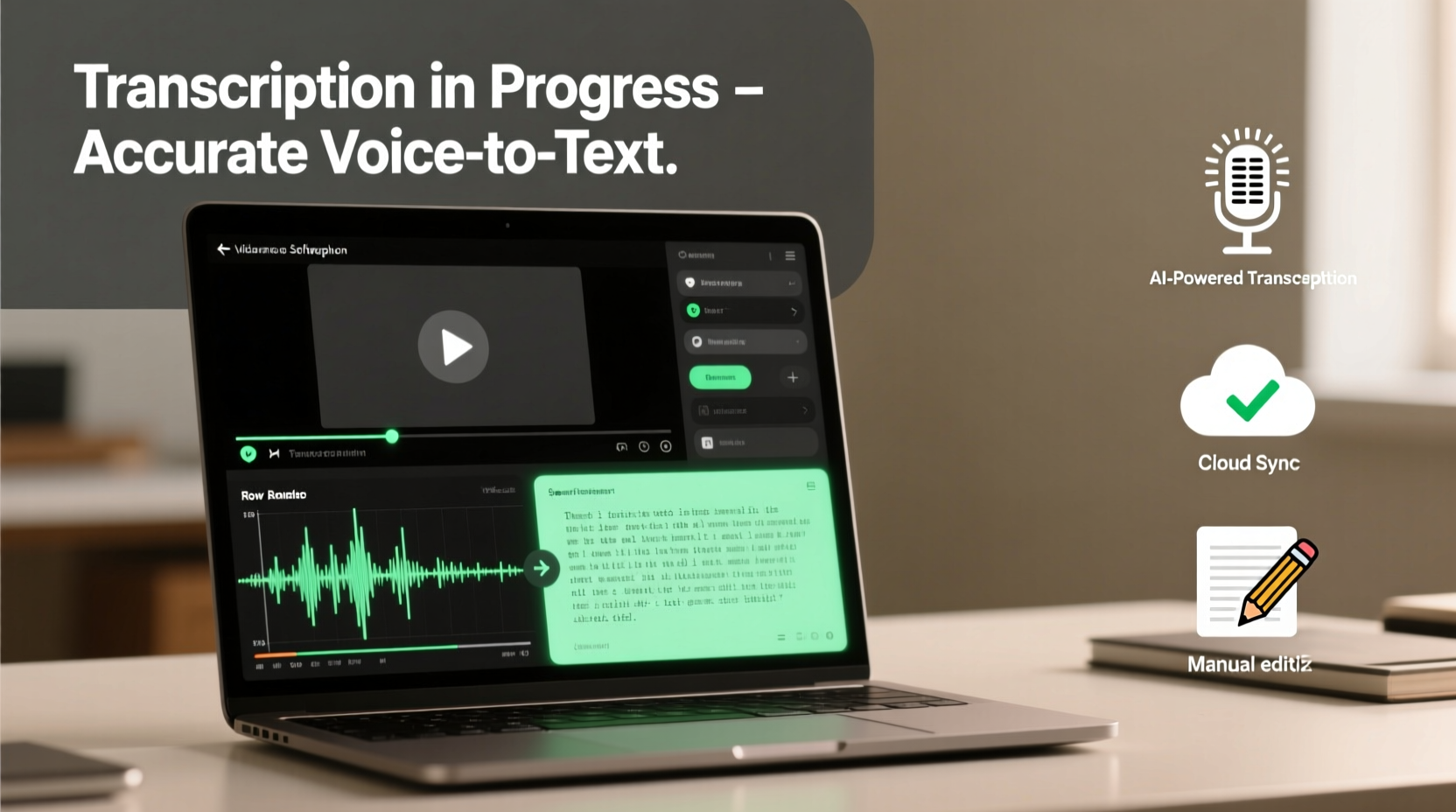
Accurate transcription extends beyond convenience. It enhances accessibility for hearing-impaired audiences, improves SEO by making video content indexable, and enables efficient content repurposing—such as turning a webinar into a blog post or extracting quotes for social media. Poorly transcribed audio can misrepresent ideas, damage credibility, and reduce engagement. According to a 2023 study by the Journal of Digital Communication, videos with accurate captions see up to 40% higher viewer retention.
“Transcription isn’t just about words—it’s about preserving meaning. One missed word can change context.” — Dr. Lena Torres, Linguistic Technology Researcher at MIT
Step-by-Step Guide to Converting Video Voice to Text
Follow this structured workflow to ensure high-quality results every time:
- Prepare Your Audio Source: Extract clean audio from your video file. Use tools like FFmpeg or online converters to export audio in WAV or MP3 format. High sample rates (44.1kHz or higher) improve transcription accuracy.
- Optimize Audio Quality: Reduce background noise using free software like Audacity. Normalize volume levels and remove long silences to help AI models focus on speech.
- Select the Right Transcription Tool: Choose based on accuracy, language support, and ease of use. Options range from automated platforms to hybrid human-AI services.
- Upload and Process: Import your cleaned audio into the chosen tool. Most platforms return a draft transcript within minutes.
- Edit and Refine: Review the output for errors in names, technical terms, or homophones (e.g., “there” vs. “their”). Add speaker labels and timestamps if needed.
- Export and Apply: Save the final transcript in your desired format—TXT, SRT for subtitles, or DOCX for documentation—and integrate it where needed.
Top Tools for Video-to-Text Conversion
The right tool makes a significant difference in speed and precision. Below is a comparison of leading transcription platforms based on accuracy, cost, and key features.
| Tool | Accuracy Rate | Best For | Pricing (Starting) |
|---|---|---|---|
| Descript | 95% | Content creators, podcasters | $12/month |
| Rev.com (AI + Human) | 98%+ | Legal, medical, academic use | $0.25/minute (human) |
| Otter.ai | 90–94% | Meetings, interviews | Free (limited); $10/month (pro) |
| Google Cloud Speech-to-Text | 93–96% | Developers, custom integrations | $0.006/15 seconds |
| Happy Scribe | 95% | Subtitles, multilingual projects | $14/hour (automated) |
For most users, Descript offers the best balance of usability and functionality, including real-time editing and voice cloning features. However, for mission-critical applications—such as court depositions or medical records—hybrid human-reviewed services like Rev remain the gold standard.
Common Pitfalls and How to Avoid Them
Even with advanced tools, transcription errors occur. The following checklist helps minimize mistakes:
- ✅ Ensure clear audio with minimal background noise
- ✅ Use a microphone when recording original content
- ✅ Specify speaker names in multi-person videos
- ✅ Check regional accents and dialects supported by the tool
- ❌ Don’t rely solely on auto-punctuation; review sentence breaks manually
- ❌ Avoid uploading low-bitrate audio files (below 64kbps)
Real-World Example: Transcribing a Team Training Video
A mid-sized tech company recorded a 45-minute internal training session with four team leads discussing product updates. The original video had ambient office noise and overlapping dialogue during Q&A. The HR manager needed an accurate transcript for onboarding new hires.
Using Otter.ai initially yielded a rough draft with frequent misidentifications—especially for technical jargon like “API integration” and speaker confusion. After exporting the audio, cleaning it in Audacity, and re-uploading to Descript with custom vocabulary added (e.g., product names), the accuracy improved dramatically. A final 20-minute edit session corrected minor errors and formatted sections by topic. The result was a polished, searchable document used across departments.
This case highlights that even strong tools benefit from preprocessing and domain-specific adjustments.
Expert Tips for Maximum Accuracy
To go beyond basic transcription, apply these professional techniques:
- Create a Custom Vocabulary List: Feed industry-specific terms into platforms like Google Cloud or Descript to improve recognition.
- Use Speaker Diarization: Enable speaker separation features to distinguish between participants automatically.
- Add Contextual Notes: Insert brackets for non-speech elements: [laughs], [pause], [inaudible].
- Leverage Timestamps: Generate time-coded transcripts for easy navigation and video syncing.
“Training your model with sample audio from your speakers can boost accuracy by 15% or more.” — Mark Chen, AI Speech Engineer at DeepLabs Inc.
Frequently Asked Questions
Can I transcribe videos in languages other than English?
Yes, most modern tools support multiple languages. Google Cloud Speech-to-Text covers over 125 languages, while Descript and Happy Scribe offer strong multilingual capabilities. However, accuracy varies by language availability and data quality. For less common languages, human transcription may still be preferable.
How long does it take to transcribe a 30-minute video?
Automated tools typically return results in under 10 minutes. Including editing time, expect 30–60 minutes depending on audio complexity. Human-only services may take 24–72 hours but offer superior accuracy for challenging content.
Are free transcription tools reliable?
Free tools like Otter.ai (free tier) or YouTube’s auto-captioning are useful for drafts and personal use. However, they often struggle with technical terms, accents, and fast speech. For professional or public-facing content, investing in premium or hybrid services is recommended.
Final Checklist Before Publishing Your Transcript
- Verify speaker labels are correct and consistent
- Confirm proper spelling of names, brands, and technical terms
- Ensure punctuation reflects natural speech flow
- Include timestamps if referencing specific moments
- Cross-check critical sections against the original audio
Conclusion
Converting video voice to text doesn’t have to be time-consuming or error-prone. By combining smart preparation, the right tools, and careful review, you can produce accurate, professional-grade transcripts with minimal effort. Whether you're creating subtitles, archiving knowledge, or repurposing content, precise transcription unlocks greater value from your video assets. Start small, refine your process, and build a system that scales with your needs.




 浙公网安备
33010002000092号
浙公网安备
33010002000092号 浙B2-20120091-4
Comments
No comments yet. Why don't you start the discussion?