
Determining your age may seem like a task best left to online tools or smartphone apps, but relying solely on digital calculators can sometimes lead to errors—especially when time zones, leap years, or incorrect input data are involved. More importantly, there’s value in knowing how to verify your age manually, whether for official documentation, personal records, or simply building numerical literacy. This guide explores practical, reliable, and accessible techniques to calculate your age without depending on the internet.
Understanding the Components of Age Calculation
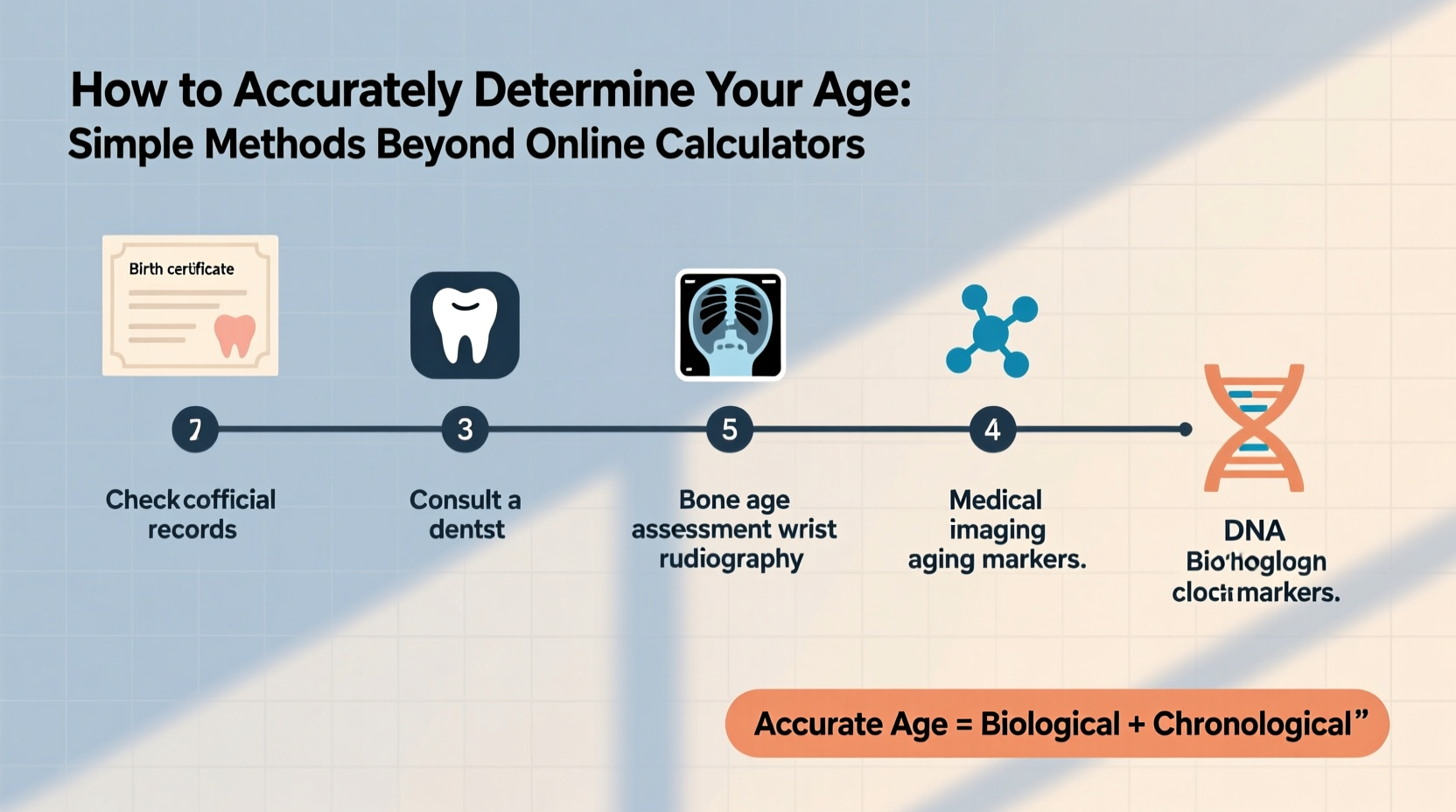
Age is more than just the number of years since birth—it’s the precise duration between your date of birth and the current date, accounting for months, days, and leap years. To calculate it accurately, you need three key elements: your full birth date (day, month, year), the current date, and an understanding of how calendar systems work.
Unlike digital calculators that process this automatically, manual calculation requires attention to detail. For example, someone born on February 29 during a leap year must consider whether their birthday is celebrated on February 28 or March 1 in non-leap years. These nuances matter when precision is essential, such as in legal, medical, or genealogical contexts.
Manual Calculation Using Subtraction Method
The most straightforward way to determine your age without technology is through direct subtraction of dates. Here’s how to do it step by step:
- Write down the current date in YYYY-MM-DD format (e.g., 2025-04-05).
- Write down your birth date in the same format (e.g., 1990-07-15).
- Subtract the birth year from the current year.
- Adjust based on whether your birthday has occurred this year.
If your birthday hasn’t passed yet in the current year, subtract one from the result. For instance, if today is April 5, 2025, and you were born on July 15, 1990, you’re still 34—not 35—because your birthday is ahead.
Example Breakdown:
- Current Date: 2025-04-05
- Birth Date: 1990-07-15
- Year Difference: 2025 – 1990 = 35
- But April comes before July → Birthday not yet reached
- Final Age: 35 – 1 = 34 years old
This method works reliably across decades and accounts for calendar irregularities when applied carefully.
Using Physical Calendars and Year-at-a-Glance Planners
A physical wall calendar or yearly planner can be surprisingly effective for tracking age, especially over long periods. By marking your birth date each year and counting completed anniversaries, you maintain a visual timeline of your life span.
This approach also helps avoid confusion caused by leap years. For example, someone born on February 29 might mark both February 28 and March 1 in non-leap years to stay consistent. Over time, this creates a tangible record that doesn’t depend on software updates or battery life.
| Method | Accuracy | Best For | Limits |
|---|---|---|---|
| Manual Subtraction | High (with care) | Quick verification, education | Prone to human error if rushed |
| Physical Calendar Tracking | Moderate to High | Long-term personal use | Requires annual maintenance |
| Official Documents | Very High | Legal, medical, immigration | Not always accessible |
| Mental Math Estimation | Low to Moderate | Rough approximations | Inaccurate for exact purposes |
Verifying Age Through Official Documentation
When accuracy is critical—such as applying for a passport, enrolling in school, or claiming retirement benefits—official documents provide the most authoritative source of truth. These include:
- Birth certificates
- Passports
- National ID cards
- Driver’s licenses
- School enrollment records
These documents typically list your full date of birth, which you can then use in manual calculations. In cases where the original birth certificate is unavailable, certified copies from government registries serve the same purpose.
“Age verification through primary documents remains the gold standard in legal and administrative processes.” — Dr. Alan Reyes, Demographer & Public Records Specialist
It's wise to keep scanned or photocopied backups of these documents in secure locations. That way, even without internet access, you can retrieve your exact birth date whenever needed.
Real-Life Example: Maria’s Passport Renewal
Maria, a 68-year-old retiree living in a rural area with limited internet access, needed to renew her passport. She didn’t trust the online age calculator she briefly used on a neighbor’s phone because it showed conflicting results due to a typo in the year field.
Instead, she retrieved her laminated copy of her birth certificate, confirmed her birth date as October 12, 1956, and checked the current date on her kitchen calendar: June 18, 2025. Since June comes before October, she calculated her age as 2025 – 1956 = 69, minus 1 = 68 years old. This matched the information on file, allowing her to complete her application confidently.
Maria’s experience highlights how low-tech methods can be more reliable than digital shortcuts when done correctly.
Step-by-Step Guide to Manual Age Verification
Follow this sequence to determine your age accurately without any digital tools:
- Gather Materials: Pen, paper, current calendar, and your birth document (if available).
- Record Dates: Write down your birth date and the current date in YYYY-MM-DD format.
- Calculate Year Gap: Subtract birth year from current year.
- Compare Months: If current month is greater than birth month, the year gap is your age. If less, subtract one. If months are equal, proceed to step 5.
- Compare Days: If months are the same, check the day. If current day ≥ birth day, use year gap. Otherwise, subtract one.
- Double-Check: Repeat the process once more to catch potential errors.
Frequently Asked Questions
Can I calculate my age in months and days too?
Yes. After determining your full years, count the additional months and days from your last birthday to today. For example, if your birthday was March 10, 2025, and today is April 5, 2025, you are 34 years, 0 months, and 26 days old (assuming you turned 34 on March 10). This level of detail is useful for baby milestones or medical assessments.
What if I don’t know my exact birth date?
In cases of unknown birth dates—common in some adoptions or historical records—approximate age can be estimated using baptismal records, school entry logs, or family testimonies. Forensic age estimation techniques exist but require professional evaluation.
Do leap years affect age calculation?
Only slightly. A person born on February 29 technically ages one day every four years, but legally and socially, they celebrate on February 28 or March 1 in common years. The total number of elapsed years remains the same; only the celebration date varies.
Conclusion: Take Control of Your Personal Data
While online calculators offer convenience, true accuracy and self-reliance come from understanding how to compute your age independently. Whether you're verifying identity, teaching a child basic math, or preparing documents without internet access, these manual methods empower you with control and confidence.




 浙公网安备
33010002000092号
浙公网安备
33010002000092号 浙B2-20120091-4
Comments
No comments yet. Why don't you start the discussion?