
Determining an accurate pregnancy due date is one of the most important steps in prenatal care. It helps healthcare providers monitor fetal development, schedule key tests, and prepare for delivery. While many assume a due date is set in stone, it’s actually an estimated range—typically within a week or two of the predicted day. The accuracy of this estimate depends on several factors, including menstrual history, conception timing, and early ultrasound results. Understanding how due dates are calculated empowers expectant parents to engage more confidently with their care team and plan effectively for the arrival of their baby.
Understanding the Basics: What Is a Due Date?
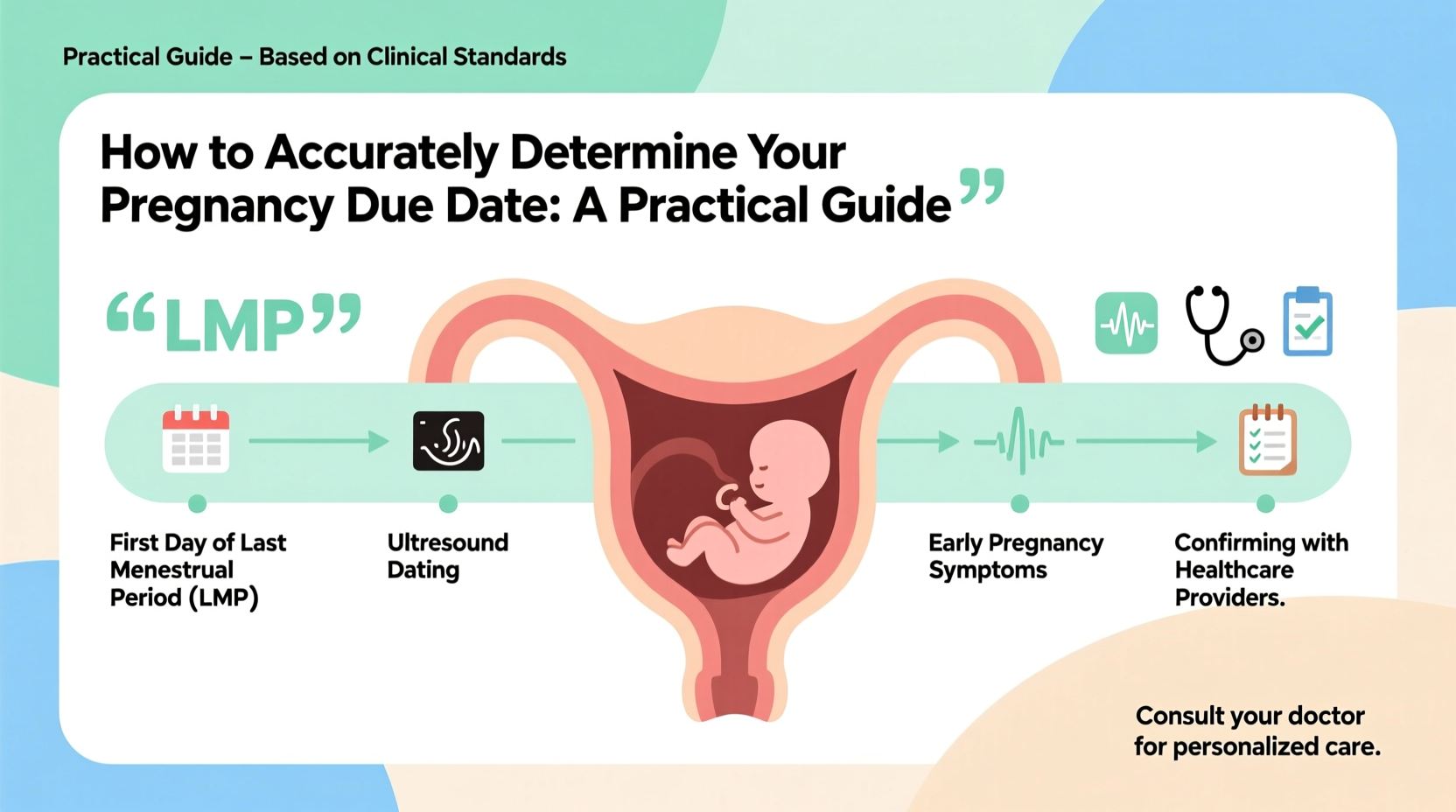
A pregnancy due date is the estimated day when labor might begin, marking the end of approximately 40 weeks of gestation. Despite the term \"due,\" it's not a deadline—only about 5% of babies are born exactly on their predicted date. Most arrive within a five-day window before or after.
The standard calculation assumes a 28-day menstrual cycle with ovulation occurring on day 14. From the first day of the last menstrual period (LMP), 280 days (or 40 weeks) are added to project the due date. This method, known as Naegele’s Rule, remains the foundation of clinical practice even though individual cycles can vary significantly.
“While due dates provide a helpful timeline, they’re best viewed as estimates. Flexibility and ongoing assessment are key.” — Dr. Lena Patel, OB-GYN and Maternal Health Specialist
Step-by-Step Guide to Calculating Your Due Date
Calculating your due date involves combining personal health information with clinical tools. Follow these steps for the most accurate result:
- Record the first day of your last menstrual period (LMP). This is the starting point used by most healthcare providers.
- Apply Naegele’s Rule: Add seven days to the LMP, then subtract three months, and add one year. For example, if your LMP was January 10, 2025:
- Add 7 days → January 17
- Subtract 3 months → October 17
- Add 1 year → October 17, 2025
- Adjust for irregular cycles. If your average cycle is longer than 28 days, you may have ovulated later, pushing conception—and therefore the due date—further out.
- Schedule an early ultrasound (between 6–13 weeks). Ultrasound measurements of the embryo or fetus help confirm or adjust the due date based on actual growth.
- Review findings with your provider. They’ll weigh all available data—LMP, cycle length, ovulation signs, and imaging—to finalize the best estimate.
When Ultrasound Overrides the LMP Date
In early pregnancy, ultrasound dating is often more accurate than LMP-based calculations—especially when menstrual cycles are irregular or uncertain.
Between 7 and 13 weeks, fetal crown-rump length (CRL) provides a highly reliable measurement. At this stage, all embryos grow at nearly the same rate, making size a strong predictor of gestational age. If the ultrasound date differs from the LMP-based date by more than seven days, clinicians typically adopt the ultrasound estimate.
After the first trimester, fetal growth becomes more variable due to genetics and other factors, so ultrasounds later in pregnancy are less reliable for adjusting the due date.
| Ultrasound Timing | Accuracy Margin | Use for Adjusting Due Date? |
|---|---|---|
| 6–8 weeks | +/- 5 days | Yes – high reliability |
| 9–13 weeks | +/- 7 days | Yes – preferred over inconsistent LMP |
| 14–27 weeks | +/- 10–14 days | Rarely – only if no prior data exists |
| After 28 weeks | +/- 21+ days | No – too imprecise |
Special Cases That Affect Due Date Accuracy
Not every pregnancy follows the textbook model. Certain conditions and circumstances require adjustments to standard dating methods.
Irregular Menstrual Cycles: Women with cycles shorter than 24 days or longer than 35 days may ovulate earlier or later than day 14. In such cases, relying solely on LMP can lead to misdating by up to two weeks.
Assisted Reproductive Technology (ART): For pregnancies conceived via IVF, the due date is calculated precisely from the date of egg retrieval or embryo transfer. This eliminates guesswork and offers the highest level of accuracy.
Unknown LMP: If the last period is forgotten or periods were absent (e.g., due to breastfeeding or hormonal contraception), early ultrasound becomes the primary tool for estimation.
Bleeding During Early Pregnancy: Some women experience implantation bleeding or spotting that they mistake for a period. This can lead to incorrect LMP reporting and an inaccurate due date unless corrected with ultrasound.
Real Example: Sarah’s Story
Sarah had irregular cycles ranging from 32 to 38 days and didn’t track ovulation. She believed her LMP was March 1st, which gave a due date of December 8th. However, her 8-week ultrasound showed the fetus measured closer to 7 weeks’ gestation. Based on crown-rump length, the radiologist adjusted the due date to December 15th—aligning better with her likely ovulation window. Without the scan, she would have been misclassified as “overdue” just two weeks later.
Do’s and Don’ts When Estimating Your Due Date
| Do’s | Don’ts |
|---|---|
| Write down the exact date of your LMP | Guess your LMP if unsure |
| Share cycle history with your provider | Assume all cycles are 28 days long |
| Attend your first-trimester ultrasound | Ignore discrepancies between symptoms and expected dates |
| Use fertility tracking if trying to conceive | Rely solely on online calculators without medical confirmation |
Frequently Asked Questions
Can my due date change after the first ultrasound?
Yes, but rarely after the first trimester. If a later ultrasound shows significant discrepancy, your provider may reassess—but changes after 20 weeks are uncommon and usually not applied to the original due date.
What happens if I don’t know when my last period was?
Your healthcare provider will rely heavily on early ultrasound results. Physical exams and hormone levels (like hCG trends) may also support dating, but ultrasound remains the gold standard.
Is it possible to be pregnant and still get a period?
You cannot have a true period while pregnant, but some women experience light bleeding around the time of implantation or due to cervical changes. This is often mistaken for menstruation and can confuse LMP-based dating.
Final Checklist: Ensuring an Accurate Due Date
- ✔ Record the first day of your last menstrual period
- ✔ Note the average length and regularity of your cycles
- ✔ Schedule your first prenatal visit by week 8–10
- ✔ Undergo a first-trimester ultrasound for confirmation
- ✔ Discuss any fertility treatments or ovulation tracking with your doctor
- ✔ Confirm the finalized due date in your medical record
Conclusion: Plan with Confidence, Not Pressure
An accurate due date is a valuable tool—not a binding contract. By understanding how it's determined and what factors influence its precision, you gain insight into your pregnancy timeline and can make informed decisions along the way. Whether you're planning maternity leave, preparing your home, or simply counting down the days, grounding your expectations in reliable medical guidance reduces stress and supports a healthier journey. Stay engaged with your care team, ask questions, and remember: every pregnancy unfolds at its own pace.




 浙公网安备
33010002000092号
浙公网安备
33010002000092号 浙B2-20120091-4
Comments
No comments yet. Why don't you start the discussion?