
Selecting a designer ring—whether for an engagement, anniversary, or personal indulgence—is a meaningful decision. But even the most exquisite piece can disappoint if it doesn’t fit properly. A ring that’s too tight causes discomfort and swelling; one that’s too loose risks slipping off and being lost forever. Achieving a perfect fit isn’t guesswork—it’s precision. Understanding how to accurately measure your ring size ensures comfort, safety, and long-term wearability, especially when investing in high-end pieces from brands like Cartier, Tiffany & Co., or Van Cleef & Arpels.
Why Ring Size Accuracy Matters for Designer Jewelry
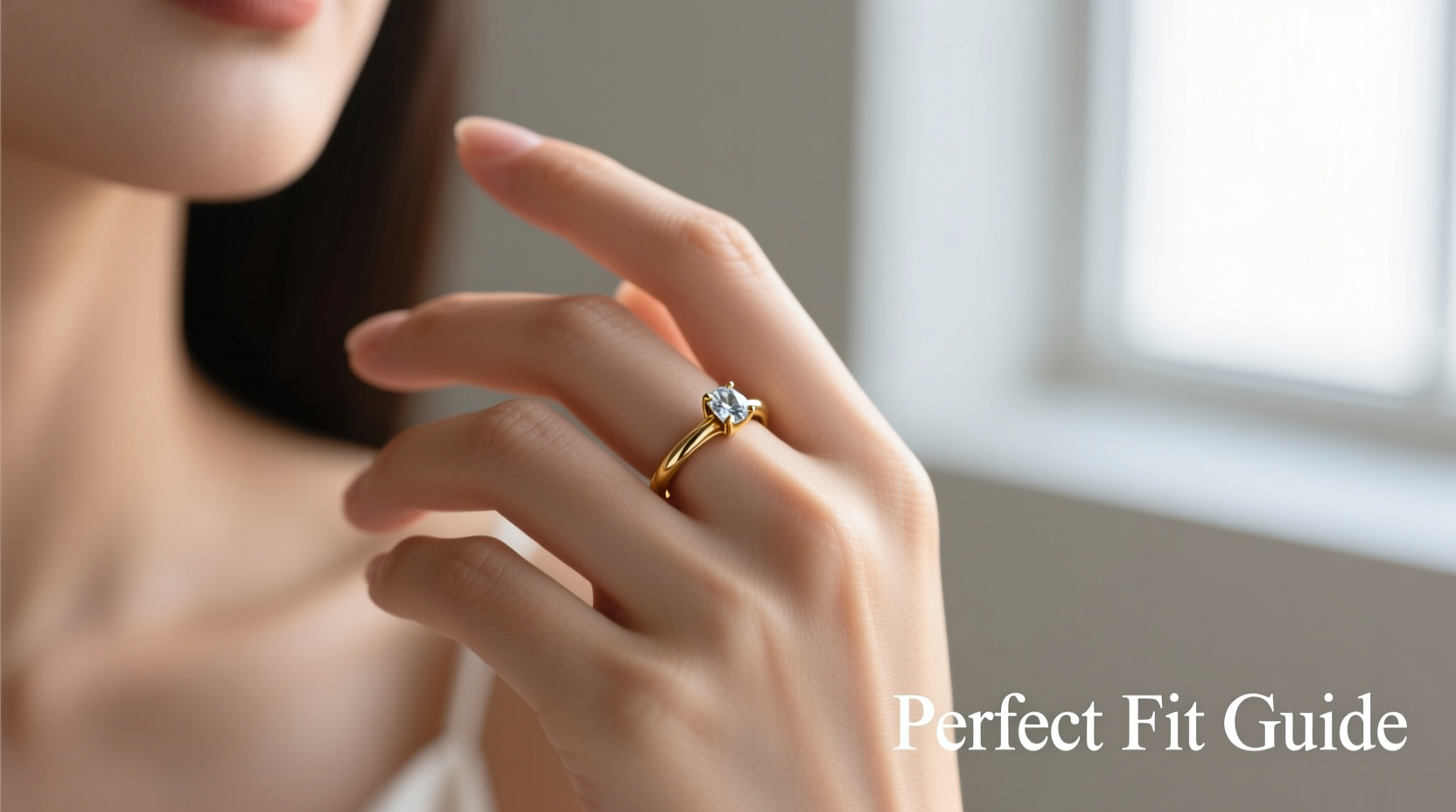
Designer rings are often crafted with intricate settings, delicate band widths, and precious stones set in precise arrangements. Unlike mass-produced fashion jewelry, these pieces are rarely adjustable without compromising structural integrity or aesthetic value. Resizing a platinum or vintage-inspired ring may cost hundreds of dollars and still affect its resale value. Moreover, many luxury retailers do not accept returns on custom-sized items. Getting the size right the first time protects both your investment and emotional connection to the piece.
“Even half a size can make the difference between a ring that feels like it belongs and one that constantly distracts.” — Julian Reed, Master Jeweler at Atelier 79
Step-by-Step Guide to Measuring Your Ring Size at Home
You don’t need professional tools to get a reliable measurement. With careful attention, you can achieve near-jeweler accuracy using common household items.
- Gather Supplies: A smooth, non-stretchy string or thin strip of paper (about 1/4 inch wide), a pen, a ruler with millimeter markings, and a known well-fitting ring (if available).
- Wrap Around the Base of Your Finger: Place the string or paper snugly around the base of the intended finger—usually the knuckle side of the last joint. Ensure it’s flat and not twisted.
- Mark the Overlap Point: Use the pen to mark where the ends meet. Avoid pulling too tight; the ring must slide over your knuckle comfortably.
- Measure the Length: Lay the string flat against the ruler and record the length in millimeters. This is your finger’s circumference.
- Convert to Ring Size: Use a standard conversion chart (see table below) to translate the measurement into U.S., UK, or European sizes.
Alternative Method: Using a Well-Fitting Ring
If you already own a ring that fits perfectly on the same finger, place it on a ruler so the inner edge aligns with zero. Measure the diameter of the inner circle across the center in millimeters. Match this number to a ring size chart.
| Diameter (mm) | Circumference (mm) | U.S. Size | UK / AU Size | EU Size |
|---|---|---|---|---|
| 15.7 | 49.3 | 5 | H | 49 |
| 16.5 | 51.9 | 6 | J | 52 |
| 17.3 | 54.4 | 7 | L | 54 |
| 18.1 | 56.9 | 8 | N | 57 |
| 18.9 | 59.5 | 9 | P | 59 |
| 19.7 | 62.0 | 10 | R | 62 |
Common Mistakes That Lead to Incorrect Sizing
Even with good intentions, many people miscalculate their ring size due to avoidable errors. Recognizing these pitfalls improves accuracy.
- Measuring cold fingers: Cold temperatures cause fingers to shrink. Measure when hands are warm and relaxed.
- Ignoring knuckle size: Some have larger knuckles than the base of their finger. Test fit by sliding the measured ring over the knuckle slowly.
- Using stretchy materials: Elastic bands or thick tape stretch, leading to oversized readings.
- Guessing based on gender: There’s no universal “average” size. Women wear sizes 4–9; men range from 8–14. Individual variation is vast.
- Not accounting for ring width: Wider bands (over 6mm) may feel tighter and require going up half a size.
Mini Case Study: The Overseas Engagement Surprise
Sophie wanted to propose with a custom-designed sapphire ring from a Parisian jeweler. Her partner had never worn a ring before, so Sophie used an old cocktail ring to estimate the size. She measured once on a winter morning, got a U.S. size 7, and placed the order. When the ring arrived, it was too tight—especially over the knuckle. After consulting a local jeweler, they discovered her partner’s true size was 7.5, but only during warmer hours. The lesson? Multiple measurements under realistic conditions prevent costly surprises.
When to Visit a Professional Jeweler
While DIY methods work well, certain situations demand expert assessment:
- You’re purchasing a ring with a complex setting (e.g., eternity bands, tension mounts).
- The recipient prefers complete surprise, and indirect measurement is needed.
- You're buying abroad and need international size conversion assurance.
- The ring involves heirloom stones or cannot be resized later.
Jewelers use precision mandrels and calibrated sizing tools that account for finger shape and movement. Many offer free sizing services, especially if you're buying from them. They can also assess whether a half-size adjustment or comfort-fit interior finish would improve wearability.
“At our atelier, we always recommend trying on multiple bands in various widths and metals. Fit is as much about feel as it is about numbers.” — Lila Nguyen, Senior Sales Associate at Maison Éclat Jewelers
Checklist: Ensuring Accurate Ring Sizing
Follow this checklist to eliminate errors and ensure confidence in your measurement:
- ✅ Measure at the end of the day when fingers are largest.
- ✅ Take measurements on three separate days.
- ✅ Use a non-stretch material like thread or paper.
- ✅ Record both circumference and diameter.
- ✅ Account for seasonal changes—fingers swell in summer, shrink in winter.
- ✅ Consider the width of the band—wider = potentially need larger size.
- ✅ Consult a jeweler for valuable or non-resizable pieces.
- ✅ If gifting, borrow a well-fitting ring from the recipient’s collection.
Frequently Asked Questions
Can I resize any designer ring?
Not all rings can be resized safely. Rings with intricate engraving, embedded stones along the band, or made from alternative materials like tungsten or ceramic are often non-resizable. Platinum and gold bands can usually be resized, but each adjustment risks weakening the metal. Always consult the manufacturer or a certified bench jeweler before proceeding.
What if my ring size varies between hands?
It’s normal for dominant hand fingers to be slightly larger due to muscle development. Always size for the specific finger and hand where the ring will be worn. Never assume symmetry between left and right.
Do temperature and altitude affect ring fit?
Yes. High altitudes and hot climates increase blood flow and fluid retention, causing temporary swelling. If you live in or frequently travel to such environments, consider having two versions of frequently worn rings or opting for flexible sizing inserts.
Final Thoughts: Precision Is Part of the Promise
A designer ring represents more than luxury—it symbolizes commitment, achievement, or self-expression. Ensuring it fits flawlessly honors that significance. Whether you’re measuring yourself or planning a surprise gift, taking the time to determine your exact ring size reflects respect for the craft and care for the wearer. Accuracy isn’t just practical—it’s part of the experience.




 浙公网安备
33010002000092号
浙公网安备
33010002000092号 浙B2-20120091-4
Comments
No comments yet. Why don't you start the discussion?