
Determining someone’s physical location from their phone number is a topic surrounded by myths, privacy concerns, and technical limitations. While movies often depict real-time GPS tracking via a simple call, the reality is far more complex—and tightly regulated. However, under the right circumstances and with appropriate tools, it is possible to estimate or verify a general location tied to a phone number. This guide breaks down legitimate, accurate, and ethical approaches used by professionals and individuals alike.
Understanding the Limitations of Phone-Based Location Tracking
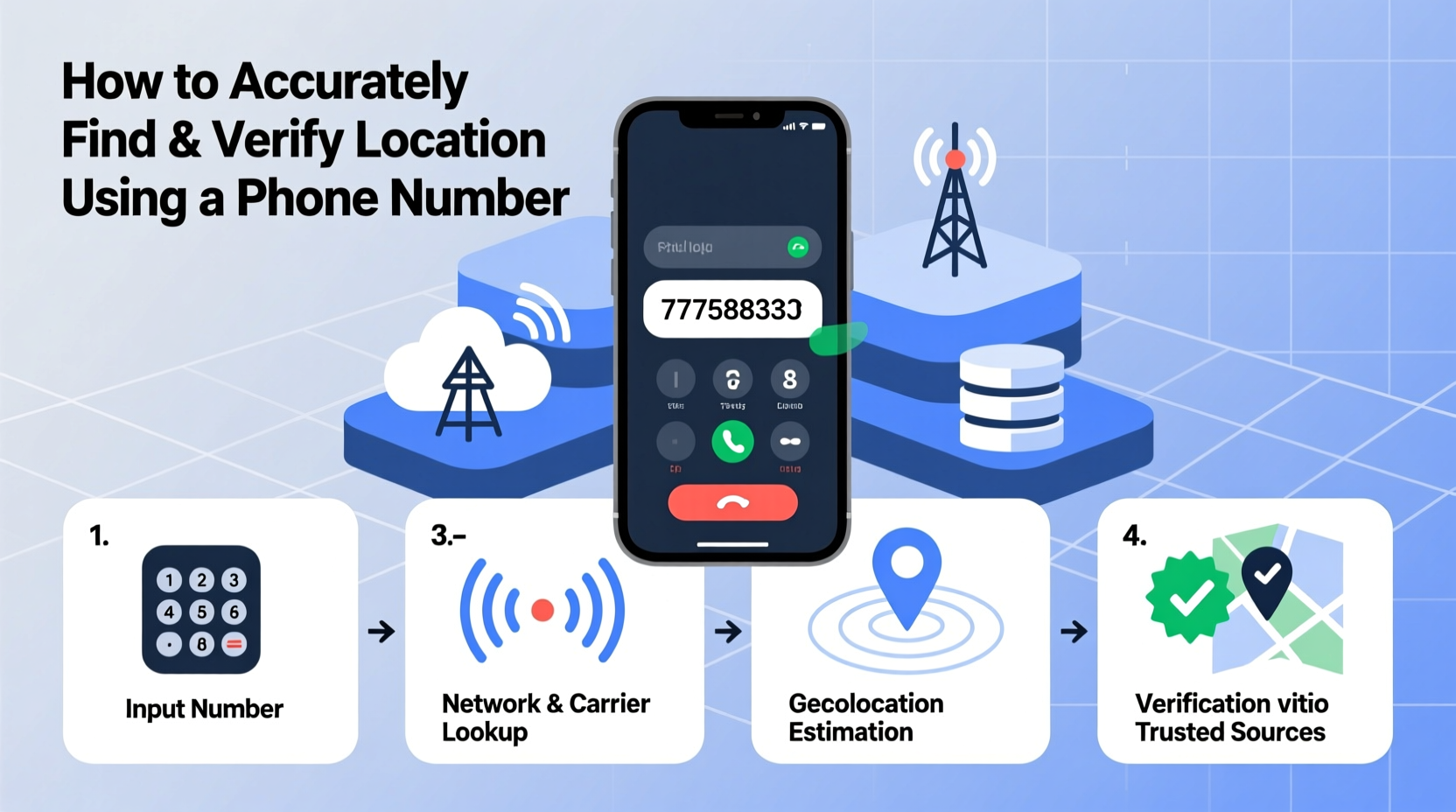
Before exploring methods, it's essential to understand what can and cannot be done. Mobile networks and smartphones generate location data through multiple sources: cell tower triangulation, Wi-Fi positioning, GPS signals, and IP address mapping. But access to this data is restricted.
Telecom providers and law enforcement agencies can pinpoint a device’s location with high accuracy when legally authorized. The average user, however, does not have direct access to real-time GPS coordinates from a phone number alone. Any service claiming to offer instant, precise global tracking of any number is likely misleading or fraudulent.
“Location data tied to phone numbers is protected under telecom regulations and privacy laws like GDPR and CCPA. Unauthorized access constitutes a breach of both ethics and law.” — Sarah Lin, Cybersecurity Analyst at NetShield Group
The key is distinguishing between approximate location estimation and invasive surveillance. Legitimate use cases include verifying a delivery person’s route, confirming a family member’s safety, or identifying spam callers.
Step-by-Step Guide to Verifying Location Using a Phone Number
While you can't track someone covertly, you can use indirect but reliable methods to infer or confirm a phone number’s associated location. Follow this structured process:
- Determine the number type (mobile, landline, VoIP): Landlines are tied to fixed addresses; mobile numbers reveal carrier and region; VoIP numbers (e.g., Google Voice) may show no physical link.
- Analyze the area code and prefix: Use North American Numbering Plan (NANP) logic or international country codes to identify the geographic origin.
- Use reverse phone lookup services: Choose reputable platforms that source public records, user reports, and carrier data.
- Cross-reference with social media or messaging apps: If communication is established, some apps display location status or signal strength indicators.
- Leverage built-in smartphone features (with consent): For personal devices, use Find My iPhone or Google’s Find My Device—only if the owner enables sharing.
Top Tools and Services for Accurate Location Verification
Not all online tools deliver reliable results. Below is a comparison of trusted options based on accuracy, legality, and usability.
| Service | Type | Accuracy | Cost | Best For |
|---|---|---|---|---|
| Truecaller | Reverse Lookup + Crowdsourced Data | Moderate (city-level) | Free / Premium ($5–$10/month) | Identifying spam calls and basic location tags |
| Whitepages | Public Records Database | High (address-level for landlines) | Paid reports (~$2–$5) | Verifying U.S.-based residential numbers |
| Telnyx | Carrier-Level API | High (for business use) | Pay-per-use API | Enterprise verification systems |
| OpenCelliD | Open-source Cell Tower DB | Low-Moderate (requires technical skill) | Free | Developers estimating location via tower data |
| Google Maps (via SMS link) | User-consented sharing | Very High (real-time GPS) | Free | Trusted contacts sharing live location |
Tools like Truecaller rely on user-uploaded contact lists, which means coverage varies globally. In contrast, Whitepages pulls from official directories, making it more dependable for U.S. landlines. For developers, Telnyx offers programmable verification workflows compliant with telecom standards.
Mini Case Study: Confirming a Delivery Driver’s Location
A small business owner received a call from a courier claiming to be stuck in traffic outside their warehouse. The number was unfamiliar. To verify authenticity:
- The owner used Truecaller to check the number—flagged as “Courier Service” with 30+ user tags.
- The area code matched the local dispatch center.
- They requested a live location pin via WhatsApp, which the driver accepted.
The shared dot moved steadily toward the facility, confirming legitimacy. Without coercion or stealth, the owner verified the claim safely and efficiently.
Do’s and Don’ts of Location Verification
“Just because something is technically possible doesn’t mean it’s ethically acceptable. Consent is non-negotiable.” — Dr. Marcus Reed, Digital Ethics Researcher, Stanford University
| Do’s | Don’ts |
|---|---|
| Verify unknown callers during emergencies | Track someone without their knowledge |
| Use location sharing with mutual agreement | Purchase \"spy apps\" promising GPS access |
| Leverage carrier-based tools for lost devices | Assume area codes always reflect current location |
| Report suspicious numbers to authorities | Spread unverified location claims publicly |
Frequently Asked Questions
Can I find someone’s exact GPS location from their phone number?
No, not without access to their device or account. Real-time GPS requires permission through apps like Find My Device or shared location pins. Third-party services cannot bypass this security.
Are free phone location trackers reliable?
Most free tools provide only general region data—often just city or area code level. Some may display false precision to encourage upgrades. Stick to well-known platforms with transparent sourcing.
What should I do if I receive threatening calls from a tracked location?
Document the number, record interactions if legal in your state, and report it to your local police and telecom provider. Do not confront the individual directly. Law enforcement can request carrier data with proper jurisdiction.
Checklist: Safely Verify a Phone Number’s Location
- ✅ Identify the number type (mobile, landline, VoIP)
- ✅ Check area code and prefix for regional clues
- ✅ Run a reverse lookup via Truecaller or Whitepages
- ✅ Search the number on social media platforms
- ✅ Request voluntary location sharing if communication exists
- ✅ Avoid third-party spyware or hacking tools
- ✅ Consult authorities if safety is at risk
Conclusion: Accuracy Meets Responsibility
Finding and verifying a location using a phone number is feasible within defined boundaries. Success depends less on technological magic and more on methodical verification, credible tools, and respect for privacy. Whether you're screening a job applicant’s reference, confirming a relative’s whereabouts, or managing logistics, the most effective strategies combine public data, user cooperation, and sound judgment.




 浙公网安备
33010002000092号
浙公网安备
33010002000092号 浙B2-20120091-4
Comments
No comments yet. Why don't you start the discussion?